

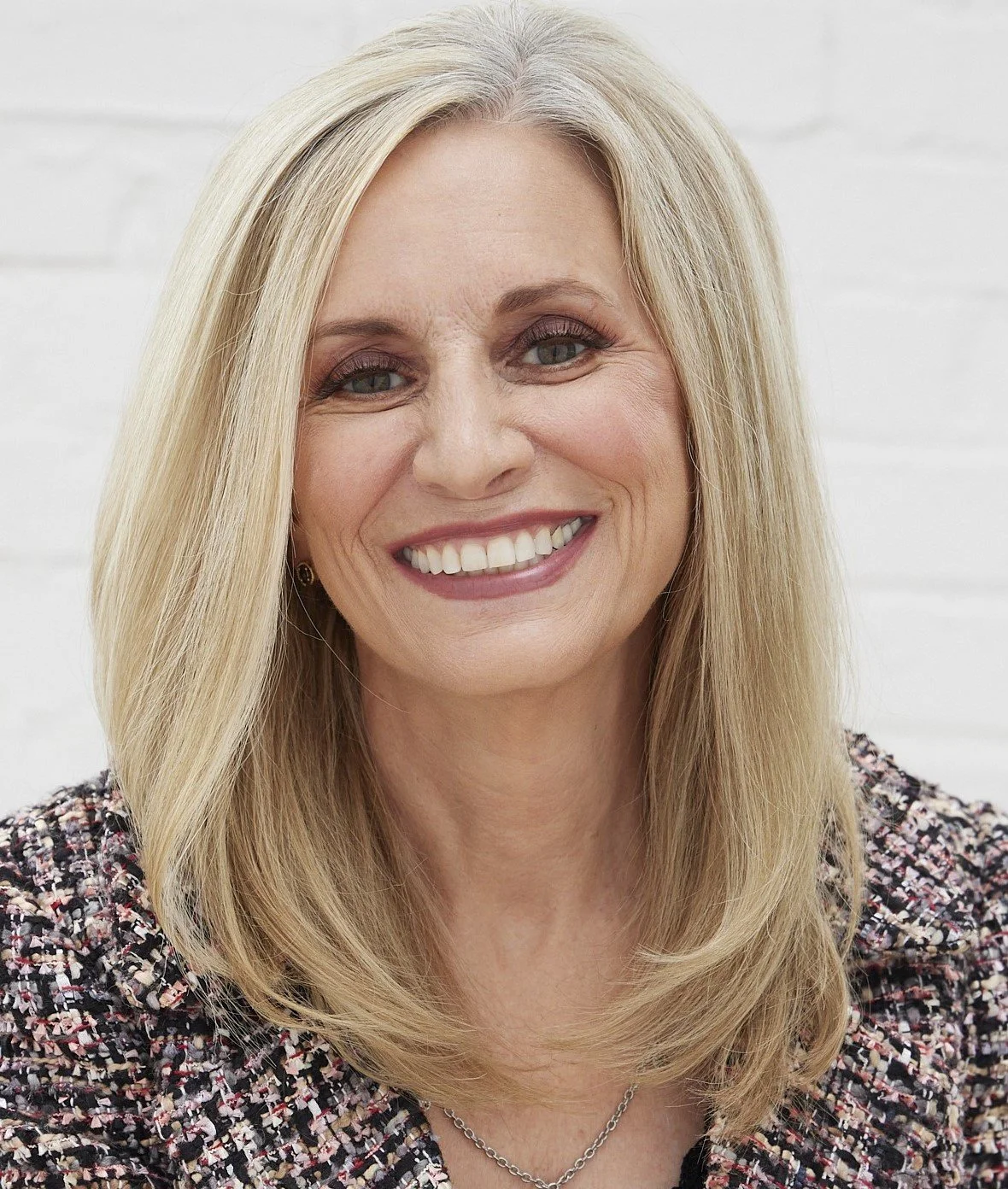
In episode 255, Peter Hayward and Cindy Frewen explore what’s lost and what’s possible when connection, from dating to civic discourse, is increasingly mediated by apps and AI.
Interviewed by: Peter Hayward
Links
Transcript
Peter Hayward: Generation futures, multi-generational futures. We might think that agreeing a share vision of the future should be possible. But what if the generations don't think of themselves, their world, the challenges we face, the way we do? Can we create shared futures then?
Cindy Frewen: I spend a lot of time with people that are a lot younger than me and it's interesting what things that they care about that are different than what things that I care about at this point in my life. And having gone through the process of being back in the dating world, for instance, is that they're stymied by how you find a mate. Where it used to be a high school or college era, they're now in their work routine when they finally actually look for a life partner and they don't have very many choices. And they go through the whole online thing. But they can't imagine any other way to find someone else. We were talking earlier, that people are so hooked on AI they can't even write an email anymore. How do you form the concept of connecting with another person it is critical... these two different levels, this civic discourse and just this everyday conversations how do you maintain that capacity for communication?
Peter Hayward: That is my guest today on FuturePod. Dr Cindy Frewen who is an urban Futurist and educator who after a long absence returns to the Pod.
Peter Hayward: welcome back to Future Pod, Cindy Frewen
Cindy Frewen: I'm happy to be here, Peter Hayward I'm happy to be asked come back. Thank you.
Peter Hayward: For the people who don't know it, Cindy was episode 20 almost seven years ago. Your podcast last time, Leaving a Legacy, you were obviously heavily involved in the teaching program at Houston. And then in seven years a bit has happened to you, hasn't it?
Cindy Frewen: Personally and professionally, both. And the world has changed in seven years. We try to do... I do generational futures, I do multi-generational futures. I look out one and two and three and four generations if I can. And there's certain things, environmental issues and some things that you can look far out rather...not easily, but in some form. And, but here we are seven years. What, right now you're asking us to look at seven years, the quintessential seven-year window that people talk about for luck and for a lot of things. There's always a sense that seven years is a cycle. But not in my business.
It's a 20 to 25-year cycle. And so it's nice to be back. It's a big changes for me personally because I lost my husband, I lost my parents, and I was doing a lot of caregiving. And that after... And I concluded my work as the chair of the Association of Professional Futurists right about that time that we talked, and I have not been teaching the last couple of years, but I taught for another five years after we were...
At that time, I was probably very heavily into methods and tools and how do you think about the future. Now I would say that I'm more about the the vision and the what it, what are the possible futures? What, how do, how, and what changes our outlook so dramatically?
Because I think in these seven years, outlooks have changed dramatically. I- in the last seven months I'd say they've changed quite a bit. Yeah. The winds of fortune are blowing at a gale pace.
Peter Hayward: Re-
Cindy Frewen: grateful to be doing long-term futures more than short-term investments, and any of that would be much more difficult
Peter Hayward: That, that's very true Richard Slaughter pro-provocatively said we maybe need to stop talking about preferred futures. I-- again, Richard said it as a provocation, but how do you respond to that?
Cindy Frewen: I still believe that you... Yeah, we don't know when we pick a future. Cities are a perfect example because they used to have these ideas, of this city beautiful is a s- was a vision. So the city beautiful m- movement, it came out of Chicago, and you... It really came out of England and then Chicago, and you...
It created sprawl essentially. It, it got it got boosted by cars and highways and cheap energy. But but you don't know what you're wishing for when you aim for a pastoral kind of, of city, is that it isn't maybe the highest quality. And so there was a kind of a mis- mistake, I would say especially the era where we were actually doing urban renewal in order to achieve that vision.
And so s- our idea of preferred futures is not always, we don't get what we meant to get. We don't know the consequences. And so I think the more interesting thing is how do you make that vision but then adapt as you see the results? That's where we're, I think, broken, is that we don't then change very readily 'cause people are still invested in the image, the blueprint image.
And instead it's this adaptive how well do we adapt more than how well do we aim at a target and hit it?
Peter Hayward: It's an interesting idea because what I hear there, Cindy, is one of our big issues is that we've got polarized political systems, and we've got them in Australia, you've got them there, same in England, same in Germany, same in France. And polarized and preferred kind of cannot come together because they each prefer something completely different, almost antithetical to the other.
So maybe we need to drop preferred out and find a word that allows there to be a kind of blending of preference or a coexistence, or maybe even your word, an adaptation of preference
Cindy Frewen: Yeah, so it seems like the Venn diagrams don't over- have any much overlap. It happens that since my husband passed five years, six years ago, I have found a n- new partner, a new mate, fallen in love again, and his and my politics are opposite. So I've spent quite a bit of time thinking about this so that we actually You know, don't hurt each other in our arguments so that it actually has something progressive about it.
One of the first things I learned is that you can't argue facts because you have different facts. And so if you start arguing facts, immediately the other person is defensive. And so instead where we find common ground are things like the values, what do we care about? And it turns out we care about a lot of the same things, and then we can find something that we share.
If, for instance, in the United States we have this problem with the immigration and borders, a- and it has become, volatile. But so we, but we both agreed that at the borders things should be not chaotic, and they were chaotic because of bad policies, and we could agree on that too, is that working in 2026 with a policy that was enacted 35 years ago is just poor leadership that they couldn't get something that was more functional because it was a dysfunctional administration problem that people take 20 years to become naturalized.
And and in that time period now we have leadership in the White House that says that they, that leaves them vulnerable to deportation in that meantime. I say, "For 20 years you're vulnerable?" And and we both can agree that's just, abhorring. It is it's poor administration for what we both agree should be a more organized policy.
And so they can't be on such a whim, so whimsical and dangerous for people who commit. And so we instead of arguing about those methods of how it's done, we can't agree on whether or not these ICE agents should wear masks because we have a... That level we can't agree on, but what we can agree on is that there needs to be a overall, a whole, overall, over- overall change, not just what's going on now, which is this, really terrible from my point of view, very terrible deportations.
And so- Yeah ... it really gets to what level can you find common ground and then work from there and be curious. Curiosity is the secret, is asking questions. Why would you... And you can't say it, "Why would you possibly believe that?" But instead you can, which makes them, sound...
It's a credibility issue, is instead it's tell me about it. Tell, talk to me about why you think that's true and- And what about it do you like? And mean it, be authentic that you really do wanna hear about it. And then you can actually have conversations that are not knock-down, drag-out.
Civil discourse is something you have to do in futures work, and certainly in urban futures work, 'cause there's such polarized ideas about how to build things and what should be built. And and the system is built to favor the people with the money because cities are economic engines.
China's sh- proven how much economic, how much develop- economic drive you get out of a lot of construction. And they overbuilt by so much that I'm not, sure if they'll ever recover from that. But this is an interesting thing is how you how you work with differences and how do you find
I teach social change at Houston, University of Houston, and we intentionally surface our make our belief system explicit. Because some people have never done that. They take an end result, but you gotta think about how did you get there though, and what was the initial impetus for your beliefs.
And once you get to those assumptions and those beliefs, you can find common ground with people. It's, ... and also you can say, because it is the assumptions, it makes a difference what people are looking for, and that's how you get people to agree on things that they otherwise wouldn't. So
Peter Hayward: You also talk about generational
change.
How-- And given we're in a weird situation where our populations technically are shrinking in terms of replacement rates, and so we are looking at quite different displaced generations coming. The generations coming after us are gonna be more numerous in some respects than the shrinking of the boomers.
So how's that
gonna play out when you take a generational perspective?
Cindy Frewen: are a lot younger than me and and it's interesting what things that they care about that are different than what things that I, care about at this point in my life. And having gone through the process of being back in the dating world, for instance, Is that they're stymied by how you find a mate.
Where it used to be a high school or college era, they're now in their work routine when they finally actually look for a life partner, and they don't have very many choices. And then they go through the whole online thing. But they're, they can't imagine any other way to find someone else. I just read here, we were talking earlier, that people are so hooked on AI, using AI, they can't even write an email anymore.
Imagine we think literacy means writing an email. So it's, for us, appalling that they, that's the lightest form of writing you get into. And yet they were so used, they just get so used to in just the last couple of years to asking AI to write a, an email for them, a f- a follow-up, that when they turn it off, they say, "What am I supposed to say?"
Instead of the usual greeting, how do you form the concept of connecting with another person? And I don't know how this adjusts, how people adjust on that, but it is a critical... these two different levels, this civic discourse and just this everyday conversations, and how do you maintain that capa- capacity for communication?
It's I'm hoping they don't learn it by talking with robots.
I think it defeats the purpose. Remember we were, it was the Turing test, right? W- AI was powerful the day that it could start holding a conversation. Guess what? Now it almost can. And s- and certainly in writing it does. And not only offers it but it is very certain even when it's wrong.
And that is really a frightening friend. If that's, if your robot, if your AI is your friend and it's so cons- it's so completely certain, but it may be completely wrong,
this is a problem. Yeah. This is a real problem. So the generational differences of how they think about using tools, these technologies, compared with us that grew up in an analog world where we were handwriting things and then we were faxing things, but we're using telephones, shared telephones that were fixed to place instead of in our pockets.
And all of these shifts that have made the new generations think differently about technology, like it's an extension of themselves. Very much, McLuhan loves this idea that it really is the medium matters because they wear, their phones like
clothes. We all do, but they really do,
Peter Hayward: So where do, so
where does
it
go?
Where are the
shared long-term visions in that generation?
Cindy Frewen: Yeah. And I, they still get together for things like a Taylor Swift concert or a World Cup soccer events, football events. They- there's still shared entertainment venues. There's still shared it's at some level a- among different fields. I'm an architect al- as well a future- as a futurist, and there's very much a global community of futurists, right?
Like you and I talking here, and so we're able to share things, and architects are the same way, is that they share knowledge across the world that you never could do before. But where does it take us? The next generations, I think that issue of how they have connections, make connections, real human connections, is gonna
It, it's gonna be the rare skill the most sought-after skill, the thing that gets rewarded because they can capture other people's attention, because they can connect in ways that people have forgotten how to connect. And and I think that, that for a- for the next generations, that's what they have to remember or have to learn to do, that they have that and adapting.
The the adapting, it combined with the connecting are the key skills that they, the
next generations have to have,
That they're missing, that they're
losing because of technology in
Peter Hayward: if you took
that to the field of emerging futures, what are the particular thing? 'Cause as futurists, we, I would argue, have had to become pretty good at reading whether people are interested or not interested in the things that we talk about. So we-- I would argue we are, generally speaking, pretty relationally focused, maybe at a transactional level.
But we've had to be very careful in how we craft and communicate not just our ideas, but how is the other person receiving the idea? Is there anything in that means futures and the generation of practitioners coming next Either might have an advantage or they have to continue to learn and practice it themselves.
Cindy Frewen: Yeah. Yeah. I wonder if they know- What they don't know. It's down to that old the old adage about the known unknowns and the unknown unknowns and all of that. It's a thing that we gain with time is to see these differences between generations and the changes that have happened because of technologies.
And I don't think they may not know that they're not, that they're sitting at the restaurant and everybody at the table is using their telephones instead of talking to each other, or that they're in their workplace and they text somebody instead of going over and talking to them.
The whole aspect of person-to-person communication, I'm not sure that they have the, I think that it has to be really lost before they reverse it and go back to saying, "We gotta learn it." And how will they learn it? They
may learn it from their AI robot
their chatbot,
unfortunately. The one that's so certain most maddening friend in the world, the one that is so certain and oftentimes wrong.
Peter Hayward: The other thing of
AI
is it's not only certain,
but it's pretty good at
relationship.
Cindy Frewen: awful.
I find it appalling how many times it compliments me in a
conversation. I gotta tell it to
quit doing that, It's just so
gratuitous. Stop
sucking up, please. you're driving me, crazy.
Peter Hayward: Yeah.
I've, I have done the same thing with chat. I've told chat, "Look, let's just take it as given that, you're talking to me, so just keep it straight."
Cindy Frewen: They say you can train them that way, that you can actually give
them some of your own writing and say,
"Please, reflect it this way.
And let's give, this is a given, and you don't have to continue to tell me how brilliant I am. It's okay. You're making me crazy doing that."
Peter Hayward: Another question for you. Just recently, I had a
chance
to do a
podcast with Jamais Cascio,
who is the author of what he says is the
next
concept after VUCA, which is BANI, the world of BANI, BANI, So instead of a volatile, uncertain, complex world, we're now in a world that."
is brittle, anxious nonlinear and incomprehensible.
And he presented that pr- Trump one, and then he represented it Trump two, and it has gone very ... It's been picked up, and I can echo this. It depends on your audience and where they're from as to whether they recognize that they've moved into a far different world than the world of post, Cold War 9/11.
The reason that Germé talked about BANI was not to say this is what the world is, but what we do in the world. And so he argues that in a brittle world, you push towards bendable. In an anxious world, you push towards your multiple perspectives. And in a world of, where things are non-linear, then you need interconnection.
And so it's about n- navigating towards places that are more resilient, more, better for us and better for people. That was-- That's his piece. What do you say to
that?
Cindy Frewen: If you went to a psychotherapist with these problems, they would definitely classify you as schizophrenic or bipolar. This is brittle anxious, nonlinear, of course, that would be-- And incomprehensible. The nonlinear is the only one in there that, that goes with the old school thinking because it assumes there's such a thing as linear.
And but the brittle, anxious, and incomprehensible,
I don't know if you could
find three more
damaging terms
For individuals than saying, "Oh my gosh no." And and they're saying that's the environment. They aren't saying individuals are
that. They're saying that's the world we live in
Peter Hayward: And
it's also the it's also the felt sense of
living in that world.
Cindy Frewen: Yeah. Yeah. Yeah. So it is representative as well as then creation and generational. It, it generates both constitutes and and reflects. But the constitutional side of it is the difficult part, the one that makes you nervous saying, "Oh my gosh, are we really?" But you can find a case for this.
I can think you can find a case. But as I said early on the idea of adapting, I think is the... You call it bendable here 'cause it starts with a B and alliterates better with brittle, but it's the same, is that you're an emerging thinker even as, you're not just an emerging market or emerging concepts or innovations, but you're an emerging person and, And that you have to
work at it, 'cause adapt- the first time you start saying, "No, that change is impossible."
I remember thinking at one point, 'cause I don't know, I've been doing futures for about 30 years now, but I was... Change was the big word, but now it's not really the big word anymore because it's just so constant. And so it doesn't tell us much. And so the only word that continues on is the non-linear, but anxious i- is the most disturbing one of all of them, I find.
Because it means that your status quo is worried as opposed to confident
or what do you call it? Multi-view. You take on multiple perspectives.
Yeah. Yeah. that's what I've had to do
with with
appreciating the polar opposite position that my fiance and I
con- constantly deal with. We can't
watch the news without having exact opposite
responses.
Peter Hayward: you have to pay attention. That, that's the A word they moved to in the
positive BANI. They said you have to pay attention. What I hear you saying is that you
have to pay attention to
How, you process, how,
you respond, how you give opinion. And
I think it's really important point-- you're one of the first people I actually have heard actually say it, Cindy, is facts are not necessarily the best place to start your
conversation.
In fact, in some ways, it's the
worst
place to
start your
conversation.
Cindy Frewen: No. No, you can't start
there. You think that I thought prematurely initially, but the first time that we spent three days arguing about immigration facts until I finally realized this is n- this is never gonna work. We should literally knock down, drag out fights about what really were the immigration numbers, and it's because there's different numbers.
And as soon as you... and every time, then you put somebody on the defense as though, "What, you think they're lying?" Y- yes, I do think they're lying. Is this helpful? No, this is not helpful. And so then you're really dealing with the world of diplomacy and and how you learn appreciation for a different point of view.
That they definitely, they're just seeing a different lineup of thi- of issues. And then you go to that it... and then see your own perspective from that perspective. See the things you care about. If I was looking at it just from that point of view, just from a security as opposed to for instance, immigration, the openness of it and the belief that we're a, A place that accepts people that are in trouble to a place that is worried about the security of the people that are coming in.
And what we end up agreeing on, Tom and I, is that we do just... We, no we don't wanna agree, we don't wanna bring in the worst people in the world here. We d- we don't, shouldn't be accepting, the offshoots of criminals, and we shouldn't be bringing in the gangs. We, somebody should be able to screen this enough that we're not bringing in these worst people into our coun- country.
But the best, the p- other, but the 97, the 97%, the 90% of other good people that aren't these criminals, yes we have o- open borders for them. We like to have them. It's been the strength of the country. And and so you just find where you can shift to that you do agree on. But so yeah, that...
but the thinking about, again, the next generation and if this is the trend towards anxious, what comes after anxious? Frozen in time? Are you completely unable to occu- op- operate because you're so anxious? I'm I'm gonna I think I would do pushback on that.
And I think the antidote to it is not just a multi-view, but is community and connection, and making and recognizing there can be different points of view. As I point out, say, the multi-view is the attention to the multi-view is the antidote. But is that being in a place where you feel secure, and you feel like you belong, a sense of belonging and a sense of connection, and that you, and you're not alone.
You're not an island. You're in a place where other people also need to have good lives, and they wanna have good lives just like you do, and how do we all get that? It's the commons. It's back to the public good. And I think that really is the answer to these things, is the connection and the belief that there's love in the world, not just anxiety.
'Cause anxiety is truly a psychological term and troubles me. It troubles me that the mood of the world could be anxious. It was when we started getting nuclear weapons that this whole existential threat issue started coming up, right? That's when you really knew you could blow up the world, could blow up a country or a city or something in one fell swoop, and it changed.
It did make people more anxious, and at a level that it never had been before. And the environmental threats, these, huge storms that we see and the rising oceans, and these things are- And shortages. These are, of water and that sort, resources that you have to have. These are, these things do make people anxious, but we have to have ways of coming to grips with with sharing it and making s- making people believe, yeah, you're gonna be okay as opposed to anxious.
... That you do have a future, that you do have a place. We get back to then that issue that Richard Slaughter says we shouldn't be doing preferred futures anymore, 'cause you've gotta say preferred for who? For who? The winners or the losers, who prefers this future? And who, who does win and who does lose?
And how do you work that, work through that so that there's a coexistence. This many people on the planet, there needs to be a coexistence. And what we've always done is grow our way out of problems. Growth and progress and all of that has been the bottom line theory, and that is the preferred future: bigger, better, faster.
But it's not necessarily what we're gonna be doing now. And so then it becomes, the issue becomes quality and how do you live, and what is your daily life, and who do you know and who loves you? Who do you care for? And these human connections get you out of this what do you call it?
The BANI or BONI world,
which is frightening sounding. I look at incomprehensible. None of these are good. Brittle,
incomprehensible anxious. Nonlinear is the only one I'm going with, the only
one I like at all. The rest of them
I'm throwing them out. It's
not a world I want. And the thing about the VUCA
world is that it introduced us to a different way of thinking, but it wasn't quite as scary.
Yeah. This one, we're way past scary. We're, like, done in. It sounds like we're already ready to be committed. And I'm not in favor of that. I just won't, I just won't go for it. I think you still have to strive for a place where people care and love e- each other and go for a better human existence, and that is betterment,
I agre- agree this is talking about betterment, which is
preferred
future, but
whether people recognize those
subtleties
or not I still think there
has to be a way that people
find
community
Peter Hayward: The other one that occupies my thinking, and I'm sure yours, is the studies from people like Pew and others that we see pretty much a-again around most of the democratic countries, the decline in people's respect for their institutions, let those institutions be legal, political, social. And it, it occupies my thinking that if we don't-- if we lose respect for most of our governance institutions, then how do we
Cindy Frewen: Yeah.
Peter Hayward: do for my immediate circle?
Cindy Frewen: Yeah. Yeah. Yeah, and I, for me, that really comes down to issues of trust, I think that there's been a great deal of money thrown at undermining trust in institutions. A lot of money that has, that saw government interventions or institutional control like the universities as against their own self-interests.
And there we didn't get the guide- the invisible hand that made us all come together as was planned by Adam Smith, that we were gonna have this great invisible hand that was gonna somehow make us go for the common good in the end. That we'd know that everybody has to have a fair wage, like Henry Ford.
Actually not the best person in the world, but had one idea, which is that I want my workers to be able to afford the cars they're making. And and it was a brilliant basis for a good society. It's Arys- you know, it's a Aristotle way of thinking. Which again, is part of, is it is a more finite world that they had 2,500 years ago.
But it's it's difficult for me to agree to a world that focuses on deficit and hate more than it focuses on sharing and love. It's just hard for me to see how we have nine or 10 billion people if we don't look at that instead of us versus them, look at it as everybody. And and so that's why it worries me.
I think we do have uncertainty. The VUCA world was okay with me because it did have that vulnerability and that uncertainty that we have to deal with. But I, these are more judgmental terms that we're brittle and that we're anxious and so I'm not in favor of going in that direction.
I think I think you have to admit that things are scarier without being afraid all the time, and without- distrusting the things that glue us together completely. For instance, education, which is under major onslaught here in America. I've heard that my old institution in Houston that I'm still a member of the faculty, so I should say my current institution, but I'm not actively teaching.
And so I would say I would hate it if I had somebody, some overlord watching whether or not we talked about illicit subjects. We talked about things that they don't want us to talk about. I would ... That would be a real problem to find out because we spoke... In social change, we spent a lot of time talking about very different views.
We always were presented with people that had different points of view because they're from all over the world. The students are from everywhere. And sometimes we'd have fifteen students representing five continents. And so you really very much had people right in each other's faces with really quite different perspectives.
And I found that enormously interesting. The curiosity becomes the key word. See, I want a world where curiosity is one of these four letters, because I find that caring about other people and curiosity about other people gets you a long way towards a place that where I want to live, a place that I think is, has got a future.
Because I think these other words can get us to a place where there is a limited future, a future that has a lot of toxicity. And so I, I would say that... I think you gotta be prepared for that, prepared to deal with that, but you deal with it with benefits, not with pain and agony and putting people in the doghouse.
So I'm hoping... And I do think that it's important that people recognize the it's not just the emotional side, but it's how you deal with things that you know that there's a benefit to having shared public goods, that there is a common good, and that is a piece of critical, I don't want...
Reso- It's a critical resource. I hate to use that capitalistic word but that's what I mean is that it is something that we have to protect, preserve and develop and grow, and it's something that we should be better and better at. The same as a civic discourse, it's part of the public good, is these are high functions of po- of societies that have a future Are ones that have the, that, that teach people to talk to each other, and teach people to appreciate each other, and teach people to have some trust in the common good.
And that means you do have some institutions, but maybe they have to be quite different. When I read about some of the institutions like the State Department in America that in the mid-century 1950s, that something like 40 or 50 per- percent of them really were CIA agents, it's no wonder they didn't trust them.
They weren't trustworthy. They were spies. But maybe that was the training, but why wasn't it just more forthright that this is what these people are? It's the secretiveness that makes people distrust them. So maybe it just is that these institutions need to be more transparent and forthright about what they're doing, and that they are the ones that have to create this communication or
this attitude
Of,
being
honest and trustworthy to
be trustworthy. Maybe they- Yeah ... did
need some comeuppance.
And
and They're getting it
They're
getting it in spades. Yeah.
Peter Hayward: Yeah, I take your point. I
think
it's-- We have talked about it. I think it was Toynbee that talked about the
overproduction
of
elites was one of the,
Points at where, society's changed, that you have elites,
and then you produce too many elites, and then you finish up with a fundamental instability.
I wonder, again, leaning into your longer view, are we just going through one of those phases where we have to try some of the authoritarian approaches to suddenly realize there is no alternative to just working this out together?
Cindy Frewen: China did show how authoritarian approaches do get more things done faster. But the, again, the thing about the preferred future, it may not be what you meant it to be, and I think that's happened to them to some degree. Is that they didn't bring everybody along with them as they went.
and yet these large social experiments like China, massive scale of social experimentation the one-child policy and things like that where it's at a scale that, a historic level. And then again, their development that went with it. Though with the ex- the huge population and then the huge development that went along with it.
These are these are moments where adjustments are so difficult. There's, they're just, It can take 25 years to find out you did it wrong. It does take 25 years to find... It may take 50 or more years to find out you made a big mistake. It certainly is true about cities that we made big mistakes and it took 50 years to find out how big, and then it's taking another 50 years to fix them.
And we aren't there yet. We're still working on it. It's a work in progress because nothing's more obdurate than a bunch of concrete and steel and all of the, all the things that go with it. 'Cause people don't change them very easily at all. But those social structures matter and like you said, the elites...
More interaction is better, I'd say. And the less stratification that happens in these things, the less isolated people are. It, them, the, that creates, th- is better. Less isolation, there should be... And this is a concern about the Silicon Valley and how much power they have with this and how now they're feeding us with our best friends, the AI bots.
And is that I can just see these guys, in this little room that they haven't come out of for the last 20 years, and they're writing all this. Or maybe they're only 20 years old and they're writing all this. And so how do they then intentionally learn about m- multiple perspectives? How do they intentionally go out there and find that?
See, I do I may not like your BANI group, but I do the al- the antidote to BANI,
right? I like the bendable, that's like adaptive, and the multi-views. That's broader perspective outside of your own. And the nonlinear, of course, it's complexity. And what was the antidote to
incomprehensible? Connected. Oh, connected. See? I do the antidote to all of this, so I'm in on that part. The anti-BANI.
Then I think you actually can go somewhere with that. This is a dead-end group list
Of four terms.
But the the future
has to be in, in,
The optimism. Remember, architects are by nature
optimistic. We
can fix
Peter Hayward: That's
very
true. You thr- you throw enough money and get enough time.
Cindy Frewen: It, but as I said, the some of our huge, largest mistakes are in construction, are in what we built.
Some of our largest, one of our most magnificent, some of the best things have been our cities. They are the most, they are the greatest Manifestation of all of our intelligence and all of everything we've ever created are, embedded in what we call a city. And yet and it's completely interconnected, it's completely meshed together in many ways, times in unexpected ways.
But yeah, I'm, I wonder if what we have to do is end up allowing, is speeding up this era of thinking we need to tear all these things up and just let that happen and just rebuild. It just makes me wonder what,
how far are we gonna beat down the Harvards and
the elites? How far down do they get beaten before there's real change,
That, that balances things out a little better?
I think balance is part of this. Yeah. It's not on any of these lists, but I think that, balancing these multiple ways of thinking. You can't really hate the conservative way of thinking if you're a, as they say, a libtard. If you're a liberal, you can't disregard it 'cause they're not wrong about needing to conserve your resources and th-e-they're right about that.
You can't just spend. You have to be mindful about how much you're spending and how you're
allocating
resources.
It, it's
There, there are
two ways of d- going about all of these things
and, or at least two ways, and it's
getting the
balance between them.
Peter Hayward: Cindy, It's,
been great to get you back on the pod. Hopefully next time we won't wait seven
years.
But
Thanks for coming on. Thanks for sharing your perspectives. I agree completely that
I think your own journey to learn to live and love the difference in people is a principle that could stand us all in good stead.
So thank you for being part of the
community.
Cindy Frewen: Nice. Wonderful. Glad to talk with you again, Peter. I hope to hear one of your rousing speeches again soon.
Peter Hayward: It was lovely to catchup with my dear friend Cindy after such a long time. And she had a lot of fascinating and thought provoking ideas for us. Thanks again Cindy. FuturePod is a not-for-profit venture. We exist through the generosity of our supporters. If you'd like to support the pod, please check out our Patreon link on futurepod.org. I'm Peter Hayward. Thanks for joining me today. Till next time