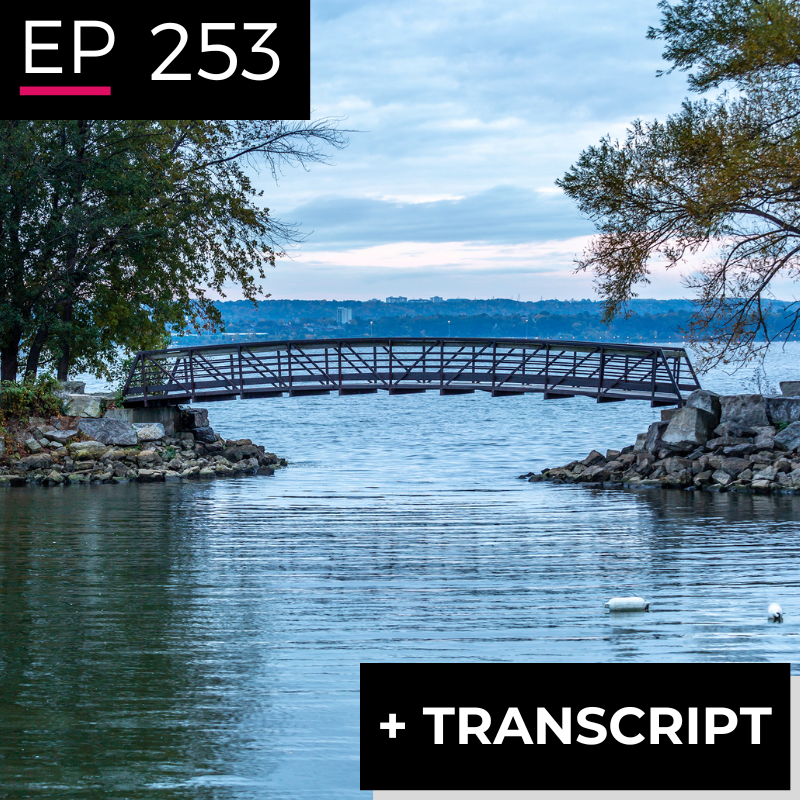
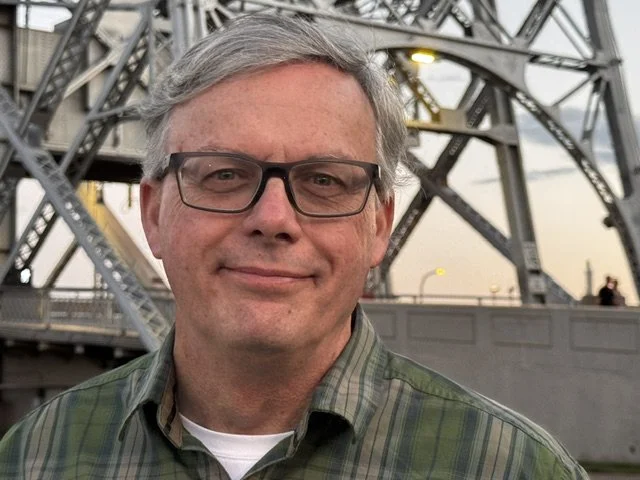
In episode 253, Peter Hayward speaks to Stephen Dupont who is an academically trained futurist, communications expert and professional speaker based in Minneapolis-St. Paul, Minnesota.
As principal of Dupont Foresight, he works with organizations to help them build bridges to quality futures. His work is grounded in more than 30 years of award-winning strategic communications experience, including corporate communications leadership inside a Fortune 100 organization, where he developed crisis scenarios, built long-range communications strategies, and learned firsthand how the gap between present thinking and future reality can make or break an organization.
Stephen holds a master's degree in foresight from the University of Houston's foresight program. He served as a 2025-26 Future Fellow of the United Nations Development Programme (UNDP) supporting the country of Brazil in long-range futures thinking. He currently serves on the boards of the Association of Professional Futurists (APF) and Teach the Future, a nonprofit dedicated to bringing futures literacy to kids and young people. He has served as the editor of Compass, an international magazine for professional futurists, since January 2022.
He is an accredited member (APR) of the Public Relations Society of America (PRSA) and was elected to its College of Fellows. He has worked with leading organizations including Mack Trucks, Thomson Reuters, Emerson Processing, FedEx, Rapala, Amana, and GMAC across industries ranging from manufacturing and transportation to financial services and outdoor recreation.
Interviewed by: Peter Hayward
Links
Transcript
Peter Hayward: Our future feels singular. Agency is about what I wish for and what I do. And yet we are never fully alone on our journey. Our present is someone else's future and our future will be the next generations past and present. Maybe the future is more connected that we think?
Stephen Dupont: I feel that The bridge metaphor is much bigger than the way we think about the futures. There's a author, John A. Powell, who's written books about bridging and about belonging and mattering. And when you build a bridge, it's very rare that to start on one side and you build it all the way over. It's actually about building it from both sides. You need the pillars on both sides to create the strength and the trust to hold the load, the energy to move the load over the bridge. So bridging is, in the context of foresight, it is about connecting people, connecting communities all together, and using communications to create this new dynamic of finding a high, a better future, a quality future that we all, where everybody benefits.
Peter Hayward: That is my guest today on FuturePod. Stephen Dupont who is a trained Futurist and communications expert. As principal of Dupont Foresight he works with organizations to help them build bridges to quality futures.
Peter Hayward: Welcome to Future Pod, Stephen
Stephen Dupont: Thank you, Peter. It's an honor to be here finally.
I think we've been talking about doing this for ... several years.
Peter Hayward: Yeah. It's an overdue one. And I'm going start this one a little bit differently just by thanking you, because I'm not sure... I’m going say I'm not sure anyone's done more to support Future Pod than you have through Compass.
That you've been a very, loyal amplifier and, communicator for us. Plus, you've also been probably my leading source of future guests, so thank you for all you've done for Future Pod
Stephen Dupont: It's been my honor, and for anyone who listens to this, I just want to point them to the very first issue of Compass that I edited in which I interviewed you about The Future Pod.
The credit actually goes to Wendy Schultz, because as I was going through the master's program at the University of Houston at the time, and she said, "There's this podcast you all need to listen to. It is really, really good." And that kind of started my journey with that, with you, starting to listen to those.
But then also when I when I was asked to edit Compass, I thought, "You're going to be one of the first people I want to interview for this magazine." So it's my honor to do this and to keep this dialogue going. I'm always happy to share with our readers of Compass all the different episodes that you do.
I think we have a common alignment where we want to hear all these different voices. We want to bring them into the town square and let them share their wisdom and their knowledge and their insights so that we all can benefit. We are all one community.
Peter Hayward: Yeah, I agree completely. So let's start with always the first question, the story question. So, what's your story, Steve? How did you get involved with futures and foresight?
Stephen Dupont: For those listening, I'm based in Minneapolis-Saint Paul, Minnesota. I'm in the heart of the Midwest in the United States. When I think about my journey into foresight, I think about this recent trip I just took. My wife and I, we drove 1,800 miles from Minneapolis to Tacoma, Washington, where we were going to pick up our youngest daughter who was done with college and bring her back.
And when I think of that – of road trips – it's, I love road trips. I love driving. I love driving hundreds of miles in a day, and I love, especially on the road trips, bridges. Yeah, big bridges, interesting architectural bridges, but the bridges that really astound me the most are the small bridges – the small bridges that we all take for granted, the ones that you cross over roads, streams, rivers – those gaps throughout the journey.
And for those who don't know what my last name means, in French it means "of the bridge." And actually, I'm a dual US-Luxembourg citizen, and so I think of the bridges that my ancestors created for me. My grandfather, Bernard Dupont, who came o- from Luxembourg as a 16-year-old, following in the path of his older brothers, and wound up in Kranzburg, South Dakota.
The Griffin family, among the first Irish settlers of Prince Edward Island. Louis Hébert and his wife, the first French settlers of Quebec. All of them made this crossing, and that's what I think about my journey as a futurist. We're crossing bridges. We're crossing from one place to another.
We're sometimes not sure where those bridges will lead to, but we put our hope and our trust that they will lead us to something better. And I want to remind everybody, my ancestors that I just spoke about – they didn't have the internet. They didn't have AI. They didn't have guidebooks to tell them where their journey was going to lead them.
They only had stories. They had stories of what might be. And I am, at my core, a storyteller. Before I became a futurist, I worked for 30 years in the world of public relations and advertising. I was a newspaper reporter, a business magazine reporter. I've written corporate books. And so I've always been involved with storytelling and creating stories that help people imagine something different, imagine a better future, imagine a different type of life.
And so that's how I got into the world of, of futures. I've always been that kind of a kid who loved science fiction, who grew up on Dune, for example who, you know, read Robert Heinlein and other science fiction writers, and, Kurt Vonnegut. I'm a big fan of his writing. And I just eventually found myself in my PR practice both frustrated and hopeful.
I wanted to take my clients to something better. All clients want something better, right? That's what they're paying you for, to create a better result. But what I wanted was for them to think longer term, further ahead. Instead of fixing the crisis at the moment. What could we do now to prevent the crisis in the first place?What could we be doing now that we could avoid a PR problem in the future?
And that's kind of what led me to more and more future thinking. And finally, back in 2017, on a ... I just saw, I saw ... I can't remember where I saw it, Peter, I saw that there was going to be a conference of the World Future Society in Chicago, and I think this is one of their last conferences.
It was a small group, nothing like the conferences of the past where they attracted 5,000 or 6,000 people. There were maybe 200 people there at most in a small conference room in downtown Chicago. Sat down at a table, and I sat next to Peter Bishop (the previous director of the University of Houston foresight program). And we got to talking, and he told me all about this great program at the University of Houston being led by Andy Hines.
And at that table, I started meeting all these other futurists, who when I when I started talking to them, I just felt like, "These are my people. Where have I been? I've been missing this, the, them all the time." It was like a connection.
And just FYI, behind the scenes here is my wife, Rebekah, who's my biggest champion, and she encouraged me to go on this trip to just explore it and see what happened, would happen. And she has been my rock behind all of this, and so have my kids too.
And I just really feel that it's just these little bridges that I've been taking one after another that have led me to where I am today, and I am looking so forward to the bridges ahead and where those might go. And I don't know where they're gonna go.
I still really feel like I'm very much in the infancy of my futurist career, even though I've been actively involved with it for about 10 years, talking about it, presenting about it, things like that. I still feel like, um, I'm just still in the early stages of that road trip. Yeah.
Peter Hayward: That's a beautiful introduction, Stephen.
I love the bridge metaphor. Yeah, it's a very evocative metaphor.
The other thing I'd say like any good futures thinker in my teaching of them, I always said you start with the past, as you started your story in the past and came into the future. 'Cause what I found is if we start from the past, then we see our future more through gratitude and responsibility.
And if we don't have that connection to the past, we can often think the future's there for us, for me. And I think going back and seeing your responsibility and your legacy brings forward futures thinking. Like you said, everybody wants to be in a better future. But I think there's a qualitative difference between a better future for me and how I think of that, which is, which can be good, or the person who says, "No, I'm responsible for this future 'cause I received this future from people before me, and I'm gonna pass this on to the people after me."
Stephen Dupont: There's so much to respond to there. That's great. I think of it as quality futures. We ... And part of that, uh, this i- part of that journey as I think about it is wrapped around the story in my head of Zen and the Art of Motorcycle Maintenance, which, in which Robert Pirsig, the writer, he starts here in Minneapolis and on a motorcycle goes all the way out to San Francisco as he explores the concept of “what is quality?”
And I think that we all want a quality future We all want to leave a legacy of a better future for future generations. That's, that is why I'm in this. I'm here for my kids and my nieces and my nephews. I feel a great responsibility to do something – anything – to help create a better world. And I have to tell you, Peter, there was a time where I felt like I don't know if this generation that I'm in right now (the Boomers and Gen Xers) is capable of leaving a better future for our kids.
In other words, I became more fearful for my kids' future than the way I have been living. So that's, that is my motivator, and it ties directly back to my ancestors. They all left places. It's movement, it's energy. They all sought a better future, not only for themselves in the present, but also for future generations, for their kids and their kids' kids.
And I really feel that as a futurist, this is our calling. And I also feel that there's a spiritual dimension to this, an energy behind this journey that I've been on – these road trips. I'll tell you, my wife and I, we stopped in Kranzburg, South Dakota, and we went to the local Catholic church where many of my ancestors are buried.
And, you know, you walk up to the grave site and you feel something there. There is a thin place there where you can have a conversation. And I remember talking to my father's uncles who are buried in Kranzburg saying, "I'm finally glad to meet you, and I hope to leave this a better legacy or continue your legacy, and to continue to create a better world for our kids and all of our kids that are in our family."
I feel that the bridge metaphor is much bigger than the futures, the way we think about the futures. There's a well-known author, John A. Powell (author of Belonging Without Othering and The Power of Bridging), who's written books about bridging and about belonging and mattering. And bridging is about, you know, when you build a bridge, it's very rare that to build a bridge, start on one side and you build it all the way over.
It's actually about building it from both sides. You need the pillars on both sides to create the strength and the trust to hold the load, the energy to move the load over the bridge, right? So bridging is, in the context of foresight, it is about connecting people, connecting communities all together, and creating this, using communications to create this new dynamic of finding a better future, a quality future that we all, where everybody benefits.
I think one of your questions is what's my approach? I still feel that I'm developing that, but I feel that this is a direction I'm going – fusing bridging and foresight and mattering. Every person wants to matter. They want to know that they matter.
They want to know that they are understood. And foresight, I feel, is a mechanism – a tool – that can help facilitate that process to get us to a, a higher quality future. And it's, one of the things I think about is I know that a lot of us in doing foresight, we think about the signals of change that we're seeing, right?
What I would call for is what is the energy underneath signals of change? What is the human energy that creates optimism and hope on one side, and fear and anger on the other? And I'm not trying to get into Star Wars here. But, the Force. But I feel like- If you look at any religious text out there of almost every faith, they all talk about the need to eliminate fear.
Let me bring that back to management, management practices. Edwards Deming, who's considered the f- the godfather of quality- One of my
Peter Hayward: heroes.
Stephen Dupont: I love him. Of his 14 points, I think it's point eight, not sure, I I'd have to look back, but you ...if to have quality in an organization, to create quality products, to create quality innovation, you must eliminate fear from the organization.
You must get it out. And I feel that is one of the biggest roles of futurists, is to challenge leaders about the fear that lies in the energy within their organizations and to get it out. Push it out. Right. Because when you get the fear out, then you're able to start moving toward the bridging.
You're able to start building those bridges you need to for a quality future.
Peter Hayward: Yeah, I think that's a good one. Again, I think this conversation's going to be responding like a table tennis match. Um, I think the fear one's interesting. I mean, Deming is one of my heroes as well, and I see the connection to Pirsig and, and Zen.
Fear for me is an energy form. It's information. It's around what you do with the information. Because a lot of things we should be fearful of. They are correct signals for us to act in a certain way. Yeah. And other fears are what I used to refer to as the child when you're in bed and you were convinced there was a monster under your bed, and you were too scared to get out of the bed and turn the light on. And there are those fears that you have to act in order to remove the fear.
The fear comes from inaction, not action. And then there are the fears that come from action that should be around are you sure? Are, you know, are you calibrated? Are you prepared? Are, so there's a beautiful, again, I don't love fear, but to me fear sits on that pivot of fear that helps us and fear that hinders us.
Stephen Dupont: Yeah.
Peter Hayward: And again-
Stephen Dupont: Yeah ...
Peter Hayward: question I want to ask just to drill back into, just n- not totally finished with you. When you sat with Peter on the table and you had the coming home experience that I think literally I had when I first sat in a classroom with Richard Slaughter. I've been described by innumerable guests the sense of finding the tribe – coming home.
Stephen Dupont: Yeah.
Peter Hayward: For you, what was that and why? What was it sitting with futurists, with you that caused you to feel that you'd come home?
Stephen Dupont: You know, I don't know if I've ever really have answered that question for myself. I just remember when I sat down with Peter, remember he's not only, he's not only telling me about the University of Houston program, but also he was really getting into the Teach the Future, his organization.
Which by the way, I'm on the board of directors for. And I think there was something where I was just, I think talking to him and, and I remember asking him, "Do you think we could teach futures to eight-year-olds?" And he said, "Absolutely." And that just kind of like, pew. The plates started falling off my eyes.
[I thought,] wait, there's something more to this. Why can't we teach futures to kids? And I think in my brain at that very moment, I was thinking about my own education here in the United States, in Minnesota. And there is so much about our own history that has been hidden from us, not taught.
I live here in the Great Plains. And if you ever read books about the indigenous cultures here, the Lakota, the Dakota…Bury My Heart at Wounded Knee is a great book to read. You, we never were taught about the genocide of the indigenous peoples here in my country growing up. And so I was kind of, I think, grappling with that at that very moment with… if we can't teach our kids truthfully about our past, how can we expect them to have the imagination to think honestly without fear about the future?
And so that was one conversation with Peter. And then I, you know, I started running into folks from all different types of organizations. A professor at the University of Notre Dame who sat next to me. Some futurists from, I think the Bahamas, who were thinking about the future of their country.
All these different folks in one room, and it was just like a, a banquet, a feast of just all these different ideas. I just was like, "Wow, I can't believe we're all in one room talking about all these different things. This is where I wanna be."
Yeah. And I think- Yeah ... part of that, Peter, too, is years before that, several years before that, many years before that, I worked in a law firm.
A big corporate law firm. One of the biggest ones here in the Midwest. Certainly one of the top 200 in the, in the US. And I started a a speaker series about innovation in biotech and biomedical. Uh, innovation, right? And we'd invite speakers in, and it just set off and I started reading, started reading at that time all, you know, Scientific American and all these different publications.
Like, all these different things that were happening. And I would go to the managing partner and say, we should be thinking about if we really want to position our firm as truly unique, building our brand as a tech law firm. We should be talking about these other issues like..."
Peter, I think this was in 2003, 2004. I said, "We should be talking about, uh, real estate on the moon. We should be talking about, legal issues, IP issues for, uh, cell fuel. Battery cell fuels. You know, what happens if they, they combust. You know, things like that. All these issues." And then I remember the managing partner saying to me, "Steven, that stuff is, like, so far ahead. No one, none of our clients wanna know about that stuff right now."
And that's kind of like, I think the story right there. I loved the lawyers. I loved that law firm. They're great guys. Great people I worked with. But not feeling like I could- We could push this here. Then being in this other room and many years later like, "Oh my gosh, we can talk about all these ideas. In fact, they're welcome." The the stranger the ideas, the better maybe.
Peter Hayward: Yeah, Jim Dator and his any useful idea about the future should appear ridiculous on first glance, otherwise it's not useful enough.
Stephen Dupont: Yeah.
Peter Hayward: I'm gonna pivot you into... now, I suppose you'd probably call it the second question. We've already touched on it, but I'm interested in talking about storytelling.
I'm gonna ask you- Yeah ... and I think, you know, you are certainly, certainly eminently qualified to help us understand stories. So I'll put a proposition to you that at its core, futures work is around creating stories, and it's stories of- Yeah ... where we've come from, where we are, where we're going. It's stories of desire and hope for things that we could aspire to.
There are fear, there are stories of fate that we use to create action to prevent, and that's kind of our stock in trade, the scenario, the forecast. Yeah.
And then, then as the world just keeps rolling, we keep telling the same stories over and over again. But we also have to tell new stories.
So, my question and I, and [my] real genuine question to you is, as a community, as a practice, are the stories we're telling sufficient, or do we need to do more to become better storytellers?
Are there things that we can learn from to become better storytellers? And then you from Compass, what are you sensing... Are you sensing changing in how we're telling our stories?
Stephen Dupont: There's a lot of questions in there. Part of me, I come from the creative industries.
For most of my career, have hung around creative people. You know, the, for those who wanna look into my LinkedIn profile, I guess, I've done, uh, you know, I've done PR for brands like Rapala fishing lures, and Toro lawnmowers and snowblowers, and Mack Trucks, and all kinds of different brands, right?
And for every single one of them, you're trying to tell a story. But I think there's two things that I realize over my career as a storyteller and as a creative. The best stories are the ones that come from the heart, that are authentic, that people can relate to. It's the stories of those little bridges, for example.
You're going across this, you're driving across a freeway and you see this bridge, and if that bridge did not exist, well, how would people get across, right? Where are they going from one place to another? One of the things I think, when it comes to scenarios, it's, and I agree with this, is that yes, to be believed, to be taken, to be credible in this profession, you need to be rigorous.
If we're going to communicate with the C-suite – yes – we need to use that data. We need to work it into our stories. We need to be solid, have solid data that backs up our stories, right? In fact, sometimes the, when I create a story, I look for the little, what I call the little golden nugget. The little, and maybe this is me, my Irish heritage, that little golden nugget of truth.
You know, it doesn't have to tell the whole story, but there's a little something there that lets your imagination run wild, right? And I think that we have to be careful as futurists. We run this fine line between being management consultants, doing what the management consulting firms want us to do with their hardcore scenarios, and on the other side, allowing our imaginations and our creative side to take us to places where we might feel uncomfortable.
And I think that is the fine line of being a futurist, is walking this line, crossing this bridge sometimes of discomfort between, things that could be very hopeful and possible and other futures that may not be, and trying to find that right path through it. So your other question here was…
Peter Hayward: Are you sensing we are changing as a group of storytellers? 'Cause you're now looking like I am. I'm looking at, I'm hearing voices that are somewhat different from the voices I started this with when we started this, seven years ago. Yeah. I would imagine you're seeing... things different from the editor's desk.
Stephen Dupont: Oh, certainly. And I, with Compass, I want anybody who's listening to this to know that the thing I love the most about Compass is when a futurist comes to me and publishes their first article. I have the honor of working with them and letting them tell their very first story about how they think about the future.
And there's no greater honor for me than that. And as you know, Peter, you read, you've read the magazine. You know, we have a wide range of people represented in every issue. Richard Slaughter, Jim Dator, Sohail, you name them. Patricia Lustig, all these greats of the field.
But also, I want to make sure that we make room for the next generation of futurists, and there are all kinds of other wonderful journals out there for foresight and future studies, and we need them. But what is special about Compass is it is in a way, it's not peer-reviewed. I'm also not putting out a cattle call here for articles, [either].
What I do is I watch people at conferences, on their LinkedIn, I bump into people, I tap them on the shoulder, and I say, "You got a voice…you got a story to share, and I want you to write it up for Compass and share your story." And it's a town square. We're coming together to respect and honor each other's stories, to bring this diversity of ideas together, and it's a multi-generational publication.
It's a publication that represents the entire world of futurists. I try in every issue to get people from all parts in there. But I'm also trying to make sure that it is a magazine that is practical too. I want those articles, I want whoever my reader is, they read something they can like, "Oh, I can start to use that in my practice today."
I want them to [share] thoughtful articles as well as thought-provoking articles that keep challenging us, that keep pushing the edge. And I think I remember asking you once, what are the edges of foresight? What's the edge? And I think at that time you'd mentioned to me something about maybe, you know, the, that, that intersection between foresight and spirituality, something like that.
And I really do believe that. That is an edge. But I think there's also still edges to be explored in how people get along with one another, why people don't get along with one another. Why we create futures where people don't matter, where we don't we don't bring everybody along in the process.
And, some of this is very basic human stuff -- that we're still dealing with. It goes back ages. And, and you would think I have a really good friend, he's a, a very, he's a top cancer researcher, and he likes reading Compass. I shoot him a copy of it. He loves it. And he's over at the University of Minnesota, and I asked him once, "What do you think about the future?"
And he said, "Sometimes the future is really disappointing." Like, where are the flying cars? Why haven't we solved cancer yet? We've been talking about being on the moon and going to Mars. Why haven't we done that yet, right? All this stuff. Why haven't we solved Alzheimer's disease? Peter, one of the very first PR campaigns I worked on was one of the first national campaigns addressing Alzheimer's disease back in 1985.
And I'm still, I'm still shocked today that we haven't figured that out yet, right? And so, going back to the question about Compass, I want to make sure that this is a place where we can share these ideas, and there's no right and wrong necessarily, but we do respect one another.
We take in these ideas, and we can all learn from them, and hopefully create those quality futures that we all really want, especially for our kids.
Peter Hayward: Yeah. I think you touch on an interesting point, which I've noticed that a lot of people, I'm not going to call them naive, that's, that's not right. But people who naturally think about the future are often keen to get to the future to get away from the present.
It's almost like the future... it's like crossing a bridge. Look, it's crap here. Let's cross the bridge and go to where it's nice, and we'll leave the bad behind and we'll arrive in this good place. And so there's this very, you know, nativist idea that the future will be better because we'll leave behind what's wrong with the past and present.
And you talked about it, in that America hasn't been honest about its past, as if we can go to... a shining future and not resolve the things in the past and bring them with us as part of our story. Or that we can leave a present where we don't agree and suddenly, miraculously, magically start agreeing in the future.
I actually wonder whether one of the things about the future is it sits there as contrast and, I'm going to say a curser of unless we get better in the present, we aren't getting to a better future. That, look, when we talk about ... futures where we live differently, relate differently, it's a mirror to how we are now, and for us to act now.
That the future wants us ... If we want a better future, then we need to get better now.
Stephen Dupont: I'm glad you brought that up because when you think of a bridge, a bridge that you trust, bridges aren't meant to go just one way. You go two ways, right? And so if we think of bridges in relation to foresight, that bridge should allow us to go back into the past, to explore that past so we can, as we explore the future, we have more context, we have more depth, we have more understanding to create the future that we want to go to.
And when we come back to that past, we have better context there too. The bridge is actually the present. It is that is now. The bridge is the metaphor for action, because I feel that foresight without action is actually just an exercise. And if we think about foresight being used by organizations, we're not here just to crank out another report.
We're here to persuade a CEO or a leader to take some action towards something, but also possibly to look back and think about what is the good we can take with us, but then also what, let's take an honest look at what hasn't worked for us too. Now, I have a friend who's a futurist at the Mayo Clinic, and he was asked one project, look at the future of hospitals 100 years from now.
But then he, the CEO liked that project so much, he asked him, "Now I want you to look back at the past of Mayo Clinic and tell us what hasn't gone well," right? I think that's a fantastic exercise for futurists to learn from the past so we can build the better bridges to the future. And it's not just one bridge, it may be multiple bridges, multiple communities, multiple futures.
I'm so glad you brought that up, and this kind of ties into my experience on my UNDP future fellowship. So we…for the better part of a year, I worked on a small team with Bronwyn Williams and others that you have interviewed, Ingrid Furtado, and a number of others on my team [Mariana Costa, Shakil Ahmed, Jonathan de Araujo de Assis].
And we were looking at 16 themes for the country of Brazil. The client was the the government of Brazil. And I have to tell you, I felt it was very exciting to be on this project, Peter. It was very interesting. It was very mind expanding for me to be involved as an American peering into the world of another country and really going in depth into it.
But one of the more shocking things I found out as I got into it was, the United States, we have been grappling, and we are still grappling with our slave history Then I [am] looking at the country of Brazil here and I'm learning, wow, again, something I never learned, Brazil had, you know, they ended slavery back in 1890. Not many years after the US did, right? And, we were all part of this gigantic slave system, right? And it was just the discomfort I was feeling going as I was learning about all these parallels between Brazil and the United States. It was really hard to describe for me, but this is part of that process of bridge-building where we, we did interviews with experts, we did all eight workshops, we surveyed hundreds of people, we got all this input. And as I started feeling the voices of people involved in what they want for the future of Brazil, I started to feel more hopeful for Brazil as we put together the report.
And then I think what was really interesting here is, as we put together that document, is to have the involvement of officials from the government thinking through, "Now where do we take this? How do we start building our foresight capacity so we can be a [better] country," I think a lot of Brazilians do not like this phrase, a country of the future, but where they can start shaping their future.
Brazil can start doing that themselves rather than allowing others shaping it for them, right? And this is something in the United States under our current administration, if you look into it, uh, we've lost a lot of futurists in government, and we're not thinking ahead. And I think I'll just leave it there.
Peter Hayward: I think he touched on another one too that I get as I get older and, you know, time always wins. But I started to see a behavior where people wanted to talk about the future they wanted to create as if they themselves right here now were going to be in a different future. Whereas-
Stephen Dupont: Yeah ...
Peter Hayward: if there is a different future, then you are going to be different in it.
You can't change the world you're in and have stable who you are. The process of truly going to the future is to change who you are. And there's actually a preparedness, I think you described this, there's a preparedness as a practitioner that when you're working on your future, it's going to change who you are, as Brazil changed who Steven Dupont [is].
And that's a very challenging role to take because you're not in control necessarily of how you're changing when you do work on the future. But I don't know how you, I don't know how you don't... Sorry, I'll start again. That's a paradox that I think we have to live with and, and work with intelligently
Stephen Dupont: Yeah, I agree. I feel that, you, as we ... I feel that as a futurist, what we're really here to do, and I don't mean to keep mixing the religious metaphors or spiritual metaphors all the time, but I really do feel that we are in the business of transformation. I feel that everybody should have the right to be future literate.
It's a human right. And we should all… leaders should all be encouraging us to be thinking about the future and acting together toward a better future. And I feel that that's why we need organizations like Teach the Future to bring it, start bringing it down to ... kids get it.
Peter Hayward: Yeah.
Stephen Dupont: Right? And we need, we need our kids to start thinking about where they want the world to go. What they want out of it. And they need to demand more of us older folks here to start making the changes that will facilitate a better future So
Peter Hayward: It's good stuff, isn't it? I can sense why you got excited about getting involved in the community.
The communication question, I'm talking to a absolute communication master. The communication question, how do you describe what Steven does to people who don't understand what Steven does?
Stephen Dupont: I will say that whenever I say I'm a futurist, I always get those like, "What?" It always is a great icebreaker actually nowadays. But you know what? It's, it's really funny that when you start saying that you're a futurist, people get it. They like, "Yeah, we need..." Like my f- my friend the cancer researcher, "We, we need to...
Please come in and talk to our organization about the future of, where you see the future of cancer or things like that." People want it. They want, they are hungry for it. And I don't know if that's because they're trying to deny, they're in denial about our present or because they really feel that they want to see things different.
They want to see things happen. They want to see that change. And, I remember, Peter, many years ago around the dinner table, we were talking our, talking with our kids. I think this is back around 2017 or so, and my oldest kid was like, 17, 18 years old, in high school still, and we were talking about Mars.
And I said, "If you had the chance to be among the first colonists of Mars, it mean, it means never coming back, never seeing your parents again, would you do it?" And my, my oldest kid, AG, they immediately said, "Yes, I'm, I'm going. I'm ready." And which is ironic as I think about my ancestors. My grandfather coming over at 16 years old to United States, never went back to Luxembourg.
Maurice or Patrick Griffin and his wife never went back to Ireland. Louis Hebert never went back to France. They were, they moved on. And I think that people really want, as I talk about it, about what I do, there is a hunger for the possible. They want know what bridges can we build next, and they want to see, I think a lot of people, they have in their mind these great spectacular bridges like the Golden Gate Bridge. That's going to get us to the future. That's going to get us to Mars, right? But the truth is, you need all these small bridges to get you there. You need to test the rockets a thousand times before you send actually the one to go to Mars, right?
You need to make these little leaps here and there to get to where you're going. And so I don't maybe, I, you know, as I think about what I do, I know it doesn't sound very sexy, but I think helping people build these little bridges is what I do best.
Peter Hayward: Well, you built a huge bridge in the last omnibus episode of Compass, and I've closed with this one.
I mean, I looked at how big that thing was, and I'm sitting there going, "How do you find the time, energy, inclination, motivation, just the ability?" I mean, that was a massive piece of work. Or was it somehow not as big as it ended up being, that suddenly it's a thing that others built with you, for you?
Stephen Dupont: I have a hard time turning people down. It's the truth.
So for anybody, for all your, your listeners Compass is a complete volunteer effort, by the way. I don't get paid a dime to edit Compass. It comes out four times a year, typically have about 30 articles per issue, and I just feel it, for right now, is part of my education, my learning right now in terms of becoming a futurist, is to create dialogue with all these other futurists around the world and invite people into the square and start talking and start dialoguing and, and sharing ideas.
And that's something I really love doing, and I'm really honored that I get to do it. And I don't know how long I'll do it for, but I am coming up, I think our next issue, which will be the future of cities, will be our 22nd or 23rd issue, but I will be crossing the 500 article line. Wow. So since I started editing it in, the first issue was February 2022.
Uh, we've done, we published 500 articles, and I really feel that, if you look at the range of folks that have been represented, the range of ideas if you were to read every one of those issues... it's a education in and of itself. And I will tell you that my personal joke is I'm probably the only one who actually ever reads every single article.
Although Richard Slaughter, he does a good job. He, we get on the phone every once in a while and we talk, and he's, I think he actually re- reads through most of them. And there are others I'm sure. But I just have a lot of fun doing it, and I am so grateful to the folks at the APF that let me do it. And I'm so grateful for all our readers and all of our contributors because it's really a community effort.
It's everybody contributing really great articles and really great thinking. And that's what I love. I love seeing those viewpoints, that thinking. You know? I'll tell you, Peter, when I was a, in a freshman in college, I was enrolled in the journalism program at the University of St. Thomas. Father Whelan caught me on the quad one afternoon on a bright sunny May day in Minnesota. And I was at that time thinking about switching my degree to go into business administration. My dad always said, "Hey, you can't go wrong as an accountant." So anyway, Father Whelan, he said, when I bump[ed] into him and he says, "So you're gonna continue in the journalism program, right?"
You know, and he's this 6'3" tall guy, imposing. You don't mess with Father Whelan. And I said, "Well, I was thinking about business administration." And he said, "You know what? If you stick with me, Dupont I will teach you how to think because through your writing, that is how you learn to think.
And to me, that has been one of the greatest golden nuggets of my life, learning to, to write, to think through my writing and to think through the reading of others.
Peter Hayward: Awesome. Well, I for one am very, very grateful and the community are very grateful for the work you do with Compass. And, also on behalf of the Future Pod community, I'm grateful that we finally had a chance to have this conversation.
So thanks for, thanks for spending some time with me and the community.
Stephen Dupont: Well, thank you. And, and thank you for all the work that you do on this. I totally ... you actually have a job I love. I love interviewing people. That's the thing I probably do best, and the only, the second, the only, the only other job I'd really want in the world would be to be the bridge operator of the aerial bridge in Duluth, when the big ships come under and you get to honk the horn, "Welcome, welcome to Duluth."
So but thank you for, for all that you do, Peter. We really needed this, and need your podcast, and we can all learn so much from it. So, it's been really great, and great to collaborate with you over all these years.
Peter Hayward: Thanks, mate.
Peter Hayward: Thanks Stephen. The Compass Magazine that Stephen edits is such a wonderful resource for our community. Check it out. FuturePod is a not-for-profit venture. We exist through the generosity of our supporters. If you'd like to support the pod, please check out our Patreon link on futurepod.org. I'm Peter Hayward. Thanks for joining me today. Till next time