In episode 252, Tom Lombardo returns to FuturePod after a six year hiatus. Tom discusses his view that the world's problems stem from failings in human consciousness, and that deliberately evolving it would transform life on Earth for the better consciousness.
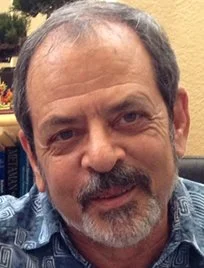
Thomas Lombardo, Ph.D. is the Director of the Center for Future Consciousness, Editor of Future Consciousness Insights (previously Wisdom and the Future), and Professor Emeritus and Retired Faculty Chair of Psychology, Philosophy, and the Future at Rio Salado College, Tempe, Arizona. He is an Executive Board member and Fellow of the World Futures Studies Federation, a special honor given to members who have made a globally recognized original contribution to futures studies. He is also past Director of The Wisdom Page.
A national and internationally recognised researcher, writer, and speaker, he has published thirteen books and over sixty articles, and given roughly the same number of professional national and international presentations on topics including: the history of scientific and philosophical thought; wisdom, character virtues, and the future of education; future consciousness and contemporary futurist thought; dystopian and utopian thought; theories of the future; the evolution of science fiction; and the future evolution of consciousness and mind.
Interviewed by: Peter Hayward
Bibliography
Center for Future Consciousness Website: https://centerforfutureconsciousness.com/
Tom Lombardo YouTube Channel: https://www.youtube.com/channel/UCHoHbont_ku9neX15fxyVxA/featured.
John Clute (others): The Encyclopedia of Science Fiction: https://sf-encyclopedia.com/ .
Lombardo, T. (2017) Future Consciousness: The Path to Purposeful Evolution. Winchester, UK: Changemakers Books.
Lombardo, T. (2018a) Science Fiction: The Evolutionary Mythology of the Future - Volume One: Prometheus to the Martians. London: Changemakers Books.
Lombardo, T. (2018-2026) Consciousness and the Future of Consciousness Webinar Video Series. https://www.youtube.com/playlist?list=PLIvBA8u8-18SoW-MzHhUjSwiWWi9EzN-3
Lombardo, T. (2021a) Science Fiction: The Evolutionary Mythology of the Future - Volume Two: The Time Machine to Metropolis. Bloomington, IN: AuthorHouse.
Lombardo, T. (2021b) Science Fiction: The Evolutionary Mythology of the Future - Volume Three: Superman to Star Maker. Bloomington, IN: AuthorHouse.
Lombardo, T. (2020-2025) Evolution of Science Fiction Webinar Video Series. https://www.youtube.com/playlist?list=PLIvBA8u8-18SiFnH9Y8adqwG2fZA0i074 .
Lombardo, T. (2024-2026) The Future Evolution of Consciousness: Draft Chapters. https://centerforfutureconsciousness.com/the-future-evolution-of-consciousness/ .
Transcript
Note to Readers and Listeners to the Podcast: See the bibliography at the end of this transcription for a list of books and videos mentioned in the text below.
Peter Hayward: Some say we are fast becoming a post-literate society, at risk, to quote Neil Postman, of amusing ourselves to death. We may be trending to that , but the future is still open, to a degree
Tom Lombardo: When I've been writing this book a strategy I took was I wanna think out what would be a preferable future of consciousness, not just simply, make probabilistic predictions about what I think could happen. What I think would be preferable. It seems to me that all of the fundamental problems and challenges in the world today, even if we think they're physical or economic, really come back to failings and weaknesses in human consciousness. So I present as a argument that if we purposively evolve our consciousness, we will have a tremendously positive impact on the quality of life, human life, and life in general on the Earth. What I'm presenting is a proposal for how to improve our present reality and create a positive future for us, which hinges on articulating a vision of how we should be evolving our consciousness into the future.
Peter Hayward: That is my guest today on FuturePod. Tom Lombardo returns for a chat six years after our last conversation
Peter Hayward: Welcome back to FuturePod, Tom Lombardo.
Tom Lombardo: Hello, Peter
Peter Hayward: Great to have you back. Over six years since we last spoke. You were way, way back in episode 56: The Purpose and Value of Science Fiction.
Tom Lombardo: Yes. That was 2020.
Peter Hayward: I suppose it was COVID. I suppose it was COVID around that time. We were sort of COVID-ing and locking down and doing various things, so.
Tom Lombardo: Yes. That's about that time, right.
Peter Hayward: Yes. You were in Phoenix, and you were loving and living in Phoenix. So just broadly, how have you been in the last six years?
How's your life been? What's been keeping you happy and busy?
Tom Lombardo: A number of different things. At a mundane level, about six years ago we bought a new house, and I was able with this new house to create a separate and unique science fiction room, which I now have. (It’s a great space for cosmic meditation and contemplation.)
Peter Hayward: Cool
Tom Lombardo: That’s one thing that emerged in the last six years.
I think roughly about six years ago, I was doing up my webinar series on the evolution of science fiction, which I eventually completed, covering the history of science fiction up to the present. In that series there are over 30 videos, which are all up on YouTube. (See link in the bibliography) Also roughly about six years ago, I started to work on a book on the future of consciousness. (See link to draft chapters in the bibliography.)
Just to make a distinction, because people often mix up the two concepts, there is the topic of future consciousness, which I would define as consciousness of the future through anticipation, imagination, foresight, and other capacities. I use the expression “future consciousness” for that. (See my book on Future Consciousness in the bibliography) But there's also the expression, “the future of consciousness,” which is thinking about how consciousness, broadly defined, could evolve and transform in the future. So one could study consciousness of the future, which I have, but you could also study and think about the future of consciousness.
Still—I don't mean to make things sound convoluted— if you think about the future of consciousness, you are engaging in consciousness of the future, particularly the future of consciousness.
So about six years ago I had started to think about and work out a book on the future of consciousness. Of course, that brings up the issue of what is consciousness just to begin with. So I've been working on that project and I started a webinar series on the future of consciousness about a year and a half ago, and there are over ten videos up on my YouTube channel on that series. (See the bibliography)
On the science fiction end of things, after I completed the YouTube video series, the last, three years, roughly, I've been working on my next book on the history of science fiction. And for the last few years my reading and writing on that end has been on the Golden Age of science fiction, which is 1938 roughly to 1950. (See bibliography for references to the first three books I published in this history series - Science Fiction: The Evolutionary Mythology of the Future: Volumes One through Three.)
So I've been immersed in reading lots of interesting stories and novels that I never read before and rereading lots of classic stuff that viewers and listeners may be familiar, for example, rereading for the third time Asimov's Foundation series and rereading Heinlein's series of future history stories and lots of other significant writers of the 1940s, such as Kuttner and Moore, van Vogt, and Russell.
I'm coming close—hopefully this year— to finishing both books, the one on the future of consciousness and the one on science fiction of the Golden Age, the 1940s primarily. Somewhere along the line I developed this habit of working on two different major projects back and forth simultaneously.
As opposed to just doing one project at a time, I do two and just oscillate back and forth between them, giving myself a break from one and going over and working on the other. This last week I've been working on the future of consciousness book. Last week I was focused on the science fiction book.
My wife Jeanne—I’ll throw her into the picture—has had a very productive five or six years as a ghostwriter. She’s developed this new profession. After she retired, she started to ghostwrite, and she keeps getting more and more clients.
So the two of us are busy and disciplined. She goes in one room and works on her latest book that she's ghostwriting. And I sit in my study and work on either the future of consciousness or science fiction.
Note to Reader: Also during the last five years I have written roughly a dozen new articles in diverse areas of futures thinking. Many of these articles are available for reading on my Center for Future Consciousness website—see the link in the bibliography—listed under “Educational Resources/New Articles” on the home page.
Peter Hayward: Sounds good.
Tom Lombardo: And in the last six years, we got a cat too.That’s a little personal tidbit to throw in here.
Peter Hayward: Let's start with science fiction, because I'm probably typical of a lot of people in our field. I have read and continue to read and reread science fiction, since I was a young child to now as quite an elderly gentleman still rereading science fiction.
You talk about a Golden Age. So does that mean that science fiction—to use the Indian kind of Varna model—is cycling down to lower levels? India talks about the golden age, followed by the silver age, followed by the tin age, etc.
In other words, in each cycle we get less. We're working with a weaker alloy. Is science fiction no longer as potent reality as a kind of literature and as a link to future consciousness as it once was?
Tom Lombardo: No, actually the expression Golden Age is kind of an accident that took place in the history of science fiction.
The expression came about, because in 1938, John Campbell, who was the writer of the classic story “Who Goes There,” (as well as many other popular stories and novels of the 1930s), which was made into the movie The Thing, became the editor of Astounding Stories, (the title later changed to Astounding Science Fiction). When Campbell became the editor in 1938, he drew in a set of new writers who became very famous, like Asimov and Heinlein and other people such as van Vogt, the Canadian science fiction writer.
People began referring to that era of the 1940s, when Campbell was the editor of Astounding, as the Golden Age of science fiction. But by no means was the period in any sense the pinnacle of the evolution of science fiction.
John Clute, who is one of the editors of The Encyclopedia of Science Fiction (see Bibliography)—which is a great resource by the way—used the expression the “Silver Age” of science fiction to refer to the period of 1950 to around 1965, which came right after the Golden Age. Myself personally, I think the stories of the Silver Age overall were of a higher quality than the stories of the Golden Age, and that's not to diminish the Golden Age, but clearly, in my mind at least, science fiction evolved in the 1950s and '60s.
And layered on top of that—just to complete an answer to your question—once I took a break from reading science fiction for a while back in the late 1970s to the early 1980s, and when I came back to science fiction toward the late 1980s/early 1990s, I was flabbergasted at how much more intricate, sophisticated, literate, and scientifically and philosophically complex science fiction had become in the late '80s into the '90s.
So if you were to look at the classic novels of the late ‘80s and early 1990s, they were at a completely different level of sophistication. We had Kim Stanley Robinson's Mars trilogy and Dan Simmons' Hyperion series, and Vernor Vinge's A Fire Upon the Deep, and Stephen Baxter's Xeelee Saga, and these novels were much more developed and complex than anything that was written back in the 1940s.
So science fiction definitely has not devolved. Science fiction has the quality, which I think is true perhaps for also other disciplines, including future studies, of repeatedly reinventing itself. People do things for a while—great stuff is produced—the era was great. In the 1940s Big Band music was great.
But not to diminish the 1940s, in the 1950s we got rock and roll, which was a qualitative jump in a way from what was there in the 1940s. Similarily science fiction has repeatedly reinvented itself. In the '60s it was the New Wave. In the '80s it was cyberpunk. So different periods will show creativity and inventiveness, and not to detract from what happened before, but each new era will show further creativity, evolution and transformation.
So reading science fiction written in the last five to 10 years, we find really a lot of phenomenal stuff that's been produced, like Adrian Tchaikovsky's Children of Time and Children of Ruin. Another one of my favorite recent novels is Charlie Jane Anders’ All the Birds in the Sky. Also I recommend to lots of futurists to read the recently published The Ministry of the Future by Kim Stanley Robinson.
So the Golden Age was an accidental designation given to the period when Campbell dominated the science fiction pulp magazines as the editor of Astounding Science Fiction. That's why the era ended up with that expression. It was not the pinnacle of science fiction but it still was a great period.
Peter Hayward: This is predominantly a literature genre that it has its canon and it has developed and possibly reached a level of high point in terms of the quality and complexity in the '90s. What now? As I'm aware, and I'm sure you are, the data is saying that people are reading less. Certainly men are reading significantly less. We can see the literary field moving over to topic areas that women read in numbers, in which I believe their top two are true crime and fantasy.
Obviously they read science fiction too. What happens to science fiction as a kind of literary genre and a bed of creativity and ideas about the future if we become a post-literate society and prefer things in image and video?
Tom Lombardo: Yes. One of the things I say about science fiction—an advantage that it has over the academic field of future studies and foresight—is that science fiction presents a psychologically holistic array of different modes of expression. There's the literature, but there's also the cinema.
Additionally, there’s been the comics. More recently there’s been the video games. There is also all of the commercial paraphernalia of science fiction.
Most people, I think, who are familiar with science fiction encountered it through the cinema as opposed to literature. Science fiction, ever since the time of Star Wars in the late '70s, has become the dominant form of cinema in general. If you were to look at the best biggest money-making movies every year, they're gonna be science fiction more often than not.
I would consider all the Marvel superhero stuff as science fiction, which grew out of science fiction in the comics. So people may not be familiar with science fiction as much through its literature, but they clearly are still participating in it and familiar with it through the cinema, which involves this shift from—as Leonard Shlain put it—the alphabet to the image as the fundamental mode of consciousness. So we've moved away from the literate toward visualization as a primary central mode of consciousness. But I believe more science fiction novels and stories get written every year than the year before. I don't know who's reading them, but more of it is being produced year by year.
At the time of Campbell with Astounding Science Fiction, there were a few magazines for reading science fiction. But now there are huge numbers of different science fiction magazines and huge numbers of novels that come out every year.
I will say though that it is a depressing reality to me that there are indications that we are becoming collectively—not individually of course—less literate, whether it has to do with reading science fiction, reading mainstream fiction, reading history, or whatever it is that we happen to like to read.
That is depressing. I think that does have an impact on the cognitive capacities of humanity in general—that we are in fact becoming less literate and that we read less. Getting into a hefty nonfiction book or a hefty science fiction book, is a intellectual challenge, as opposed to I'm gonna sit down and watch TV ... or watch two-minute long blips on my phone.
Peter Hayward: And that was my next question, which was drawing a link to the way that we cognitively engage with ideas. The book or the literary has critical depth. We are shifting over to more of a consumption model where you consume images that have been made for you. What does that do to future consciousness?
Tom Lombardo: It’s going to impoverish your working long-term memory, in my view. In order to think and to be cognitively creative our intellectual capacities need to be fed. If one doesn't get a certain amount of challenging material and ideas and concepts and facts, et cetera, to work with, one's cognitive intellectual abilities suffer for it.
It’s like what I was saying before about the novel versus the two-minute blip. A novel or a book on history requires sustained integrative attention. A two-minute blip does not. So the mind is literally not being exercised or fed very well. And you know in science fiction, in fact, there are nightmares of this kind of human reality.
Lots of people are familiar with 1984, Brave New World, and other dystopian novels, in which reading plummets or disappears, or as another example in Fahrenheit 451. This possibility is something that, in fact, has been thought about and foreseen for quite a long time.
Will people stop reading? Will books become outlawed? It is a depressing possibility.
Peter Hayward: Where do you stand on Neil Postman and his argument that Orwell feared that the truth would be concealed, whereas Huxley feared that we wouldn't care.
Tom Lombardo: Yes, I know that quote by Neil Postman. I loved Neil Postman when I read him, and I agree with him that in a lot of ways our present reality is closer to Brave New World than 1984. It's a world of short-term attention and feelies and don't give a shit, and a sensory world—a short-term attention span world.
Peter Hayward: We throw our dear friends at OpenAI and the large language models into the picture, where we can ask questions and get answers from the LLMs, Fable and whatever.
What happens when we can readily get answers to questions, where we don't have to answer the question ourselves?
Tom Lombardo: It's like exercising your muscles. If you don't need to use your memory, your capacity for remembering things significantly diminishes. If you don't need to have to think, your capacity for thinking diminishes too.
So whether it's remembering information or creating and organizing answers to questions or problems or challenges, if someone or something else—it seems to me like a no-brainer— is doing the remembering for you, we outsource our memory to machines. If someone or something else is doing the thinking for you and writing your essays, your intellectual and mental capacities are gonna diminish.
Now it would be good, and it would be desirable that the technologies that we create could be tools that helped us to rise to higher levels of expression and performance, and that they serve our mind, our personality, our way of life. But if they start to rob us of it—rob us of our distinctive human qualities—and start to take the place of them, then that's not good.
It’s going to have a debilitating effect upon our mind, our character, and our personality. And not even just intellectually; we become more passive. Why make an effort to do something when this thing could do it for me? I don't even have to make an effort. All I have to do is like be the rat in the Skinner box.
I press the lever, I get my pellet of food or my M&M.
Peter Hayward: So if you're writing a book on consciousness and the future of consciousness, I don't want you to tell us what's in the book, but in advance but you must be wrestling with this fundamental paradox that we appear to be becoming both more intelligent and simultaneously less conscious at the same time.
Tom Lombardo: Well, there's lots of lots of intelligent people, thoughtful people, and creative inventive people in the world. It's the overall effect collectively that is worrisome. When I've been writing this book, one of the things I did—a strategy I took—was to think out what would be a preferable future of consciousness, and not just simply make probabilistic predictions about what I think could happen. What I’m thinking about is what preferably should happen. I am also considering the set of weaknesses or failings that may be actually increasing in human consciousness.
So I can anticipate, in taking a bleak view of things, that things are going downhill with respect to the future of consciousness, or I could present a preferable future. In fact, the way I frame it is this:
It seems to me that all of the fundamental problems and challenges in the world today, even if we think they're physical or economic, really come back to failings and weaknesses in human consciousness. And the solution to things, and even things like climate problems, war problems, or economic problems—whatever they happen to be—are due to failings in consciousness.
So I present the argument that if we purposively evolve our consciousness, we will have a tremendously positive impact on the quality of life, human life, and life in general on the Earth. So what I'm presenting is a proposal for how to improve our present reality and create a positive future for us that hinges on articulating a vision of how we should be evolving our consciousness into the future.
I suggest that weaknesses and failings in consciousness, such as shortsightedness, egocentricity, greed, lack of thoughtfulness, authoritarianism, dogmatism, are creating all of our problems. I'm presenting a vision of a preferable future evolution of consciousness, in which there is this argument that by pursuing the evolution of consciousness collectively, we will actually make our world a much better place, even at the physical ecological level.
The totality of our existence and how we understand the world that we are in and how we see ourselves approaching and dealing with the world is a reflection of our consciousness. If we transform our consciousness for the better, that changes the world.
Peter Hayward: I agree, Tom. I wonder, do we have to live through the present where we're possibly at the point of devolving consciousness to actually garner the will and impetus to do what you're describing?
Tom Lombardo: That's a good question, Peter, and I'm gonna give you an answer to it using science fiction. We're gonna cross over here to another topic I’m sure are aware. There is the oscillatory theory of history, that things go up and down. Things evolve, civilizations evolve, and then they collapse, and then out of the ashes of the whole thing, something new emerges.
Begun during the Golden Age, one of the classic science fiction novel series of all time is Isaac Asimov's Foundation trilogy. Isaac Asimov, in writing it, envisioned this vast galactic empire, which Hari Seldon, the mathematician, historian, and scientist, predicted was going to crumble and fall apart, and civilization was gonna go into a dark ages that would last for a long, long time.
Eventually something new would emerge in the distant future that Hari Seldon wanted to lay the seeds for in the present. His vision was to create two foundations which would serve as the basis for the reemergence of human civilization coming out of barbarism, and would take us to a different, more advanced level of human civilization.
Not to be too pessimistic here, but it seems as if history is filled with this kind of pattern of the ascent of something new and then its eventual collapse due to its own flaws. Sounds rather Hegelian. Then something new and better will emerge out of it, assuming we learn the lessons from the past regarding what went wrong with the previous civilization.
When I was thinking about writing the Future of Consciousness book I considered Asimov’s Foundation trilogy. Asimov had these two foundations, one of which focused on physical science and physical technology, and the other focused on psychological science and the evolution of consciousness. In envisioning these two foundations, he implicitly was endorsing ontological dualism.
On one hand we have the physical, on the other hand we have the mental. It seemed to me that what we needed was the creation of an integrative third foundation. And a third foundation in my mind would be a initiative which would be able to integrate and understand the relationship of our consciousness on one hand with our physicality on the other hand, and see how they mesh.
In our history we have a plethora of different approaches to the future, which either highlight conscious or spiritual development or highlight physical, economic, and technological development. But we don't have a sufficiently integrative point of view where the two are seen as functioning and inextricably bound together.
It seems to me that consciousness has to take the lead on this and has to be the focus, but our preferable vision has to be framed in a way that acknowledges that our conscious reality is intimately tied to our physicality, our physical instrumentation, and the ecological physical reality of the earth that we live in.
So we need a third foundation. My book is going to be a proposal for a third foundation that gets away from this dualistic opposition and oscillation and pulls consciousness and physicality together. Instead of us either turning into dumb cyborgs, which we are doing right now, or oppositely, like with Olaf Stapledon’s Starmaker alien characters, who sit around contemplating the cosmos and never doing a damn thing at all with their physical reality, we should evolve to be wise cyborgs.
As a species that realizes that technology and our physicality is integral to our very nature, we should pursue wisdom and the heightening of consciousness as our center of gravity. When we look at our technologies and we look at our physical products and our physical reality, we have to always ask ourselves how is this physical element benefiting us consciously and mentally, as opposed to just creating new physical products and technologies that actually have a negative impact upon our conscious capacities.
So I'm all for robots and I'm all for artificial intelligence, but it should be of the form where it is benefiting us consciously as opposed to negatively affecting us. At this point in time, I don't know how much that's happening. And so going back to my opening part of this last long statement I'm making, we may have to go into a collapse to learn our mistakes and come out of it.
Now, the cosmos has no guarantees in it, and so there's no reason to suppose that humanity will continue to evolve. H.G. Wells, right at the end of his career in his last couple years wrote a couple small little books. One was titled “Mind at the End of Its Tether.”
He said that maybe the future doesn't belong to us. Maybe it belongs to some other species that is better adapted and better capable of dealing with the challenges of the future than we are. We could be human-centric and egocentric thinking we're destined to rule the cosmos or the Earth, but there's no guarantee on that. We could screw up.
Peter Hayward: I recall when I was doing my Ph.D. I read Mind at the End of the Tether. There’s an anecdotal story that just before Wells died, he heard about the atomic bomb and said, "I told you so."
Peter Hayward: I've just done a podcast with Richard Slaughter, a friend of yours, and with another gentleman, J.P. Jaconen, on the idea of integral futures, where there's an equal focus on interior, individual, and cultural development along with exterior and material development. How we need to have an integrated and balanced perspective. That is something that Richard's been on for over 20 years now. The work of Ken Wilber is an example of this philosophy, but this philosophy's not limited to Ken Wilber. I think you would say most cultures around the world have an integral focus in their philosophy and their ontology?
Tom Lombardo: Yes there have been and continue to be visions of human reality and the future which are integrative and, in particular, integrate our conscious realm into the picture. I don't use the word interior because I don't know whether consciousness is entirely interior. But let's just say I'll use the word consciousness here. We need to integrate consciousness with our physicality— our bodies, our ecological environment, and our tools and instruments. We need an integrated vision of that.
And Richard, in fact—agreed—has been advocating for that for a long, long time. I would just add into that being a psychologist by education I tend to focus on the individual mind, personality, self, and consciousness. So I think that it is critically important that we don't just simply think at the systems level, the social level, and the culture level. We should look at each of us individually, in what could each of us individually do to participate, and to contribute to in our collective evolution and how each of us could individually evolve.
If I say that we need to evolve our consciousness, purposively so, then that's something that each of us individually has to do.
Peter Hayward: Yes.
Peter Hayward: I was gonna ask you about the role played by individual virtues in the purposeful development of individual consciousness.
Tom Lombardo: Yes. I spend a good deal of time in my book Future Consciousness talking about character virtues as central ideals for the development of future consciousness. But I'm gonna come back to virtues in this new book on the future of consciousness and I'm highlighting that same theme.
When we think about the evolution of our individual consciousness, the ideals that we should be shooting for can be defined as character virtues that are holistic, integrative aspects or features of our individual conscious selves. So let's take one that right at this point is being trampled on and ignored to a great degree, which is honesty and integrity as a character virtue.
Now, one of the problems that we have today is that we don't really elevate character virtues or ethical traits like honesty or integrity as central to human existence. What we elevate as central is money and political power or fame, for example.
The one virtue in particular that I talked about in my previous book and in some articles that I think is central to all of this is the character virtue of wisdom, as an integrative virtue of a lot of other virtues. If one is to define the preferable future, one is setting up ideals, and these are ideals about human consciousness.
And to me it seems that these ideals have to be at a character level. They have to be holistic and the concept of virtue fits quite well with that notion of holistic ideals of consciousness. Another one is taking self-responsibility for one's own existence as opposed to blaming it on other people, other things, other forces, et cetera.
I have a whole list of basic character virtues which provide aspiration points, goals, lights to shoot for. I'm gonna work on compassion, gonna work on integrity, gonna work on self-responsibility, gonna work on wisdom, etc.
Also realistic constructive optimism as opposed to depression and pessimism. So these virtues are critical to a vision of a preferable and purposeful future. Purposeful—I want to use that word—because we need to intentionally develop these virtues. It's not just simply going happen to us.
We’re not going to get better just simply sitting around doing nothing, or because we have a new TV set, or a new air conditioner. I'm learning more recently about a new character virtue— not a new one—but a heightening of this one: Appreciation and patience.
Peter Hayward: Gratitude.
Tom Lombardo: Yes, gratitude. Which has been studied— not taking something for granted. In this case having a comfortable environment to live in because things can get challenging. Challenge can really push you in the evolution of virtues or it may not on the other hand.
Peter Hayward: Yes. I have been for a good chunk of my lifetime a practicing stoic following the character virtues of stoicism, Marcus Aurelius ... and all them. And I have been seeing more and more the connection between the character virtues and how we deal with adversity, uncertainty, complexity and challenge.
Yes.There has to be a level of individual resilience, there has to be cultural resilience, and then there has to be action. And when you get the three working together, I think you could say you're fairly holistic.
Tom Lombardo: Yes, for example, it's a little oxymoronic to say a person is wise but, on the other hand, they don't do anything with that wisdom in terms of guiding their actions.
Wisdom has to have an epistemic component and an action component. I agree with you that culture, in the sense of an environment of other individuals who contribute to, reinforce, and support your own individual development is a critically important thing. So it's hard to be honest in a group of liars.
And so the social cultural component is important, critical for the individual component to flourish.
Peter Hayward: Yes. I agree.
Peter Hayward: So your book is going to be a modest call for we need to be more integrative in how we both build our consciousness and our actions towards the future.
Are there any other kind of signs for you that just suggest that positive change could be possible?
Tom Lombardo: Yes. Because over the years up to the present, I have observed many, many different writers from many different perspectives who have emphasized and highlighted the importance of the development of wisdom and the development of consciousness as central to dealing with the problems and challenges of today.
So I'm not a lone voice. There's lots of other voices, similar voices around. So that is reinforcing to me. That gives me some hope. I do, though, have a certain level of pessimism because when I do look around, I see lots of indications of things going in the other direction.
Roughly one and a half years people in the US and across the globe really got depressed and angry and upset over what happened with the US election. Many things appear to be really going in a negative direction now. This is terrible and awful.
And that song of lamenting and complaining been going on for the last year and a half now. I thought, though that we should start to create some constructive response to this current mess, as opposed to just wallowing in depression and misery and anger over the whole thing. And it may take a long time to turn things around.
I mean that in the big sense of more than just a few years, decades, or even centuries to turn things around. Because when you look at history, where we are right now in the US or in other parts of the world—it’s gonna be the same thing. But I know the history of the United States better.
Where we are right now is a result of lots of things that we've done and lots of things that have happened in our 250-year history. This is not some, "Oh, shit, how the hell did this happen?" kind of phenomena. You could see all kinds of stuff going on through our U.S. history that has led to this point. So to undo that is not going to be easy.
If some biological psychologists are correct, there are some ways in which our human psychology, our consciousness, is a reflection of very deep-seated biological factors in us that have a long evolutionary history that you're not gonna eradicate, or get rid of in any short period of time. So there is a pessimistic side to things as well.
But to say something very cliché-like, I'm supportive of Confucius's supposed line, "Better to light one candle than curse the darkness." So I'm trying to light a few candles here, at least a few, and even if it takes a long time for the fire to spread, it's better than sitting there cursing the darkness because there is darkness, but then on the other hand, you know, there's been darkness in all eras. People will say the darkness now is worse than ever. The potential for catastrophe is worse than ever. In the 1940s, what the image was by the end of the 1940s was we had reached the most terrible of all possibilities of being able to blow ourselves to smithereens with nuclear weapons—that we finally had perfected the weapon that could eliminate us as a species.
So every era has its great problems and great disasters. So we have ours right now for sure, but as Wendell Bell said, it's still better overall to try to be constructive as opposed to just simply sit there and bemoan our current situation.
Peter Hayward: Tom, it's been fun. I'm sorry it's taken us six years to get you back on the pod, but thanks for lighting candles on behalf of all of us, and good luck with the new books. And thanks for spending some time on FuturePod.
Tom Lombardo: Yes. And thank you, Peter, for asking me. I enjoy chatting with you.
Peter Hayward: Thanks Tom. Check out Tom's YouTube channel and the Centre for Future Consciousness website for more content by Tom. FuturePod is a not-for-profit venture. We exist through the generosity of our supporters. If you'd like to support the pod, please check out our Patreon link on futurepod.org. I'm Peter Hayward. Thanks for joining me today. Till next time.