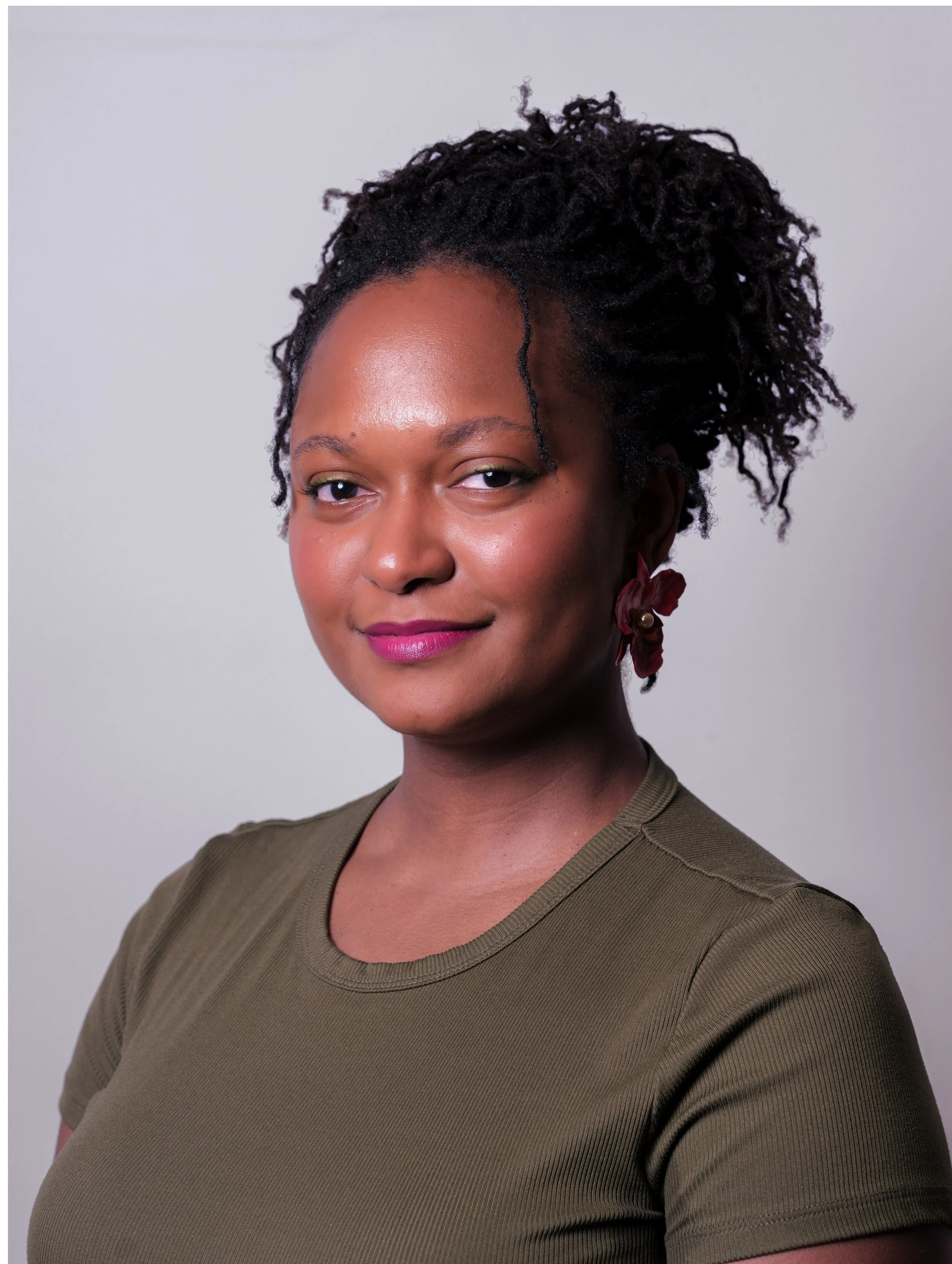
In episode 251, Peter Hayward meets Alicia Richins. Alicia (she/they) is a climate justice advocate, sustainable impact strategist, and writer passionate about imagining beyond the plausible.
With nearly a decade of facilitation experience and five years in consulting, Alicia helps organizations and community groups develop futures-oriented impact strategies that navigate the intersections of climate, social, and economic justice. Through their work, they guide teams in unpacking complex challenges while building actionable pathways toward their desired futures.
A proud Trinbagonian-Canadian, their approach is shaped by deep engagement in the youth climate movement across Canada and the Caribbean, alongside graduate studies in ecological economics, international development, and urban planning. Their work is further enriched by ongoing education in strategic foresight, sustainability, and systems change.
Interviewed by: Peter Hayward
Links
LinkedIn: https://www.linkedin.com/in/alicia-richins/
https://www.theclimateverse.com/
https://www.climateverse.world/ (substack/dispatch)
Transcript
Peter Hayward: Clever people clearly outline how present behaviour is not going to lead us anywhere we want to be. Interested people can read this and agree that things need to change. And things don't appear to change. Why?
Alicia Richins: The climate crisis it's not a technical crisis. We have pretty much all the solutions we need. A few more in development, sure, but it's really about the political will and the investment required to actually make the change. And why aren't we making that change? Because we're so stuck in the story about who we are. Like we're already designed for this, great future, and it's just, everybody else has to get their stuff together so that we can all get to this good future. But there's so much that, we are a product of our time. We're a product of this now that we're in right now. And so as much as we have these aspirations we hold, it doesn't excuse us of the work we have to do. And so putting yourself in a story I think really personalizes that journey and raises insights not just for people's work and relationships but also for self. Like oh wow what did this bring up for me that I need to be thinking about and maybe shifting if I want to embody and make this different future possible?
Peter Hayward: That is my guest today on FuturePod, Alicia Richins, She/they is a climate justice advocate, sustainable impact strategist, and writer passionate about imagining beyond the plausible. A proud Trinbagonian-Canadian, their approach is shaped by deep engagement in the youth climate movement across Canada and the Caribbean, alongside graduate studies in ecological economics, international development, and urban planning. Their work is further enriched by ongoing education in strategic foresight, sustainability, and systems change.
Peter Hayward: Welcome to Future Pod, Alicia
Alicia Richins: Thank you.
Peter Hayward: Good to have a first time member of the pod community. So what's, what's the Alicia Richins story? How did you get involved with the Futures and Foresight community?
Alicia Richins: Yes. Okay. That's a great question. For me, coming into futures and foresight was a full circle moment of returning to my creative identity. Like, I grew up very much as a performing arts kid. I- I've been playing the violin since I was five, steel pan, piano, any instrument you can imagine, ballet, jazz, tap, all the things.
Um, and that was a big part of my childhood and my adolescence. And then I think in the transition to university, I felt the pressure to, you know, do something serious and put these hobbies to the side that weren't ever going to make me a living, um, which was very much my, my father's core concern. But somewhere along the line after, you know, finishing school, I did-- I studied economics in undergrad, and I did my master's in environmental studies, focusing on ecological economics, um, getting, getting out into the world of work, and I think particularly also in lockdown because of the pandemic, um, I started getting back into writing as a creative outlet, and first it was completely nonfiction, just writing essays, connecting different social and economic and cultural issues together in ways that I didn't feel were part of the mainstream conversation.
Um, and I always-- I was having conversations with childhood friends about how, you know, I hadn't felt-- I, I've been feeling this gap, this longing for the return to that, that creative self that I was as a young person or a younger person, I should say. And somehow one day I really just got annoyed with the news here in Canada.
I live in Toronto. And there was a week, I think back in 2022 when, you know, the RCMP, who are the federal police force, they were pretty much, you know, carting off these Indigenous land defenders, the Wet'suwet'en people, who were fighting against, you know, further infractions on their territories. And they were being met with, you know, getting carted off to jail and being charged.
And at the same time, we had this so-called freedom trucker convoy wreaking havoc across the country with zero impediment by said federal police. And I just thought, "What if I lived in a parallel dimension where the response was reversed?" And I decided to write it down. And then I started writing more stories like that, just imagining alternate parallel dimensions where we're actually, like, doing the thing, um, that we're supposed to be doing in terms of getting towards climate just futures.
And that just kind of ballooned from there. I was introduced to the whole world of foresight through the NextGen Foresight Practitioners Fellowship held by the School of International Futures. And it was literally in sitting down and putting together my application for the fellowship, I was like, "Oh, okay, this is how this is foresight, and I'm actually doing these images of the future and creating spaces for experiential futuring."
And so I just kind of fell into it as a result of my own, curiosities. And from there I was hooked. You know, I took all of the courses I could. I got certified in foresight. Uh, I've been working on bringing it back into my, um, my climate justice facilitation and sustainability consulting work.
But also, like the Climateverse itself as a storytelling platform has evolved so much from there into now I would say it's more of like a narrative change studio more than just the stories themselves. But yeah, it's been a really beautiful full circle experience where I finally feel fulfilled in a way that I hadn't for a number of years, like finally stretching that creativity muscle.
Peter Hayward: Okay. I won't say it's completely the first time I've heard that, but most people come to futures from a discipline. It's not a good first discipline, it's a good meta-discipline, I think, or a paradigmatic discipline that joins things up.
How was that though? I would imagine when you were leaning into and rediscovering your creative side, were you still at the same time coexisting in a fairly conventional role, in a conventional organization? Was it the kind of the two worlds you were in, the world of normal and the world of, the not normal?
Alicia Richins: Very much so. Very much so. You know, I was working in a non-profit context looking at impact measurement, um, and standards, et cetera. Um, and at the time I had already been doing, um, some sustainability consulting on the side of my desk, um, particularly focused on the UN sustainable development goals. And when, you know, the, the framework of futures and foresight came into my life, it was just kind of this aha moment for me actually, where I realized, well, all of this sustainability stuff we've been talking about is literally about trying to make the future better
Like it's- Mm. You know, we're we tend to talk in the present tense, but it's about making a better future, and so why not use these tools and methodologies to articulate it in that sense? And even make it more interesting and engaging -
Peter Hayward: Mm.
Alicia Richins: Um, than the typical kind of climate and sustainability conversations we tend to have.
Peter Hayward: Yeah. what I noticed, Alicia, was often people who are interested in creating better futures, preferred futures, they often want to think of this idea of what is the future that I want to create? But they themselves don't imagine that they are gonna be changed by that future. They almost think I am me, and the future needs to change."
It's so- some way surprising, but we don't talk about it, is that how are you going to be in that future? Mm-hmm. 'Cause you're not gonna be the future you are now. And I wonder whether the creative side is a way to try on how I might be in a different future.
Alicia Richins: Absolutely, you know? 'Cause I always say the, the climate crisis is a crisis, not ... it's not a technical crisis. Like, we have pretty much all the solutions we need. A few more in development, sure, but it's really about, like, the political will, um, and the investment required to actually make the change.
And why aren't we making that change? Because we're so stuck in the story about who we are. Um, and it's so ironic, to your point, when we think that we are already there. Ah, yes. Like we're already designed for this, you know, great future, and it's just, like, everybody else has to get their stuff together so that we can all get to this good future.
But there's so much that, you know, we are a product of our time. We're a product of this now that we're in right now. And so as much as we have these aspirations we hold, it doesn't, you know, excuse us of the work we have to do. And so putting yourself in a story, I think, really personalizes that journey and raises insights not just for people's, like, work and relationships, but also for self.
Like, oh, wow, what did this bring up for me that I need to be thinking about and maybe shifting if I want to embody and make this different future possible?
Peter Hayward: Is that a professional challenge, too, for our field generally, that we ourselves as futures thinkers, foresight practitioners, that we might think that we're already future ready- I think so
when we're just like anybody else, that we're not in the future, we aren't the future self we need to become.
Alicia Richins: Yeah, I think that's kind of a professional hazard, right? 'Cause we're, we're kind of these flag bearers for this different way and these new methods. And it sometimes could blind us to the biases we carry or the blind spots we have around, yeah, like, I, I care about this thing, but there's maybe some work I have to do on myself too.
Yeah.
Peter Hayward: I often think one of our ... I think it's both a strength and our, and our blind spot, is with, because we spend so much time thinking about the future or the preferred future, we think that the thinking is enough, that if I'm actually thinking, I have become what the future wants.
Whereas of course there's a whole set of behavioral changes.
All these people who wrote seriously about, concern for the future and carbon footprint, but they didn't see a problem in jumping on a plane and flying to a conference around the world.
That there was I'm serious about the future, but yeah, my behavior is I'm not serious about the future." And I always wondered how do we bring the behavior part's the more important part? I mean, the thinking's important, but isn't the behavior change the most important part?
Alicia Richins: Absolutely. And that's why I think it g- it goes back to the, the narratives and the stories that we're living in, right? Because yes, I care about the future, but I can always find a reason to continue doing the things that are preventing us from getting to that future. There's always some justification because we haven't really interrogated, who we are and what, what we actually think about what needs to happen and our role in that change, even from the small level of like mutual aid in your neighborhood.
Like how many people in Toronto don't even know their neighbors to, to connect and support each other, to build towards, you know, these visions people have of these super connected, grounded, bottom-up communities that are, you know, running on renewable energy and everything like that Chobani ad that everybody runs as the ultimate solar punk image.
Peter Hayward: So given that as a framing of your journey, how does that now pivot into the way you do it? The kind of frameworks that, or approaches that, that are central to how you actually do this, if it's about creativity and narrative, but also fundamental change.
Alicia Richins: Yeah. Um, there's, I would say like I have two answers for that.
So one, I would say is the what if question that we use a lot in like speculative fiction, you know? Like I said when I started The Climateverse, what if I lived in a parallel dimension, you know? What if after Queen Elizabeth passed away, the Commonwealth demanded all of their jewels back? What if Premier Doug Ford in Ontario was forced to change his policy about, closing in on the greenbelt land, which he did ha- end up having to do a few weeks after I published that story.
And it's from that point of the what if and the exploration of scenarios that I think I come to exploring different tools. Like I think of foresight as a toolbox with different methods and tools we can play with. Um, but one of the ones that I definitely come to often and a lot, and probably isn't a surprise, is Causal Layered Analysis, Sohail Inayatullah's work.
Um, and even the way that he frames it as narrative foresight, you know, before even worrying about what does the future look like, it's what are the stories we're living in that keep us trapped in this present that we're trying to change.
Peter Hayward: So maybe just for the listeners' benefit, obviously there's probably quite a lot of people probably listening who know what CLA is, have used the tool, but what's your take on how you use it, and why do you use it that way?
Alicia Richins: I think it's helpful for making sense of the, of the present, especially when you're having conversations or rather engagements, facilitated engagements with people who aren't as familiar with futures or even climate work that I do. Um, and so Causal Layered Analysis is a framework for unpacking the iceberg, so to speak.
It's the famous iceberg metaphor that, you know, what's, what's under the surface is the biggest part of the iceberg that we can't even see. And so what's above the, what's on the surface is, you know, the litany, the headlines. Like what are the messages and the stories that we're ... Or the narratives that are circling around us?
And then when we go a layer, a layer deeper, what are the systems holding or creating the conditions for these stories? And then what are the The narratives and the worldviews underneath those systems that make those systems tick, and then even below worldview, we have these myths, these core, um, foundational myths that are holding us in certain patterns that make, the current reality possible.
What I have found to be really transformational for folks when I facilitate the CLA is actually unpacking this. I feel like everybody's always on the same page, like, "Yes, it's this, and it's capitalism, and it's this other thing, and it's that other thing." But then when we get to the reframe that's always this really powerful aha moment that I use to inspire more of the detailed scenario building and speculative writing where, okay, well, if, if these are the layers that we're dealing with and we wanted to reframe, we gotta start from the bottom.
What are new myths we need to hold? And how do those new myths ne- lead to new worldviews that lead to new systems that lead to new stories? And I think in practice, you know, whether I'm facilitating a group through the experience or thinking through a new narrative, um, I use causal layered analysis to help people anchor into that new vision.
Um, and I think the storytelling piece is what makes it so powerful to have this tangible thing of like, "Yes, this is what I want to work towards, and here are some of those, like, underpinning values even that I need to work on embodying even more." To, to our earlier point of, you know, like we, we think we're already there, but how much are we actually embodying, you know, anti-capitalist and all of these other new, um, myths and worldviews that are required to make these new stories possible?
Peter Hayward: Yeah. O- one of the things I, uh, I developed a game called the Sakar Game, which, um, I had the great pleasure of learning from Sohail and then gave back to him as another tool. I find CLA is good when you integrate it with something people do, so like a role play. So rather than sit in the abstract and just look at the world or themselves in, as an abstract, is to actually put them in, get them to play something.
Alicia Richins: Yeah.
Peter Hayward: Then ask them why they played it the way they played it, and deconstruct their behaviors using CLA. So why, as the warriors, did you take your gun out and shoot the intellectuals? 'Cause they, and that's, that's, that, that's almost a litany social cause. "Well, I shot them because they were a threat." Why?
And so it's, to me, CLA coupled with actual behavior- Yeah, definitely ... that people have done in front of you is a is very revealing and very, but I think a very pr- profound point, that it's about what you do that shows the story you're telling yourself.
Alicia Richins: Absolutely. I think that's fascinating. I, I, I've used it in role play.
So the work I do in the Climateverse now is creating these interactive, I call them Storyorlds, kind of these simulation experiences ex- exploring different possible scenarios. Um, and often the causal layer analysis comes up pretty early on as a tool for sense making. You know, it's like, "Okay, this is this new world.
How do we make sense of this world?" And, you know, let's, let's do some causal layered analysis to do so. But I love your provocation of like, let's play in the thing play out your role, and then use a causal layered analysis to understand why you did what you did. So yeah, I might, I might take a feather out of your hat there and try it that way-
for the next one I design.
Peter Hayward: Is CLA ... I mean, when ... How do I say it, Alicia? It can be very academic if you kind of write it in the terms of it's this kind of structured narrative model that goes to deeper through the archetypes. But it's also just a totally natural way that people understand to have conversation.
As a facilitator, are there particular things you have to do to make sure that it doesn't actually get in the way of conversation?
Alicia Richins: I don't know that I've had that challenge per se, um, in terms of the, the way I practice it, just kind of holding everyone together at the same level at the same time, so we're moving through it, um, and sitting through all of the different perspectives and experiences that come up before jumping to the, another layer.
Peter Hayward: I think what you're saying there, Alicia, is that it's about listening to the pace of the conversation people wanna have. Mm-hmm. And some conversations wanna stay at the social cause or even the litany level for some time, almost to talk themselves out before they dip deeper.
Alicia Richins: Yeah. And then I think it's my role to kind of bring the provocation to, to try to, you know, gently nudge them to come a little deeper if possible.
Peter Hayward: Alicia, I, I just came off a podcast with Lavonne Leong, and this, her podcast should be out shortly, and she asked the question about ... She said that she's very aware that our tools that we use in futures and foresight k- kind of came out of the Second World War, and the sort of, you know, the
That was kind of when futures and foresight really emerged. And she asked the open question, uh, that is our toolkit good enough for what we're facing now?
Alicia Richins: Mm.
Peter Hayward: And whether there's other things that we haven't got in our toolkit that we need to really be effective in what we're trying to do.
Alicia Richins: Yeah, that's a great question.
You know, I think a lot about the ways that we can maybe adapt existing tools. Like I, I know one, um, co-conspirator in Canada who actually uses CLA but using a tree metaphor, um, and it really transforms, the way the activity is done. Um, I recently did a futures triangle as part of a session, um, just earlier this week, and someone raised the provocation of like this whole idea of like past, present, and future is very, um you know, you know, very, very Western ideological.
There are all of these other worldviews and ways of thinking about time that can be interesting, and I thought that was a really interesting provocation considering maybe time is a spiral, maybe time is a circle, and we have these interweaving circles of past, present, and future building into the now.
And I'm really inspired by that conversation to see how, you know, the next time I use a futures triangle, I can frame it in that more kind of circular, continuous way, 'cause that's actually is how I see time and think about the now. Um, so, so yeah, I think there, there are definitely ways to apply more, I guess, localized, grounded knowledge to the tool.
I don't think any of the tools are really that groundbreaking. I think, you know, when we tap into people's own, especially from, like, an indigenous or Afro indigenous perspective or, you know, just, just people who are, like, grounded in land and memory and ancestry in a certain way, like, a lot of this, a lot of this framing of futures and foresight is, is...
can be already embodied knowledge in many ways.
Peter Hayward: Mm-hmm.
Alicia Richins: Um, and our tools aren't, a- moving against that embodied knowledge, but they can be adapted to hold that embodied knowledge in different ways. So I think sometimes we just need to be okay with, like, you know, like Sohail Inayatullah is not, like, looking at me doing CLE.
It's okay if I, if I adapt it from, you know, the original design of this thing. It's okay if I, you know, took a different metaphor or a different way of moving with the tool to be more aligned, not just with people's lived experiences, but, um, to your point about the other podcast, you know, just the times that we're living in and the intensity that things have-
Peter Hayward: Yeah
taken
Alicia Richins: on. Yeah.
Peter Hayward: quite a few years ago, I did a workshop with Otto Scharmer. It was a, well, like a multi-day, like a, like a two or three-day one just outside of Toronto, and as part of the workshop He worked with a woman, and she was a dancer.
And what Otto would do is we would do the very heady work of, you know, Theory U and all that kind of stuff, and then we would go into this dance space, and the person would ask us to embody dance, movement. It was trying to, you know, basically take us out of our heads and put them back into our bodies, and then come back into the workshop again.
I wonder whether actual physical movement, and I'm talking to you, I mean, you know, you're a dancer whether, whether that's an underused part of our tool- uh, potential toolbox for helping people both imagine and create alternative futures.
Alicia Richins: Yeah. That's a wonderful provocation that I've never applied.
You know, for me, dance is always kind of separate, the fun thing I go and do. But yeah, I think that could be really powerful, just bringing in more methods of connecting to body and moving out of head all of the time to unearth new information, or even make, or even make the insights from the intellectual exercise more embodied and understood.
Peter Hayward: Hmm.
Alicia Richins: Yeah.
Peter Hayward: So looking around the world, what are you paying attention to now? What's getting your attention and why?
Alicia Richins: I mean, I definitely look for signals that give me hope around the world. Um, I'm excited by the recent Santa Marta conference where we have, you know, a coalition of some countries that have come together to say, "Yes, we're gonna get implementing this fossil fuel phase-out in some way, even if, you know, the conventional powers that be aren't on board.
Like, there's something we could do if we come together and do that." And that definitely gives me hope in a time when I think a lot of us are really disenchanted with the UN system and, you know, this whole global governance framework that was literally designed to prevent more conflict and war and seems to be failing at it these days.
Something else that's been really interesting in the, you know, AI of it all is all of the backlash against the data center construction, especially across the United States, I find very interesting. Like, people getting booed at commencement speeches, um, communities rallying against these data centers creating all of this, like, noise and taking all of their water.
And I don't even think it's a, it's a, it's a signal that I think about directly when it relates to AI, but I think about it in terms of, you know, potential systems change or, or something that gets enough people angry enough to come together and actually think about all of these other things that we could be changing to get our governments out of, you know, I think in North America, our governments are oligarchical and even more deeply kind of entrenched and run by corporate interests.
How do we retake our governments from corporate interests? Mm-hmm. And then that makes me think also of, you know, Zohran Mamdani, who I think is just magical in how normal of a guy this man is and seems to be getting things done in a way that so many previous leaders were unable to, and is inspiring so much leadership, you know?
I think the shoveling work he did in the last snowstorm this past winter where normal New Yorkers could sign up and get paid and hired to help shovel the snow away, that definitely inspired the Toronto mayor to have a similar program here. And it just shows like, yeah, if you just kind of like have the political will to do the thing, it's possible.
Um, so I definitely am holding onto these different little possibility models.
Peter Hayward: Yeah, I suppose it's interesting. I mean, we shouldn't be surprising that, you know, most political systems, it's outsiders that are attractive to people because they see the, uh, the people who've been in power for, long periods of time haven't really been effective.
But that but the same thing if you let outsiders in, then you don't, you don't get y- you don't just get one type of outsider, you get all types of outsiders.
Alicia Richins: Yeah. And it's kind of one of those, I guess, benefits and challenges of globalization depending on what perspective you're holding. Or, you know, if you wanna call it globalization or internationalization, where I think human migration has always been a, a feature of, of human civilization, and how can we embrace that more and see what new perspectives come up by embracing that kind of multicultural coming together?
Peter Hayward: It's ... That's a funny one. Migration's a funny one for me, Alicia, because at the same time that we're seeing really, you know, around the world significant pushback against, um, uh, migration programs. But at the same time we've got the f- this demographic phenomenon of our dropping fertility rates.
Alicia Richins: Exactly.
Peter Hayward: And it's almost like these two things are occurring. They're, like, almost people are having two conversations. They're saying, "We don't want more people, and we're actually acting in a way that we won't have more people. A- and yet I'm not seeing that kind of come together, 'cause it's almost like a shadow.
It's almost one's a conversation and a shadow of the other.
Alicia Richins: that kind of core cognitive dissonance that we're talking about. Yeah. Like, you want one future, but you're not actually doing the thing to get there.
Peter Hayward: Yeah. I was reading a, uh, a, a blogger who wrote, just looking at the fertility rate in Thailand, that Thailand's currently 66 million people, but at their current fertility rate, in 200 years there will only be two million people in Thailand.
And yeah, and you'll ... And of course you can't imagine that.
Alicia Richins: No.
Peter Hayward: when I'm reading this demographic information, and demographics are to some extent very, very accurate forecasts of where we're going, at some level it's almost hard to get your head around what does the world look like if there's less people, and are we gonna let there be less people? I just can't get my head around a world with less people in it than we currently have now, and yet the numbers are saying but that's what the world we're gonna have. William Gibson wrote a book, in it he termed this period of time when the world gets smaller the bonus, 'cause it's the bonus for the people that are on the other side of it. Cause you've got all the capital, all the tech, but much less people But at the same time, they've got the guilt that, "How come we got through and others didn't?"
Alicia Richins: Yeah. It's quite a dilemma, you know? I think, I think some of that cognitive dissonance obviously is, like, racist. Like, we want more people, but we want more of only a certain kind of people. Yeah, like us. Yeah. You
Peter Hayward: know? Yes, people like us.
Alicia Richins: Yeah, we want people like us. And this kind of us and them narrative is really at the core of, of the climate crisis in the first place, right?
Like, we- Mm ... need to protect us. And them over there, either they go away or we use them, or we take their land, or, you know, we extract their resources so that, so that the us can be great. Um, but at the end of the day, we're all on this one planet together, and this us and them binary is an illusion.
And at the end of the day, all of the bad things that we want to do to them actually end up hurting us.
Peter Hayward: Yeah. that's the ingredients for a classic tragedy in literature sense if you're writing it as a, as a story. It's a tragedy where people destroy themselves.
Alicia Richins: such an interesting direction, even when you think about, the, the ideology of growth that at the core of our economic system, that the economy as we know it will crash if there are less people.
Like it's an actual problem, you know? Mm. And it's interesting how we have these different incentives set up in a system to try to encourage growth and growth, even if the growth isn't actually helping human people or communities. It's just growth for the sake of keeping this wheel turning, this wheel that's turning us into oblivion.
But then on the other side, like how do we prepare for a transition like that? How do we mitigate against having that, that as the outcome? I don't know. So many directions to go there.
Peter Hayward: Yeah, I mean, I, what I'm hearing, Alicia, is this, the theme that I got through that little conversation was kind of leaning into Riel Miller's idea of future literacy.
Alicia Richins: Mm-hmm.
Peter Hayward: We aren't particularly good at creating alternative narratives for ourselves, that we're actually trapped in this quite a narrow series of narratives of ourselves and the future, that something like population decline, we can't ... Well, Peter Hayward finds it very hard to construct a narrative of that world
Alicia Richins: Yeah, and I think it has a lot to do with us being sold for many decades now this kind of singular vision of the future.
And, you know, we have these economic and political experts that are gonna forecast and tell us exactly what's going to happen. And I think it's a, it's been a kind of like a theft of our imaginations, that we're actually living in the imagination of a few very powerful people right now. And, you know, if I'm an imagination activist, as Phoebe Tickle um, has started off the movement to be, it's about reclaiming our capacity to hold futures literacy, to imagine multiple possible futures are always unfolding.
And there's so much insight to take from that, that the future has not yet been written or it's constantly being written . And it's not, you know, it's not a done deal at all. It never is.
Peter Hayward: I see children with an amazing ability to construct narrative And I almost see it wither as people get older.
And I wonder whether the way that we educate and we reward education and a- a development of adult growth, we actually take away that necessary ability to have flexible imaginations of what we could be as people.
Alicia Richins: 100%. You know, many people much smarter than me and educated on the subject have talked about the education system still modeling the factory worker system where, you know, you're kind of going to school to learn how to be an efficient and obedient employee, which requires you to, to stifle your imagination muscles, let those muscles atrophy completely to succeed or survive even.
Um, and what would it be like if we had education systems that nurtured that imagination, not just in kindergarten, but all the way through to tertiary level education?
Peter Hayward: And is that what indigenous people that haven't been as totally immersed in our cultural stories can offer to us, is that they actually are capable of telling quite different stories?
Alicia Richins: Yes, absolutely. Indigenous peoples and peoples who are connected to land wherever it is that they're living, and connected to ancestry who are holding those stories through lineages, I think are definitely really powerful knowledge keepers in just practicing that, that capacity for imagination. And I think there's even an opportunity in our globalized, multicultural world to learn from each other's histories and relationships to land and different indigeneities around the world to really expand all of the, the possible futures that we even think or conceive are feasible in our minds.
And I hate that word feasible, but yes.
Peter Hayward: So let's move to the communication question the one that is always interesting. What do you, how do you explain to people what Alicia does if people don't know what it is Alicia does?
Alicia Richins: I love this question 'cause it's always changing, so you'll let me know if I'm effective.
But I would say that I create speculative narratives or scenarios of possible futures that at their core have a certain striking dilemma that makes it very clear that it's different from the world we live in today. Um, and I invite people to step into those worlds with me to make sense of it, to make decisions, and to role play as if we were living in that world.
What would we do? What could we do? How do we, you know, navigate from, for instance, a world where the internet has crashed all around the world to a world that has found ways to connect in more meaningful ways? Um, what, what insights does that bring back to our real life world, um, back here in 2026 about how we interface with inter- the internet and technology in general?
So yeah, I create these scenarios immersive worlds, not in a VR or XR sense, just in a, in a narrative sense, um, and invite folks to, to role play, uh, from a certain position in that world and collaborate to, yeah, solve problems and create artifacts and hold narratives that from which you can glean insights to take back into regular life.
Peter Hayward: People move towards you when you, if you gave a description like that? Do you... Is it... Or is it an answer to something that they've said to you for you to lead with that?
Alicia Richins: I think sometimes it might be an answer, 'cause like in many, you know, professional fields, I think in foresight we tend to fall into the jargon. And so if anything, I'm trying to like, as much as possible, not use any foresight terms to make it clear what it is, while still holding enough space, because a lot of the work is emergent, right?
Like, even in explaining some of the upcoming engagements I'm going to be having, it's hard to ... Like, I can't tell you exactly what's going to happen every step of the way because it's going to emerge as a result of the conversations by the specific people that happen to be in the room at the time. But yeah, I don't know.
I guess, uh, TBD. I'll have to come back and let you know how effective it's been at describing it that way. I've started calling them storyworlds, you know? It's- Yeah ... part simulation, part narrative experience, interactive storytelling. We'll see, we'll see how it evolves.
Peter Hayward: Yeah. I mean, it's a long way from people who are talking about having trouble planning for the future.
Alicia Richins: Yeah ...
Peter Hayward: and I wonder whether people that are having difficulty with planning are confident or interested enough to wanna step into story worlds as an alternative way to decide what they need to do.
Alicia Richins: Yeah. I think the, the people who come into story worlds are thinking less about how they plan for the future, and are coming more from a place of emotional reaction to what's possible, you know?
It's a lot of, um, climate anxiety. There's a lot of doom and gloom and apocalypse. And so- Ah ... how do we like move through potential dystopias and find not utopia, but some kind of protopia that still gives us enough to take back and feel like, "Okay," like, "this is still worthwhile. I can take some insights back to my work, and there, there's still something worth saving on this planet, and we're not all doomed."
Peter Hayward: Yeah.
Alicia Richins: And, you know, I can, you know, um, what's the word I'm looking for? Like, fortify myself to get back out there.
Peter Hayward: Yeah, well, I'm hearing real people actually rediscovering agency. I mean- Mm-hmm ... it's the sense that, you know, we don't wanna tell one another sort of our fairy stories about, having someone come down and change the world for us, but at the same time, we want people to find their agency.
'Cause whatever happens in the world people will still find agency.
Alicia Richins: Exactly. That's exactly it, helping people find their agency. I would love to talk to more people who are struggling to plan for the future to see, you know, what, what the angle is that would really connect most deeply with that challenge.
But yeah.
Peter Hayward: So Alicia, getting towards the end of the podcast, anything you wanna talk to the listeners about that you're getting involved in project-wise that people could be interested in?
Alicia Richins: Absolutely. So I have a upcoming story world as I've just described them. Um, and it's very much inspired by a lot of what we've been talking about, especially when it comes to our dis- especially when it comes to our disappointment with the current global system of governance, um, and partially inspired by the work in Santa Marta.
Um, the story world is called The Planetary Commons, and it's imagining a time in the future where different countries, mostly from the Global South, have decided, "You know what? It's time for a different way of managing our global cooperation architecture." And so the, the opening scenario is really just this report that some countries are coming together, some communities are coming together to join and start up this Planetary Commons Council, and you're invited to step into it.
Um, and we'll all, you know, come into our own personas and meet weekly over, um, five to six weeks this coming winter. Subscribe for updates at climateverse.world. So yeah, come join The Planetary Commons and reclaim a sense of agency in the face of a crumbling global governance system. And we’ll also have a couple more localized, in-person engagements here in Toronto in the Fall.
Peter Hayward: What would your outcome be from that five or six weeks of conversation and collaboration?
Alicia Richins: Well, uh, like I said, a lot of it will be emergent. So what happens from week to week definitely depends on, you know, what comes out. The s- the second scenario dilemma will definitely depend on the decisions made in the first session, for instance.
But what I'm hoping for is some articulation of an alternate way of doing things, um, whether that be in terms of leadership structure, in terms of the skills needed, in terms of different even treaties and agreements. Um, a lot of it also involves, I should have mentioned, thank you for following up, the artifact co-creation.
So whether it's like new treaties and some design fiction, thinking about new tools that we might need in this new world, um, that all get published on our dispatch to, you know, a broader public, um, and that I'll compile into a zine that really articulates a counterpoint, uh, yeah, a, a defined counterpoint to the existing systems we're living in right now, for inst- specifically the UN, I would say.
Peter Hayward: Okay. Uh, well, the links to that will be on your webpage with this podcast. So that all sounds very exciting and interesting, so I hope it goes very, very well for you.
Alicia Richins: Thank you very much. Yes, I hope a whole bunch of people join, and I'm so curious to see what emerges.
Peter Hayward: Okay. Well, on that note, uh, it's been fun to catch up.
You came recommended from another previous podcast guest, so, uh, thanks to-- thanks for the recommendation and thanks for spending some time with the Future Pod community.
Alicia Richins: Yes, thank you for the recommendation as well, and it's been such a pleasure chatting with you too.
Peter Hayward: Thank you Alicia. That was great fun and very stimulating. Check out Alicia's Climateverse website and substack. FuturePod is a not-for-profit venture. We exist through the generosity of our supporters. If you'd like to support the pod, please check out our Patreon link on futurepod.org. I'm Peter Hayward. Thanks for joining me today. Till next time.