In episode 250, Adam Sharpe joins Amanda to discuss how we can create meaningful opportunities for young people to be active participants in shaping the future.
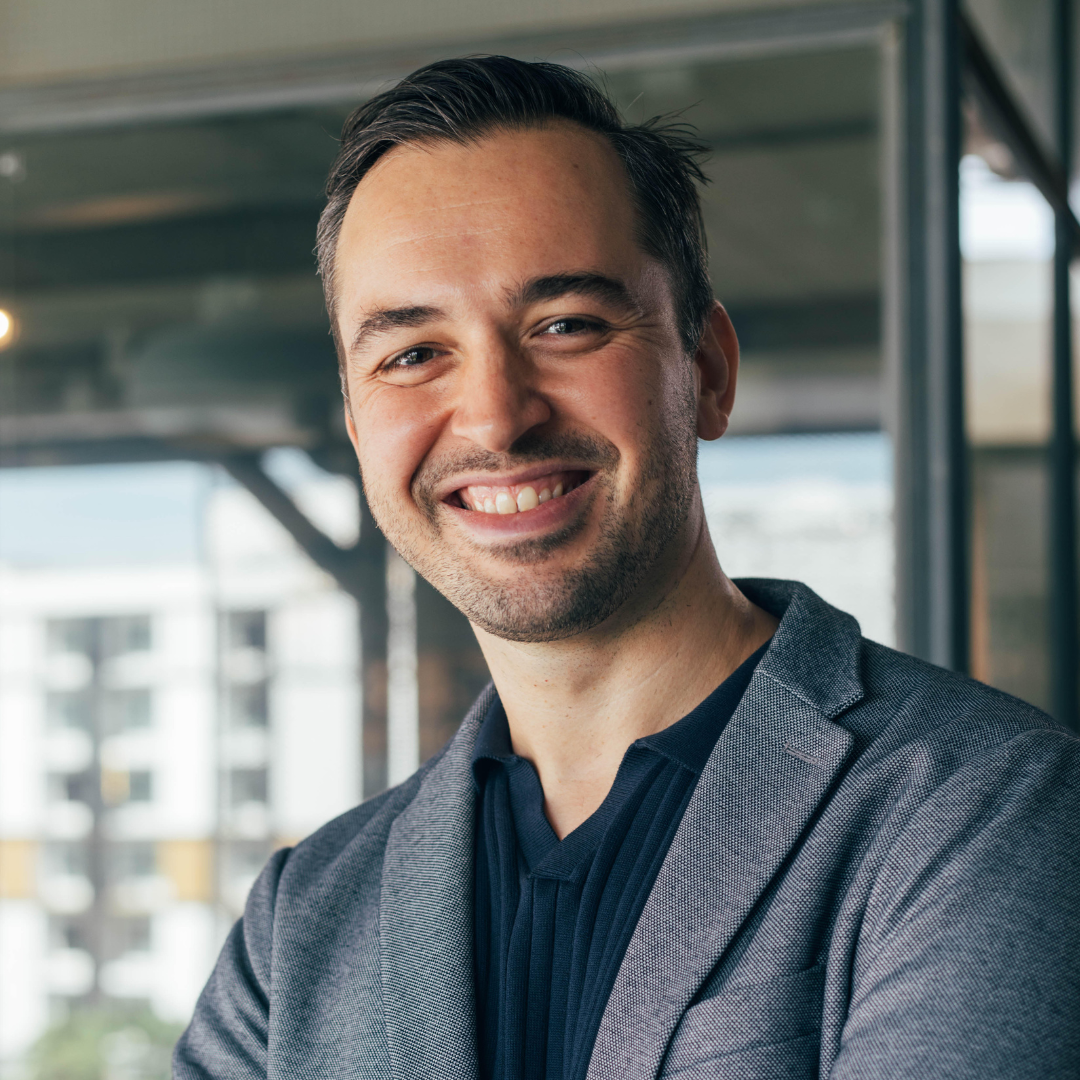
Adam is a foresight practitioner and facilitator working at a global level with UNICEF, navigating policy fora where the future of intergenerational fairness and the social contract is being negotiated. Simultaneously, through Metafuture School, he builds the foresight capacities of communities and leaders across sectors and continents.
Adam’s mission is to address a systemic lack of long-term thinking and intergenerational governance worldwide, and to unleash the fullest potential of young people to meet today's challenges, and those emerging on the horizon. He wants to ensure that young people are not just passively inheriting the future—which they never truly are—but have every opportunity to actively co-author it. He wants what we all want: a better future for my son, and for all children everywhere.
In 2022, Adam was awarded the Next Generation Foresight Practitioners award for Intergenerational Fairness by the School of International Futures. He is also a KFAS-Salzburg Global Fellow, an NGFP Fellow, and a member of the Association of Professional Futurists.
Interviewed by: Amanda Reeves

Links
Email: adam@metafutureschool.org
Future Child Persona Methodology: https://www.unicef.org/innocenti/stories/new-tool-change-how-world-imagines-future
MTV EXIT Live in Battambang: https://www.youtube.com/watch?v=cvNjLRGClro&t=1s
Appreciative Inquiry in the Baghmati River: https://www.researchgate.net/publication/365125625_Futures_for_Youth_by_Youth_How_Dreams_of_a_Better_Future_Inspired_a_Youth_Movement_to_Protect_the_Bagmati_River
Metafuture School: https://metafutureschool.org/
Transcript
Amanda Reeves: What do we owe to younger generations? How can we create meaningful opportunities for young people to participate in shaping the future? And what is the emancipatory potential of doing participatory futures work alongside young people? I'm Amanda Reeves, and I'll be your host for FuturePod today.
Adam Sharpe: At the end of the exhibit, you step into a kiosk and you can leave a message for a child. And some of the messages, they are so heartfelt. Someone saying I'm sorry, I'm sorry for what we did, I'm sorry for what we left you. We're so proud of you. You are from my region. I feel like I know a child just like you. We are wishing you all the best. People are actually really feeling into the future, connecting to their innate sense of intergenerational responsibility.
Amanda Reeves: That's Adam Sharpe, our guest for today. Adam's mission is to address a systemic lack of long-term thinking and intergenerational governance worldwide, and to unleash the fullest potential of young people to meet today's challenges, as well as those emerging on the horizon. Adam seeks to ensure young people are not just passively inheriting the future, which they never truly are, but have every opportunity to actively co-author it.
Adam, welcome to Future Pod.
Adam Sharpe: Thank you for having me Amanda
Amanda Reeves: Let's start with your story. How is it that you found your way into the futures and foresight community?
Adam Sharpe: Today I am the youth participation specialist at UNICEF Innocenti and the Director of Learning at Meta Futures School, and the journey to that has been really long and winding and strange and serendipitous. I think my life really changed about 16 years ago when I moved from London where I grew up in the UK to Southeast Asia, and it was one year after the global financial crash.
And was a recruitment consultant at the time, like I'd, I'd studied politics because I felt ignorant of the world. And I think I've been introduced at a very early age to the Australian, investigatory journalist, John Pilger, because my mom helped write one of his books, Hidden Agendas,
Amanda Reeves: Oh wow.
Adam Sharpe: Which sort of revealed so much to me about how little I knew and how little school was teaching me. So I went into politics at university, but I didn't come out clear at all what I wanted to do. I just wanted to make enough money to live in London where I'd grown up and my parents by that stage had left, had left the UK. So I lost my recruitment job during the global financial crash, I was good at talking to people and I was confident picking up the phone, but I was just too sensitive to have my name up on a leaderboard, fighting for supremacy over my colleagues. Like I'm just too sensitive for that.
I was probably completely useless. And so it was right that they fired me. But thereafter I just didn't have the confidence or the clarity, where I wanted to go to stay in London and try and find work. I thought I'm gonna burn through every cent I have living in this city. And instead I just kicked the can down the road and said, I'm gonna take my money and go traveling. I'm gonna go to Southeast Asia. I had visited a friend who'd done the same thing and moved to Vietnam and was just living an incredible life there, so I decided to follow suit. I did what many of us do, which is I became a teacher. But about a year and a half into that I just knew that this was not my calling. I felt like there was more that I could do. But with that teaching job comes your long term visa, comes your stability and
Amanda Reeves: Yes.
Adam Sharpe: Comes your security in a new country. So, I started doing things that I love, I started doing, I said, I'm gonna do the things that I love to do and something is gonna emerge from this. And that started with playing music, singing and performing live and also doing charity work. So I was raising money for children's homes on the Thai Burmese border.
A good friend of mine was running a children's home and I was helping out. And I started combining those two things. So I started organizing these fundraising events that were full of music and video and creativity and performance. And they were raising a lot of money and they were turning a lot of heads in the community and they turned the head of the director, of MTV exit at the time and exploitation and trafficking.
I'll never forget, he came to see me play music and this guy Matt Love himself an Australian, and as I was performing some song, he, he wrote in Tabasco sauce on a piece of A4 paper and held it up and it said, hired. And I was like, I knew. I knew in that moment that my life was gonna change because I'd stepped into development and it was a different kind of development. It was human trafficking prevention, but under the MTV banner. So how do we use music, performance, the arts, movie making, documentary filmmaking, concerts? Like prevention messaging to make a difference. And my job was to to come in and help build youth networks across Southeast Asia so that young people were leading the prevention, the advocacy efforts, not MTV, and
Amanda Reeves: hmm.
Adam Sharpe: That was funded by Australian Aid and U-S-A-I-D at the time. Australian Aid became DFAT and U-S-A-I-D, we, we know what happened there.
Amanda Reeves: Yes.
Adam Sharpe: But that just gave me just this extraordinary experience of getting out of the way and, and, and sharing materials and know-how with local communities, and then just giving them platforms to prevent trafficking.
How to ensure that people don't give up their passports when they apply for a job. How to make sure that before you travel for work in Thailand or wherever that you bring some money without which your chances of getting trafficked just expand tremendously, exponentially. So it was just an extraordinary entry into the world of development. I first got exposed to futures thinking through a workshop by Sohail Inayatullah, like, how many people has he brought into this world,
Amanda Reeves: Mm-hmm.
Adam Sharpe: but I have to thank Jost Wagner. He saw something in me, and he said you've got to be part of this Asia Pacific Futures Network conference that I organize in Bangkok. He said, do some work for us and you can come in for free. You can join Sohail's work for free. So I was there producing videos and doing little interviews with people at APFN and I came out of that experience working with Sohail, just with this deep conviction that this next step in my career was gonna be about introducing more young people to this incredible, these incredible methodologies.
And I just immediately saw the emancipatory potential of futures for young people who could come to a program like with MTV and have an amazing time and make friends and build connections and get a great thing on their CV, but ultimately they were going back to conditions, to circumstances that really felt hopeless. For example, just massive unemployment, lack of jobs, lack of opportunity. 80% of young people in Asia Pacific at the time in indecent work, and I felt that endemic despair that people talk about everyone having now, it was like, it was really felt amongst young people I was working with at the time. So that started off the journey and that's how I started working with Sohail and Ivana and built Meta Futures School to, again, democratize futures, and widen the access point, and eventually, after doing experiments with UNESCO, the Asian Development Bank and other organizations who wanted to engage young people, using foresight as my critical tool to do that. I then got the, the opportunity of a lifetime four years ago to join UNICEF and build the UN's first youth foresight function, where foresight was there to really transform participation of children and young people in decisions that impact their lives. And in UNICEF's strategy and the journey over the last four years has been seeing how participation then transforms foresight when it's done well.
Amanda Reeves: I love that story. I don't think I'd realized before how important culture and cultural ways of being, like making music, bringing people together, having concerts, how important the arts were in your journey to arrive here and also it makes me start to think about how interesting it is to be using culture as a way to change culture.
Adam Sharpe: There's a really funny video on YouTube, it's called MTV Exit Battambang. Battambang is a province in Cambodia, and we partnered with Phare Ponleu Selpak, which is originally a French NGO that built this circus, this Cambodian circus. And if you've ever been to CM Reap, you may have been to that circus, but they've performed all over the world
Amanda Reeves: Mm.
Adam Sharpe: So part of that trafficking prevention work was bringing young - it's free for any young person to join this circus and to build a career in the arts
Amanda Reeves: Wow.
Adam Sharpe: Through that partnership we had young people learning about trafficking from local NGOs and experts, but then working with creatives to create plays about human trafficking that they then performed on stage in front of thousands of people in Battambang
and Siem Reap and Baneay Meanchey and Prey Veng and all over the country. It was incredible. And there's a video of it of these young people performing on stage. Yeah, I think it's a wonderful way to, I mean, we know the benefits of role play and theatre -
Amanda Reeves: Yes.
Adam Sharpe: On learning, that's essentially what acting is. It's deep empathy building, and learning-
Amanda Reeves: Mm.
Adam Sharpe: Through storytelling, but as a way to bring the whole community into that act. And what's vital here is you don't use the same art in every community. You do theater because there's this tremendous local NGO and local people who love theater, but in Philippines we were doing photography and in Myanmar we were doing art and creating these posters and bringing them into the community. So it's about being really responsive and it can be truly game changing and not to mention as a way, as a window for young people and to development work and to community action.
It widens the access point for them as well. It's like you don't need -
Amanda Reeves: Yes.
Adam Sharpe: a Master's degree to do this community work. You know, you don't to be working for an NGO or something to try and protect your friends and your family from traffickers who are preying on people's ignorance.
Amanda Reeves: Adam I'd like to ask a bit more about how you work. W e've talked a little bit about how the arts have formed part of your practice, but I'm interested, are there any other frameworks or methods that you feel are important to your practice?
Adam Sharpe: Yeah. I would be remiss to not give a shout out here to Future Pod and to Patricia Lustig who was asked this question five years ago. A nd she answered with appreciative inquiry and that sent me on a journey to learn more about the method. I read a lot of David Cooperrider's work, shout out to him who created appreciative inquiry and recently retired and goodness knows how much amazing community work he has catalyzed. B ut that method was so, so rich in how it completely transformed the way we solve problems.
Amanda Reeves: Hmm.
Adam Sharpe: By having a strength-based approach, starting not with what the problem is, but by understanding what's working within the realm of the inquiry and having communities do this together through one-on-one interviews.
Then co-creating a preferred vision of the future that we wanna move toward. Then designing initiatives that are grounded in what we know works.
Amanda Reeves: Hmm.
Adam Sharpe: Grounded in our collective wisdom and knowledge, which is equally important when you're a community leader with a lot of expertise and maybe a degree, or you're just a young person who was maybe just a participant, who maybe was just learning at school.
Like it really democratizes knowledge, widens the access point. It gives everyone a sense of belonging and a sense of ownership over the process. I had the chance to try that methodology out based on this one Futurepod episode with this amazing community in Nepal working with the Asian Development Bank who'd made a big investment in the Bagmati River, and by teaching this youth group of young environmentalists Appreciative inquiry. That process scaled to hundreds and hundreds of young people across Kathmandu and across Nepal. A nd it generated 19 youth led initiatives from vermicomposting awareness raising, recycling initiatives to protect this Bagmati River, that was so important spiritually to the people at Kathmandu.
So I also use the same methodology in global processes with ADB. So working with hundreds of young people online to contribute to our understanding of the futures of work, post COVID-19. So shout out to Futurepod, big shout out to Patricia Lustig who's just a wonderful mentor. And I would just implore you when you hear about these methods, that that information is out there, it's available to us to put into action.
So I'm so, so thankful. So I had to say that. Of course, my futures practice is always grounded in the six pillars approach because Sohail was my first step into this world. Those six pillars of mapping, anticipating, timing, deepening, creating alternatives, and transforming. S o there's lots of methods and tools within each of those steps. But I think a lot of my foresight work, particularly at UNICEF, is done online with a group of people who have never done futures or foresight before and who are often young people. A nd so, I found introducing a lot of methods quite challenging. It doesn't matter how good you are at explaining methods and tools, whether you're using an iceberg to explain the CLA or you're calling a futures wheel a mind map. It doesn't matter how well you do at explaining what these methods are and making them relatable and accessible. Too many methods get in the way very often when you have a short amount of time with a group of newbies, maybe who, where English is not their first language, like-
Amanda Reeves: yes.
Adam Sharpe: These things are jargon, our methods, our tools, that we can in our own way and, and can get in the way of those really rich conversations that futures can inspire. So I like working with methods that can do a lot, that can help us better understand and process uncertainty and get us into a conversation about agency. And this is particularly important for young people because you have a really interesting conversation about the future. And the question is so what?
Amanda Reeves: Yeah.
Adam Sharpe: Like, what's the point? They want action. They feel like these long-term issues, they're
going to inherit them. They're coming down the track or they're here with us right now.
Amanda Reeves: Mm-hmm.
Adam Sharpe: Why did I invest my time? So methods like the futures triangle, I think many people share how powerful that methodology is. It's really incumbent upon us to just- to use that method to its fullest potential. Okay. So not just mapping the preferred images of the future and the drivers of change in the present and the weights of history, but, but getting into decision making within those contending forces. How do we-
Amanda Reeves: Hmm.
Adam Sharpe: Lighten those weights. How do we make that vision more compelling, more attractive? Can we surf those drivers of change better? Can we harness them? I was leading a foresight workshop with Foundations for Tomorrow, which is this amazing youth led organization in Australia, and they're running a fellowship right now, and they're gonna be building this national conversation, promoting intergenerational fairness and just really widening the access point of governance. And that's really important to me. And we did the futures triangle and we really sat with the vision just a little bit longer than you normally would. And, and what was emerging was these images of community and these feelings of pride at being Australian again, and having pride in being Australian, of embracing the full breadth and diversity of Australia.
Amanda Reeves: Hmm.
Adam Sharpe: And that then becomes action when they said we have to build coalitions and we have to learn how to bring in stakeholders maybe we don't work with enough.
That might seem obvious, but once you've sat in a preferred future and really meditated on it and felt it, and you're sort of imagining yourself doing the rocking chair test and you've retired and you're thinking back, you know-
Amanda Reeves: Mm-hmm.
Adam Sharpe: about your life. Get them to connect that feeling into the future. I think that's just so, so important. And so the last method I want to talk about is one that, we developed at UNICEF in collaboration with Artifact Group, and we launched last year with the Dubai Future Foundation. I said that foresight was originally to transform participation, but when you do participation well, it begins to transform foresight as well. We, we co-designed this method called the Future Child Persona Methodology. Now, ultimately, it shifts the conversation from what might the world look like to what might childhood feel like. And it, it borrows a lot from the work of Stewart Candy on experiential futures, to, to really get us imagining the children of the future. Children are not homogenous group, they're not all the same, and they're certainly not gonna be the same in 20, 30 years time as they are today. Same way, their parents are not the same, right? They're gonna be very different. So of course, we need to avoid legislating for future generations as though they're gonna have the same- I mean, I think children all have fundamentally same needs and they have their own rights for a reason. The right to play, the right to an education-
Amanda Reeves: Yes.
Adam Sharpe: the right to not live in conflict, etcetera. But this process, for example, this backpack exercise, we invite the learner, the participant, to pack a backpack for a child's day out, right?
In that backpack, what's something to learn with or something to play with? What's a tech device? What's a food item that they might have? In a way, it's sort of playing to that innate, biological, intergenerational responsibility that I'm helping to pack this kid off for their day.
What do you need? And it generates these artifacts of the future that really deepen our connection to it. And then there's this day in the life template broken down by morning, day, and night. So in the morning its how are they getting ready in this future? Who do they turn to for support? How do they feel about the day ahead, to the last-
Amanda Reeves: Hmm.
Adam Sharpe: Step, which is as they lay down to sleep, like what hopes do they have for themselves and for the world? And we've had the chance to, work with hundreds of young people to co-design these future child personas. We worked with Tomorrow In Focus this amazing AI, video organization last year to bring these future children into digital worlds that you can actually experience and interact with.
So our exhibit last year at the Dubai Future Forum, we've done it for the last two years. We curated an exhibit on the futures of childhood on the children's floor, on the first floor. It's really incredible and people can walk through this exhibit and meet future children, learn about their day and their aspirations, and they can interact. They can press buttons and ask them questions. And the best evidence I have that this works is that at the end of the exhibit, you step into a kiosk and you can leave a message for a child. And some of the messages, they are so heartfelt, from someone saying I'm sorry.
I'm sorry for what we did, I'm sorry for what we, what we left you, to someone else saying we're so proud of you. You are from my region. I feel like I know a child just like you. We are wishing you all the best. And it's like what's happening here is people are actually really feeling into the future, connecting to their innate sense of intergenerational responsibility. I really am supportive of this future generations movement in policy. I think it's profoundly important. It's calling for a complete moral revolution. Right? Let's be clear about that.
Amanda Reeves: Yes.
Adam Sharpe: I think William McCaskill's book, What We Owe the Future is a must read for anyone who's interested in this 'cause he makes it so clearly as a philosopher, that harm to a child today has the same moral weight as a harm to a child tomorrow. There's no, there's absolutely no difference.
Amanda Reeves: Mm-hmm.
Adam Sharpe: But I don't think very often our futures practice gives people that feeling, and I think methods like this can do that.
Amanda Reeves: Oh, I love this method so much and listening to you talk about it today. If I think about future generations, it's hard for me to have a relationship with the idea of future generations. It's sort of this abstract blur. But if you help me imagine a child who belongs to that future generation, who has hopes and dreams, who I am imagining myself providing for and helping them set themselves up for the day as we prepare their bag, like I can have a relationship with that imaginary child and that really hits different. It helps me access a level of care that I don't think I can access otherwise.
Amanda Reeves: When we talk to futurists, we often are interested in what people are noticing and what's catching your attention. I'm really interested in what's jumping out to you at the moment.
Adam Sharpe: There are some mega trends that are really capturing my attention the most right now, and they're all interconnected. And action toward them is, is similarly interconnected. So, if I was to focus on just three megatrends, it would be climate crisis, demographic shifts, and governance, right?
So in terms of climate, it's particularly front of mind. I mean, firstly in my own personal circumstance, I just moved from Bangkok where I lived for 16 years to Sydney, Australia, and I love Bangkok. But slowly but surely, especially after having a child four years ago. Simply put, Bangkok has become unlivable. The last five years the air is so polluted that for five months of the year, it's, it's unhealthy. You can't breathe. And so-
Amanda Reeves: Wow.
Adam Sharpe: It's unhealthy to breathe. Sometimes Bangkok, sometimes Chiang Mai, they're the most polluted cities in the entire world.
Amanda Reeves: Hmm.
Adam Sharpe: And I think a lot of effort is being made to address it, but it's not- it's not working. And for me to hear my son struggle to breathe, coughing his lungs out, it was just the guilt I felt.
And then, you know, for another three or four months of the year, it's become so hot that you can only really go outside of your house for a few hours of the day if that. You're talking a hundred percent humidity. We're talking-
Amanda Reeves: Whew.
Adam Sharpe: Temperatures that are climbing year after year after year and you are basically relegated to living in these air conditioned apartments, going to air conditioned car to air conditioned mall.
And that's your life. I have the luxury of having an incredible wife who gets hired to come work in Sydney and we can move. I was like, this is a scary move. But more than anything, you're giving me, you're giving us, you're giving our son a chance at life. Okay, so ultimately we greatly underestimate the global heating that's coming down the track. And you go to any conference, I mean, you read any science paper now. The estimates on global heating are dramatic. This has come up at UNICEF through some of our youth-led foresight work. I think about Mamadou in Mali who envisioned with this group of young people this night mode future where learning and playtime take place at night because it's too hot during the day because schools don't have the cooling infrastructure.
So it's, it's not only like they have to shut their schools quite often because it's too hot, not to mention the impact on girls' menstrual cycles when they're in that level of heat. Right. So in Europe we'd call that a siesta. You know, you go have a nice siesta late in the afternoon and then you can go out until really really late. At some point, we're gonna have to really legislate seriously for extreme heat in a way that doesn't negatively impact our children's development and their futures.
A lot of the work in climate we're doing at UNICEF is around climate education. We've done work on climate education in the past. We now have a fellowship that's dedicated to it, and the futures that young people are imagining. It's climate education where it's project based. It's out in the community. It's bringing generations together. It's relying on indigenous wisdoms, and really transforming how we think about and educate around climate.
We launched a climate breakthroughs report on this in May last year. It's so, so rich. And there's so much more that's gonna come out of this fellowship now where foresight should translate into real policy shifts. I've also done a lot of research on demographics.
I launched a game called People Power, which basically encourage learners to explore the impacts of demographics through demographic shifts and population decline through policy, culture, and technology. I think, again, we greatly underestimate the impacts of demographics, in part because global populations are still rising because there are still kids coming down the track.
But actually by mid-century we're gonna see very significant changes. I mean, you just look at a country like Japan that's losing hundreds of thousands of people every single year from their populations. They're closing a school every single day. They have to put mannequins up at bus stops in rural areas because people feel so lonely. They have this dramatic rise in deaths of despair. The change is heterogeneous. It looks different depending on where you are in the world. But ultimately, the fact that birth rates are declining is truly global, apart from maybe some parts in I think West Africa. I'm fascinated because less and less young people supporting more and more old people breaks every single system that we have.
Amanda Reeves: Yes.
Adam Sharpe: And it's not something that you can just reverse through shifting policy. This coherent and consistent across almost every country in the world, whether egalitarian or authoritarian, and it just so happens that Japan doesn't open its doors very much to immigrants. They really value their cultural homogeneity, and the world values it, right? So how governments respond to these shifts, I think is gonna create really profound change.
And, and I think when I've done these, this work with people, a lot of people are quite excited by what an Africa that has the demographic dividend in the middle of the century, what that means for the whole world. If the demographic dividend becomes dividend and not burden, i.e. education investment, real investment in the next generation coming up. The cultural implications worldwide will be fascinating. Where Africa is a center of culture and innovation. I've worked with young people like Joshua Opey in Ghana, imagining Ghana becoming a hub of technological innovation for the global south.
There's a real desire to learn from the mistakes of the Western world and to do things differently. And I think people are genuinely excited. But I think the other side of demographics is the potential women's rights challenge that's coming.
Amanda Reeves: Yes.
Adam Sharpe: I think we are seeing human rights on the decline, all over the world, and for almost all groups. But I think as demographics really hit economies, and countries are losing considerable numbers of people every single year. You have that very real potential of women losing rights over their bodily autonomy. Right. And lastly, governance. Already in countries where young people don't vote as much as adults, you have this skewing of politics towards the elderly. Okay?
But as there's less and less young people, more and more elderly, that is gonna become really, really acute. I'm particularly concerned that data from 160 countries around the world says young people are increasingly dissatisfied with democracy now.
And so we really need to find a way to address the level of inequality in society. I mean, just think about Australia, believing they'll never be able to own a house.
Amanda Reeves: Yes.
Adam Sharpe: Potentially not have a livable climate. So you can anticipate a decline in civic engagement, an increase in antisocial behavior, and more and more brain drain with a great deal of uncertainty unless you address some of these intergenerational fairness issues. And that's gonna become really, really acute. One of the things I find kind of strange is when I'm in Australia. When I hear music in public, it's always music from the nineties.
I was watching the Australian Open before the men's final, and Sophie Ellis Baxter played. And then I saw the, the New Year's Eve celebrations
Amanda Reeves: Mm-hmm.
Adam Sharpe: Underneath Sydney Harbor Bridge. And it was like Mel B or Mel C frpm the Spice Girls was performing and I was like, Australia has these incredible young acts that young people love, like Tame Impala. Do you know what I'm saying? Like Vance Joy. No way is a young person controlling that jukebox. Like what? There's a level of cultural stagnation that happens when you're not really celebrating what's new and what's coming through. And I know this is sort of lighthearted because I think a lot of the data I'm talking about, it's quite heavy. So it's nice to have a laugh too, but I would imagine growing up in this country feeling like, oh, where am I?
There's so much in the zeitgeist about everything that's wrong with young people. Young people as antisocial, young people as troublemaker, young people as dangerous, e-bike rider, you know what I'm saying? Where is young person as innovator, as change maker, as carer of climate, carer of a fairer and more decent society? Of course, not all young people are wonderful and virtuous, but growing up in a world where you feel these intergenerational fairness challenges impacting you and you don't see yourself represented or celebrated anywhere, you're gonna get rebels. You're gonna get people just wanting to leave. So anyway, those are just a few of the things I'm thinking about.
Amanda Reeves: I had a moment when I was grocery shopping and suddenly I was like, oh, I know all the songs that are being played on the supermarket radio. And I was like, ah. I finally hit the age where I'm the target demographic.
Like, oh, suddenly it's my time to shine. And I remember that being a real moment of like, oh, I'm no longer the young person who's a troublemaker. You know? You're now the lady who does the shopping.
Adam Sharpe: Yeah! It's like Oldchella, like that event-
Amanda Reeves: Yeah!
Adam Sharpe: Which is really flashy, really expensive, and just go and see the Rolling Stones and all these like, older groups -
Amanda Reeves: Yes!
Adam Sharpe: I love those groups, that's great. But when young people have no money and no opportunity you gonna just target adults more.
So it becomes like a vicious cycle right? And we need to, we need to break that cycle.
Amanda Reeves: It's not good for any of us. Mm-hmm.
Adam Sharpe: Is it Machiavelli who talked about that society is only as healthy as one that actually embraces change.
Amanda Reeves: Yeah.
Adam Sharpe: Change is as natural as the seasons. And there is a certain clinging of the past to prevent us from reaching certain futures.
I love the way the great documentary filmmaker Adam Curtis speaks about AI. He said ultimately AI has taken all of our feelings, all of our anxieties, all of our knowledge, and they just recycle it, package it, and present it, offering it as the future. And it's the biggest weight of history holding us back-
Amanda Reeves: Yes.
Adam Sharpe: from achieving something new and creating a new future. And I love that, and I think it's the same thing when we constantly diminish our young people.
Amanda Reeves: And if I think about it through Bill Sharp's lens, it's very much a tool of maintaining the current system. It's about extending that life support for how things currently are. By reducing our curiosity, our capacity to think beyond what's already been written and said and put online.
Amanda Reeves: Adam, when you meet someone new who doesn't necessarily understand, they're not part of the futures community, they don't quite understand what it is that you do here, what do you tell them?
Adam Sharpe: Oh goodness me. I think it's... it's really funny 'cause like my mom and dad, when I speak to them a lot, they always say , "when we talk to our friends and they ask us what you do, we never know what to say. "
So first of all, I would say my textbook answer is " I'm a participatory futures and foresight practitioner. "
Amanda Reeves: Mm-hmm.
Adam Sharpe: If they're still, if they haven't fallen asleep, I'll then go on to say " I help people and organizations see longer, think more creatively and act together."
And if they still haven't fallen asleep, then I'll say, "I do facilitation, program design, research, and strategic planning, with methods from futures and embodied creative practice. So I think every elevator pitch sort of has stages-
Amanda Reeves: Yes.
Adam Sharpe: When their interest tails away is when you know when to go to that next level detail. I think that, more and more, it's trying to focus on the issues that you work on more than the practice. I think no one cares about foresight for foresight's sake. They care about what change you're trying to bring about in the world, right?
So for example. when I'm wearing my UNICEF hat, I want to say I'm working to bring about a future where children and young people safely and actively participate in and influence decision making to meet present and future challenges. Or I'm trying to widen the access point so children and young people can get involved in decision making that impacts their lives.
had a meeting with Jess Price, for example, who's Australian, really innovative mind who we met at the Oceania Futures Symposium. She doesn't talk about being a futurist or foresight practitioner at all, not even a consultant. She's completely focused on transforming work.
Amanda Reeves: Mm.
Adam Sharpe: And I think if you, if you lead with the issues that you work on, the problems that you are trying to solve and the spaces within which you're doing it, then I think you're much more likely to capture someone's attention than talking about how you're a foresight practitioner and you do different methods and tools, right?
It's like, what are we doing this for?
Amanda Reeves: Yeah
Adam Sharpe: That would be my answer, but sometimes, especially when I speak to my mom and dad, it comes out wrong clearly.
Amanda Reeves: Yeah, I think there's something there about people care less about how you do your work and they care more about why you're doing it.
Adam Sharpe: Yeah, exactly.
Amanda Reeves: Tuning into this idea of participatory futures being so central to your practice, what happens when we combine that with this real focus on youth and democracy and inclusion and inviting young people to have a voice in that conversation and to really play a role.
As a futures community, what do you think our obligations are towards future generations?
Adam Sharpe: I think one of the things that really drew me to futures was that it was as much like a, a social movement as it was an academic field. Every futurist I met had this deep commitment to democratize the practice.
I think this was before COVID. And I think that some people's passion to do that may have waned because there's so many more people in the field now and, and now we are more exposed to not only the upsides, but also the pitfalls of that.
Amanda Reeves: Yes.
Adam Sharpe: For example, tokenistic futures and foresight practice, performative foresight. It's a new world. It's funny, given the conversation we had about the last question, it's never been
easier to sell someone on using the future to change the present. Right. It's never been
easier to make that case.
Amanda Reeves: Mm-hmm.
Adam Sharpe: But again, I, I think for a lot of practitioners, the desire to democratize futures often ends there with rhetoric and the idea being that I'm gonna do futures the way it's always been practiced when I'm paid to do it.
Amanda Reeves: Mm-hmm.
Adam Sharpe: Completely understanding, no judgment here, and I'm not going use the language of the field without really a commitment to the participation that you're championing.
So I mean, how can you democratize futures if you're not even willing to democratize your language? If you speak to people who have been part of futures and foresight processes, and I don't care what age they are, they'll just tell you - over my head - and I, I think we're talking like textbooks, not like human beings. And so when I argue for participatory intergenerational foresight and governance, I do see it as a moral obligation, as well as a strategic necessity, right?
For democratic renewal. Like I feel that deeply, and I think that futurists have this profound opportunity to be real change makers and to really make that happen. But it means critical self-reflection about how we practice futures and foresight. I've spoken a lot already on this podcast about why I think it's crucial that we engage young people. I don't need to go back over the stats about how disengaged they feel from decision making, about how endemic, you know, despair is. I mean, I felt despair when I was a young person too. I think a certain amount of that is just the experience of being a young person, but let's, let's get real, young people are growing up, forming their sense of identity in this malaise of existential threats.
Amanda Reeves: Yes.
Adam Sharpe: Right. And don't get me wrong, my dad grew up with the existential threat of the Cold War and fear of nuclear disaster, but human beings, you know, had their fingers on the button, but it was a really scary time.
Amanda Reeves: Yeah.
Adam Sharpe: Again, I think a lot of these things are very common to the human experience, and you can take a sort of generational theory view of macro history and just see the patterns repeated. Okay? You can look at news headlines from around the world during the Vietnam War and think, wow, I could have just turned on the TV today. So don't get me wrong, I'm not, saying that this is necessarily completely exceptional, but I think there are intergenerational fairness issues that are particularly felt now that really demand more inclusion and participation. And when the economy is bad-
Amanda Reeves: Mm-hmm.
Adam Sharpe: Things like participation's often the first thing to go, is that we need to make sure there's more money in young people's pockets. Not that more young people are involved in democracy and it's like, well actually, if young people don't know how to get involved in decision making democracy, they can't advocate for their economic rights, can they?
All of these human rights, the same as all of those mega trends, they're all interconnected. We can't ignore climate and still address demographics. We can't ignore participation and still address economic prosperity.
So anyway, coming back to that central point, we know this works, that this work works. Look at the work of Kuo-Hua Chen at Tamkang University and the results of training Masters students in futures and foresight. We know that it builds their transdisciplinary perspectives and solutions. It builds their optimism for the future. It encourages their agency.
The results of our Youth Foresight Fellowships at UNICEF show repeatedly that it increases young people's concern about the future, whether at the community, country, regional, global level. It increases their concern, but it also increases their optimism that they can make a difference.
This work activates people and we know it does. We have the data and, and if you speak to any futurist, any foresight practitioner, they will tell you it works because they've seen it work and they've seen it work for themselves too. We do need more data in our practice, but there is data there that we can leverage to make a really strong case. We know this works. And beyond that, my provocation would be the methods and tools are increasingly there. The appetite to get involved in this work is increasingly there. Let's start talking like human beings.
We published these principles of Meaningful Youth Engagement in a Youth Foresight playbook three years ago. It was a case study based toolkit, and these principles really guide how we do futures and foresight. And to put it simply, it's just always coming back to this question, how do we make this more participatory at every step? From the design of a foresight project, the design of the during and the design of what comes after. Open the door to young people, then train them on the methods and tools and let them lead sessions. Let them take responsibility. When you publish something, co-author with young people. All of my reports in the Journal of Future Studies are all co-authored with five, six young people who have never published anything in their lives and now they have an opportunity to do that.
And then how do you provide that continual ongoing support? Look, I know that we don't have unlimited bandwidth, right? We're just human beings, but I think through coalition building, partnership building, taking a principle based approach, recognising that foresight as usual isn't gonna get it done.
Speak about foresight with your mom, the way Amanda and I clearly have and watch the blood drain from her face and know that that's probably happening elsewhere too.
Amanda Reeves: Mm
Adam Sharpe: I think the central point is, and coming back to my experience in development is, there's a lot of ego in futures and foresight. It's very empowering to be in front of a group of people and helping to lead them into a conversation about the future. You feel it's got like almost mystical significance, you're stood in the center of this storm and challenging people to think differently.
That's very alluring, that's quite seductive and in many ways, that can make a really tremendous practitioner-
Amanda Reeves: Yes.
Adam Sharpe: Who can get people thinking differently. I think that's so exciting, but we must make it less about us and more about everyone in the room. And how can you do that and how can we keep asking that question again? I love the sound of my own voice. I love nothing more than leading a workshop. The more people, the better. Honestly, I love that.
But I learned through development work, how harmful that can be. And our job is to be able to step away from that space and have a group of people who are ready to take steps toward their preferred futures, and that is a muscle that is underutilized, the same as the futures muscle is underutilised. You have to build that, but you also have to build the muscle of, I'm gonna take what I've learned and I'm gonna go and actually take action. That's a muscle too.
That's my provocation. And also to just keep learning. I do not have all the answers at all. I feel like I'm standing on the shoulders of giants, the David Cooperriders, the Sohail Inayatullahs, the Patricia Lustigs. Let's also honor this incredible field.
I'm not the first to do Youth Foresight. The Youth Futures book was published 25 years ago and is full of super rich case studies and people who can speak about it even better than I can. This is an amazing field with a wonderful history, and it's a pleasure to be able to contribute it, move the ball forward, up the field, right?
With humility. With real humility, and trying to get the ego out of the way. Not always easy, Amanda.
Amanda Reeves: I think that's a really relatable experience. As part of leading futures work, sometimes we have to learn when do we step outta the way and when do we let the work continue on beyond us. Mm-hmm.
Thank you so much for making time to chat with me today. On behalf of the FuturePod community, I'm so appreciative of how generously you've shared about your practice and your aspirations for the field.
Adam Sharpe: Thank you so much Amanda, and as a long time fan of the pod it was pretty anxiety producing, coming and speaking and finally having a chance to be on the podcast. Just big shout out to you and to Peter Hayward and to everyone involved, you know, just through stories like the one I shared earlier about watching Patricia Lustig's talk and then taking action on it, building that taking action muscle. Just keep doing what you're doing because it has ripple effects, many of which you won't see, but they're there, so thank you.
Amanda Reeves: Thank you. I hope you got as much out of today's conversation as I did. FuturePod is a not-for-profit venture. We exist through the generosity of our supporters. If you'd like to support the pod, please check out our Patreon link on futurepod.org. I'm Amanda Reeves. Thanks for joining us today.