

In episode 249, Richard Slaughter and JP Jakonen join Peter to discuss the past and present of Ken Wilber’s Integral Theory and their book Integral Foresight and Human Futures.
Interviewed by: Peter Hayward
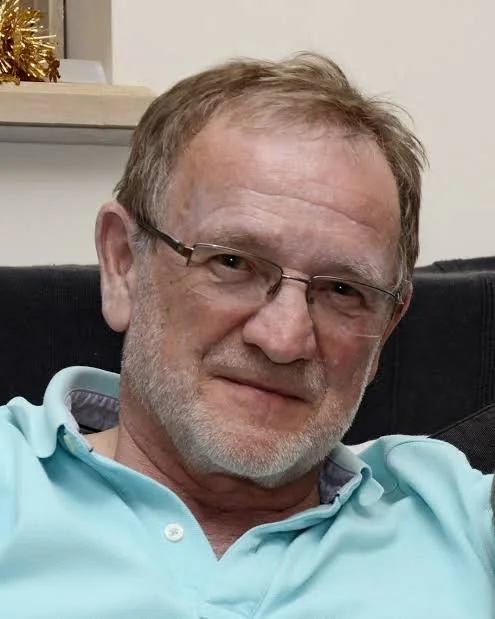
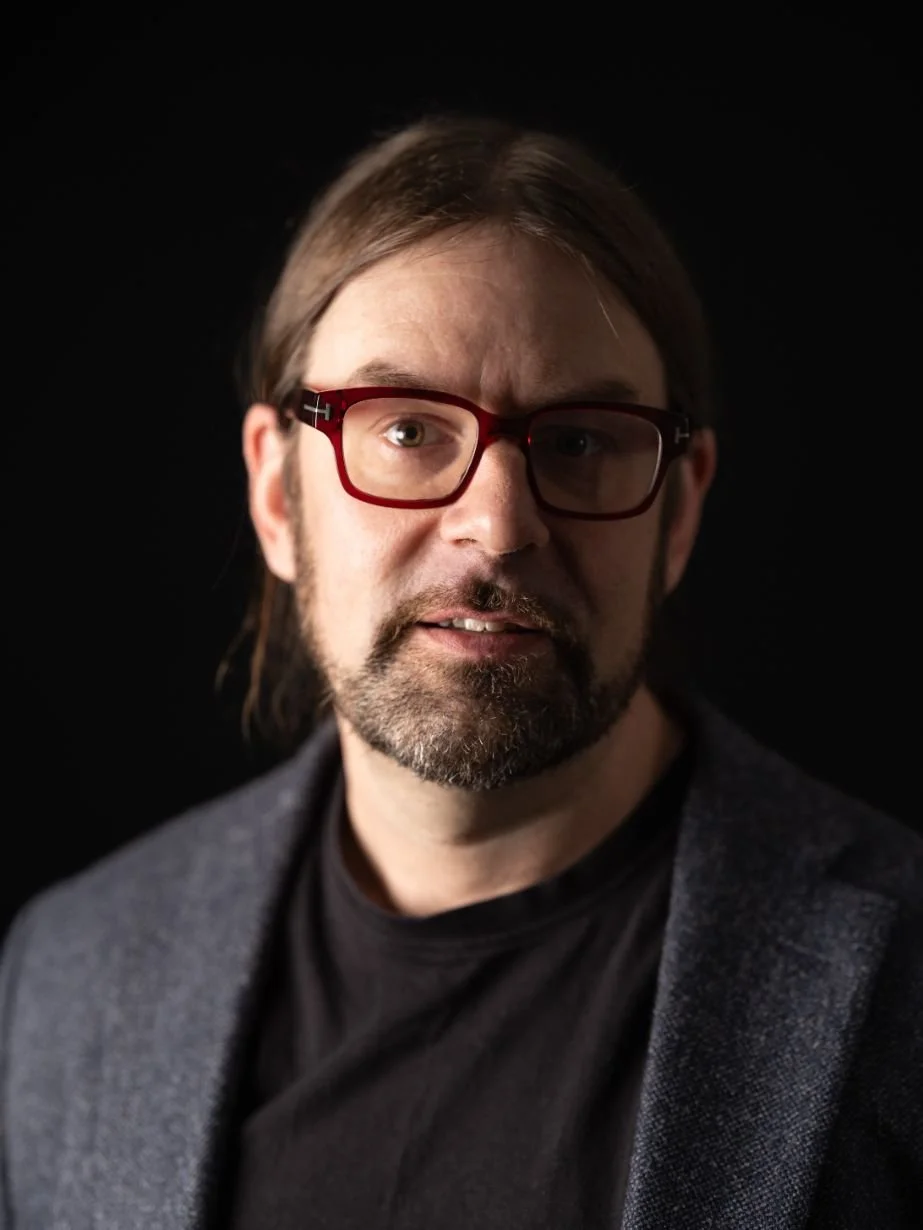
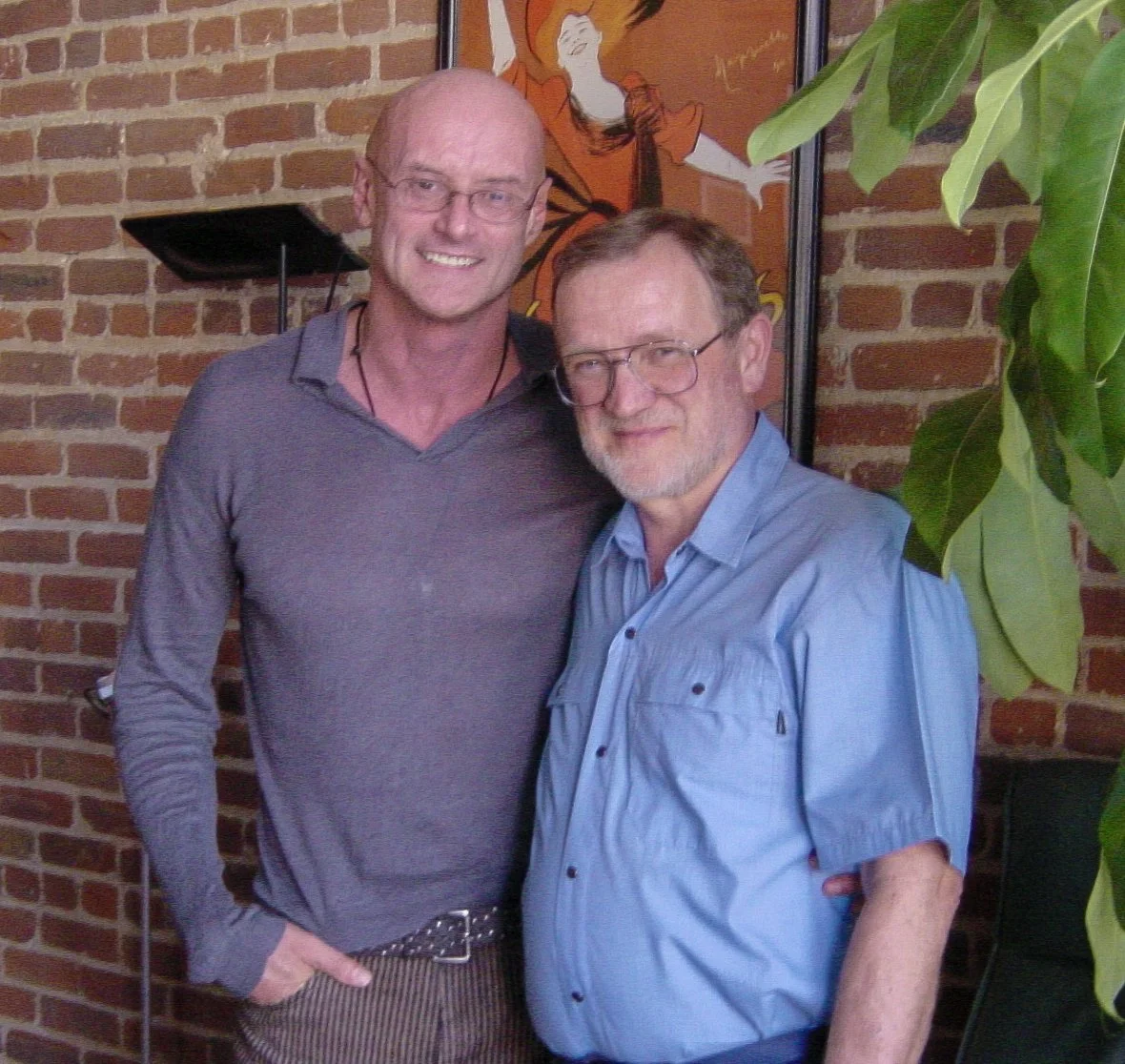

Links
https://appliedmetatheory.org/measuring-altitude-empirically-grounding-developmental-levels-with-the-lectical-scale (The study by Brendan Dempsey et al. at Institute of Applied Metatheory)
https://integrallife.com/polarity-engine (New AI based application of polarity thinking)
www.jpjakonen.com (my website)
Special issue of Futures on Richard Slaughter's work: https://foresightinternational.com.au/about/futures-special-issue-2021/
Website: www.technologyforesight.biz
Transcript
Peter Hayward: Back in the early Noughties I was studying and teaching into the Masters of Foresight at Swinburne and with the encouragement of Richard Slaughter myself, Joe Voros and others were deep diving into Ken Wilber's work on Integral theory. It was a heady and exciting time. That's over 20 years ago. Where is Integral thinking now?
Richard Slaughter: In my PhD, you might remember what I had done was to challenge the empirical basis of futures work, that it was all about forecasting and to actually introduce the notion of critical futures, that was certainly a step in the right direction, but what it really didn't properly understand was what are the human factors that are really at the centre of this? What I discovered about Integral is that it challenged the empiricist view of the world just by that simple four-quadrant device. So simple, but within it is enwrapped this enormous challenge to thinking about the external world. It suggests to us that the interior worlds of human beings and cultures are of equal importance to the exteriors that we're so used to and live in.
JP Jakonen: What integral theory points to is not something that's, not esoteric at all, but it's called interior space of human beings. It's the stuff that we as, mostly visual beings, are unable to see unless we sit down and think about it and do some research on it, and of course that research has been done. But it's so easy to overlook the fact that we have an interior world because, here's the kicker, we cannot see it. We cannot see it, so we have to look inwards, and that's really hard for us.
Peter Hayward: Those are my guests today on FuturePod. Richard Slaughter returns for a chat and he brings a friend with him JP Jakonen.
Peter Hayward: Welcome back to Future Pod, Richard Slaughter.
Richard Slaughter: Thank you very much, Peter. It's great to be here.
Peter Hayward: It's been a couple of years since we've had you on.
How have you been?
Richard Slaughter: I can honestly say that having hit my 80th decade, I've never felt better.
Peter Hayward: Fantastic.
Richard Slaughter: I've got a, a spot here where I'm free of bureaucratic hassles. I've got a, much smaller library than I had before I moved to an apartment.
But it's a, it's got a great vibe and I can work here peacefully. with my beloved wife, Laurie. I've never felt more settled in myself, more clear, more focused ver before.
Peter Hayward: That's great. And you've brought a friend. Can you... Do you want to introduce who we're going to be talking, the three of us?
Richard Slaughter: Yes. Well, as you may remember that I’ve been to Turku a number of times for futures conferences and got to know a few folk there, including Matti Kampinen.
He got together with JP Jakonen., Broadly-speaking, heir and co-wrote a paper about wisdom culture.
I'll let him talk about that. And, um, it was terrific What I particularly appreciated was the way they had picked up the essence of some of my earlier work on Integral Futures and put it together in relation to, the,, comparative studies of religion. It, it's not something I'd seen before. So that's when I first came into contact with JP.
Since then we've chatted for about a decade during which we discovered that we had so much in common that things just moved on from there.
Peter Hayward: And you wrote a book which is pretty much the theme of the conversation Welcome to Future Pod, JP
JP Jakonen: Thank you so much.
Thank you so much. And thank you, Richard, for the kind introduction.
Peter Hayward: So we have a tradition, the first question in Future Pod, and this won't be a guest interview. I'll get you back for a full-on guest interview just, just with you and I. Just for the benefits of the listeners, d would you like to give us a brief introduction about yourself?
JP Jakonen: Well, I'm a scholar of comparative religion from the University of Turku, Finland. Uh, I'm a lifelong junkie of wisdom studies, which means the world's wisdom traditions and the essence of where they are pointing towards. My, my background is heavily tied with the integral philosophy that's been introduced by the American philosopher Ken Wilber, who I did a PhD on.
The PhD was called Ken Wilber as a Spiritual Innovator: Studies in Integral Theory. And I've written a bunch, bunch of books applying the integral theory into, uh, leadership, entrepreneurship business organizations, and just living a, a balanced life. So that's pretty much the highest elevation I can muster at this point.
Peter Hayward: Richard, can you talk about the decade friendship that turned into a book? Why do you think that was?
Richard Slaughter: I think it's because there's a natural affinity between JP and myself personally and in relation to the things that excite us as a discipline. When, we'd known each other for only a short time he contributed to a special issue of Futures in 2021 that was showcased my whole output and asking a number of colleagues to, uh, to contribute. About a dozen people responded and I deeply appreciated them all. However, JP wrote a luminous piece which he called Carrying Fire, which was completely different to anything anyone else had written. What stood out for me is that he was the only person who agreed to, to write one of those profiles who was already using integral methods and who , thoroughly understood it.
Unlike all the other contributors he completely understood what it was all about, what the issues were and how it was, how it was looking as its perspective (or lenses) emerged into the world, tentatively at first. s You may remember that at the beginning, there was a fair amount of controversy about this new enterprise.
Some people felt threatened. They suggested that I was some kind of Wilbur fan making a fuss about very little. But I always felt that, properly understood, integral work could be useful at a fairly straightforward level without going, getting into difficult territory where things. can become problematic.
JP really understood all that, and he wrote about it with such extreme clarity that it just seemed natural that a conversation unfolded from there on in.. He probably has some other experiences from that time that he might want to mention..
JP Jakonen: That's actually pretty much how I felt too, Richard. That what I did in the, in the article was kind of like just highlight the, the-- your life's work and especially in relation to the integral movement, so to speak. How you've combined two, two outliers, pretty much, you know, future studies and integral theory, which are both, still unfortunately not mainstream.
And as regards, just the essence of integral, it's basically making room for everything and pointing out these omissions that we make when we are, you know, using whatever perspective that comes to us naturally, both vertically in a developmental way, and horizontally as we are taking account these different perspectives into, into reality.
So that's pretty much, I hesitate to say that's all there is to it because that's not true. But that's kind of like how my whole, whole take on the integral movement has been to approach it after diving very deeply into it for 20-plus years, to hold it so lightly- ... that it can actually be used in the sense that was referred to in the, in the title of the article, Carrying Fire, you know, which, which was my take on how human beings have used fire originally in caves, you know.
And then we have been able to carry the fire in our pockets in these little lighters, and that's just a staggering phenomenon of human engineering, to be able to carry the thing that took us ages to manufacture, and just a flick of a switch we can light things up. And I think we need to do the same thing with, with future studies, with integral, everything that's, that's, good and beneficial for us humans
Richard Slaughter: Yeah, I remember when I first came across that m- magnum opus of what was called Sex, Ecology, Spirituality: The Spirit of Evolution. It was in a particularly troublesome time in my own life.
I remember coming back to it chapter after chapter and finding myself elated, energized and informed. This was not his trivial. This kind of reaction doesn't happen with most sources you come across. This was something, a revelation, if you will. But in a way that I felt was connected strongly and powerfully with the challenging reality around us.
I got a lot of energy, a lot of inspiration from that. And of course, you and I both at different times have been over there and visited the man himself. I think we both discovered him for ourselves. We went in with open minds: who is this guy? What's he really like? To find out, yes, he's a real person. You know, he lives and breathes just like the rest of us.
He's friendly, easy going. He's also a powerhouse of intellectual knowledge, understanding and application. And my goodness, what a background he has. So, uh, it was terrific, to go and meet the man, find out, yes, he's real. There's nothing about him that, that would cause anyone any concern.
He's, he's gentle, intelligent, bright, and committed. I understood that this was something bigger than just another academic exercise. It was something that had massive applicability. So I got going in my particular sphere, and you were doing your bit in yours, and I think that is really where the conversation continued.
JP Jakonen: Oh, yeah. And there's, I think there's a tendency for academics, and I hesitate to say, but I will say for men to belittle philosophy that causes a visceral reaction And Wilber's philosophy, you know, it, it, and, and integral philosophy more in general, being a philosophy that kind of makes room for everything, touches upon all the important aspects of living, does cause that visceral reaction.
I was just talking with, with my good friend Keith Martin-Smith, uh, who's a Zen priest and writer of an excellent book called When the Buddha Needs Therapy. And he said, you know, reading Sex, Ecology, Spirituality for the first time, he cried because he recognized these aspects of himself that were being labelled as psychotic previously, i.e.,
spiritual experiences. That was time when he didn't have a, a background training in Zen at the time. And, you know, this type of philosophy, I don't know if there's a name for it, but we just call it, like, visceral, emotional, cognitive sci- philosophy, has such deep roots. Think to the great Danish philosopher, Søren Kierkegaard, whose philosophy was all about this, existential conundrum of human living, and his philosophy was not heady, but caused a, a reaction.
Peter Hayward: Your book is called Integral Foresight and Human Futures: An Introductory Anthology. And we'll talk about the book specifically. I just want if take ... I'm curious to hear the two of you do a bit of hindsight on Integral, because I was, I was with Richard at the Foresight Masters at Swinburne, and I was inside that Integral Futures 'bubble', which was very exciting. Extracts were coming out live from Ken, and we were reading them and trying to make sense of them, and we were going to from phase four to phase five to inside outsides and the outsides of insides and the insides of out... it was a very rich time. And Richard, you and I took Integral Futures to, to a few conferences, and we saw people very enthusiastically grabbing onto parts of it. The four quadrants, of course. They were trying to see ways to do it. There was suddenly a blossoming of 'four-quadrant everything.'
Integral gardening, Integral cooking. You had, uh, Integral life practice.
Richard Slaughter: Yes.
Peter Hayward: And then the real juice got going. I think, um, US vice president,
Al Gore, mentioned that he'd been reading it. Then the Integral Institute emerged followed by a website called Integral Naked. There was a real vibe it felt like a it was a very cool place to be.
Richard Slaughter: For sure.
Peter Hayward: And now looking back, what do the two of you make sense of that rush which I think touches on a kind of emotional, psychological, and this particularly masculine side of it. What seems to have happened is that to some extent the energy dissipated, the buzz went away, the circus moved on So can you go back and then come forward to where Wilber Integral is roughly now in 2026?
Richard Slaughter: Well, let me take the first bit and leave, uh, JP to address the second because he's been actually over there quite recently and brought back some fascinating updates. What I would say for myself is that this was part of a long-term process of understanding and growth.
Back in n my 1982 PhD, you might recall I'd challenged the empirical basis of futures work - the view that it was primarily about forecasting. From there introducing the notion of critical futures, which meant, in part that you were open to recognizing the host of factors that emerge from cultural settings and ways of thinking.
,That was certainly a step in the right direction, but what it really didn't mention, or properly understand was what are the human factors that are really at the centre of this?
What I discovered about Integral is that it challenged the empiricist view of the world just by way of that simple four-quadrant device. So simple, but within it is enwrapped this enormous challenge to thinking merely about the external world. IIt suggests to us that the interior worlds of, of human beings and cultures are of equal importance to the exteriors that we're so used to and live in.
Once that really sinks home, your mind opens up to exactly the kind of work that you chose to look at, Peter, which is the stages of human development, which are central to understanding anything. That's one of the strongest features of Integral. We're not building sandcastles on our own on a lonely beach.
We're valuing and working with rich material that so many other people have put their life effort into and, in so doing, created these rich understandings of how human beings work. It meant going back to the early psychologists and the stage development theorists right through that wonderful group of people who already had produced a wide body of usable knowledge. Knowledge about how people work, the social construction of the invisible threads and forces that operate universally in all cultures.
And so we had the beginnings of an outline for re- reconciling the interiors with the exteriors. And out of that really poured all this insight and this richness that you were talking about. It was a really exciting time because we felt we were actually beginning to grapple with the world as it was, rather than some abstract portions of it.
So may- maybe JP could take it from there.
JP Jakonen: I'll take it from here, and that's, that's really beautiful, Richard. What the integral theory points to is not something that's, as you said, you know, it's, it's not ... Well, it's not esoteric at all, but it's, it's called interior space of human beings.
It's the stuff that we as, mostly visual beings are unable to see unless we sit down and think about it and do some research on it, and of course that research has been done. But it's so easy to overlook the fact that we have an interior world because, here's the kicker, we cannot see it.
We cannot see it, so we have to look inwards, and that's really hard for us. Again I hesitate to say it's a male phenomenon, but we tend to have this kind of like masculine bias which, which orients us towards stuff very broadly. And stuff is easy to see, and how staff- stuff fits together, like the classic, uh, definition of philosophy, how things in the most general sense hang together in the most general sense.
But then there's the interiors of things. Okay. Now, going back to the integral movement, as you, as you said Peter, there was this period of kind of like it's, it's, its heyday, so to speak. Four quadrant everything. Four quadrant gardening. Uh, uh, integral gardening, integral life practice, and stuff like that.
And having just returned from the recent integral conference of North America, which was held in Denver, Colorado for the second time, uh, this May my take on the integral movement currently is that it's, it's in this liminal phase. So it had this big start, I would say from starting from the release of Sex Ecology Spirituality from 1995 up until, uh, 2010s.
So there was this big 15-year period. And now I would see that there's like ... I would say there's two broad lines of development in the integral movement currently, where the other version is, is what I call Integral Lite, which is making integral easy enough. I call it cool, shareable, and good enough.
So it needs to be cool as a cool artifact that's passed down from as a, kind of as a meme from one person to another. Then shareable, so it's, you know, understandable. It needs to be light enough to hold in your, in your hand. And then, then good enough, which means, you know, kind of like a light beer.
You know, it does its job. It doesn't need to be any more complex than it is. It does the job, gives you a mild buzz. Then we have the other line of development, which I call the Integral IPAs. So we have Robb Smith's, uh, Institute of Applied Metatheory, and they do tremendous work on actually researching integral.
They just came out with this amazing piece on how integral was right all along. So they've done a, a study of these developmental stages. Uh, you can link that in the show notes, but it's, it's just staggering from Brendan Dempsey and other scholars. So I'd say, you know, it's, it's kind of in a dormant period currently, waiting for its reemergence in these two different lines of development
Peter Hayward: The, um, of course, the condition of the world, I would say, is in a different space too from when integral was getting its rush. To look back to the idea that a vice president like Al Gore would, would say that he was reading a book like it would've been Theory of Everything, I think that was the book that Al Gore said he read.
And of course, it's a quaint idea when you look at the current White House that a theorist like Wilber would even be spoken of
Richard Slaughter: Yeah, that's a long way from where we are quite clearly. But I think this is one of the things that makes, integral so con- so permanently vibrant and useful.
Liminal is another richly expressive term. I don’t know about JP, but when I look around the world I see clear evidence of the kinds of the sources and origins, the raw drivers of dysfunction.. This view is assisted, of course, by, Spiral Dynamics, which sounds alike a an American neologism.
I was completely wrong because when I heard of it. "Oh no, not another ne-neologism from the US. We've got enough of those." But it actually proved to be an incredibly valuable way of summarizing not just individuals values, but what was going on within each of those bands of possibility.
So looking, uh, looking out at the world today, we, we can see the absolutely raw basic values that are in play. And questions about "how did the people running things come to be where they are, given that the values and worldviews that they hold are manifestly, manifestly inadequate and inadequate for all to see.? "We're currently in a situation where raw power has at least temporarily overwhelmed the discriminations that are available to everyone to see through exactly what's happening and why. Hence, there's a, a very powerful payoff, I think, in terms of diagnostics. We may might come back to this a bit late, but it's something that I've used very specifically in relation to my long-running attempt to understand what's been happening with the IT revolution.
I don't think I could have got as far in this inquiry if I hadn't had something as clear and sharp and usable over the long haul as these integral models.
Peter Hayward: I, yeah, I s- yeah, I can see some, I think I can see some fingerprints. Do you want to explain that idea just to kind of illustrate, I think, the very, very important point that Richard's making about what we're seeing as external behaviour, and its I think, strong relationship with the inadequate of, the inadequacy of their relative individual and cultural development of institutions and organizations?
JP Jakonen: Well, the, the technigarch thing came from, me and Richard talking about the whole IT revolution and the state of, of the world currently, in the light of what the technological oligarchs are, are doing. And I kind of offered the, coming from my background as a, as a scholar of, of religious and spiritual traditions, that these, the notion of these technigarchs being as failed Buddhists in the sense that they are looking for, well, looking for salvation and kinda like looking it from the r- having these, these, we have these, we have a need what I would call a spiritual instinct. We have a need for, or for faith. And as Richard pointed out to spiral dynamics these levels of values that we all go through, we can see that when we have a value, it's something we believe in. We believe this map that's presenting itself instead of the world view that we see through is, is something that is very sacred to us.
Richard Slaughter: More recently I've learned a lot from people like Richard King and others like him who have taken a very close look at the worldview of, the" and investigated the foundations of , techno-scientism. Which, quite simply, refers to the profoundly uncritical Some 20 years ago, there were early efforts in the U- US and elsewhere to set up a number of what Robert Jungk called 'lookout institutions" or institutions of foresight.
One of them was called the Office of Technology Assessment, or the OTA, which I remember ell. I recall meeting some very bright people whose task tas to work their way into certain issues and to offer some useful observations about how they might, or might not be developed.
However one the Neoliberal ascendancy got going during the , Reagan and the Reagan and Thatcher regimes any notion of that kind of thing happening outside government was completely rejected in favour "Laissez Faire" That is, small government, markets rule, people should get out the way if they want access to "trickle down" wealth.
That was basically it in a nutshell. Well, what we've seen, of course, is the failure of that whole way of doing things. As a direct result we've seen a whole series of technologies launched as if there was nothing at stake when you put powerful new technologies out t into the public realm.
More recently it's become more clear how that very act of introducing LLMs (Large Language Models) a couple of years ago flies in the face of cultural wisdom, cultural knowledge. The injunction "Do no harm" or "Hippocratic Oath" has been with us for some five thousand years, and for that reason alone should be taken seriously.
Which is why the medical world continues to respect and apply it. . They don't release drugs as soon as they're invented. They run extensive trials to make sure they're absolutely safe before they can be put to wider use.
What we've seen in the last 20 years from the US and unfortunately from China, Russia and others, is a complete denial of that tradition. along with foresight and taking care. They've rushed innovations to market without the slightest concern for the risks, costs and long-term consequences. What I found particularly revealing was Shoshana Zuboff's account of how the internet oligarchs got started by working in secret and establishing the technology that led directly to the abuses and very real dangers that characterise the internet today. Her book, The Age of Surveillance Capitalism usefully described how they got started while the US government looked the other way. In effect, they weaponised the internet and put everyone, including children, young people, women and the elderly at risk.
What could have been, what was originally thought to be a new era of communication and understanding turned into a criminal enterprise dedicated to power and profit. To put it differently, instrumental power was given free reign, and the human values that are central to any viable views of present and future were put on hold.
I'm going to suggest here that we defer further discussion of the wider implication for another occasion. I'll just add that
the power of human ingenuity, of science and technology has been used incredibly badly, because the motivations, the purposes, the way it's been done are tge direct product of inadequate values and worldviews.
Peter Hayward:That's a good spot, JP, to bring you back in. So, so let me ask can you now frame what Richard has just explained through the integral frame as a diagnostic of what's going on?
JP Jakonen: Sure thing. So One way to interpret what Richard just offered is, is as a critique of the overemphasis on velocity. There's a polarity here, on the other side, we have wisdom, on the other side we have velocity. So what's behind this is what an over-emphasis on the ethics of velocity, which is imbued throughout the technogarch worldview.
It's coming from neoliberalism where velocity rules, where innovation rules. And there's nothing wrong with innovation. I've been an entrepreneur for 16 years, not in the technological sphere, but in the wisdom sphere of things. So I understand innovation but tend to focus on the other side
Within the integral framework, polarity thinking is like a stepping stone towards the deeper aspects of integral. But we need to understand that, that human beings usually, you know, are really bad at holding two opposite thoughts at the same time and seeing them both as true. Yet that's part of what integral thinking offers. It says, ok, we have two opposing truths that can be true at the same time, and here's how to approach them.
Fr the past 20-plus years, the ethics of velocity has ruled the world, which we have seen in the proliferation of social media, now LLMs taking over. And again, offering the perspective of, of wisdom studies or spiritual understanding is we're looking for saviours in these things.
But the saviour is coded in this ethics of velocity. The saviour we are looking for is a world where things happen at the speed of thought. But anybody who has investigated human thought knows that, it's not a place that can be trusted.
We do not have the wisdom to operate these technological advancements, we can see that, that it's like handing, not a toy gun, but a real to children. So we are split-speed blinding wisdom in our species by using these tools for which we lack the inner maturity to handle
Richard Slaughter: Yeah, I think JP's got it right, exactly right.
The key point there is that the greater the power, the more care and maturity it requires. The more forward-thinking, the more careful one would expect agencies to be. But unfortunately, the oligarchs regard technology as their very own religion. They are betting on it to overturn most, if not all, of the rules and procedures and safeguards that every viable society in the past considered essential.
It's like watching a horror show at a distance where the script is written elsewhere. For me, it's essential to see through that, out the other side and to know what to do when things look so desperately unhelpful, now and in the future. .
That's hat's partly where my work has been going over the last while. But I also want to give credit to people like Adam Becker and his book More Everything The he subtitle is interesting as well: AI Overlords, Space Empires, and Silicon Valley's Crusade to Control the Fate of Humanity.
There's a list of people in the back of the book that he's interviewed and a list of those who refused. So you can see exactly where he's gone, asked questions and listened. He's brought back to us a non-integral but a clear account of the sort of values and the projects that emerge from them, the way of thinking, the actual worldview. Unfortunately, the latter turns its back on history, on us, and the natural world, to pursue far-fetched fantasies that are closer to science fiction than the real world.
This reminds me of a comment of Ken's years ago that I'm sure JP will remember. He talked about people "running around in the world of time looking for the timeless.?
JP Jakonen: That's exactly it, and that's the, that's the technocrat as failed Buddhist's illusion, where we are looking for the timeless, which is, of course, it's the, I, I always fathomed the timeless as the thing that everybody is looking for, but they don't know that they're looking for that, and that's what I would call our spiritual instinct as a species.
But we give these interpretations to our spiritual instinct according to our, well, our, uh, stage of development, where we are currently at, the worldview through which we are seeing and interpreting the spiritual instinct. For example people who have a technogarch mindset, the ethics of velocity is one way of interpreting that spiritual instinct.
It's whatever happens fastest and gives us the easiest solution from a technical perspective. And it's really understandable, the whole conundrum of our, you know, present-day living, which might seem hopeless, suddenly starts to seem more hopeful when we see through the developmental lens that, look, this is the very holy, very sacred instinct we have, and these, you know, I hesitate to say, but I will say, these poor people are just, you know, giving it this very thin technological interpretation.
I don't know, like colonizing Mars, which is about the worst idea I've ever heard. You know, let's colonize Mars because we do have a paradise here on Earth, but let's just, you know, blow it up and move to Mars and eat cockroaches in tunnels. And it just gives us, um, ... I don't know. It, for me, it gives the developmental thing, the developmental perspective gives a more hopeful view of both the future and our present. We can see that there's this bias for- Mm
this type of interpreting of our, our need for timeless, which is never found through any of these developmental levels', The spiritual line t is whole other line of development in itself. It's always already here since we're already home.
Richard Slaughter: Yeah, I'd also like to add to that. I said earlier that, um, what's important h- too is to know how to deal with the, the gloom and doom stuff, and how to look beyond it and not feel overwhelmed by it. I find meaningful to me, as with many of other people, is re-engagement with nature.
I've recently rewritten a piece I put together in 2019 called Future Studies as a Quest for Meaning where I look at some of the experiences that led me to take a much more reverential and profoundly considered view of life, especially looking into deep time I began to appreciate how some of the very earliest organisms on Earth are embodied in parts of our own biology and how we didn't appear until very late.
Peter Hayward: I'm gonna ask you to draw this back to the book. Uh, we haven't really talked about the book. So is it possible to kind of... 'Cause I want you to talk about who the book is written for, and who should-- who could be interested in in, in getting their hands on it. And I, and I understand, Richard, it's actually...
There actually are some options as to how people actually get access to the book.
Richard Slaughter: Yes. It's an open access text, and the University of Southern Queensland has made that available via their Open Text system. So there'll be a e URL in the package that you put out on Future Pod showing exactly what the, what the URL is.)
JP and I worked on this together on and off for 2-3 years. We ended up making a careful selection from material published between 2007 and 2020. We began with aspects of the Futures Context that pre-dated Integral before outlining some early Methods. Finally, we considered wider Consequences in two ways. First, 'out there' in the real world, second 'in here' with FS supporting personal searches for meaning. We used JPs piece 'Carrying fire' as the Foreword and literally gave him the 'last word in a helpful piece based on the metaphor of a several-storied building. The levels, with rooms on each, provide a clear illustration of how key Integral concepts fit together.
Peter Hayward: JP. Would you like to say a bit more about that Afterword?.
JP Jakonen: Sure. I introduced what I call the multi-story building model or architecture of worldviews, which is my introduction to integral theory for people who are not yet well-versed in integral theory.
So it's, it's a model that I came up with about 10 years ago that I used out of necessity basically when I was talking with my clients who are leaders in organizations who don't have a lot of time or who might have a really short attention span due to the complexity of their everyday demands.
If I wanted to get the idea of integral theory across to them, because I knew it would be helpful for them to, for example, see some of the omissions they're making in their leadership I sketched out a 3D model of a rough sketch of a building and I said to the people or to the person like, "Look, you know, if you're in, on the first floor of this building you can only see your own front yard.
So your view of the world or whoever is working for you the view of the world is egocentric. It's just their own front yard. And if you go up to the second floor of the building you might be able to see the whole yard. Oh, this is our yard. This is our building, our common building. So now your world- worldview comes, becomes ethnocentric or group centric, so it's not about just me but about us.
But it's not yet all of us, so you have to climb to the third level of the building to see, look, these buildings are everywhere. They're a global phenomenon and people all around the world can see not only their own yard or their common yard, but people all around the world can see these yards. So thinking becomes modern, uh, and global, and all of us type of thinking.
Then if you climb to the fourth floor of the building you can see these buildings, they cast these long shadows, and these long shadows they marginalize some narratives and some stories as your thinking becomes post-modern, and it comes even more complex. And I use this analogy to illustrate the fact that people in all sorts of organizations do have these different views.
Some people can see their own yard, some people can see the common yard, and some people can see even more complex views. And it went down really well, so I, I-- over the years, I tried it out a bunch of times with people I was consulting with. And little by little, I added some other nuances to the building model.
So I added these rooms, which are the quadrants in integral theory. So if you want to see, for example, what's going on outside of a person or, for example, measure their, you know, their output, you have to go to this room. But if you want to see what's going on inside of that person, you have to walk, literally walk to this other room and look from that window and ask them, you know, "What is going on?"
And make these interpretations and all the difficult stuff. Uh, I made this into a picture, this rough 3D sketch that was introduced also in the appendix of Integral Foresight. And it seems to have, done its job in the sense that people can grasp the essence of, of what integral is fairly quickly despite their so-called level of development or whatever
Richard Slaughter: Yeah, I, I think it's a magnificent addition to the book, and it, it really makes a point that has been central to, to my thinking for a long time, which is what we're looking for, the goal, if you like, is clarity around what it needs to be constructive and able to play a positive role in this challenging world.
Itt can come down to something as simple as moving from a sociocentric worldview to a world-centric. I know there are levels beyond that, but just that one shift, then moving from a conventional viewpoint to a post-conventional viewpoint. Now, that's two transitions. They're quite easy to describe - what's involved in them, what you have to do, what the point is, the consequences that emerge.
But they're also not submerged in great detail. It's something you can communicate very simply, and it has as much depth and, and explanatory power as you want to discover. So it does come back to the way that individuals are operating now in the world, the extent to which we're willing to reflect on those.
Walking up and down and around JP's building is probably the, one of the best ways I know to do it because it's so clear. Everyone can remember what a building looks like. Everyone knows what he's talking about. There's nothing esoteric there. If you want be esoteric, you can. That's fine. Go ahead.
There's lots to do. But, as I said at the beginning, some of this is so straightforward that it's amazing that anyone would think they were under any kind of threat. If there is a threat it's that you don't know a way forward that meets your own very personal needs..
JP Jakonen: It's like I met Ken Wilber just recently at his house and he said, you know,
It's just so staggering how developmental studies isn't yet a mainstream thing because it's just so obvious, and as the building metaphor explains, you know, anybody, I mean anybody can understand it. Look, I've tested this with very high-level CEOs. They seem to get it, and I've tested if with our 11-year-old daughter who is always asking, "Daddy, what, what floor am I now on?"
And I'm saying, "Well, based on what you're saying, you're probably at the second floor, but you know, what you just said, it's kind of like you're approaching the third floor." It's like the carrying fire analogy. We can have these very complex fire rituals, or we can just carry this little bag or a little lighter or a box of matches in our pockets.
We can choose, but in the end, it's, it's not any more complex than, than how anthropocentric fire turned into these little lighters that we are able to carry.
Peter Hayward: Good stuff. Look, congratulations on the book. I think, Richard, there are some people that we need to acknowledge, otherwise there would not have been a book.
Richard Slaughter: Thanks, Peter. Well, the driving force really was Luke van der Laan. who was at the university when this was happening. It took a huge effort for him to intervene and actually get the copy editors and, and the artists and lined up and oversee the early stages. Special thanks are also due to Adrian Stagg for managing the university side of the process and Samara Hoffman who created two highly distinctive covers, one for this book and another for Deleting Dystopia.
Integral Foresight was published by the School of Humanities and Communication at the University of Southern Queensland, October 2025
Richard Slaughter: Yes. It's an open access text, and the University of Southern Queensland has made that available via their Open Text system. So there'll be a e URL in the package that you put out on Future Pod showing exactly what the, what the URL is.)
The team really worked hard to get this one out. We produced an earlier ePub called Deleting Dystopia, which is basically a series of my articles from Futures about the IT revolution was developing up to a certain point. It conclude very simply that there are two things that we can do.
First of all at that time, two, two promising leads were suggested. First, , remember that these people have no social license, and remind them of that regularly. Second, what we need are to see so-called social media as utilities, build them as utilities that are meant to serve the public.
The, the covers are similar. Beautiful design, uh, in both cases. They go together very nicely. And of course, open to anyone out there who is interested in thinking about futures, thinking about how tech and futures, can be approached.
Or maybe people who are both beginners and experienced practitioners alike who are looking for as lightly different edge. There's a very strong tendency in futures work these days to use the new technologies, and I get that up to a point. But I'm not at all sure that people realize quite where it's all leading.
The fact that they're useful in a various ways now does not mean that the whole show has to come our way and take over, which it looks like being ready to do. So these two books sort of do go together in, in a certain way. Integral Foresight is the most recent, and I hope people will get a lot out of it.
It's certainly been a pleasure working with JP on it.
Peter Hayward: Last words, JP. I'll give you the chance to - Bring this ship home?
JP Jakonen: I'll bring this ship home with just two words that sum yo my take on futures and integra:. radical simplicity.
Peter Hayward: it's been wonderful. Congratulations to the two of you on the book, and thanks Luke, who's been a guest on Future Pod for making it possible, and the university for supporting it. And thanks for you two doing the work and just being the people you are. And thanks for spending some time with Future Pod.
Richard Slaughter: It's been a pleasure.
JP Jakonen: Thank you so much.
Richard Slaughter: Thank you.
Peter Hayward: Thanks to Richard and JP for taking the time to explain why they believe that Integral still has much to offer. If you think it might be something that could offer something to you then the book is freely available. Go and get it. Future Pod is a not-for-profit venture. We exist through the generosity of our supporters. If you would like to support the pod, then please check out the Patreon link on our website. I'm Peter Hayward. Thanks for joining me today. Till next time.