

In episode 248, Peter speaks to Ruth Lewis who is a trained foresight professional and professional engineer with a passion to assist people make wise and informed decisions in technology investments to enable preferred futures.
Interviewed by: Peter Hayward
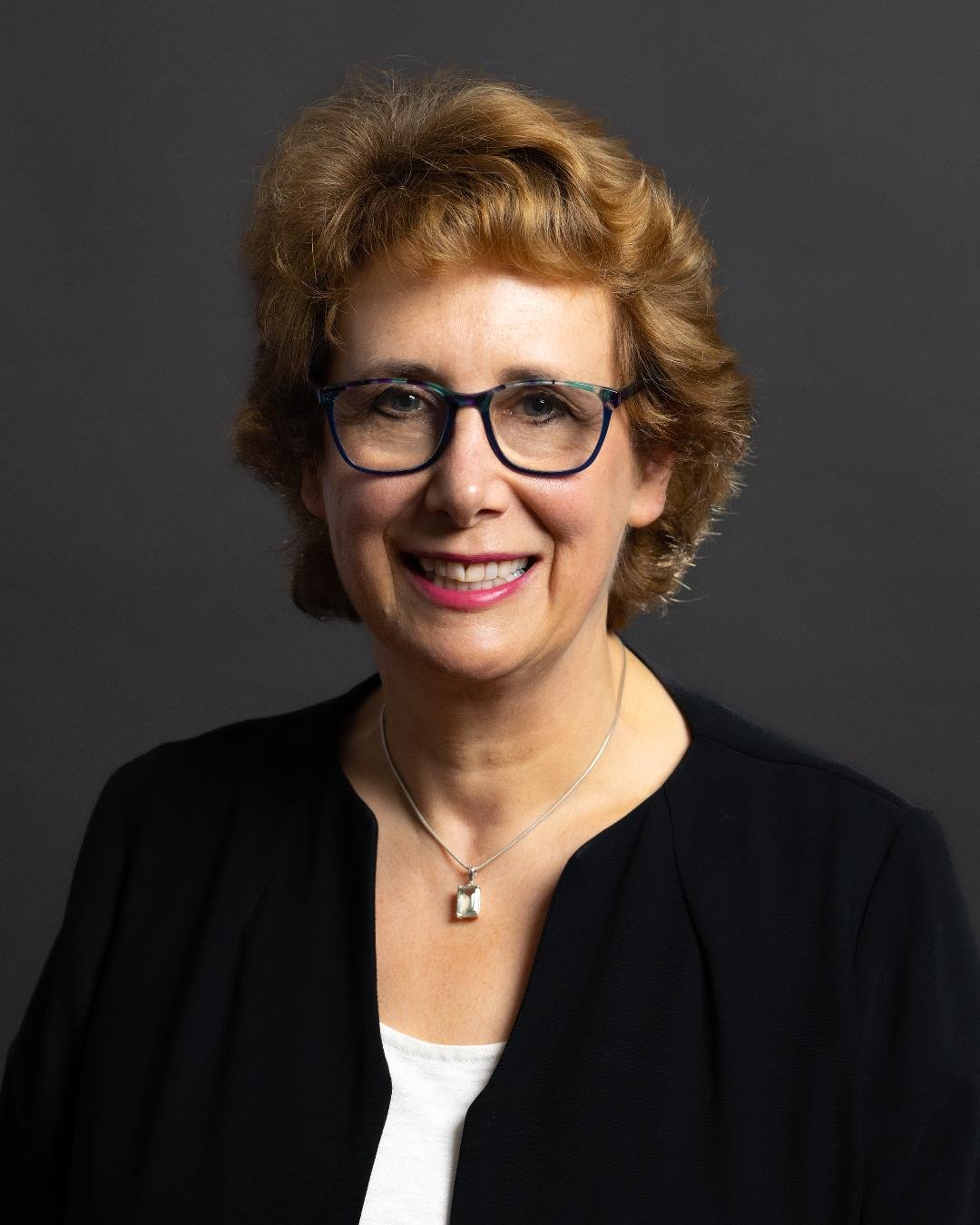
Contact
Website: www.technologyforesight.biz
Transcript
Peter Hayward: Can we marry the ethical concerns many have about AI's impact on our lives and work with the economic and technical dimensions of AI?
Ruth Lewis: Absolutely, people are distrustful. They are fearful not just for their jobs but also for their futures. When you think about your kids, already entry level jobs are being displaced. That's one thing. But also there's some organizations, many organizations introducing AI perhaps not in a well-governed way and people are concerned not just for displacement, but how that's actually going be affecting their job. I don't mean to make it sound like all doom and gloom because AI can do some amazing things. You look at some of the applications in the medical field or in predicting rainfall and climate change and it can do some most extraordinary things. So what I like to think about is all the wonderful things that AI can do. In some countries, I believe particularly in Scandinavia, they anticipated that AI would be such an extraordinary opportunity that they actually educated their population to actually think of how they could solve problems using AI. And everyone became a centre of problem solving and really AI is in that sense just a tool to solve fundamental problems or other problems that perhaps humans would take too long to actually solve. I think when we think about AI and other sorts of emerging technologies, ultimately it's there to solve problems for us and we can use it for good, but you know how is it gonna be applied? That's really the issue in terms of us distrusting, the way it's being developed or potentially the way it's being deployed. And then it becomes around a power imbalance, doesn't it? Ultimately it's about empowering people. Empowering communities and society in using AI for good instead of just as an extractive mechanism.
Peter Hayward: That is my guest today on FuturePod, Ruth Lewis, who is a trained foresight professional and professional engineer with a passion to assist people make wise and informed decisions in technology investments to enable preferred futures.
Peter Hayward: with welcome to Future Pod Ruth.
Ruth Lewis: Thank you so much Peter. I'm just so delighted and excited to be here today.
Peter Hayward: It's good. And
Ruth Lewis: to see you again.
Peter Hayward: So let's start the Ruth Lewis question. How did you get involved with the Futures and Foresight community?
Ruth Lewis: Oh, wow. So it was, it's an interesting story actually. So in terms of who I am, I suppose I need to explain my background and then how I, I got to the Foresight community, I describe myself as a futurist and an engineer by way of the IT industry with a work history, including being a network consultant and a business analyst and a strategic business consultant in technology in in the IT industry.
I guess at some point, probably a bit over 10 years ago, I was looking for some inspiration and I actually found the master of Strategic Foresight, (which of course you were teaching at the time), in an educational fair back in 2015. And that's where I wasn't looking for an MBA. And I remember you wrote a very interesting paper about the difference between MBA students and Master's Strategic Foresight students.
And I would say I absolutely fit in with them,
even though I did wind up doing I think a couple of strategy subjects in the MSF. They were probably the only ones I took out of the MBA course and I just found the MSF so exciting! So I actually started the Master of Strategic Foresight, as you probably recall, back in 2016, which was quite a watershed moment, unfortunately, for the course.
And I remember seeing your face on my first day there and you're counting up the number of students enrolled and I think there were about five, maybe six. And I saw your face more and I thought, oh dear, what does that, and I think I soon found out beccause I think that was around the time they told you that they were going to retire the course, wasn't it?
Peter Hayward: That's right.
Yeah. I was a futurist. But I can also count fingers and toes and once I didn't have to take my shoes and socks off, uh, to count the students, I knew the course didn't have much longer for the world.
Ruth Lewis: But how lucky was I to actually have the opportunity to enrol?
And then of course I graduated in 2019 and I think I was one of the very last graduating students from the Master's course. So even though you had at that point retired, and we of course carried on withJoe Vorros, he was just so wonderful. And you came back as a guest lecturer. So we were lucky enough to have you as well.
I was just so lucky to have the cohort that was the last graduating cohort of the full course and was able to change my viewpoint, essentially change my career, or not really change it, but more integrate Foresight thinking into my career and then change course into amuch more holistic version of what I was previously.
Peter Hayward: Because we had a lot of fun we, we got, pretty wild in the classroom and thought about stuff, but you had to go back into the world after all the fun of the classroom and actually land this. How was that?
Ruth Lewis: Well, it, it was actually an integrative experience.
What I found was that pretty much all of the subjects that I did, I put into practice. This was all in anticipation of the challenges of emerging technologies such as AI, and I do believe the course helped me to anticipate these changes, but also the purpose of the course - as Dr. Joe told us - is you actually work out what we wanted to do.
What is our purpose in life? Yeah. And he talked about, are you an advocate? Are you this, you know what exactly? What's the meaning for your life? And that kind of came through, designingInnovative Futures and 21st Century Challenges. These are all subjectswe did, Powering 21st Century Innovation, and of course, Foresight.
1 and 2, and particularly Foresight 2, where the whole subject was about our personal futures and what the global challenges are that we see and what our part is in solving that. And so I took that on board. Seriously took that on board. That's what I wound up turning into my future is how to not just to help myself tosolve these enormous global challenges, but helping other people to also solve them as well. And I think that was what Dr. Joe was really saying about you'll find your way, but first you've got to identify what it is your challenge is going to be. Andthat's the way I went through.
Now, of course, I'm a global lead in, developing engineering standards, in publishing engineering standards. And those that are also in development that directly address these challenges that we were looking at in some of the subjects thatwe were studying. Some of thechallenges such as, environmental, waste andjustice in energy transition, around technology-facilitated abuse around AI and emerging technology and how it dehumanizes people, how to turn that around. I remember the first subject you taught us was all about hope and Hope theory. It's all around giving people hope, but in a very concrete way.
These are engineering solutions engineeringprofessional standards that we want people to know about and actually to apply in their work. And that will give them hope. It gives them both agency and pathways as you once explained to us in a very visceral way. But it's also around how industry is changing, how people's work.
Is changing in the introduction of some of these emerging technologies such as AI particularly the white collar industry and in particular the engineering profession are facing profound changes to their ways of working and also the career paths through the introduction of AI and how it's developing.
So, that's what I'm looking into, what I'm actually advising on and how we're developing those standards. And, um, the other part of it is, so I do a lot of that on a voluntary basis, but I also have my own professional consulting firm, which is called Technology Foresight Consulting. I think a number of the subjects I was researching at the university and my consulting company assists businesses and governments and non-government organizations in realizing their ethical purpose, their objectives and values through emerging technologies such as AI. So, yeah, it's been quite a journey.
But I'm just so happy that not only were my eyes opened to the opportunities through strategic foresight, but I am able to put that into practice every day through the work that I do. Yeah. So, enormous gratitude for that.
Peter Hayward: So let's talk aboutthe way you do the work you do, because you are quite right, Technology forecasting is a quite well established way of arguably projecting a lot of technologies forward, trying to work out how these things get landed and integrated and worked in. And of course, in the foresight classroom, we, yes, we recognize that you could project. Future's out. But we also wanted the inward turn where we talked about the psychology, the cultural dimension, the moral dimension.
We spent a lot of time talking about insights, interiors of people and correct organizations. So when you do the work you do, is it, are you I'm sure, Ruth, you are not. Doing just futures on the outside. You are also having conversations about futures on the inside?
Ruth Lewis: Yes. No, and thank you.
That's such an interesting way of framing the question, Peter. In fact, I'd say 99% of it is futures on the inside. It's around worldviews. It's around Ethical theories. So, for example, Beck and Cowan’s Spiral Dynamics is used to explain worldviews on things like AI policy, regulatory, and as well as community responses.
So issues like trust and truth, people's responses to AI, and how it's actually integrated into their lives for positive or negative or in between. So Spiral Dynamics helps me to frame engineering standards for engineers that encompass different worldviews of morality, of technology, of society, and of planetary stewardship.
So that's one example of a framework that I find really helpful. It's all around worldviews.
Peter Hayward: Can I ask a question I don't expect, and I as it, when you do this with engineers, do they, are they comfortable, willing, enthusiastic, or reluctant to actually take what. Yeah, things are complicated on the outside alone, correct?
Ruth Lewis: Yes.
Peter Hayward: Without wanting to talk about what's going on at the individual cultural moral level, or are in fact people going, no, actually we want to talk about these things as well as the external complexity.
Ruth Lewis: It is a mixture, Peter, to be honest, and it is definitely an emerging space. So we call these types of standards, socio-technical standards.
Yes, that's correct. The traditional way for the engineer to think, and if I can refer to Spiral Dynamics is very ‘orange thinking’. It is, and if I was to talk about another subject that we did in, when we studied paradigms of inquiry in our Strategic Foresight to where, um, we talked, a standard.
Or a normal technical standard. We use what we call the positivism paradigm. Whereas socio-technical standards, we use this participatory paradigm with co-constructed realities and transdisciplinary teams, where we have engineers working alongside sociologists and anthropologists, philosophers, and you know, and defying what we mean.
It is a work in progress. Yes. The traditional engineer is very much within the positivism paradigm because that's the way they've been trained. That's the way I was trained, and they don't take anything else seriously. But now people can start to see the changes in the world, and it's honestly the only way you can, you have to learn this new language.
You have to learn. How to co-construct these new solutions to these incredible challenges, to the world, and indeed to the industry. So it's not enough to just say, yeah, well I was taught that, yeah. You know, 20 years ago or 15 years ago, or 40 years ago. Because you need to know more. You need to know how to deal with these things.
And I tell you what, engineers are nothing if not innovative. Engineering is about innovation and finding solutions. And that's why I'm always hopeful that we can, and that's become part of my mission, to actually. steer the boat towards understanding this wider view of how we need to think about crafting solutions to these enormous challenges that we're seeing.
Peter Hayward: I think too, that you already mentioned this, the fact that as experts, engineers are terrific at designing, at coming up with innovative solutions for the outside, but something like AI fundamentally undoes the need for engineers at all. So they actually have a very emotional response to this.
This is this, yes, this is a technology, but it's actually a technology that could actually make them obsolete.
Ruth Lewis: Mm-hmm.
Peter Hayward: And it must be fascinating to work with people who are just used to complexity being something out there that really doesn't affect them as a person, as opposed to a complexity and a technology that actually when they grasp it goes to the core of who they are.
Ruth Lewis: Who they are, but also the communities that they are designing for. Even, you know, things like a perfect example when we talk about city design and smart cities. Of course, smart city design's been around for a while, but when you look at truly integrating individuals within their society, within a city.
And that's just one example. You know, you actually do need to understand how communities work and how they live and how individuals work. So you need, to work much more holistically. And they're starting to realize that this is terribly important. And really, that's the growth area in engineering is to understand those areas.
Because in fact, the technical side, as you said. We'll eventually make the technical side redundant. Redundant in the sense of if a machine can do it, but you still need to have the accountability, the transparency of the design
too, from a liability point of view, because a machine cannot be held liable from a legal point of view.
You know, whether you are talking about a self-driving car through the manufacturer or the distributor or the automated taxi service or you're talking about a bridge that's going to stand up, there's still that only a person or, or a corporation can be sued, not a machine. So. At
Peter Hayward: the moment,
Ruth Lewis: way
Peter Hayward: at the most
Ruth Lewis: at the, well, that's, that's the way the law works at the moment, you know?
So you still need to understand how that works and therefore, the key challenge is, well, how was that solution actually built?
Ruth Lewis: How was it designed and built? If you don't understand that, because there's no transparency in the way that many of the AI systems work.
Peter Hayward: So Hale wrote an essay, it's gotta be near on 30 years ago, where he talked about ethics for basically technology. Will we ever grant them having rights and 'cause if these increasingly become part of our life, part of our work, part of everything, then to what extent do they actually have rights? I just read an essay this week where, one person is saying these are probably, if they're not already smarter than most humans, they certainly are heading towards a form of super intelligence where these will able to, these will be able to do much, much more than humans can do.
Ruth Lewis: Yes that's really interesting. And in fact, one of the standards that we are developing is all around AI promoting and use in implementing Earth law. So Earth itself is a legal entity under some jurisdictions. So yes, we actually have a standard for that too. Absolutely. Can I go back to some of the other theories, or frameworks that I use. You mentioned Sohail Inatula. His Causal Layered Analysis is always very, very useful to dig underneath the common language to explain intentions and of course, theory. We talked about a lot that is really good around how to direct social change.
And the standards that I lead are really around society and technology and how that will work together. Scenario planning I think is always very helpful, particularly when we look at different scenarios, particularly our four-quadrant scenarios to explain different ways of engaging or pushing for change and also aboutThinking alternatively from, as you were talking about technology forecasting or projecting the current into the future, explaining about alternative futures, particularly with the hope that we are not locked into a particular future and are steering people into thinking about hopeful futures and alternative futures or even preposterous futures andtheir preferred futures and so on, and systems thinking.
I remember really enjoying that back in the university days. That's very, very helpful, particularly when we talk about emerging technology and also data use. And how it will impact society and the planet, and what to do about that. And then of course, all the ethical theories that we learned in our final year.
Subject Foresight 2, where I've gone through that and it's Used all the time. Yeah, very, very helpful. All of those subjects were just fantastic.
Peter Hayward: So what's your ethical frame? So what's Ruth's ethical view on how you travel through the world and make a difference?
Ruth Lewis: Oh, okay. So I think, I'm very much, into looking at it from a multi-ethical frame to be honest.
And I think that, again, that came about through the first standard I engaged with while I was actually still at the university whilst doingForesight 2, which was actually developing an engineering standard. That combined the ethical theories such as, duty ethics and utilitarianism and Aristotle's virtue Ethics, which is character-based in defining ethical values and applying and embedding that into technology. So that is my framework. Defining and understanding what are the values, what are the ethical or human values that need to be applied to technology? When we think about how that's going to be used. By the individual, by communities, by society, and the impact or outcomes that we want to see, or that may be negative when, as an outcome particularly forhuman wellbeing when applied into the world.
Peter Hayward: So that's, yeah. I was gonna ask you, is that. Is that a hopeful future that we might see in the future? Is that a future that we're got one foot in at the moment while another foot is in another kind of financial, economic model? Can you marry. That ethical dimension with the economic and technological dimension?
Ruth Lewis: I thinkvalue is also partly to do with the economic side, particularly where we are talking about, you know, that the societal capitalist model that we are, we need to produce. Economic value, exchange value in order to drive market acceptance.
In fact, engineering standards and international standards are generally all voluntary. They're all supporting market trade from an international point of view, from a geopolitical point of view, geographic point of view, because they cross boundaries, and they allow international trade. Safe international trade because people understand when there is compliance with particular engineering standards, that they know what they're getting.
When we are talking about from a socio-technical point of view, again, they understand there is transparency of the ethical framework that has been applied to a particular product or service. So that's why they're so, so important. Yeah, absolutely. It actually supports the free market and economic trade.
So, very much so - the ethical dimension and the economic and the technological dimension need to be married through the socio-technical standards.
Peter Hayward: I read just recently that, and again, I won't say this is general data, but a lot of the polling of individuals, particularly in America, has been they've certainly found declining levels of trust that AI is going to improve their lives, and in fact, rising concerns that AI is something they cannot trust or the people who are designing AI can't be trusted. Rolling it into the kind of lack of confidence in institutions and the political people to have governance. Again, I wonder how, if there is rising concern in sectors about this technology or the use of the technology, and then you are talking about embedding ethics into the technology, how does that play out?
Ruth Lewis: It's, I think particularly in Australia, that's always been the case. If I could say, I think Australians, they've done a lot of polling surveys in Australia to show a great deal of cynicism. And I think instruments such as the National AI Centre are trying to encourage our local industry, which I think is very important, and, internationally as well.
They've got similar instruments and trying to reassure the population and particular organizations that this is safe. But in the meantime, our government, and this is the same internationally, they're trying to develop legislation or some jurisdictions are trying to have specificlegislation, or at least adapting existing legislation to reassure people that they are safe, that they do have redress if things go wrong.
Absolutely, people are distrustful. They are fearful not just for their jobs but also for their futures. When you think about your kids, um, already entry-level jobs are being displaced. That's one thing. But also there's some organizations, many organizations introducing AI , perhaps not in a well-governed way. -people are concerned not just for displacement, but how that's actually going to affect their job. I don't mean to make it sound like all doom and gloom because AI can do some amazing things. You look at some of the applications in the medical field or in predicting rainfall and climate change you know, it can do some most
extraordinary things. So what I like to think about is all the wonderful things that AI can do. In some countries, I believe, particularly in Scandinavia, they anticipated that AI would be such an extraordinary opportunity that they educated, their population to think of how they could solve problems using AI.
And everyone became a centre of problem solving and, really AIis in that sense just a tool to solve fundamental problems, or other problems that perhaps humans would take too long to actually solve. So, we, I think when we think about AI and other sorts of emerging technologies, ultimately it's there to solve problems for us, and we can use it for good, but you knowow is it going to be applied? That's really the issue in terms of us distrusting the way it's being developed or potentially the way it's being deployed. And then it becomes around a power imbalance, doesn't it? Ultimately, it's aboutempowering people. Empowering communities and society in using AI for good instead of
just as an extractive mechanism. And you're right, the way that the industry is going where there's been such enormous investment and then there's a lot of hype around, trying to extract return on the enormous amount of investment as soon as possible. I think that's the danger point.
You know, why are we implementing this?
it's not just about productivity. That's, one thing, but really, we are trying to solve so many important problems that we as a society have. How can we use it for good? Peter Hayward: And of course, at the same time, it's also turned into a form of geopolitics between America and China in terms of who is the world's power and who's got the most powerful technology on their side.
So pivot from the general foresight to the things you are really paying attention to and why. So of all the things around technology, not just AI, but all the technologies that, what things are you really paying attention to? And why?
Ruth Lewis: Okay, so I'm really interested in a movement that I've been finding more aboutthe, particularly in the European Union, and that's called Digital Humanism.
And that's actually, it's also gaining a bit of traction elsewhere, what you might call a weak signal of change, I suppose. And that movement says that because AI lacks consciousness or intent, or indeed ethical responsibility in genuine trust, your actions, AI creates more than just personal vulnerability and it results in collective and societal
vulnerabilities and harm. It's very much what you might call a Green world view. And it's actually quite different from the European Union regulatory view, which is based on AI risk. So that's coming back to what you were saying before about trust and the way people perceive technology and in particular AI.
So that's really, really interesting. Um, and also looking at the changing concepts that you'd already mentioned around trust and truth and what people believe in, and what that means to different worldviews and paradigms, , what does trust mean, and what does truth mean?
Again, the paradigms or the worldviews are so different. And there's always a tension between society, the state, and the market to define what is moral, what's morality, and what's trustworthy. And as I mentioned, this power imbalance between the various states and policy makers. And the AI industry, at least in the West.
At any rate, from a global point of view, in the east, it's kind of flipped the other way, but I think a good example, social media is defining where people get their information and what they believe. And this is having a profound effect on the legitimacy of state actors and in democracy in general.
So I find it quite interesting that we have a lot of standards contributors, particularly from Western countries such as the European Union, the US and Canada and they see the standards world that I'm involved in, the engineering standards world, as a rational place to build a consensus-based ecosystem.
And maybe they see a way of funnelling their energy when their world, particularly in some of those Western countries such as the US when their world is turned upside down from a political point of view, they feel like they can define their own sense of trust and truth through the standards process, through the standards world where we have very strong processes anddefinitions of how these things have to be done, and it actually defines what good practice is. But within those boundaries, within that ecosystem, they can define something that makes sense to them. So yeah, enormous uptake, particularly in those countries of involvement. Another signal that I see emerging, which I think is really, really interesting, and this is how personal liberty is being defined and will be defined in the future. This actually happens to be the theme that I chose when I became an Emerging Fellow for the APF back in 2019 after I graduated. This is around that paradox of balancing the freedom to do as we please, and that includes developing or investing in and using emerging technologies such as AI and using other people's private data, and also the restraint of accountability over the consequences of your action and responsibility to the community and to society, and really
balancing societal human rights and freedom of expression in times of change, before the law can protect us or to bring people to account. And this is where standards emerge before regulation or before policy. So we need to think very deeply about these sorts of issues. We need to think holistically, and we need to think both short and long term about what solutions are, and then bring these solutions to policymakers and to regulators.
So, then they can say, great, this is a way of doing things. And an example of that is, in the introduction ofthe social media ban for children in Australia, and I think they're looking at that in the UK. That was actually informed by one of the standards that I'm involved in with in the IEEE which is based on one that has been published.
So the policy and the regulations were actually based on the standard, and that's typically the way it works, because we need to think ahead, we need to be foresightful in terms of how we actually come up with the solution. And then that can be adopted or potentially adapted by policymakers and legislators to solve a societal problem.
In this case, social media and children was based on the Five Rights of Children, which is a convention.
Peter Hayward: One of the things that I've been, I'm trying to pay particular attention to and not seeing a lot of data on it, it's pretty hard to collect, is how this is playing out with younger people.
I've just come off a podcast with Julie Rush and she works with what you would call Gen Zs who are basically starting at university.
And one of the things she said. Just listening to them talk is they've got a phrase, which when someone says something, the response to it is, oh, that's AI. And they're not talking about AI. That's a code for fake. And it's interesting when you hear how in a cultural space, particularly with the young, that. AI in their vocabulary now is a shorthand for you cannot believe that.
Ruth Lewis: No, no, that's true. And in fact, AI can be used for good, but also for abuse and for misinformation.
It has been, or even not AI technology generally. Social media. Butnow it's just so much easier create fake information or fake images, fake people, fake podcasts. What is authentic now? What is truth? It’s very fundamental, but also it can be used, unfortunately, and we were talking about social media. I think one of the things I've heard about the social medial ban in Australia, perhaps more anecdotally, is through parents and also for younger people, is the sense of relief. Particularly, they can actually have real conversations without having tofunnel it through social media. I think kids are very adaptable. They've grown up with social media, that's become their intermediary for conversations, and sometimes it's, it's really positive, but it's also given the opportunity for some pretty nasty behaviour. Perhaps amplified it beyond what itwould've been previously with, without social media.
Soit is a massive social experiment, and I'm quite certain that the Australian eSafety commissioner is taking multiple surveys to see how this social experiment is turning out. But just anecdotally, from talking to parents and children, and we are talking the under sixteen years, so they're fairly young, so far, a bit of haggling, I guess, and family dynamics.
But generally, I've heard some fairly positive things. Other kids saying, that's okay. I've got other things I can do, so it they don't seem to worry that much. But maybe you've heard other things?
Peter Hayward: yeah. So I'm interested in communication.
Strategies you need to employ Ruth, because when you are talking about this kind of, bringing this dimension of thinking, values, ethics, technology as part of a social ecosystem, then you must have some quite clever communication strategies for how you bring this into conversations such that people come with you rather than just back off.
Ruth Lewis: . I tend to be pretty much from A to B, and maybe that's because I'm an engineer, and that's really interesting! I've done quite a few presentations, including four forums, like Engineers Australia even at the board level in the IEEE, which happens to be where.
I develop the standards. And that's also called the world's largest technical professional organization. And what you tend to find is
it doesn't always land. Some people , maybe they don't understand, but other people, it's like the light comes on and they're saying, you know. I was looking for something like this. It's kind of like strategic foresight, isn't it? The light comes on, and I think, I just knew there was a problem there, and I couldn't quite put my finger on it, and you have exactly explained why I've been uncomfortable with this, and that's what happened to me as far as my career.
And you know what I was doing. I realized there is this discrepancy, this is this yellow thinking that you describe in your paper. I knew there was something wrong, but I couldn't quite put my finger on it. And I've had so much feedback saying that's brilliant and you've answered so many of my questions about how to deal with these sorts of things.
But not everybody gets it.
No, I'm not very sophisticated in ommunicating with people who aren’t interested.
Peter Hayward: So what are some of the tells for you that a person might be fertile ground to talk about these kinds of things?
Ruth Lewis: I think you can see it in their eyes or when they're paying attention. I saw it, actually. I came back to Swinburne and I did a lecture about a year or so ago in one of the engineering classrooms, and I don't know whether it's because they're undergraduate students.
I think about two thirds of the class were just still on their phone , but there was just a bunch of people who were just, oh.
Their eyes just lit up, and they rushed up to me afterwards saying, wow, just wow. They really got it. And all I was was talking about was saying, this is your future. You've got to own it. It's not my future, it's yours. You are the future engineers. You need to understand this stuff because this will give you power.
This will empower you to remake the world the way you want to live it, the way you want it to be. Whereas others, I don't know, maybe they're just too distracted by the technology. I don't know.
Peter Hayward: You are putting this up as an agency conversation, but at the same time, you're also putting it up as a responsibility conversation. Because to have agency means you also have the responsibility that comes with agency. You don't get one without the other.
Ruth Lewis: That's very true. Yeah.
Yeah, so, I'm not saying that everybody gets it or is interested. I think it, it's hard because again, it comes back to those worldview things. Some people are very motivated to just make a lot of money, you know, or just to do only technology, design. And that's it.
Making a bridge stand up, and that's fine. And other people, are very passionate about making a better world, but they don't have agency. They don’t how to do that because they see technology only as a bad thing, perhaps, and they don't know how to navigate through it.
Well, I'm saying actually these standards help you navigate through it because they've been built in a combination of technical and Humanities-type people. Anthropologists and sociologists and psychologists because they understand this stuff. And together in a transdisciplinary way, we have actually built a solution that's going to work.
And that will help and give all of these people agency. You know, there's always going to be people who just want fast cars and fast tech, and other people worry about the effect on you, on people. So, I it's like you're just trying to change just that little bit or give agency to those few people as you did with me and like Joe Vorros did with me.
You know, Joe used to say this his purpose in life is around education, to get people like me to go out and make a change in the world, he used to say that quite a few times. And I guess, that's what we areall trying to do. Just trying to find that wedge through, or attract enough people who can, who.
truly, deeply care about these sorts of things, but they're looking for a way of changing things, and for the rest of them, they've got their own little lives too, so that's just fineMaybe they'll be interested some other time. But it is exhausting sometimes.
I participate in execuitive-level conversations now, and I've had conversations around that standards are just for. Some people say that these are just engineering standards and all this stuff you are doing, Ruth, is all very new, and it's all a bit confusing.
I mean, not in those words, but you know. And do we really want to muddy the ground a bit? 'cause we kind of know what these engineering standards are and I am saying no, wake up. This is the world we live in. It'smessy, it's complex, it's ambiguous. You know, all that sort of VUCA stuff.
This is with designing, we have to take responsibility for our world and, and our lived environment, our built environment, and how we communicate with each other, and how we live so that we can be whole people. So yeah, I think that's an answer to your previous question. No, I think I just try and wake them up and give them a little bit of a shake.
This is terrible. And I've had impassioned speeches with enior executives, where I say, you guys just wake up to yourselves. You can't hide under the desk.
Peter Hayward: So Ruth, you have engineering standards on this basis, but they're more than just AI that your standards deal with, aren't they?
Ruth Lewis: Yes, that's right. So, so yes, certainly AI and other emerging technology, which includes safe and ethical design for AI, and AI uses such as AI companion chatbots that pretend to be a real person and people actually have relationships with. So how can you do that in a safe way or design alternative worlds such as the Metaverse or
Extended reality and augmented reality or even neurotechnology. Also socially assistive robots, which can be embedded into society to assist vulnerable people. Environmental stewardship standards, including setting professional practice standards and creating environmental impact accounting and measuring greenhouse gas reduction as well as reporting mechanisms.
And then another very important area that the standards cover is around protecting vulnerable people through safe technology design. And that includes things likethe design detection devices forolder people, for recognition of indigenous people’s data, identifying trustworthy news sources, and privacy for human-generated data,
how to set your own contractual privacy terms on the internet and overcoming technology-facilitated abuse, as well as implementing gender-based equity and social inclusion considerations in low carbon energy transition programs. So that just gives you a taste of the some of the sociotechnical standards that we are developing.
Peter Hayward: Are standards just for engineers or are they things that other people can look at, get ideas? Get suggestions about what they might do in their domain?
Ruth Lewis: Absolutely. That the whole purpose is that they should be, adapted or adopted. Many of them are available for free download, from the Institute of Electrical and Electronics Engineers website.
These are very special standards that are actually provided free of charge througha special IEEE program, in support of their motto ofadvancing technology for humanity. So they are really humanitarian standards. We actually have a community in the standards committee of over 250 volunteers who are creating the standards. People (including non-engineers) can go and look at the published standards, download them, but they also, if they're interested, they'd always be welcome to come and join the standards working groups and contribute. Or they may even have an idea or see a need to create a new standard.
So please do contact me for more information.
Peter Hayward: Yeah. So hopefully on your website we can have links to those. Downloadable standards, and also have information that if people do want to either engage with the working groups or make suggestions to you, then those links will also be on your show page.
Ruth Lewis: Yes.
Peter Hayward: But Ruth, it's been great to catch up again, as you say, it's been a little while since you've had a chance to have a chat. But, again, I applaud you for finding your way in the world. It was always clear to me that you were going to find your way into the world, and I'm so delighted that you've found a valuable and useful societal, but also personal place for you to make a difference.
Ruth Lewis: Indeed. Peter and thank you so much. You and Joe were absolutely the catalyst for making a change, not just for me, for the entire cohort of the Master of Strategic Foresight course, and its participants. Absolutely instrumental, and we've all gone off, in our different ways and in our different capacities applying what you had built over those 20 years, just the most extraordinary contribution from both of you, from all of the staff who created and taught that amazing course.
So my absolute gratitude to you. Thank you.
Peter Hayward: Thank you. And thanks for spending some time with the Future Pod community.
Ruth Lewis: Thank you so much, Peter.
Peter Hayward: It was great to catch up with Ruth and I really do appreciate the hard work that people like her do behind the scenes like creating engineering standards for this technology that is so central to our lives. Future Pod is a not-for-profit venture. We exist through the generosity of our supporters. If you would like to support the pod, then please check out the Patreon link on our website. I'm Peter Hayward. Thanks for joining me today. Till next time.