
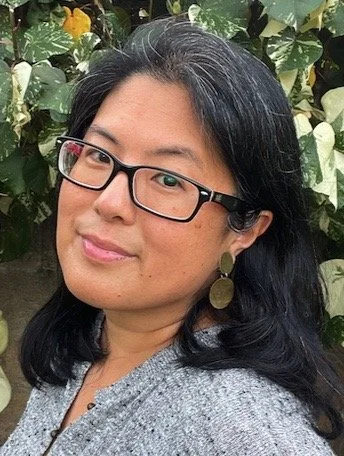
In episode 247, Peter speaks to Lavonne Leong who is the founder and principal of Embr Futures.
Interviewed by: Peter Hayward
Contact
Website: EmbrFutures.com
Contact info: Lavonne@EmbrFutures.com
Transcript
Peter Hayward: Could it be that a dominant role people like us will play in the future is less forecasting what could come to pass and more supporting people in the transition?
Lavonne Leong: I think that the term midwives is a great one because you're standing to the side of what's really happening and you're helping it be easier. It's an image that I mentally reach for whenever someone asks me what I do? I usually say I'm both a strategic and a transformational futurist. And those two things have traditionally been in opposition to each other. But increasingly I'm feeling that strategy is requiring the ability to understand how the world is transforming and to ask yourself how you're gonna transform as a result in a way that preserves what matters most to you. And transformational futures, which you know, really rightly has been based in imagination needs a strategic element if any of it is gonna come to pass.
Peter Hayward: That is my guest today on FuturePod, Lavonne Leong who is the founder and principal of Embr Futures which bridges strategic and transformational foresight to help organizations navigate accelerating change and move beyond reactive planning to engage the future with clarity and purpose.
Peter Hayward: Welcome to FuturePod Lavonne
Lavonne Leong: Thank you so much for having me. It's a great honor to be here
Peter Hayward: again.
Lavonne Leong: again.
Peter Hayward: You this is your second time on the pod, but first time as guest. I,
Lavonne Leong: Yes. Yeah. I'm really excited for this conversation.
Peter Hayward: Let's start at the first question. The Lavonne Leong question story, really, how did you get involved with the Futures and Foresight community?
Lavonne Leong: Ah, okay. So in a sense, I think I was always coming to futures. Like lots of other futuristsit was a very circuitous journey. So when I was a kid, I was a reader mostly of science fiction. Then I became an academic. I fell in love with words, and I studied the ways that the narrative structures of fiction can dictate the lives people think are possible or desirable.
And then I decided that I wanted to work with living words, and I wanted to make those words rather than studying them. So I became a journalist. When I was a journalist, I covered lots of different topics. I covered culture and science and business. And eventually what I put on my business card after several years was that I wrote about change and the people in the middle of it.
And this was in the mid late 2010s. And at that time, all those global bills that we had suspected we had incurred were coming due, actually started to arrive in the public sphere. So climate change became a real and unavoidable thing. Though of course for anyone who had been paying attention, it had been real for decades.
But it entered the mainstream. We really started to see changes to the quality of people's lives, from algorithm-based social media, constant phone use and changes to the quality of our minds as well, and the quality of our attention. Truth around that time, stopped being a shared thing that we co-constructed through dialogue, andTruth started to be personalized and optimized for attention and farmed. And so the people at that I, as a journalist, was talking to and interviewing, started to be affected by all these things. And they fell into two camps often. Either they saw clearly what was going on and they were depressed by it, or they maintained a sense of agency by constructing their own and to me, not very accurate version of reality, which it's really very easy to do these days.
So you had the realists on one side and the optimists on the other, and it felt very binary, like an either or, which is not ideal. And then I was working for a regional business magazine, and I was living in Honolulu and my editor for that magazine asked me to do a story on the quote unquote, “world-famous futures and foresight program” that was down the street from where I lived, at the University of Hawaii at Mānoa.
I had never heard of a futurist and I had no idea how, I guess lucky, I was about to become. I got to hang out for several days with a guy called Jim Dator, who had just retired from his position as a director of the Hawaii Research Center for Future Studies.
I got to hang out with Jairus Grove, who had just taken over Jim's role. I met Richard Kaipo Lum, who had graduated from the program and was living in Honolulu and working internationally. The University of Hawaii at Mānoa was one of the few places in the world that you could get a PhD focusing on future studies.
So everything that these folks said was both wildly imaginative—Jim might say “ridiculous,” in a good way—and it was also rigorously realistic. And it just, suddenly, everything felt like it clicked, intellectually and spiritually. It just felt like home. So I finished that piece that I was working on as a journalist.
I went on to the next piece, and for the next couple years I just felt more and more strongly that there was this group of people, these futurists, who were getting to do the most fun thing, and one of the most important things, pretty much in the universe, for a human to do. And I watched systems continue to shift and destabilize in ways that were clearly connected.
And then I ran across an interview with Soheil Inayatullah, who is another Hawaii graduate, of course. He was talking about how he became a futurist. And I think the quote that stopped me in my tracks was “It became clear to me that we are in a grand transition, and our role as futurists is to facilitate that transition.”
And wow, that just made the hairs on my arms stand up. By then, I wasn't living in Hawaii anymore, but I gave Lum, who I'd interviewed, a call, and he mentioned that the strategic foresight program at the University of Houston provided a really rigorous, solid grounding in the tools of foresight. And it had been running remotely for more than a decade by that point.
That was 2019, so I thought it was weird to do remote classes, but I contacted Andy Hines, who was the Houston program coordinator. He was brilliant and fun, and he said I could take one class just to see if I wanted to enroll in the program. That class ended up being social change, taught by Cindy Frewen.
She is a wonderful urban futurist. I warned Cindy that I had a weird professional background, and she said, we all have weird backgrounds. She said, we're like animals in the Okavango Delta, that travel a thousand miles to find this lush paradise. And we come from different places and we end up here at the Houston program and then we leave for new places. But we've drunk.
That was January, 2020. Yeah. So in March—and I was living in the Canadian Gulf Islands. Very rural really great place, but but very rural—and then in March, like three months later, the pandemic just tipped over the dining table. And the only thing that stayed the same in my life was the social change class.
We kept meeting online on Wednesday evenings and we were processing all of it in real time and it was like oxygen. So I was totally hooked. I signed up for the full master's degree and I guess the rest is kind of history. I fell in love with futures at a transformative futures institution, I trained at a strategic foresight institution, and now I get to combine both of those things pretty much every day.
Peter Hayward: Wow, that's a hell of a, it's a hell of a serendipitous story and a serendipity. This notion that things happen through luck.
Lavonne Leong: So much luck.
Peter Hayward: FuturePod, some ways, I think we started Future-Pod. I think we put our first little batch of podcast out in 2018, Christmas time. And then of course we walked straight smack bang into the pandemic.
And then we started a series of interviews, interviews with people that I called Futures in the Age of COVID, which of course was a play on Love in the Time of Cholera.
Peter Hayward: And just talking to the people about, how are you now? And also how people calibrate their lives—know you talk about transition. It really is also how we calibrate who, what's going on in the world imperfectly and who we are, imperfectly
Lavonne Leong: Yes. Did you find that you had different kinds of conversations?
Peter Hayward: Oh, absolutely. There were some that were, very remorseful. We deserve this. This has been coming, yada yada. There are others that you go, wow, what an opportunity. I mean it was stark how people, I mean nobody was having fun because it was a very serious illness and people were dying all around the world, but at the same time, wow, what a time to be alive.
Lavonne Leong: Yeah, it was fascinating. And I love, I loved that part of me got to be fascinated by it, even as, we were homeschooling our kids and we're worrying about my parents who were where I grew up in Honolulu, and so we couldn't get to them because we were in Canada and the border was closed.
So there was all this worry, all this anger and anxiety. And then at the same time the ability to at least zoom out sometimes to 20,000 feet and say, so what is actually happening and what could actually come of this?
Peter Hayward: Wasn't it interesting to how there was a moment. Where, in my language, this is part of what we were talking about before we started recording, where the metanarratives hadn't started. This was a health crisis. Governments acted. If they acted, people generally went along with it, and within that we saw these beautifully human responses to it.
We had musicians doing zoom performances. We had people in communities finding ways to talk across their balconies. There was this tiny moment where there was a narrative, which was this a dangerous place. The government saying we can't do X, and then people found their little place in it.
And then, I don’t know what, I can't remember the time when it changed, but suddenly the metanarrative came in that this is a part of a bigger plan, this is part of restriction, and then we started to see the natural change come. It I suppose it was probably just social media eventually kicked in and said, I dunno what you call it, whether you want to call it, they basically turned it into another conflict situation.
But it was, there was this moment, there was a moment before it happened. It was actually so sweet. And just people doing, people being their best forms of themselves.
Lavonne Leong: It was beautiful in many ways. And I remember that time that you were describing because people were talking about it as a pause and everyone was so exhausted that they really needed a pause. They needed a break. They looked at the—there was a bay that that was very frequented by tourists where we were.
And people were talking about the recovery of the bay and the appearance of different species there. And I think that happened globally. The air cleared up. All of these things were, because we were having a pause. And then part of that had to do with duration. I remember my daughter saying, right at the beginning of the shutdown, she said, “what if this lasts for a really long time?” Because we'd gone to the library and we'd borrowed like 50 books. And I thought, surely this is going to carry us through the next two weeks. And I said based on, and I wasn't a futurist yet, but I said, based on what, what has happened recently, with I think it was with SARS and MERS, this is gonna last for a few weeks, so let's enjoy these few weeks and see what we can do with them.
And so many people were doing that and it was lovely to, for them to have this kind of stable base of meaning and then to contribute something or to do something beautiful with this pause and to rest. And then they got that rest and then it became really clear that it wasn't going to end anytime soon.
And also that everyone moving online, as you mentioned, social media took over as our main reality in many ways. And those algorithms really started to, I think, have an effect on what we were seeing and experiencing and the metanarrative that came out of it.
Peter Hayward: Yeah, that's very true. Because again I'll put it in the language of American culture, there was no Walter Cronkite. There was no meta-figure who gave you the narrative, or the respected person who people listened to what they said we could do. And we can't be surprised that at that time the narratives were disappearing.
And I'm talking to a journalist who loved words. You must be fascinated by how language and stories and storytellers have become so central, and now we've got AI as storytellers. This must be an amazing time and also I imagine a worrying time for someone who loves words.
Lavonne Leong: Yeah, it's a very strange time to be a person of words. And that's, I think that's the big thread through my whole life is I've always loved words and stories and how narratives are put together and of course the power of narratives isn't going away, but but as an academic, I could see how the academy and the university was changing and the sort of business model was coming in.
And then of course, as a journalist, because of the information revolution and the sudden I guess plethora of information that we had words became quite cheap in a way. As a journalist, it started to be, how many words can you produce rather than what the story is. Because if you produce 800 words, they can put an ad next to it so they can sell that ad that this is the sort of magazine format.
So words became a commodity, and it became about how many words rather than the story that we were telling, especially as stories were fragmenting. because suddenly, and this is wonderful too, there's a wonderful aspect to everyone being able to have their story go viral. And I think if we hadn't had the algorithms creep in and and try to capture attention in ways that that emphasized fear, I think it could have been great.
There was a period, and I'm showing my age, but there was a period in the sort of early 2010s when I think the internet was quite a fun place to be. At least much of it, right? You saw all these blogs and I guess the equivalent now is Substack. But you saw everyone having their story and telling it and sharing what they found interesting instead of what they found fearful or anxiety provoking.
Peter Hayward: You would've read the people that have been writing that we are now moving into a post literate society. Where do you stand on that perspective as a journalist, futurist, academic.
Lavonne Leong: Yeah it's a good topic to bring up because I see the truth of it. Jim Dator has just released a book, I think it's called Living Make-Belief. Its central thesis is that we're moving into a world of images and individualized realities as a dream world that is post-empirical, it's post science, it's instinct and vibe, and all of these things that you can really see blooming now.
And especially since everyone has their own device, and I've been working on a project about the future of work and AI, and a lot of it is how personalized can you get, will people eventually see their own personalized, unique ecosystem of ads that are created just for them and just for their psyche based on what they feed into ChatGPT. And so all of this sort of individualized reality and this kind of coming away from a shared reality and the moving towards images, which, it’s been going on for a long time. Ever since and maybe even before this, but certainly with film, right? You had the transcendence of words for hundreds of years.
From, I don't know—“in the beginning was the word,” right? But right up until the invention of film. And then you get these sort of transitory words and pictures, and now maybe we have just pictures. And that's part of globalization because the more pictures you have, the more global you are, in a way. But I also see some, I guess trends or seeds of a possible future that aren't necessarily about make-your-own reality, and a real future in which images dominate rather than words. And that's part of the AI movement. I just did a presentation with Juli Rush, who you just had on this show, for parents of a school, and it was called “10 Skills for Future Adults.”
And one of the things that we talked about was how Julie found—Julie teaches futures to students, to middle schoolers, and she said one of the insults that you can insult someone with is, “That's AI, which means that's not true.” So we're starting to see, I think, a saturation of images and a devaluation of images in a way, because it's so easy to create those now.
And this also goes for words, but it's so easy to create images that if something is AI, it's valued less, and authenticity is valued more. More imperfection is valued. Face-to-face contact is valued more. So we can extrapolate all of these trends that are happening now, and they're very strong, but I think we can also pay attention to these seeds of another possible future.
Peter Hayward: That does remind me, Lavonne of if we know what happened with literature and drama in the countries that were behind the Iron Curtain, that playwrights and poets and writers had to get through the censor, but found always even then, ways to write plays and poetry and stories that on the surface looked like they met with the sensors’ requirements but deep down were subversive, and we're actually having a different conversation. So as what you are talking about young people, perhaps in a world that we as adults might be clutching our pearls and worry about the fact that they're not reading anymore, younger people are going to develop their own literacy, their own critical theory, their own subtext, and they will become literate enough to subvert the dominant narrative of the state or Google or anything else.
Lavonne Leong: Absolutely. And one thing that I hope happens is that the value of literacy goes up. I, I love words for their own sake, and I love books for their own sake. But something that I think we're seeing a lot of especially in the last few months in in the tech space of employment is that lots of tech writers around tech are saying that the humanities are going up in value.
Studying things that are other than computer science, is going up in value. Part of the skill stack that they'll need to have in age where AI can reproduce anything that has a decision tree and a best-practice manual, is judgment and critical thinking. And in order to have that, I feel that you have to have some kind of access to not just the past 10 years of what has been written and said, but the past, hundreds of years of what has been written and said, that will really set you up.
I talk about this a lot, but having access to a whole seed bank of possible solutions and thoughts is really going to set you up for the future, especially a future in which the systems that we used to be able to rely on are coming apart. Philosophy used to be a nice-to-have topic, but it was a yawn.
I was bored by it in my own philosophy class when I was at university. But they're live questions now. How should we live? What systems should we have? How do we know what we know? Especially that one.
Peter Hayward: I think, yeah, the epistemology question of philosophy has become front and center for much of what we're seeing. So you talked about the work you did with Juli about the, what, the capacities or capabilities that younger people need to learn perhaps. Can you talk a little bit about those, but also draw them back to your other earlier point about futurists as these kind of midwives of transitions, that we are there to not necessarily drive the transition, but play a supporting role to people in the transition?
Lavonne Leong: Yep. Absolutely. So I think that the term midwives is a great one because you're standing to the side of what's really happening and you're helping it be easier. It’s an image that I mentally reach for whenever someone asks me what I do, even if I don't necessarily say the word midwife, because it's very gendered.
Some people run away from it because they think, they think about, I don't know, fluids and all of that kind of thing. But when people ask me what I do, I usually say I'm both a strategic and a transformational futurist. And those two things have traditionally been seen in opposition to each other.
But increasingly I'm feeling that strategy is requiring the ability to understand how the world is transforming and to ask yourself how you're going to transform as a result, in a way that preserves what matters most to you. And transformational futures, which you know, really rightly has been based in imagination, needs a strategic element if any of it is going to come to pass.
So I feel like we can't leave strategy to the extractors. And having said that, I'm going to circle back to the skills that I, Julie and I think might come in handy for the future, and they're going to be very non-technological sounding skills. One of those is self-management.
It's the ability to process what is happening, understand where you are in it, understand what you need from it, and not be pushed about by, say, social media, which is going to have its own agenda for you. The difference between 2026 and the year 2000, and maybe the reason that we saw a big dip in mental health for kids starting in the year 2013, which was also, I think it was a significant year for iPhone adoption or for smartphone adoption.
I think more than 50% or more than 90%. It passed a threshold, and suddenly everybody was using them. And it goes back to that idea of agency, right? Are you determining what you pay attention to, or is someone else determining what you pay attention to by hooking you in through behavioral psychology? So the ability to control your own attention and to decide, okay, I'm gonna put my attention here—that isgoing to be, I think, really important. The ability to understand what you're feeling, and to give yourself what you need, also going to be really important. The ability to tell a story from the world around you.
And that goes back to attention, right? With the kids that I have experienced, sometimes with children who spend a lot of time on screens you see a lack of practice noticing things in the world, a lack of practice in reading the world. Because if you're playing a video game, you're living in a world that's been constructed by somebody else and you are following the rules, and if you follow their rules, it's all going to be very predictable. You level up, you fight the monsters, you make connections, but it's very self-contained. But if you can go out and take a hike and and come back and say, “Wow, I found this really cool frog,” Or, I had trouble fording a stream in one place, so I went to another place and I was able to get across.” “I saw a falling star and it was beautiful.” So the ability to have unmediated experiences and to be able to construct a story from those things— also really important, because that forms the foundation of the judgment.
And it's not only because of that, number one, it's good for mental health, it's good for agency, it's good for the building of people, right? The ability to be bored, to manage your own time. But also if you want to be employed in an age where AI is doing a lot of the labor, you're going to need to be able to have that judgment.
Peter Hayward: I wonder to Lavonne one of, when you get to my age, you. I look back at my own childhood and how important it was for me to have adults around me who showed me ways to do things I might not have agreed with. But I have always said, you can learn as much by what someone does that you don't want to do it.
But I'm wondering how important it is that we as adults, how we do these things openly so children can watch us. That how we tell our story and continue to have stories through our lives, that we pay attention, that we regulate emotions, and that we also go out and have adventures.
Lavonne Leong: Yeah, a hundred percent. Kids are watching us no matter what, no matter whether we think that they are or not. And if we are modeling, and, as I've often accidentally modeled, if we're modeling being on screen all the time, and that is our primary reality, of course, that's what they're going to pick up.
If we model managing that, I think it's going to be easier for them to do that, too. If we mindfully create space in our day for, I don't know, a few hours of non-screen time, of dinners with without screens, just space for conversations without screens. That's not an anti-technology stance. I think technology is incredibly important, but to be able to do without it helps us have agency within it and use it as a tool, rather than it using us.
Peter Hayward: As you've talked about what people need to develop as capabilities to navigate the transition. You've also talked about the futurist as doula or a midwife assist in translation. Can you connect with some of the things that futurists need to do in order to best do their job?
Lavonne Leong: I think modeling has a lot to do with that. So coming up with alternative models or seeds of the future is very important, because a trend can't exist unless it started from an idea or a seed. And, we talk a lot about seeds of the future, and I think we can also create those.
When I talk about that, one thing I think about is the the Pacifika Futures report, which I did last year partly for the UNDP. And it was published by the Pacific Island Forum and Australian Aid. And it won a Dubai Future Forum Award last year for advances in the field.
And I think the advance that we are really proud of is that it combined a very traditional classical foresight approach— it looked at trends and drivers, and it was divided into ten sections each with a topic that was creating change externally—but it also asked the question, what is the future of indigenous peoples in the Pacific with respect to international development?
And then it tried to bring in more voices. So when we gathered trends, it wasn't just futurists sitting in a room or on a computer, or even just talking to decision makers. There was a dedicated scanning group within the UNDP that met regularly over the course of many months to identify and compile trends. And some of those folks were from the Pacific Island region and some of them weren't.
And those trends—this was almost two years ago, so it was in a totally different era when it was still slightly radical to imply this, those trends clearly pointed to a future in which the Bretton Woods style of international development wasn't working, for lots of reasons. And then there were also lots of consultations—with youth from the region, with Pacific elders.
And this is where it gets really interesting because when you combine a report that shows that things aren't working as they are, with the ways of knowing of the people from the region. You start coming to solutions that couldn't even have been comprehended, wouldn't have made sense, if the report had just stayed within the language and the worldview of the original ‘problem.’
[Peter, please trim this in audio – LL] So the final product looked like a regular report, but woven throughout it were what we called Wayfinders, and they weren't written by me. These wayfinders were written by a Pacific elder. His whose name was Reverend Dr. Upolu Va‘ai.
And we called them Wayfinders, after the traditional Pacific practice of open-ocean navigation. And that practice often moves you towards a destination that you've either never been to yourself, or maybe no one has ever been to. When we were talking about ways of putting the report together we really brought up, and I think Rev. Upolu brought this up as well, that Pacifika people were able to cross huge expenses of ocean and settle new lands many millennia before Columbus or even the Vikings, using this skillset. It's in their DNA. So we had a section on demographic changes in the region, very traditional foresight, about how what you call the ‘Youth Bulge,’ which is a large number of youth in the Pacific Island nations, creates lots of possibilities and lots of possible problems. But then you also had a Wayfinder that was attached to that, that reframed it in a different way.
Peter Hayward: What I'm hearing a couple of things there. Reminding me I just come off a podcast. It'll certainly come out before this one, which I was talking to Jo Lepore about doing futures in large corporations, and one of the things she's learned is that you don't need to be the smartest person in the room.
And it often gets in the way of futures and foresight if you try to be too smart. It actually, if you are better at working with people and collaborating with things, that you actually are more effective to get the work done. And that, and I'm hearing in that, that we don't need to be, we don't need to have the way to do it.
We don't need to have the best idea. What we can do is facilitate something that is alternative, but is also empirical, but also has alternative voices and the seeds of possibility.
Lavonne Leong: 100%. And I think that can help solve a problem that we are always grappling with, which is how to make futures stick. We're having so many conversations, and they're not new conversations, about how you create a report and then it's put on the shelf and gathers dust.
And that's a problem of having thought of oneself as the smartest person in the room. But if you can facilitate conversations that surface the knowledge that is already there, then the solution becomes indigenous to the organization that you're working with, and people love the solutions that they create themselves, and they will commit to those things. And if they commit to those things, then those things are going to happen.
Peter Hayward: One of my favorite stories when I was teaching futures was the story of the Mont Fleur scenarios in South Africa, as I point out to people. It was done by accountants and socialists. So they were the people who commissioned the work, but one of the most brilliant things they did was they described the scenarios in terms of birds. The birds that were indigenous to South Africa, and you might go, yeah, they, that's a neat idea, but those metaphors, the ostrich or the flamingo or whatever they used, they crept into the political vernacular that the speeches of people, well after the Mont Fleur scenarios had been published were simply, you were saying things like, I'm not an ostrich, and they were taking the Mont Fleur scenarios and bringing them into current decision making, through making it part of dialogue.
The most powerful example I can think of were a set of scenarios became really the lingua franca of how people would talk about the transition.
Lavonne Leong: Yes. And I love that example. I fell in love with the modular scenarios when I was learning about them in class and I thought, wow, this has to happen everywhere. And I think also what I love about those is the idea that that they can become part of the large conversation and when scenarios do that, I feel like that's success. I was interviewing Betty Sue Flowers a couple of weeks ago about scenarios and she was saying something very similar, which was that scenarios themselves aren't quite as important as the shared understanding that they engender, and the fact that you're moving from what's often an official scenario, the allowed scenario of the organization or the group, which is either it could be ‘doom and gloom,’ or it could be ‘we can't fail.’ But either way, one future is not helpful. But having many futures suddenly diversifying these possible futures is the work that the scenarios do.
Peter Hayward: Yeah.
Lavonne Leong: And if you are able to inhabit all of the space between those scenarios mentally, then you're going to be more prepared for the future.
Peter Hayward: In her podcast with me, Betty Sue talked about when she worked with people like Adam Kahane and others, she said, I just want to walk around and listen to the conversations on the tables. And she had an ear for hearing the silent or the soft person say something. There was always the person who was doing all the talking, and that tended to be what everybody heard.
But there'd be someone who's just got a soft message, a quiet message, and she'd listened for those. And then if they were powerful, then she found a way to bring them forward in her report. So not simply reporting what was said, but curating very carefully the voices that would normally be overlooked if you were listening to the majority voice: the people who voted, the people who grabbed the pen, the people who presented the information. She, as a futurist said, no, I need, I don't know how. How do you choose those small voices and feature them? Alongside the strong one. How do you know that's the voice? That's the thing to pick up.
Lavonne Leong: Oh, that's such a good question. I worked with Kelly Kornet Weber on a project about the future of engineering certification in Canada [Peter, pls delete the following in audio. – LL] I only worked on this was a six-month time period during the course of a three year engagement. So I didn't see everything that went on. But my work centered around helping to create those scenarios. And the question, how do you include something and what, when do you know what to include?
Part of that work was to break folks into groups that were very diverse and to, and some of them were young, some of them were older, some of them were more or less powerful within their field, but it was recognized and I think foregrounded by all the facilitators that they all had knowledge that the others did not.
One of the questions of Engineers Canada was how to bring younger people and people who weren't, didn't fit the traditional profile of an engineer, which I guess is a sort of a white male, how to bring those folks into the fold and undertake what could be a very arduous long journey of many years.
And to make them feel included. And so someone who wasn't within the power structure, they actually had the answer to that question. And part of the work of a facilitator who is also a futurist is to hold space for that. And then because of the question that was asked, to listen to those voices just as much as if not more, because those voices often had the answers.
So part of it is listening to the question.
Peter Hayward: there's an ethical line here, which I'm sure you know is that to what extent is you the futurist casting the writing or the scenario based on your preferences? And you have skills and you have knowledge, and you have all this, you are also a human being who has futures that they would prefer. How do you walk that professional line between, is this me put saying it the way I would say it, or is No, my job is to represent or collect or collate or curate these voices.
Lavonne Leong: For sure. I think we all have preferred futures that we value. And certainly I think it's important to feel aligned with, with the work that you're doing, some of that. But I also think that when you're hired by a client, it's your job once you are hired by them to to ask the questions that they're asking with the set of values that they have.
Sometimes the set of values can be broadened, but it still needs to feel like it belongs to them. So when I, there are some, I think there are some corporations that it might be harder for me to work for, but once I'm on board with the project, I try as much as I can to to hold space for the conversations that they want to have in the way that they want to have them.
But then there's also this other layer, which is that some of these things are about human thriving and that we are all humans. And at the end of the day a lot of the things that you're holding space for are about, okay, so we're living in a capitalist society, and some of it has to be about profit.
If you are working with, say, a corporation, and I do some work for corporations and I also do some work for nonprofits and governance organizations. But there's profit and if we're moving into a world in which there's a lot of trust breakdown around organizations that seem to be motivated purely by profit, is there a way to increase the resilience of an organization, by helping to surface some of the values that are not purely profit motivated? So back when I was a journalist I was working with a regional business magazine and I went to work for them because because they were big fans of the triple bottom line, well before it was fashionable to do and the triple bottom line, of course, is profit, but it's also environment and it's also social.
So you're measuring things that are not just about money. And the, I think the more diversity you have in what you're considering, it's just like a stool, right? If you have one leg, it's more likely to fall over. But if you're considering more things, and I think it's our job as futurists to consider more things, it's nothing if not that—the more legs you have on your stool, up to a point, the more solid and stable it's going to be.
Peter Hayward: Thanks. Let's jump into what you are paying attention to. I think we've already touched on a few of these, but you might wanna just draw them together. But of the things that are happening around Lavonne, what are you paying most attention to and why?
Lavonne Leong: Right now I'm paying a lot of attention to I think what other futurists are saying, that I've long been interested in our toolbox. Futures and foresight as a profession started just post World War II. And because of that, we got to live for a really long time in a very stable, or a comparatively stable, environment.
And the tools and frameworks that emerged from that were really built for that world. And so I've been wondering for quite a while, what are the new tools that we need to see in a more volatile world, where your scenarios go obsolete really quickly, right?
So what what else do we need to be able to do? And part of that, I think as you were saying, is is surfacing the wisdom within an organization, right? Finding more diverse voices. Maybe having a toolbox that includes things for not just complexity, but complexity that feels like it's verging into chaos.
What are the tools for systems that are actively breaking or becoming disorganized? So I've been paying really close attention to this in the past few weeks, and I've seen a lot of chatter from other futurists around this too. There's a a wonderful futurist who's an acquaintance called Khai Seng Hong, who lives in Singapore.
A few days ago he posted on LinkedIn something that really stopped me in my tracks. He wrote thatthe ecologists who study the adaptive cycle, which is the recurring pattern of growth, conservation, release, reorganization—the up and the down and the collapse—they emphasize a crucial insight.
What happens during reorganization depends enormously on what was prepared before that window opened. So when systems break open, the quality of what emerges isn't random. It draws on the innovation that was cultivated at smaller scales and on the institutional memory and the frameworks and the relationships that were preserved through the disruption.
So if we can't prevent the breaking of systems, then maybe the most important task is to figure out how to preserve. What to preserve. We can't save everything, what we're going to need on the other side. And that goes all the way back to that, those Pacific voyagers too. I grew up in Hawaii, so this feels very live to me, even though I'm not an indigenous person myself.
We were taught in school that part of the skillset of making a long Pacific voyage was to pack a sort of kit that you took with you on your voyage. You didn't take everything, you took what you needed to restart when you got there. So there was a set of 22 canoe plants, there was a set of animals, there were the people that you took and there was the knowledge in those people's heads. You are wind tunneling everything, and those are the things that you can take with you. So I've been wondering, what can we take with us? What are we, what skills are we going to need? And I've also been really thinking that we're moving, and I've been telling clients this a lot, that we're moving on from a metaphor of driving, right?
There's that famous E.L. Doctorow quote about how when you're driving, your headlights can only see a little way, but you can make the whole trip like that. And we're actually moving on from that metaphor, in which you can just be in a system that rewards you for short term vision. But you're also depending on a reality that fits the driving metaphor, in which you have stable things like maps and fixed roads and signage and gas stations, all of this really reliable infrastructure, to a reality that feels more of a sailing metaphor.
Conditions are literally more liquid, and there are no roads. You can have your destination in mind, but you're really going to have to navigate, and based on the conditions and how they're changing, you're going to have to be willing to tack. To seem to sail in the wrong direction, away from your destination, in order to make progress towards it.
And your crew's going to need to work together. They're going to really need to know what they're doing, and they're going to need to pay much closer attention to how external conditions are changing all the time, and how that changes what's possible and probable in the short and long term.
Peter Hayward: One that I've been hearing start to emerge, Lavonne, is before or during our move to this different state, we need to be clear on the end of this one, and we need to take care to properly end something before we move to the new. A lot of my time as a consultant and change manager was often we were impatient to get to the better future and we didn't really take time, respect to show what we are changing from. And I'm now just hearing people talking about the importance of closing rituals, the importance of ending of things. It's important yes, to plan to move to the new, but it's also important to end respectfully, intelligence ju wisdom. To end things, and it's not something that we've in the West spent a lot of time talking about, but other cultures possibly have a better relationship with ends before we move to change.
What do you say about that?
Lavonne Leong: I think we're terrible at ending things in the West. I think we'd spend as much time as possible not admitting that things are ending until it's too late and it feels like a catastrophe. And I think also there's this kind of mythology that the person who is the most persistent will be the one who wins.
So if you can just outlast all the people who say that it's ending, then your world vision is going to be the one that wins out. And I think there's a certain truth to that, but at the same time there's a limit to it as well. And what we're missing out on, is the ability to have an ending.
Then to have a beginning—because it's really hard to begin anything, as you said, until you've at least started to end something. When you look at the Three Horizons model, though, it's not clean. You don't end something and then something else begins. You have this messy middle, and we're now in the messy middle.
So I think it might be unrealistic for us to wait for a moment when we can say, this is done. I don't feel like it's ever going to be that way. But if you can help people understand that the first horizon, the current system, doesn't always go away. It morphs into something else, right?
It can persist, and those are some of the things that you can take with you into the new future. Again, you can't take everything. Most things you're gonna have to leave behind, but you can take and preserve continuity. And that's something that came up a lot when with working with indigenous ways of knowing as well, that the continuity is important. We use the Futures Triangle a lot, and and the weight of the past has tended to be negative. It's all the things that are holding us back. But we started to discuss the weight of the past as, what do we want to keep? What's valuable from indigenous ways of knowing?
What are those things that are so important to bring forward?
Peter Hayward: I wonder if one of our future capabilities is having a better literacy for grief because being able, one of the reasons in organizations when you move to something, you're generally moving from something that's not working and yet. That thing that's not working has been people's jobs, has been people's careers, people's prestige.
And that one of the reasons I imagine we don't wanna talk about why it's not working is we don't wanna focus on who's been, who hasn't done their job? Or whose job has become less important? Or who, it might not even be a person. It might just be circumstance, it might just be fate that said, this thing that you've done till now doesn't work anymore.
And so we don't have, we don't have a comfort or a literacy for how we grieve. And your friend Juli Rush, who I did a podcast with just recently, it's really important that we actually have a good way to manage grief. 'cause grief travels with us through our lives and grief travels with us to our futures.
Lavonne Leong: Yeah, that is the question. And I think a complimentary understanding with that is that if you're grieving, you're still alive. So you can grieve the ending of something and then hopefully you get to start something that is new. So focusing on that I think is also important, but yeah.
But the skills of grief need to be recovered for sure.
Peter Hayward: 'Cause you talk about values and what grief surfaces urgently is what you value. What has been what has possibly, often we grieve what we fear we are losing.
Lavonne Leong: Yes. What we fear we are losing, we value. Because as we were talking about earlier, fear can be a motivator, right? Fear is a signal, it's information. And maybe you value more what you fear losing, and you can start to carry that forward. And if you look at traditional cultures, it, there's a way of grieving and in many traditional cultures when I was young, I'm half Chinese.
And my great-grandmother would gather us once a year to to visit the ancestors at their graves and to feast. That was a way of grieving, but it was also a way of keeping them close to us.
Peter Hayward: Sohail says that if you don't deal with the past, then it becomes disowned and comes with you. And as we have disowned futures, we also have disowned pasts. And we need to own the past to have and bring that part to the future.
Lavonne Leong: In all its complexity, becausethe past is complex and it's uncomfortable and you're seeing that so much now in in the, parts of the United States wanting to disown so much of its past because it makes it feel uncomfortable—and yet if you disown it, it will come back and haunt you.
Peter Hayward: Yeah. So we've gone from, so we've gone from transitions to ghosts, hungry ghosts to use the term from the Japanese.
Lavonne Leong: Indeed.
Peter Hayward: So again, the communication question, and then we'll wrap this. You're a communications expert, a journalist. What do you call yourself when people don't know what Lavonne does?
Lavonne Leong: What do I call myself? I just use the term futurist, and I think it's imperfect for sure, because sometimes they'll say, did you know there was an art movement?
Peter Hayward: Yeah. In Italy. In Italy, yes. Futurism. Yes.
Lavonne Leong: Yes. In Italy. Exactly. Or they'll say, does that have anything to do with the stock market?
So I feel like the word futurist is used, it's ‘already got one, thank you very much. It's very nice.’ But at the same time I don't I don't know that there's a better term. Even the field itself, I there's strategic foresight and then there's futures studies. John Sweeney often says ‘futures and foresight,’ and I think I've adopted that.
But when someone says, what exactly do you do? What does a futurist do? I usually say I usually say that I help organizations and communities to pay attention and to broaden their vision, explore more of what is actually possible, both good and bad and then talk about what they want to do with it. And some of the most important work I do is to create a safe space for conversations that need to be had, but that there isn't daily space for, or no one wants to touch it because it's not part of a group's official future. But once one person says it, they usually find out that other people are thinking it too.
And that's another way to figure out what you put in your scenario, right? And that can be what stays with the organization, most of all, is once you've said it, you can't unsee it.
Peter Hayward: Yeah. I think that's one of our jobs is we come in, we can say something and then leave. And it was safer if we said it and then they comment on what we said than necessarily if you say it inside the organization.
Lavonne Leong: Agreed. And it's even better if they say it.
Peter Hayward: Thanks Lavonne. This has been great fun. So as a wrap, do you wanna just finish with the kind of piece of work that you're working on now that you know where you're gonna be when I talk to you again in six months’ time?
Lavonne Leong: Oh Peter, there are some things that I that I'm just beginning and I can't talk about them too much yet in depth, because the depth doesn't exist yet. But that does mean that I would love folks to get in touch. They can reach out to me on LinkedIn, anyone who's working in this space of transformative futures and how we can help that have a strategic element, right?
How we can help transformative futures come to folks who are uncomfortable with transformation. That's a big question that I'm working on and that touches on the grief aspect and the midwifing aspect and the whole transitional aspect. How do we help people navigate this transition?
And what tools do we need in our foresight/futures toolbox to help people navigate a transition that I don't think anyone is really comfortable with—and not necessarily how to make people comfortable. I don't think that's our work. But how to help them surf the tsunami, as Jim Dator would say, I'm looking for a set of surfboards and I'd love to talk more with anyone who wants to reach out about that.
Peter Hayward: How can people find you?
Lavonne Leong: People can find me on LinkedIn, or they can reach out to me via email. LavonneLeong@gmail.com. I also have a website, Embr Futures.
Peter Hayward: Terrific. It's been great to spend some time with you. We had a short time talking about that amazing piece of work with Reanna and James, which I think in some ways touched on a whole lot of things about transformation and transition. But it's been great there some time to go deep with you on your practice and what you are finding fun.
But thanks for spending some time with me and the FuturePod community.
Lavonne Leong: Thanks so much, Peter. This has been a real delight.
Peter Hayward: Thanks to Lavonne for a rich and wide conversation. Future Pod is a not-for-profit venture. We exist through the generosity of our supporters. If you would like to support the pod, then please check out the Patreon link on our website. I'm Peter Hayward. Thanks for joining me today. Till next time.