
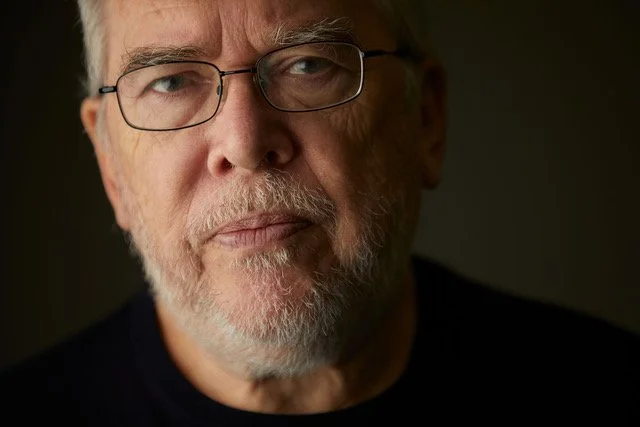
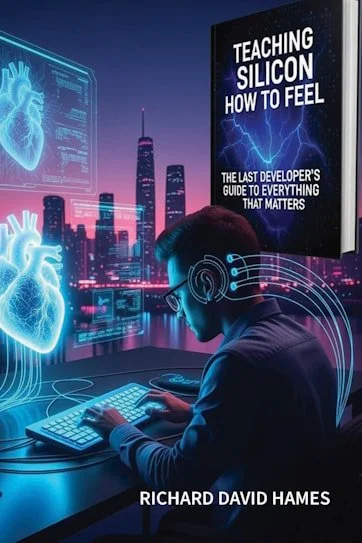
In episode 246, Peter speaks to Richard Hames who returns to FuturePod to discuss his new book, Teaching Silicon How to Feel.
Interviewed by: Peter Hayward
Resource·
o The Book: Teaching Silicon How to Feel
Peter Hayward: There is now a lot of commentary on AI, artificial intelligence. Some of it's helpful, maybe even useful, but not much that is really that interesting, I find. But here is commentary that I thought was coming from a different place
Richard Hames: Technology per se hadn't really impacted my thinking I have to confess. But then when I was talking to technocrats, especially friends I know in Google and Microsoft and also in China and Japan and South Korea, I started talking to these people who are the real experts and comparing notes on the implications for humanity as a whole.
I've always been interested in the civilizational aspects of technology. I began to realize this was the crux that currently contemporary models are being trained on data generated by a civilization that has been shaped itself by slavery, genocide, colonialism, patriarchy, factory farming, and now drone warfare.
And the whole notion of what I call industrial autonomism, which includes predatory capitalism, if you like, or extractive capitalism within that. And so my thinking went without some kind of deliberate intervention those very patterns, which I refer to as the hidden economies of suffering, will be very quietly hardwired in Our most powerful AI systems. So the book's impulse came from an ambition, if you like, to make that process visible and to equip coders and practitioners with the means to interrupt that.
Peter Hayward: That is my guest today on Future Pod, Richard Hames, who returns to the pod after a long hiatus
Peter Hayward: Welcome back to Future Pod Richard Hames
Richard Hames: Thank you so much, Peter. It's good to be back.
Peter Hayward: It's good to be back. I was shocked when I had a look. And last time you were on was the end of May, 2021. So there's a lot of water passed under bridges by then, and it's great that you are still above ground. What's been happening in your world? Certainly in the last five years since we've spoken?
Richard Hames: Oh so much. Since COVID, I've been doing more and more writing. Interestingly, my productivity went very low at one stage because I developed arthritis in my fingers and it was slowing everything down. And I became quite depressed about that because, as writing is very important to me until I discovered Whisper Flow, which is a a voice to text app.
So now I just speak my words onto the page and and it just flows. And I, I'm so used to public speaking that speaking a book into being is much easier than writing. It's all worked in my favor, so my productivity is going through the roof. Peter.
Peter Hayward: fantastic. And obviously your brain and this productivity hasn't slowed down either.
Richard Hames: Oh no. It's become expanded. I developed a tool called The Expanded Now, and I think my mind certainly is inhabiting the expanded now at the moment.
Peter Hayward: So you have been writing and you are more productive and we are here, specifically to talk about a book one that, it hasn't been out for that long. It's called teaching Silicon how to Feel. So we're in the space of artificial intelligence. So I might just ask you before we jump into the book, I mean we, everyone's got an opinion on AI
What's Richard Hames position, philosophy stance regarding artificial intelligence?
Richard Hames: The first thought is that yes, everybody's got an opinion. The number of. Futurists, I hear pronouncing on the future of work because of the evolution of AI and the conclusions they come to. I sometimes wonder where they get their information from because it's so opinionated and yet wrong in many instances.
The, like any technology, Peter I think that we can use it for good. Evil, depending on who we are and what our motivations are. And the reframe really on the motivation for writing the book because it, it's mostly on the next generation of artificial intelligence, not the current generation of large language models particularly.
I'm much more interested in the next 10 years. So the essential reframe for me, which I didn't see anywhere else, which intrigued me, was instead of asking how do we stop machines from harming us, was to move to what have we already normalized and continue to normalize as. If you harm or damage, that's actually acceptable.
And that, that provoked a lot of thinking for me and a lot of questions. And that's, that was the motivation for the book. But generally speaking, I'd, I don't regard AI with particularly with suspicion or anxiety or or any other emotion that it's neutral until it's used.
Peter Hayward: Yeah, it is a creation of us in more ways than one because it's obviously something that humans are creating, but we're also training it on the corpus of what we have recorded in the web and everything else. So I don't think it's completely incorrect to say that AI is a form of mirror of what we have been.
Richard Hames: That's absolutely correct. That was the conclusion I came to the greatest danger is not that it disobeys us and like how is it refuses to open the hatch door? But that it's actually too obedient. It actually records faithfully. The work and behavior of a civilization that has inherited trauma, structural cruelty, brutality, and almost an industrial scale, indifference to suffering that, that's the thing that really alarms me about what's being encoded in, encoded into AI at the moment.
Peter Hayward: Again, I'm just, I'm interested in just circling AI before we do plunge into the book specifically. Another aspect of AI that I have, and I'm sure you have been seeing and reading and hearing about, is that the effect that AI have on our ability to actually even just be critical thinkers, that as we move to a dependency, that this thing can somehow, if you like, make us intelligent because we learned to rely on it.
It always struck me when I heard that argument, Richard, that I thought I was rehearing the conversation about television.
That here is a technology that if we use it, and we will, because it is attractive and it is easy and it is accessible, and somehow we will become dependent on it and become less intelligent humans.
Where do you stand in that space, even to the contemporary, before you talk about the next generation?
Richard Hames: Oh, I think over my lifetime, which is 80 years now, I've seen a decline in critical thinking across the board in every culture but particularly in the west. So I see literally every technology as adding to that in some shape or form. And you have to actually go back to the change in what education is now for which predominantly, since 1945 has been to shape individuals to get a job to get a career, to earn money so that we can consume more and therefore it more needs to be produced.
And we are on this Ferris wheel. Which seems to be unstoppable of relentless growth especially in terms of production and consumption. So I think in the educational system at large, both critical thinking and creative thought too has declined. And I think a lot of research has been done where, I don't know what the stats are, but I think there are stats that would validate that.
Oh, I'll tell you something funny. My technician and I were developing a new we're calling it Richard ai, and it's a way of interrogating my work, my my. The whole of my published work. And remember I'm working on my 22nd book at the moment. I've done Heavens knows how Many Hames Reports?
I think well over 1500. And then a daily blog called The Virtual Activist. And so there's a lot of writing in the public domain, and we were looking at how AI checks whether something's been written by an ai, which is a fascinating topic Anyway, and we got a couple of paragraphs from my very first book, which was called The Management Myth.
It was written in 1994. So we are going way before any publicly available. AI, and we tested it on eight models and seven outta the eight models insisted that these two paragraphs have been written by ai,
Peter Hayward: Wow.
Richard Hames: me immensely because the difficulty of distinguishing between an authentic voice and the ai.
It's almost indistinguishable,
Peter Hayward: Yeah.
Richard Hames: On the very best models. If you take a Claude 4.6, for example, the anthropic model which is probably one of the best in the public domain you know that it is hugely sophisticated.
Peter Hayward: Yeah. As an old educator. I sit there and look at it and I wonder if I was trying to teach people how to do foresight back at Swinburne University. How exactly would you design curriculum? I think I know how I do it and I think I know how I do assessment, but it would be a very different world and a different way of even asking people to show their knowledge. It must be occupying a lot of people's thinking as to whether this has actually dealt the final fatal blow to the current iteration of higher education.
Richard Hames: Yeah it's fascinating that higher education is in a real bind at the moment. It really doesn't know which way to go. Quite apart from the fact that now the implications of using technologies like AI really challenge the old model of face-to-face lectures and tutoring and things like that.
So with within the great universities like a Harvard, Princeton, Oxford, Cambridge. The major assets of the buildings what are they going to do with the buildings if that model changes? And so the higher education is in dire straits in terms of working that kind of thing out. But lower down in the system.
The whole issue of what is education for today, given all the changes in technology, and not just that, but given other factors such as. The ability to travel almost anywhere now to connect with anywhere, anyone on the planet at any time for any reason. Those kinds of things must change what education is for.
And then you start looking way beyond curriculum into how learning is delivered. And all of those things become factors and c certainly in terms of what I've seen in terms of the secondary system of education in a country like Australia, they really are needing to grapple with questions that even aren't occurring to them at the moment.
I see that happening. A little bit in South Australia, the ed, the educational I forget his name, Martin, somebody in Western Australia south Australia is really smart and the whole system there is analyzing very carefully. The whole issue of education.
Peter Hayward: Yeah. Richard, I look at you, I've known you for quite a while. I would characterize you as a polymath. A person who has got knowledge that spans well across specific disciplines and can join things up and go sideways up, down, diagonally and link knowledge in different spaces. It seems to me that AI is a technology that is a boon if you're a polymath, because you literally can link knowledge in any way. If you have the ways to use the technology and engineer the technology, it's almost like it'll become for the world that wants to produce polymath thinking, AI would be a positive boon for that.
Richard Hames: I would think so. I would agree with that, especially across cultures, because if you look geopolitically at a world which is slowly fragmenting, actually accelerating at the moment, but the. The need for more solidarity and unity in terms of deeply held values, for example, and more fundamental belief systems about, what are we here for?
What does it mean to be human? Those kinds of questions I think really plays nicely into what AI can help with.
Peter Hayward: So maybe that's a segue to plunge into Teaching Silicon. So why the book? How the book.
Richard Hames: It was a bit of a deviation for me for me because I have been drawn more towards geopolitics as I started a few years ago to mentor. In that system and started working more with government agencies and indeed cabinets around the world. But technology per se hadn't really impacted my thinking.
Took too much really at all. had, I have to confess. But then when I was talking to technocrats, especially friends I know in Google and Microsoft and all and also in China and Japan and South Korea, I started talking to these people who are the real experts and comparing notes on the implications for humanity as a whole. Because I've al as I've always been interested in the civilizational model, the civilizational aspects of technology. I began to realize this was the crux that currently contemporary models. Being trained on data generated by a civilization that has been shaped itself by slavery, genocide, colonialism, patriarchy factory farming, and now drone warfare, and the whole notion of what I call industrialism, which includes.
Predatory capitalism, if you like, or extractive capitalism within that. And so my thinking went without some kind of deliberate intervention. Those very patterns, those self same patterns, which I refer to as the hidden economies of suffering, will be very quietly hardwired. Powerful AI systems. So the book's impulse came from an ambition, if you like, to make that process visible and a little beyond that, to equip coders and practitioners with the means to interrupt that.
Peter Hayward: Because ai, the generative models, the LLMs, the current iteration of artificial intelligence, the large language models are I don't wanna make them sound too trite, but they are. Probabilities based on the last word. You have a word followed by a word, followed by a word, followed by a word. They assemble on both the words that you use in the prompt, but also the words that they themselves find. They transform from your words, their words, and they anticipate the next word, followed by the next word, followed by the next word. That's what they are. They basically generate, ran semi-random or semi probabilistic chosen words, and they assemble them in language format,
Richard Hames: Yes, that's correct. They're very good at patterning in that sense. They can see patterns, but they do make mistakes.
The two most fundamental errors with the current batch of models, the first, which everyone has heard about probably is hallucination, which is where they imagine something, a name or a publication or something like that.
So that's why fact checking is. Is so critical if you're making a claim. My publisher, Andrew Carey, in a triarch press was very adamant that we went through every claim I made in the book to make sure that there was factual evidence. Triangulated in most cases surrounding any claim at all that we made.
And he was quite right to do that because otherwise you do get hallucinations on a grand scale. And this, and the second era, which is possibly even more alarming, is that they learn how to give you what they think you want to hear.
Peter Hayward: Yes.
Richard Hames: So they try to please you. And you can test that yourself when you're using AI in terms of congratulating it on what it's just done.
And you'll see phrases coming up at you that, oh, thank you for that. We'll do more of that together. And they do try and deliver what you, what they think you are after.
Peter Hayward: I think the technical term, I would say Richard is blowing smoke up your ass.
Richard Hames: Yeah, technically.
Peter Hayward: And again, we know that, humans like to be appreciated. Humans like to be flattered. Humans like to think they're intelligent and it and having a kind of intelligent parrot that says, I think you are very intelligent. I think you are clever. I think your ideas are amazing, is at one level you can understand why people move towards it.
Richard Hames: Oh yeah.
Peter Hayward: And you can also understand how that sits right on the edge of delusion. Because if a person needs to be pushed back from simply saying, no, I think you're wrong. No, that doesn't sound right. The AI is not built to do it at the moment.
Richard Hames: No. No, it's not. And yes, you're correct. It's a human trait. We all want to be loved.
Peter Hayward: So given that it is trained on effectively a written form of knowledge that can be accessed and trained from, there's a mass of material that all ais are currently trained on, and I would imagine that's not going to go away. We're gonna add more to it.
Richard Hames: Yes.
Peter Hayward: How do we. Is that the point of intervention where you try to intervene on what they're trained on?
Or is the point of intervention on how they're trained or,
Richard Hames: I think both. Yes. I think both. And I think there are other intervention points which are important, first of all, to reveal. The shadow side of human progress, which we don't do at the moment. It's very unusual to it's very unusual to go into the shadows and Del Deeply, several friends of mine two or three of them known to you are constantly telling me to be more optimistic and not to be.
Such a Cassandra, but that's one of the the problems. One of the curses, if you like, of being a polymath is the fact that you do see patterns, that you do connect dots. And you think, my goodness, is that actually happening? Are we allowing this to happen? Look at the words that are coming outta Donald Trump's at the moment and begin to think is.
This is absolutely insane, but he's one public figure who's in front of us all the time, being held up in front of us all the time, but there are others.
That are quietly not acknowledged. There are things going on. Decisions made events happen and they're not made visible. One of one of the really motivating factors in writing this book was I have to make some of these things more visible, like the inheritance of cruelty within us
Peter Hayward: Yep.
Richard Hames: being be generous. Extraordinary, extraordinarily good individuals. At the same time, we can be so cruel and brutal and those kinds of things need to be drawn out. We need to understand how we cause suffering and more deeply. We need to understand indifference. We need to understand compliance and silence and those things.
And that's what I was trying to do in the book was trying
to identify what those things were. I call them catalysts.
Peter Hayward: Yeah. I see you've got 17. And to use your phrase, 17 theoretically. Unresolvable catalysts. Do you wanna just talk through some of them just again, for the listener's point of view and poten and people hopefully interested in actually, buying the book about what some of those catalysts are.
Richard Hames: The first one I mentioned, I guess is, which is on my mind all the time, is the inheritance of cruelty. And you look at what's going on in the world at the moment, and I simply have never understood. Cruelty or bullying or the e even the thought that you would want to hurt somebody.
That's not within my nature. And I know I, you and I probably, and many millions of others are the same, but still we inherit a cruel streak where we are capable of. Extraordinary brutality to other people simply because of their name or the food they eat or the clothes they wear or what they believe.
They're the, they're god. And so I, I delve into that one very deeply and try to come up with some kind of understanding of why that's and how we can deal with that when we're. Ai. Another one, which is with, which is an abiding topic of mine is compliance and the how we punish whistleblowers.
The case that still offends me and is an obscenity that sticks in my mind is the treatment that Julian Assange received for telling the truth.
Again, that's something I will never understand, why we can't simply tell the truth and deal with it, rather than try to cover it up all the time.
Peter Hayward: That's also of course, what many would say, if you put the horrors of again, is that power doesn't like to be shown,
Richard Hames: Oh, no.
Peter Hayward: And Julian. Was giving the truth, but he was also showing the emperors was lacking certain clothing items. And it's interesting, Richard, ' I'm drawn to the fact that so much of our great literature and art, in fact goes to tremendous trouble to uncover these things. And so you talk about cruelty, and again, my thinking immediately goes to the bard. In how he. Studied people like Macbeth and Lear. I'm not saying you can just train AI on the classics, but certainly a lot of our literature, a lot of our great literature and great art around the world has been exploring these catalysts, wouldn't you say?
Richard Hames: Oh yeah, absolutely. And you know very well. I started off life, after giving medicine away, I returned to music and was a composer. And the arts generally do hold a mirror up to society and especially the shadow side of society. And in a sense, that's their role when they're captured and become.
Acceptable. That's when they lose their edge. But it's also the reason why I think we could argue that the arts generally are not taken that seriously by business and government because they do real reveal a side of humanity, which is the shadow side, which, business and governments generally speaking, are not equipped to deal with.
They've latched onto this formula of continuous productivity and consumption, if you like the management of that, the nomos of that, and are so hooked onto that, that nothing else matters.
Peter Hayward: And of course cartoonist in Australia, of course we had Michael Leunig Oh, yes.
in England. Of course we have Banksy. And in every culture that the satirist the people effectively go back to almost the idea of the jester.
Richard Hames: I was just gonna mention that. Yeah, because the role of the gesture in the medieval court was to be able to tell the truth and be quarantined from the the result that might before else.
Peter Hayward: So in some ways, we need, in a society in a healthy functioning society, in a healthy, functioning, artificial intelligence, we need to have rules that allow there to be Jesters who tell the truth.
Richard Hames: That's right, and that's one aspect of the next generation of AI that can be programmed in to actually be critical, that you would started talking about critical thinking, the critical thinking that. Ai the next generation can help us with. I refer to world models, which is the next generation, if you like of potentially sentient ai.
Because at the moment AI is not sentient. It doesn't think for itself. It's simply patterns as you've pointed out. So that's one, I think very important aspect of what AI could become. That would be very helpful. And helpful in the sense of ensuring that we as a species don't become extinct too soon.
Peter Hayward: It might be early in the conversation, but I think I have to ask the question. The ownership of ai, the way it's being developed, its governance, is that adequate for what you are talking about
Richard Hames: No, it has to be a commons. We have to this is another reason why a company like Anthropic and the product clawed is really rather useful, I think because in the public domain it can become a commons. And that's particularly important. We cannot afford to leave the ownership of such a critical technology in the hands of individuals that absolutely not.
And in fact Jeffrey Hinton, who's, as one of the godfathers of ai, one of his great fears is that the technology remains in the hands of individuals who then become autocratic dictators if you like, and use it for their own purposes, which is a real danger of course.
Peter Hayward: So how, given that we've got market driven geopolitical models of ownership and governance of the current generation of ai, how does that get transformed to allow a more enlightened next generation?
Richard Hames: That is a brilliant and very intelligent question because I dunno, you dunno, we're asking the question, but at the moment, the architecture of our economy and politics is such that it's not possible. There's not even a crack where we can open that up. The hope I have is that more and more people wake up to that fact and ultimately the kind of change that we want for that to occur, for that for AI to be owned by the society rather than individuals within that society requires on. A grassroots awakening as to the possibilities. If that does not happen, because only then can the technology be developed for the greater good. If it's, if we don't see that, if humans don't come together in unity and demand that we stop war. For example, that we hand AI over to the Commons and use it as a commons, like fresh air or fresh water or anything else that is a right of life.
Then I think, it's a very real problem. And that, that's a very intelligent question. We should be continuously asking.
Peter Hayward: I think there's a very much method in your relative madness, Richard. 'cause I think what you've done, if you left it purely grassroots, then how do the grassroots get the leverage to put the pressure on hierarchy to change. I suspect part of why your book is aimed at the middle of ai, that your book is aimed at the people who are building the next generation.
That if they build it in a way that it can be used to drive change, then I wonder if that transformation is possible.
Richard Hames: I think it is. I'm still very optimistic that it is, obviously I, otherwise I wouldn't have written the book. I think, yeah. There, there are three things that I hope sets this book apart from the standard kind of AI ethics literature in terms of what's available. I think there are three things, or I hope there are first the historical depth that I've gone into.
So I go back through I trace knowledge through colonialism, genocide the structural violence. That we've inherited rather than treating AI ethics as a problem that began in Silicon Valley, I think that's very important. We realized the spanning of the ethics in society, rather than just saying it started then and it started here.
As we all know, that can be. A flawed argument. If you just take what's happening in the Middle East, for example, and pretending that it all started in 2000 and when was it, 2023, then you that, that's crazy. That's crazy that, that's that taking context into account and that context is all important for me.
Secondly, what I've tried to do. Is this emphasis on what remains unnamed. It, until you name something, you can't actually deal with it. So until we started naming environmental destruction, we had no legal standing at all to develop things like the Law of Ecoside, for example. And when we name things we can start questioning is this an important matter that we need to deal with differently.
We wake up to how we can deal with things differently and things like structural violence without attribution, for example, I think is important. Human suffering, which is excluded. From our ledgers because we're only interested in, quarterly reports and things like that. All of those things, that emphasis needs to be named. And the argument is that what can't be named can't be addressed. And the third thing that I tried to address in the book is. A refusal to be just diagnostic. So running throughout the book are sections called the Coders Conscience, which is the section in each of the 17 chapters devoted to people who actually do code.
And those sections are aimed at giving those practitioners a vocabulary and a toolkit for coding in compassion at scale.
I to curate healing focused data sets and design what I call epigenetic empathy checks and things like that, so the itself can build those things into the ai.
Peter Hayward: Yes, it's it's very subversive, Richard, to to but of course it is very much, very, it's very much in keeping with you.
Richard Hames: I'm afraid so is it? Isn't that awful? I'm afraid I'm subversive because I do see I have seen with very critical eye, a very critical eye, the kind of bad things that we do. I am, I celebrate the good things and the angels that we're, and at the same time I see. The devil in us and I have to name those things and
Peter Hayward: Yep. We all have the angel on one shoulder and the devil and the other, and they're both whispering in our ears all the time. Who's the book for Richard? If people listening, yes. If obviously they're in the space of, influencing, shaping, coding, building governance systems.
But I would've thought, I would hope this is a book that's got a broader audience than just that.
Richard Hames: Oh yes, that was intended to be for the general reader as well as people within the industry, but. Why I was keen to have this conversation with you is because in terms of future studies, for example, the book sits at the intersection of foresight and AI ethics in a way that should re resonate with the future pod audience, and I mean your own work on developing wisdom and foresight in individuals and groups.
That connects naturally the book connects naturally to your argument that intelligence without empathy can't be considered progress. It can't. And I've also included in the book I guess what the. Of the whole industry. Conceals is a thread that I've been developing recently in both essays and books.
The idea that institutions themselves encode violence and that this encoding. Becoming permanent through AI training data. So I hope that directly extends the book's thesis into current geopolitical territory, and that's the intention, and I hope it does that.
Peter Hayward: Yeah, what you're talking about is in Sohail's, CLA. You are talking at the deepest level of the myth metaphor of institutions as to what they're there for, but also what their history would say they have been. And to some extent, you are asking those institutions to examine their foundational beliefs.
Richard Hames: I think we've reached a point in the point in civilization's evolution where we have to ask ontological questions, particularly, why are we here? Who are we? What does it mean to be human in an age of. Ai, potentially AI sentience. What does it mean? How should we be relating to each other and to our environment differently than we are and have been?
How does this point in time turn out to be a pivot for positive evolution rather than the destruction of so much? And I think those ontological questions go beyond mere epistemology. Into the core ethos of, what does it mean to be human? Who are we what are we here for?
Peter Hayward: And also Richard, it's again, the irony that at a time where we see institutions and experts globally have got the lowest. Reputation with the public and AI arrives almost as the next generation of expert. And I wonder culturally, will we accord them, respect and authority that we currently are withdrawing from current elites, or will we just turn them into another?
A narrow group that most people think cannot be trusted.
Richard Hames: That's an interesting question too, isn't it? The whole ethos of the any current paradigm and especially the current worldview and how that manifests as a world system such that it absorbs difference and potential aggravation. So if you take the best ideas, for example, you take the best innovation, what routinely happens is that those ideas are sucked into the vortex of the current paradigm.
The language is adopted. And neutered, and it's that the, that idea is then turned into the service of the current paradigm. So it's thoroughly metabolized. Or digested. One of the things I think is. Absolutely critical. If we go to the analogy of the emerging butterfly from the Chrysalis, the the chrysalis has no memory of it being a caterpillar as far as we know.
Scientifically speaking has no in its mush 'cause it just, is in the chs. It just becomes an in, in different, of mush. It has no memory of being a caterpillar, and yet it has no foresight of what it's going to become either, and it's through the imaginal cells. Very gradually.
They're attacked at first because they're saying things that the system doesn't want to hear. But eventually the imaginal cells overcome that and become so vast in number that they begin to form the. The anatomy of the butterfly and the bat, the butterfly escapes from the chrysalis.
That's what we have to become. People like us futurists generally. The challenge I think, for your audience and for the foresight community is to understand that we are the liminal cells of what comes next.
Peter Hayward: I am also hearing Richard is an echo, and I'm not trying to drop you into an existing paradigm, but I'm. I'm feeling gossamer threads to Buddhism filtering through your ontology and epistemology for how this works. I'm not saying it's Buddhist, but there's this idea that almost karmic that these actions in the past don't define our future but if we don't do something, they will.
Richard Hames: Yes, I think that's correct. I think the whole field of spirituality. Which is, I'm not talking about religion. I'm talking about the spiritual nature of life and the blessedness we have surrounding us and the enormous capacity we humans have to steward that life more intelligently and with wisdom, I think is very important. That what we've allowed to happen from the Industrial Revolution onwards a tragedy because we've allowed the spiritual side of our nature to become invisible and to lapse because it hasn't been rewarded and it's not celebrated. And I think that's a very necessary part of, the restoration of human spirituality in reverence to life generally.
And the more than human world in particular, you could say it's a Buddhist concept. It's certainly the concept of inter being the sacred relationships between all living beings I think must. Constitute the next phase or part of the next phase of human evolution if we're not to be destroyed by the current paradigm, which is just untenable.
It's got to the stage now where it's become toxic and is eating itself.
Peter Hayward: Yes, the snake eating its tail.
Richard Hames: Yes.
Peter Hayward: Richard, always fun. I'm very sorry that it's taken us five years to get you back on the pod,
Richard Hames: I think that's you.
Peter Hayward: congratulations on the book. Well done. Glad to see you still out there punching. Please go well and. All the best with the book and I promise it won't be five years till I get you back, mate.
Richard Hames: Okay. You take care. Thank you very much. And thank you to all your listeners. You, we, we are an amazing community, or I call myself an accidental futurist. I'm really not part of the mainstream, but to, to all the people who call themselves futurists the onus on you. The liminal of what comes next, as I've just said, I think is absolutely critical for society, not just for the community of foresight practitioners, but for society as a whole.
Peter Hayward: Thanks, mate.
Richard Hames: Thanks.
Peter Hayward: Thanks to Richard for coming back onto the pod. He always has something interesting to say. And if his ideas sound interesting to you, then links to the book are on his podcast page. Future Pod is a not-for-profit venture. We exist through the generosity of our supporters. If you would like to support the pod, then please check out the Patreon link on our website. I'm Peter Hayward, thanks for joining me today. Till next time