

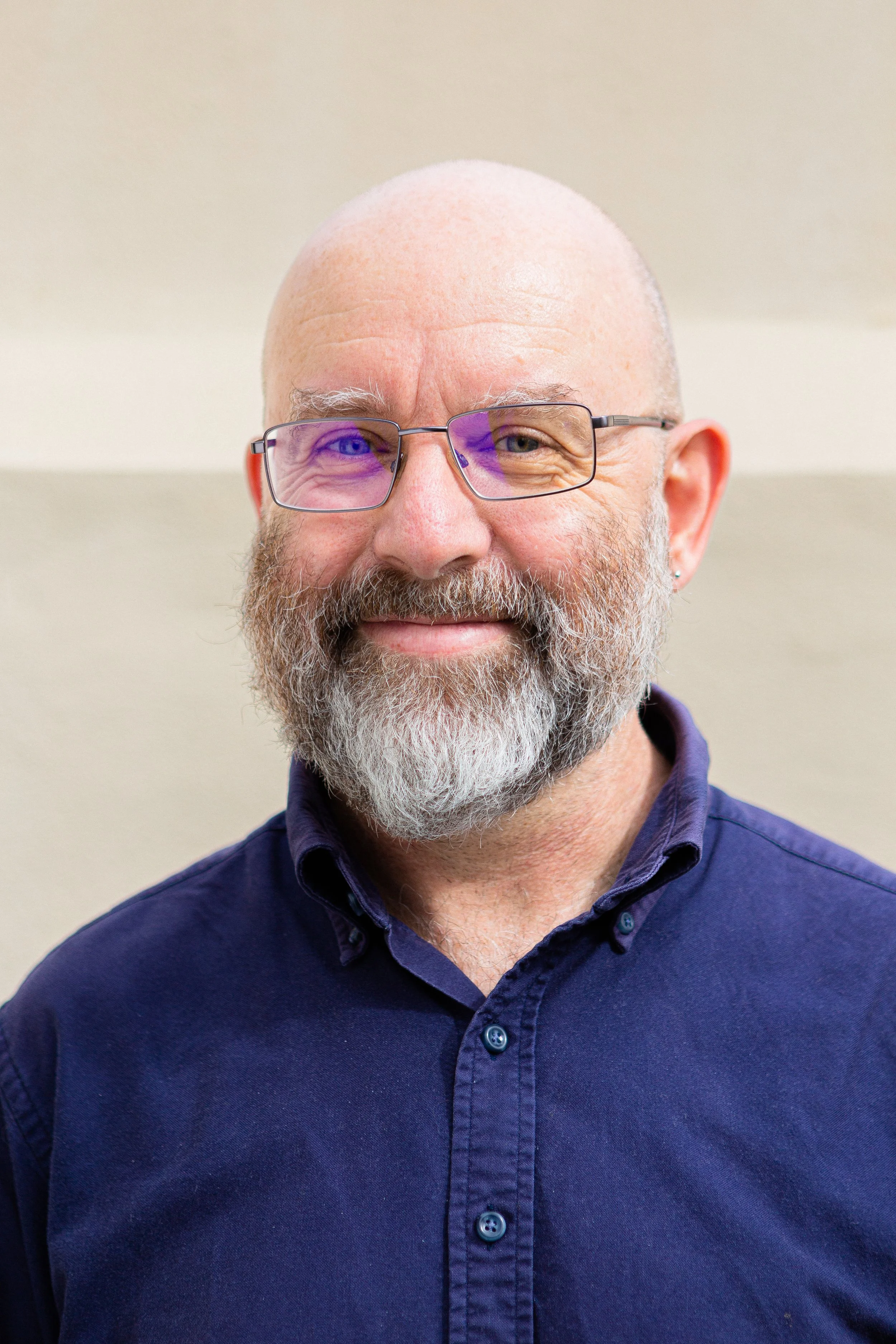
In episode 245, Peter speaks to Dr Tim Mansfield, Futures Researcher and a Culture Consultant at the Interaction Consortium.
Interviewed by: Peter Hayward

Resource·
email: tim@timmansfield.com
socials on the website
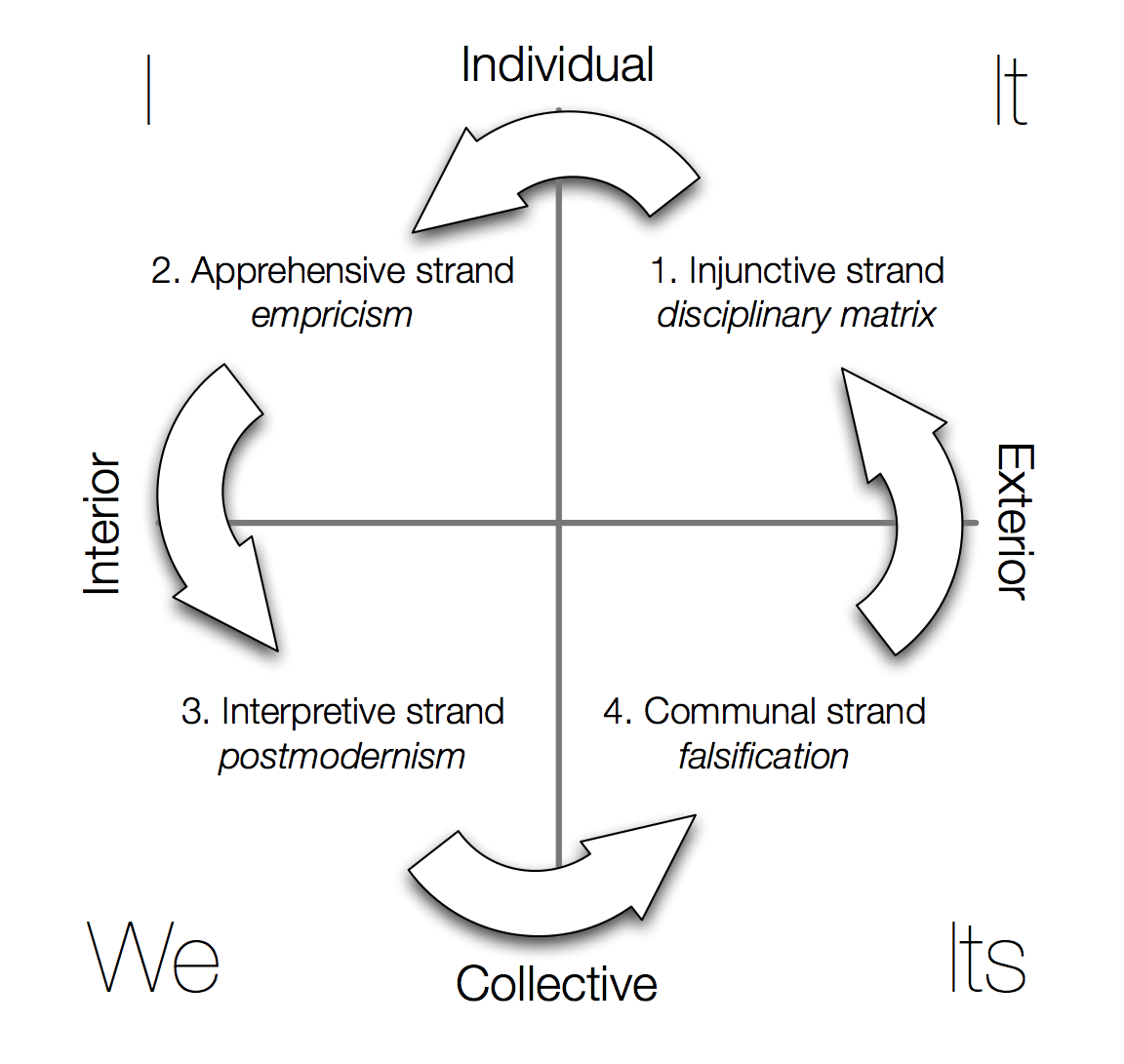
Mark Edwards, The Integral Cycle of Knowledge
Corrections
I apologise to all Tolkien fans for the implication that simarils and palantiri are somehow equivalent or even synonymous. Grave lore error. Deep bow of apology. Mea culpa.
I referred to Frithjof Schuon, but I meant Fritjof Capra (very different authors!)
Transcript
Peter Hayward: When I found Foresight, or Foresight found me I got very excited. It seemed to explain a lot to me, and yet when in my excitement I tried to explain what I had learned, I often got that look. I think A lot of you know it. What is that about?
Tim Mansfield: So I started to realize, I think at that time, that part of what's going on with futures and foresight, is that actually what's happening is that as you move into a certain stage of adult development, it becomes straightforward to think about divergent possible futures, multiple possibilities, deep time, deep futures, complex systems. That's all just the water you start to be able to swim in. It's not something that requires a lot of machinery or scaffolding, it's just what you do. And then you're stuck trying to communicate what seems obvious to people who were at an earlier stage in their development and just don't get it. And so we construct these various kinds of scaffolding to try to help people glimpse things or think their way into a certain frame of mind in a very painstaking and difficult way, or simply to engage as consultants. I've started for the last 10 years, I've been calling it developmental arbitrage. So what you are selling to people, your stage of cognitive development, you're selling to people at an earlier stage of cognitive development, what your stage of cognitive development is. And that's it.
Peter Hayward: That is my guest on FuturePod today, Tim Mansfield, Foresight tragic, like me, futures researcher and a culture consultant at the Interaction Consortium.
Peter Hayward: Welcome to Future Pod, Tim Mansfield.
Tim Mansfield: Thank you, Peter Hayward. It's really good to see you again.
Peter Hayward: This has been a little while in the organizing, hasn't it, Tim?
Tim Mansfield: It has taken a minute. It's true. It's a fair comment.
Peter Hayward: So welcome to Future Pod and let's start with the Tim Mansfield story. How did you get involved in the Futures and Foresight community?
Tim Mansfield: Yeah, immediately before you turned the camera on I dropped the term for – so for the benefit of your international listeners – in Australia where someone feels doomed to support a football team despite the fact that the team never wins – so they're supporting the Magpies (Collingwood Football Club). They call themselves a Magpies Tragic, because they can't help themselves following the team.
So I'm a Foresight Tragic from birth pretty much. I think I've always… and that's partly a result of being born in the generation I'm born in.
Because I think when I was growing up as a kid, I just, my childhood just had endless books and TV programs about what the future was going to be like. There was just… I was just constantly… it was partly I guess that my family bought me books because they knew I was interested in it, but I just feel like…
So I was born in ‘67, so I'm growing up in the sort of seventies, early eighties, and everyone was obsessed with what the year 2000 was going to be like. That was every, we all understood that was where the future was going to happen was the year 2000 for starters.
And then I think in high school, I just, I inhaled Arthur C. Clark's “Profiles of the Future”. I've since discovered that went through five editions and I've collected a set of them now so that I can watch his timelines evolve as things go on, but that was, and I treated that as oh, this is Arthur C. Clark! He knows what he's talking about. So I look at these timelines and I was I remember sitting there and plotting what my life was going to be like when we could talk to dolphins and when we'd get to Saturn and like how that was going to work out.
It was going to be good. I recall being very sad that I was going to be 33 in the year 2000, which was going to be too old to enjoy the future. Yeah. So that was very tragic…
Peter Hayward: Tragic. Almost an early “Logan's Run”. Premonition.
Tim Mansfield: Yeah. Yeah. That's right. That's right. Turned out, oh my God.
I'm 58, so that's that. Now that just feels impossible. So that was like – the future and science fiction was always an obsession. I read some fictional books with computers in them when I was a little kid, and I thought computers just sounded like the coolest thing ever.
And so I just glommed onto that. Like my high school was just moving from having I went to Brisbane State High, which is a public school, it's a state school, but it's a selective state school, so it had slightly better resources than the local state school did.
So it had a card reader minicomputer to program on. And they were just moving from using that to using Apple IIs. And so I could put my hands on a keyboard as well. And so I got involved in the computer club and doing all that sort of stuff. And so when it got to the end of high school, like the only thing I wanted to do was go and work on computers.
Because it was really clear to me that whatever the future was going to be, that was going to be a big part of it. So in a way my life has been rotating around computers. But when I think back to that time, the reason that was interesting to me, and the reason it remains interesting to me today is because it was clear that was going to be a big part of what was going to drive the future.
I think I could tell that at 16. I stuck with it. Then I guess I went to university, I enrolled in a Bachelor of Science in computer science. I wound up graduating with a Bachelor of Arts in Computer Science – with a Bachelor of Arts with a triple major in Computer Science due to an administrative stuff-up partway through.
In the course of the degree I was just looking for electives to do, and my university had interdisciplinary subjects which weren't part of one of the departments. It was like – usually lecturers from several departments collaborated to come up with these programs. One of them was “ID213 – Analysing The Future”. I was just paging through the Bachelor of Arts prospectus and I ran across this – I'm doing that obviously! So I enrolled in that.
It was a semester, it was good fun. And then I guess I graduated. I rolled from the Bachelor degree. I did an Honours year, and then I went straight into a PhD. I took an inordinately long time to finish a PhD because I was pursuing an amateur theatre career. I was supposed to be writing my thesis and I took three months off to help build puppets for a puppet rock opera.
Yeah. Somewhere in there.
Peter Hayward: You kind of do that when you're doing a PhD.
Tim Mansfield: I was doing it through the period, like all the lecturers in the department had all taken eight years to do their PhD. But it was transitioning to that period where everyone expected you to get everything squared away in three and a half.
Yeah. So I was the bad example for a while. Like supervisors would say to their students, you don't want to wind up like Tim Mansfield, got to stay focused on the target. Anyway, I escaped ultimately and, sorry, what do you call it? Graduated. Graduated, that's right. Graduated, yeah, that's what we call it.
And I went to work straight out of the PhD. I went to work for a research centre called DSTC. The Distributed Systems Technology Centre. It was an interesting place because it was one of the first Cooperative Research Centres, which for the benefit of people in Australia that aren't part of the university system and for folks elsewhere in the world, that's a program that's been around for oh my god, like 30 years now. Cooperative Research Centres are partnerships between a bunch of companies and a bunch of universities around a particular topic. And the aim is to take… they throw some federal government money in and the aim is to try to improve outcomes, getting the research out of universities and out into business and the world.
To be honest, it's got mixed success, but there's been some very notable success stories. DSTC was one of the early ones and we got some pretty good wins. And I worked in a research project called wOrlds that was about, it was one of the early projects around – at the time, I think this field still calls itself this –Computer-Supported Cooperative Work which is before anything that we currently call collaboration software, before social software, social media, before Zoom, before Teams, before Skype, before Slack, before any of these things. Before Twitter.
We were researching how to build software to help people communicate and collaborate. And I was there for 10 years. It was really pivotal part of my intellectual journey, I think, because we were spending every day trying to think about how do people work together? What does it mean to actually collaborate?
And what role does software potentially play in that? How does it assist you? How do we have it not get in the way? We were, it's a really interesting field because it's a collaboration [itself]. Fundamentally the core of the field is a collaboration between ethnographers and to some extent psychologists, social psychologists, but people in the human sciences, and nerds who want to build software …
Peter Hayward: And probably don't want to collaborate with anybody.
Tim Mansfield: It's a tricky thing! They used to… the European conference used to dramatize this conflict by having “Ethnos” versus “Techies” soccer match at the annual conference. Unfortunately, the Ethnos were largely middle-aged alcoholics, and the Techies were all early 20-year-old fit boys.
And so you…
Peter Hayward: You don't need to be a futurist to see where that one ends up.
Tim Mansfield: I think it pretty much ended up in the same place every time. So there's two things about that –
One was I got very interested in like what a group is and how groups scale, because that was an interesting question about – it's one thing to have two people collaborating – like we're collaborating to record a podcast episode, and it's a different thing to have a corporation of 3000 people. What does it mean to have a corporation collaborate? I get interested in groups and scale and the ways groups communicate, and that led me onto a whole bunch of things that came next.
But the other thing that was amazing about it as a place to work was it was a very intellectually vibrant place that was really into the idea of people just trying things. So I had a lot of opportunities to try out different things that I wanted to do, like workshops, courses, like offering courses to people in industry, researching stuff, building things. I've moved through a bunch of different roles over the 10 years I was there.
One of the pivotal things that I did while I was there, somewhere in there, I read Peter Schwartz's book “The Art of the Long View”. I just thought it was the the coolest thing that has ever been written. I still think it's one of the coolest things that's ever been written. It's such an intellectually appealing and immediately practical piece of material.
And I managed to convince… at some point we were trying to do a strategy exercise and I managed to convince the senior leadership that they should let me run a GBN scenario process. So we ran workshops and we mapped forces, and we worked out the driving forces and we did a 2x2 matrix and we built scenarios and we and then we wound up building software to illustrate the scenarios, like what would happen in these scenarios in different circumstances.
It was really fun. And I think we did to some extent – one of the things that really landed for me with what Schwartz was saying was that idea that he talks about the “strategic conversation”. That the reason why this approach is a useful one is that if you can make those scenarios vivid and meaningful inside an organization and give them – crucially – pithy titles, then people start to use them as a language for discussing strategic options.
And that means that people then talk about strategy. Because the question of: If the IT department's going to buy 30 workstations, what should the workstations be? That's a strategic decision. Yeah. We're going to open up an office in Melbourne. Where should it be? That's a strategic decision.
It's not an operational, it's an operational decision, but it has a strategic input. So unless you weave strategy into the day-to-day work of ordinary people, it's pointless. So I came to have some reflections on the way scenarios get used later on and they came out of that experience, I think, fundamentally.
There's a point in your intellectual development where there are certain books that you read and you read them at precisely the right moment, and you go, “Yes! This person's saying exactly what I've been…” not in, not explicitly thinking, and they've given it words.
And that's – “Oh yes, this is exactly what I've been trying to say. Yes, this is perfect!” And you think, and it feels, like the most obvious thing, right? Because they've just articulated this thing you've been sensing, and then you try and explain it to somebody else. And that person is not at that particular, that same particular point in their intellectual development.
Ah, and they… I have this phrase that… I'm not at this point of the story. I'm about to be at this point of the story. I'm not at this point of the story, but they… … they look at you with this I call it the… they look at you “Like you've got tentacles coming out of your face” Look. Yeah. “What on earth are you talking about? How could that possibly make conceivable sense?”
I had – and you realize that this – you realize that this very simple thing is only simple because of the moment that the idea or the concept impacted on you and your process of development.
Peter Hayward: \When I was teaching foresight and as people would come into the room what they would meet in the room were people who thought like them.
“Oh my God, I'm not crazy. That are other people like me. Yes!”
And this person worked in a law firm and he wrote an essay. And because he said, “… when I went back to the law firm to explain what I was doing”, he said, “The shutters came down.” Yes. And that is the vivid sense.
Tim Mansfield: Yes.
Peter Hayward: That you are passionate. And the other person's response is to simply put the shutters down.
Tim Mansfield: “What are you talking about?”
So DSTC, ultimately it had two rounds of CRC funding and then ultimately it ran out of funds and the whole thing had to shut down. So I wound up doing not very well as an independent consultant after that. It turns out it's important to actually keep financial accounts to make sure that you're making money – because I wasn't terribly thorough about that at the time as I recall.
Anyway, so I got a job at another research centre for a year or so, and then my boss from… Professor Simon Kaplan at QUT, I'll name the guy, he's a remarkable chap. I'd worked for him at DSTC and he was part of a new CRC called Smart Services.
And he came and found me and said, “okay, that scenario thing you did at DSTC. I want you to come and do that kind of work again. We've got this project that's part of this research centre, this one project, and it's about the future of the service sector in Australia. We need someone to run it. I think you'd be good to run it. Do you want to come and do it?”
So I went, that sounds like a barrel of monkeys. Let's do it. So it was a part-time appointment, so I still was doing some other stuff on the side, but yeah, sorry I wound up taking on this project and I spent, I can't remember, four or five years?
I eventually recruited Jose Ramos, who you've had on the show, Gareth Priday, you've had on the show. Soaked up a bunch of informal foresight education from hanging out with those two. Because they're both… I call Jose the most overeducated foresight practitioner on the planet. Because I think he's done three different degrees in foresight with the major schools of thought in the discipline really.
Peter Hayward: In different countries.
Tim Mansfield: In different countries, and then he has brought all of his own kind of, fascinating philosophical background to everything he does as well, so they're both big influences on what we were doing. And we spent four years on the one hand trying to ask this question what is the…
So this is in… what am I… where are we now? I guess I'm talking the early 2010s, I guess this is 2010, 2012, something like that.
And so the target was 2020. What's the future of the service sector in Australia looking towards in 2020? So we did a scenario exercise. I think it, we came with a bunch of scenarios that weren't terribly interesting.
And then we started going I don't know, maybe what we should be looking at is like, how can we bring foresight practice to the group of people involved in this research centre who are all in the service sector? So maybe there's a way to have a different kind of impact. I think we did some workshops, like the very first thing I did was I did a I redid a GBN style scenario process with the participants in this CRC. And we generated some stuff out of that, and I did some talks about it.
I'm looking out on this room because they're all, technology, it's services, but it's technology services. So most of the corporations involved in this research centre are technology people. So I'm standing in front of a room of 200 of these folks and I'm talking about “divergent thinking” and “interpretive lenses” and “cultural context” and “complex systems” and “multiple possible…”. And I get into meetings with people and they're going, “yes, but what's going to happen in 2020? I need a prediction. And if you can't do a prediction, it's because your model's not good enough and you don't have the right amount of data.”
And I'm like, I feel like we're seeing the world from a different place. So it got to a point where I would go to things and I would say this stuff is quite complex. We're quite good at it. We will come and do foresight workshops to help you think about the strategy of your organization. We'll do them completely for free. All you have to do is give us a couple of days.”
And just no one would say yes. So we tried and we tried. We kept having the tentacles-coming-out-of-your-face looks from people. And then we just spent a lot of time trying to figure out. How do we…?
So clearly – foresight practice as we'd understood it, right? As the boys had been educated in it, in the various schools in the world, and the way I picked it up informally in my own way – was not landing as an offer, as a… not-even-a-commercial offer. It wasn't landing as a free offer to the businesses we were talking to.
So something was amiss with this picture. And so it led us to a thing of – is there some way we can have a positive impact on this sector using the background that we're bringing to this that's different from what we think we ought to be doing? And so we did a couple of things out of that. And I think, yeah, you are part of some of these conversations and you helped guide some of this work.
I think at the time you had several, we had several pivotal conversations. You gave me the great… you gave me some, you did a talk, I think at one of the Smart Services conferences, I think, and I have wholesale lifted sections of that talk for presentations I've given myself. You did a great thing about change blindness.
You've done that a few times.
Peter Hayward: I was trying to introduce the concept that people, as you said, they framed the world and they framed what was useful in the world. Paradigmatically, technically, using dear, old Habermas. Yeah. The technical interest, the emancipatory interest, theological interest. And it was about how you, the way Joe Voros used to describe it, how do you tune the message so it's received by the listener and the way to talk so that you don't take the juice out.
Tim Mansfield: Yeah.
So in the middle of my time with the DSTC I moved from Brisbane to Sydney. Yep. So that was pretty pivotal. In the early, so Smart Services is the early 2010s. So I moved to Sydney in 2000. Actually, it's very easy to remember how long I've been in the city. because I moved in a nice round year. But early on in that I was in a bookstore in Honolulu and on the discount table they had this book with this very attractive bald man with a pair of glasses on. The book was called “A Brief History of Everything”. And I thought, that's, yep, that sounds unambitious as a title. I guess I'd better pick it up. I was also a bald man with no beard and glasses at the time. So there was a certain narcissistic recognition, I think in seeing the author on the cover…
Peter Hayward: … you do look like Ken Wilber… if I squint…
Tim Mansfield: Not anymore! I don't think. Perhaps I did a little at the time. So yeah, Ken Wilber – right – to say the name and I guess that was my, I inhaled the whole thing and then I bought “No Boundary” Anyway I read a bunch of Wilber books and at some point in there I gave a talk for friends on the all quadrants, all levels or lines, all states, all types model from integral theory.
And people would askreally sensible questions and I realized I couldn't answer most of them.
So I realized I do not understand this anywhere near as well as I think I do. So I came back to Sydney from that weekend away. And. I had signed up for the Ken Wilber meetup in Sydney, and I thought, if I'm going to figure out more about this, I need to hang out with other people that understand this better than I do.
So I tried to go to a Ken Wilber meetup meeting and I went to meetup.com and it said, I'm sorry, there are no Ken Wilber meetup meetings because the organizer has left. So if you wanted there to be some meetings, you could volunteer. And there's a – it's Meetup, so there's a big, literally a shiny red button saying “volunteer as organizer”.
So I went, okay. So I hit the button and then showed up to my first meeting and apologized to the other attendees for having taken over their meetup in a bloodless coup. So I spent a few months there talking to people. Interesting, strange, fascinating nerds that they are. And amongst which I count myself, I want to be super clear.
Yeah. We decided to rename the group Sydney Integral. And I ran that for several years. I eventually handed it over to Trish Nowland, who's run it for three times as long as I ran it in the first place. I think it's still going in Sydney. So it's a community group of just people interested in Wilber and integral theory.
Yeah. So that was a really pivotal thing.
Tim Mansfield: so through that period, we are now in the late naughts moving into the early 2010s. So at the same time as I'm in this inquiry with Smart Services of trying to work out why is this stuff not landing? I've also been navigating this whole world of adult development and the idea that we move through different stages of meaning and different, we develop more and more subtle and complex cognitive capacities.
We get a deeper and broader sense of self as we move through adult life provided we're faced with interesting enough dilemmas through the life that we live. You and I are talking about things from that perspective as well, and it's gradually dawning on me that I think, as you say and this is what we were alluding to earlier, that when you read one – the experience I was talking about before where you read a book at a certain point in your own development and it perfectly articulates something you've been feeling, but unable to say – that was the experience of reading brief history of everything.
Yeah. And I think it is for a lot of people that encounter Wilber, that they, you run into them at a certain point. You go, “Oh my god. Yeah. This is what I've been trying to say. Oh, and he's added twice as much as I'd thought. There's a whole bunch of new stuff here that I hadn't encountered”, and it's a big gateway to a whole different way of seeing things.
So I started to realize, I think at that time, that part of what's going on with Futures and Foresight, and I think I'll get you to talk about this in a second, but I think this is your experience with running the Masters, is that actually what's happening is that as you move into a certain stage of adult development, it becomes straightforward to think about divergent possible futures, multiple possibilities, deep time, deep futures, complex systems.
That's all just the water you start to be able to swim in. It's not something that requires a lot of machinery or scaffolding, it's just what you do. And then you're stuck trying to communicate what seems obvious to people who were at an earlier stage in their development and just don't get it. And so we construct these various kinds of scaffolding to try to help people glimpse things or think their way into a certain frame of mind in a very painstaking and difficult way, or simply to engage as consultants.
I've started for the last 10 years, I've been calling it “developmental arbitrage”. So what you are selling to people, your stage of cognitive development, you're selling to people at an earlier stage of cognitive development, what your stage of cognitive development is. And that's it.
That's it. They just want someone who can see things from a later perspective than they're able to see.
Peter Hayward: Yeah, probably half a step, probably half a step. Not too far. It's that level of… because otherwise the tentacles appear from their face…
Tim Mansfield: Otherwise the tentacles come out!
Exactly right. Yeah, exactly right. Yeah. But that was your experience with the Masters. Is that you get people showing up at that point.
Peter Hayward: I think you said this – If you are at the point where, what happened for me, just in watching people come to the classroom is that, and Susan's work was the work that spoke closest to what I saw in the workshop was that people who had mastered the conventional world.
They were powerful, influential, intelligent, successful ex–whatevers. They then felt there was, that wasn't, they were not that anymore. They were in a place of, something has shifted. And, but what they had as a language to describe was not what they were, but what they were not. And what they were looking for was the next self tAnd so I don't think Master of Foresight was unique, but it landed at a time that there were many hundreds of people around Australia that wanted to go: what's next?
Tim Mansfield: Yeah. Because and I think this is like we're talking about a similar phenomenon from different perspectives.
Like I'm standing in front of that room of like fairly senior people in Australian businesses and it's mostly people that just aren't getting what the hell I'm talking about. And I think that's because a lot of corporations in this country are focused towards doing a certain job and doing it as efficiently as possible.
And that means you're thinking in terms of clear targets, logical frameworks it's a very sort of logic, process-driven, linear kind of view of the world, right? And so the people that are attracted to those businesses, the people that are good at that sort of stuff, the people that rise to executive positions in them are people that think in that very efficiency-oriented way of thinking.
And that's a certain stage in the developmental process. And that's creating organizations where as long as you can think in… as long as you're in that you're all good. But then there's this common thing where people exhaust their time at that frame of mind, and then they, and then usually what they do is they pop out and become a consultant.
Or a coach or something. And some of those people, when they pop out, go,
“I better figure out what my next job is because I still need to feed my children. So if I need a job, I should go and get another degree. What's a degree that like it might give me what I want. Oh, yeah. What's strategic foresight? It's at Swinburne. I could totally go and do that and that will give him my next job.” And so they come and enroll in your course.
Peter Hayward: I'd be sitting at the orientation and people would walk up to me and say, tell me about the Master of Foresight because I don't want to do an MBA.
So it was this kind of strange question…
Tim Mansfield: So you're the anti-MBA!
Peter Hayward: Yeah. I don’t know what this course is, but I don't want it to be that and so the way I understand it was what… To be successful in a world that operates like those people who said to you, you need a better model and more data is… that is what we would call “conventional thinking”. It's very effective. It puts people on the moon.
Peter Hayward: It's very powerful way to build a world.
Tim Mansfield: A hundred percent
Peter Hayward: What happens in your life when you encounter something in your life that doesn't fit within the conventional view of the world. And that can be personal, complex, emotional.
Tim Mansfield: That's more complex, less well-defined. Yeah. Yep. Fundamentally not the same kind of structure or data. Yeah.
Peter Hayward: Then your view of the world as an orderly planned, data driven, model driven world, it collapses.
And you are left with what do I think of the world now? There is always that world that you remember that I thought that way. Yeah. But you were not in that world anymore. And there's a, there's a tremendous longing and almost loss for it that wouldn't it be good if you could give me the red pill?
Tim Mansfield: … and I could go back…
Peter Hayward: … and not have to think this way.
Tim Mansfield: Yeah. It would be so much simpler if I just didn't have to think about its complicated stuff. That would be so good.
Peter Hayward: And that's what I think we then met truly in the space. And I'm pivoting into this space now because I want to talk to you about it, what I would call post-conventional development.
So my first question, Tim, if there is a, if there is a conventional world that is very effective, very successful, do everything else then what the heck is post-conventional development?
Tim Mansfield: To, it's an interesting, that particular phrasing is interesting because conventional development just means what everyone else seems to be doing, right?
So that's not necessarily the same at every point in history. So it means roughly a common thing when you live in a rich, western country. But it doesn't mean the same thing today as it meant in 1950, and it didn't mean the same thing in 1950 as it meant in 1720, right?
Post-conventional development is just whatever is a later stage, but to make sense of that, right? So we're alluding to this and I think for folks that are familiar with this kind of theoretical stuff or that have read Wilber or are familiar with adult developmental theory, this is all obvious and we don't need to repeat it, but I guess for some of your listeners, they won't have necessarily engaged with that as necessarily as strongly.
So shall I do a little, just a recap of kind of adult developmental theories as we understand it today, just as a sort of orientation. We can drop a few names, mention a few theories, give people things to Google. Is that a cool thing to do?
Peter Hayward: [pauses] Yes.
Tim Mansfield: Okay. That was a long pause.
Peter Hayward: Ask Chat. I'm sure.
Tim Mansfield: Ask ChatGPT. Don't ask ChatGPT… use Claude – it's much classier use. I don't know. Do you think everybody… is it a waste of time? Does everybody kind of already know this stuff?
Peter Hayward: Have a go Tim. You are good at this, you are very good at explaining something that I would take two hours. You can do it in…
Tim Mansfield: Anybody who has had children is aware that children move through measurable stages of cognitive development. At some… there are points when kids are very small, where they simply cannot make sense of… the reason peekaboo works with babies is because they don't, they can’t cognitively process. The idea that I'm there. You're not there you are there, you're not there. You are there. And then there's a point when the brain forms in a certain way and the kid reaches a certain age and they're kinda like, what are you doing?
Like, why is that? There's a delightful point where you can take a tall, thin glass and a short fat glass, and you can fill the tall, thin glass up with water and you can pour it into the short fat glass. And you can say to the child, which glass holds more water. You can pour them backwards and forwards and the child will reliably go, the short fat glass has less water and the tall thin glass has more water.
And you go, yep. You pour it backwards and forwards. And they've, they're convinced that's the case. And then they cross some line at some point and you do the same exercise and they go, what are you talking about? It's the same amount of water. They obviously hold the same water. And people have actually done stuff where they've played them videos of themselves saying it's different amounts of water, and the child generally refuses to believe that's them, right?
So we know that children go through stages and that video story is an important thing because we go through stages as children and we generally cannot recall how the world looked to us when we occupied an earlier stage. And what we've gradually understood by studying kids is that kids go through development in a bunch of different ways.
So they develop cognitively in terms of the complexity of how they're able to understand the world. They develop socio-emotionally in terms of the complexity of relationship and feeling they're able to navigate with other people. They develop ethically in terms of how they're able to face and solve dilemmas of morality.
And a bunch of other ways. So until about 20, 30 years ago, everyone accepted that. Kids developed, but everyone assumed by the time you reached like, roughly, 21 – your prefrontal cortex is more or less fully formed. You're fully baked, you're an adult human. That's that. But then some people started… often people in universities are teaching students and they're going, I feel like it doesn't stop.
I feel like more may be happening. And so there's a bunch of researchers in, I want to say the 80s, do some pivotal research on young adults and then eventually older adults, and then eventually executives. And this carries through a lineage of things. So the big names for child development are Kohlberg for moral development, Piaget for cognitive development and probably Eric Erickson who does stuff that's a little bit later.
So then these researchers in the 80s that are starting to go, “I feel like this doesn't necessarily stop.” You're talking about Robert Kegan at Harvard. You're talking about Jane Loevinger at Washington University. And I guess you're talking about there's some, and there's some other interesting stuff like James Fowler also at Harvard who does research on the development of conceptions of faith and how you orient yourself towards questions about ultimate meaning.
So all these folks, they use different ways to assess how someone's making meaning of the world, meaning in the world. And we don't need to go into the details of them, but they all use more or less the same sort of structuralist approach to how to figure out if anything's happening. So you do a longitudinal study over – it's got to be over like 10 years really to have any meaning.
You assess people using whatever method it is, the survey or the interview or whatever. You get a body of data at the beginning of the study, and you cluster people. Okay? These, all these survey answers seem to be saying the same thing. All these interview transcripts seem to be coming from the same kind of place.
So we'll put those in a bucket. We'll call the bucket A. These are coming, they're in another bucket. We'll call the bucket B. And these are another bucket. We'll call the bucket C. We come back in two years’ time, we do it all again. We come back in two years’ time. We do it all again. We keep doing this over four or five years, over five, 10 years.
And then we see do people tend to move from bucket A to bucket B to bucket C? Do they ever move from C back to B or is always A, B, C? And if you can, if there's aspects of the data you're uncovering in this, and it's usually some things, not all of the things, but that, is there any bits of data that reliably in pretty much every case, move from A to B to C and never go back?
And if you can demonstrate that you've got a developmental sequence, you've just shown that people develop along a certain pathway. So that, so I think Bob Kegan's work gets extended by lots of students and by his own work and his collaborations with people like Jennifer Garvey Berger and various other researchers, and Kegan's still writing and he is still doing research today.
He, and so his model, as these people's careers go on, the number of stages they're mapping tends to get longer and longer. But always I notice every developmental sequence always always seems to end with one that says, “And then people become magical and we don't understand how they think.”
So… which is the point at which the researcher is no longer able to make sense of the data…
Peter Hayward: Yeah, so it’s always a dilemma at what point is the researcher capable of even making sense of the next level of data if they themselves are at a level?
Tim Mansfield: Absolutely. Absolutely.
Peter Hayward: Thanks for that. okay, if there is this invariant developmental process, can we as individuals take charge of our development? And actually promote it or accelerate it or make it intentional rather than accidental.
Tim Mansfield: … can we consciously do something about it? Is there ways we can expedite it? Yes, I think that is a good call. I think I kind of want to not directly answer your question and come at it around a little circle.
Because the conversation that we started to have around this was… so we're talking to people in these organizations and if you're one of those… so if you're one of those… if you're trying to do foresight, you're dealing with a developmental problem, right? You've got people in the team that are getting this idea of divergent complex futures and they, that's very exciting and they want to think about it.
And then you've got the rest of the organization, which doesn't understand what the hell you're talking about and can't from this perspective, from this developmental perspective. They're like the kid looking at the two glasses of water and they cannot see that it's the same water, and I think it's important to think of it in those terms that it's not really better or worse, it's just a question of has life thrown you sufficiently complex curve balls that your brain has had to break down and reorganize itself to cope with these more complex curve balls?
And if it hasn't, look, more power to you, because your life's probably just happier. But if it has, you've got this, you've got this complex neural machinery that unfortunately is going to keep doing its thing no matter what you want to do. So we're – from inside foresight – we're asking that question. But then I think folks that deal with that problem of popping out of the corporate environment and trying to figure out what to do, they go on to become consultants or coaches, they're getting faced with that same problem.
And the question they're trying to ask is. Can I make people develop? Can I take them to a point where they can try to see it? And I think what a lot of people try to do is just do lectures on developmental theory or integral and hope that's going to get the point across. And it reliably does… the… you get ejected from the corporate body by antibodies really quickly if you try to pull that off.
No, you can't develop somebody else. I think thousands of people have taken a good crack at that, including many married couples, I think over the years. And it… that simply does not work. It's not a doable thing. And so then there's the more principled question of… once you've realized that development is a thing that happens and there are certain stages in that developmental sequence where you start to notice the process of development itself.
Peter Hayward: Yes.
So you're not just making interpretations of meaning in the world. You also start to go, wait a minute. I didn't always think this way. Oh, actually. And so the history of your own development starts to open up behind you at a certain stage. And that gets deeper and richer and more kind of spacious, I think as life proceeds.
And then you start to get curious about what's next? And how do I, like what do I, like how do I start to open up those pathways and where does that go? So we obviously we're not the first people to ask that question. There's a bunch of people, this interconnects with the transpersonal psychology movement in the United States.
It's got a lot of connection with the kind of Esalen, kind of Human Potential stuff from the 70s and 80s in the US. And a bunch of other things. A bunch of folks from contemporary spirituality circles are asking different versions of this same kind of question. There's a particular mob in Seattle who formed a company called Pacific Integral back in the nineties.
And initially just doing consulting and training around this stuff. And then trying to go, “People want to keep moving. Is there a way to help them keep moving?” And so they started to put together a program called Generating Transformative Change and which has some done some crazy number of… they do a nine month program with retreats and group work and stuff like that.
And it's designed around some core ideas. And I don't fully understand the program design, so I won't really talk about it in any detail, but it's organized around the things that have proven themselves to be pretty good at midwifing someone from one stage to either glimpsing the next stage or moving through a transition if the person's ready for it or helping them bed down in the next stage, depending on where they're at in that process.
And people tend to only go and do the program if they're facing into the next…
Peter Hayward: Yeah.
Tim Mansfield: … developmental transition in their life. I think it's a really successful program. And that Seattle program, I think has been going for, I actually don't know, I think it's like 15, 16, 18 years, something like that and they've graduated dozens of cohorts.
And I think the place… did we meet? We didn't meet at GTC, did we?
Peter Hayward: No. We certainly knew each other well before we both ended up on one of the first GTC programs run in Pacific. The first one.
Tim Mansfield: Yeah.
Peter Hayward: So then it isn't surprising that you and I finished up in that.
Tim Mansfield: No given what we've been talking about as the sort of deep history of all this. So two particular enterprising Kiwis, Tamara Androsoff, Thomas Dünser went and did the program in Seattle and then got qualified as faculty and then brought the program to the South Pacific. And so that started a tradition of this GTC South Pacific.
Which is run in Sydney and Adelaide and Auckland often retreats in two cities and people come from all over Australia, New Zealand, and these days, even Taiwan and Singapore and a few different places in Southeast Asia to go to this program. So you and I were in the very first cohort of that back in 2011-2012.
And it's just graduated its eighth cohort, I think. With an interregnum in there for, predictable pandemic reasons,
Peter Hayward: But why do people want… because there is no, we're not moving to happiness. It's not going from bad to good. We're not going from lousy to better. We are going from different to different. Why?
Tim Mansfield: Why would you bother doing such a thing? I recall actually someone in that first cohort saying… we spent a day going into the details of each of the developmental stages…
I think the model that I think we used a lot in that program that still remains my favourite model to this day because of the character of it is the STAGES model, Terry O’Fallon’s STAGES model. And that's a… That's interesting. So in my little intro to adult developmental theory, I talked about Jane Loevinger at Washington University.
And so one of her students – Suzanne Cook-Greuter. So, Jane looked at young women and the development of young women, and then Suzanne Cook-Greuter used Jane's approach and built on it by talking to executives in corporations and then looked at the development of executives over time. So applying the same methodology, the same assessment instruments, and then extended it.
Kinda – do people keep going? Does it stop at 25 or does it stop at 30? No, keeps going. So Suzanne maps later stages on top of that. And then Terri is one of Suzanne's students. And Terri takes the same methods and the same approach, and the same methodology, augments it with Grounded Theory and a few other things.
And then because Terry's involved in the GTC program, she gets to look at people that are at even later stages than the executives of corporations that Suzanne looked at. I want to be super-clear that this whole thing is quite controversial. Right? So there's a lot of people who politically don't like the idea of developmental stages because for them it's talking about a kind of hierarchy of people…
Peter Hayward: Better and worse and better and worse and higher and lower, and…
Tim Mansfield: Right higher, there's, higher stages and lower stages and all that sort of stuff.
One of the things I've got from working with Terry over the years is just getting used to phrasing it as earlier and later and as a process of maturation which doesn't have a lot of those connotations, but I think there's a genuine and legitimate kind of leftist political critique of a lot of this stuff because there definitely is a history.
It's absolutely a history in anthropology of ranking civilizations according… or societies according to levels of development. And judging some to be less adequate and more adequate based on… And that's a totally legitimate critique.
Peter Hayward: Again, think of Carol Gilligan's work where she worked with Kohlberg on moral development and then when Kohlberg came up with a theory and Gilligan worked with Kohlberg and applied it, and she was, she couldn't believe how women consistently rated late earlier in the model,
Tim Mansfield: earlier on Kohlberg's.
Peter Hayward: And so Carol Gilligan decided. Why don't we let the women in their own voices tell us how they're reasoning morally? And she wrote a book called “In Their Own Voice”, which is the very thing you are talking about, which is a totally appropriate way of saying don't come up with models and squeeze every member of humanity into it.
Tim Mansfield: Absolutely. And that's one of those really fantastic sort of constructivist insights is that Kohlberg doesn't understand, doesn't know that what he's doing in framing the way he asks his questions is he's implicitly privileging the perspective of men and boys.
And therefore women are ranking less developed on his model. So it takes someone from outside his worldview and perspective. To be able to expose that bias. But what Carol Gilligan didn't do is say, development doesn't happen. She said development happens and it happens… It takes a different shape and it takes a different… it has a different process and a different texture in women than it does in men, but she doesn't deny that it basically happens.
So I think there's legitimate critiques of this stuff. I'm not persuaded by any of the critiques that try to say the development's not real or that stages aren't actual phenomena that occur in human experience.
They're not boxes. People don't jump from one stage to the next in one big jump. They fiddle backwards and forwards over boundaries quite a bit.
You retain behaviors and thinking patterns from earlier stages. In later stages, you get glimpses of even later stages from where you're at without fully moving into them. So it's messy in the transitions. And I think a lot of the early work tended to act like it was a ratchet where you're moving up these distinct ladder rungs or something.
And that's not the case. And it's also true that while there are, and I'd like to get onto this if we've got time, but there's, there are social manifestations of this stuff, but you can't say legitimately that societies move from a stage to the next stage because that's not how societies work.
That's silly and naive. But it'd be good to get back to that at some point because that's what brings us back to what's conventional and post-conventional actually. Yep. I'm not sure where, how do we get onto that? Yeah. What was your initial question?
Peter Hayward: Is it fair to say someone who spent a good chunk of their life in this space, and I'll talk for myself and you can speak for yours, this is not a controllable process.
Tim Mansfield: Yeah, that's absolutely true. I think what you can do is manage the transition in a better way. And a lot of what you get from the GTC program is ways in which to manage the transition more elegantly. I think the question I was trying to circle my way around was in that first program you and I did together –
I remember one of our colleagues in the program we'd spent the whole day learning Terri’s model and we looked at the stage… we moved from the stage where this person was at. And then we looked at the stage immediately afterwards.
And he said, why would I want to do that? Why would I want to move from this perfectly adequate place where I find myself, to this apparently baffling very confusing next place that you're telling me I'm about to move to? That just seems like a terrible idea.
And I was like, brother, I hear you. That's absolutely true.
I did just want to say, because this is just a cute obs… it's not a cute observation. I think it's a profound observation. That lineage from Jane Loevinger to Suzanne Cook-Greuter to Terri O'Fallon. I made a slide to illustrate that for a talk I did once and it really struck me that all three of those women are grandmothers.
They're all women in late life. And so it's a wise crone lineage. And that's partly why I'm drawn to it, I think, is because it's got that… it carries in it in the way it's phrased and the way it explains itself, a deep sense of care, the kind of care that a grandmother has – who sees development in the course of, she sees her grandchild learning to walk and she sees her children navigating midlife and she watches herself and her partner and her friends navigating later life and the dilemmas, the different dilemmas that come up in different life phases.
And so development is a lived experience, right? And one characterized by care really, which was Gilligan's insight actually in letting women speak in their own voice. And I think that helps overcome a lot of that toxic language around. Better and worse and higher and lower and more dominant and less dominant and stuff that we get so much from a kind of masculine way of seeing things.
Peter Hayward: And if Tim, if I loop this back to Futures work, is that I agree 100%. That why I was also drawn to the same thing – that care for self, care for other, care for future generation, that I think it's a core approach for what people who are working in the Futures space should be signing up for.
I think it is an ethic for doing the work we to go towards futures that are more caring for more than one that simply just tailors to a minority and a shrinking minority…
Tim Mansfield: To winning! You and I had a conversation years ago, I think one or both of us observed that that to be a Foresight practitioner, you have to be dispositionally optimistic.
Because you cannot look at the data without realizing we are in for a rough run. There's a bunch of uncertainties in the next few decades, but here's what's not [un]certain. We are in for a rough run in the next few decades. And we are very likely looking at a range of catastrophes and you can't look at that… if you can't bring some optimism to that, then you just got to get out of the field. Because you just can't keep looking at the data.
I said optimism at the time, but I think what you just said, I think frames it better because. Why do we bother doing this? Why do we keep gazing into the silmaril and try to figure out what the hell is going on?
I refuse to say palantir anymore. I've stopped referring to palantirs now. I just, I talk about silmarils instead. We keep gazing into the silmaril because we care, we care about carrying forward the lineage of our ancestors in the present day. We care about the lives that our children, our grandchildren, our nieces and nephews, our great nieces and nephews are going to live in.
We care about the world. That's, and that's, it's not aspirational. I think as you start to emerge in some of the, into some of these latest stages, you just can't help caring about the world. Bugger it.
Peter Hayward: Yeah. another part what is central to me, and I think if you sat in the classroom with me, I think a lot of the people got a fair dose of it, is that it's about speaking truth to power.
Which of course is not necessarily the truth, but it's a truth that possibly power needs… we believe needs to hear. So there is this thing of, the Cassandra syndrome, that sometimes people aren't listening to the message that you are trying to give them because they don't want to hear that message.
They'd prefer to hear a different one.
Tim Mansfield: Yeah.
Peter Hayward: And the other one, of course, to paraphrase, Martin Luther King power and love.
Tim Mansfield: Yeah.
Peter Hayward: That power without love is brutal and cruel. And love without power is anodyne and pointless
Tim Mansfield: and pointless… without teeth.
Peter Hayward: And so we are trying to be powerful in order to let people who have real power soften, allow others into the space, allow their future to at least get some time rather than just the winners continuing to win
Tim Mansfield: A community of Cassandras talking to a community of Pandoras, I think is the time we find ourselves living in. Yeah.
Peter Hayward: You mentioned earlier about how these stages act out or appear in groups. Do you want to just maybe just spend a little bit of time explaining to listeners about that?
Tim Mansfield: For sure. And I'm going to look at, so I'm going to talk about societies as a whole, right? Nations, I suppose is probably the logical place to talk about it, but it can, this can apply to like neighborhoods or regions as well.
There's an old, completely debunked 19th century idea that societies move… hunter-gatherer societies or agricultural societies or industrial societies, and they're in some ranked order.
This goes back to Rousseau. And they move through these ranked orders and it's an implacable march of progress. And, that's debunked. That doesn't… that turns out not to be the case. There's lots of societies that make all sorts of complex changes… Read “The Dawn of Everything” by David Graeber and David Wengrow if you want to get a complex view of all that, it's a fascinating and deeply challenging book.
That doesn't happen. However, it makes sense that if a bunch of people in a society, if a substantial minority of the people or a substantial majority of the people in a given society tend to be at a similar stage in their development, then that stage of development acts as a norm in that society that sort of defines what it means to be a proper grownup.
There's a mechanism of this. I think Mark Edwards learning cycle around Wilber's quadrants are all things you can Google. We can, is there show notes? We can put some links in the show notes to some of this stuff. I think provides a plausible mechanism.
Wilber draws on Marx's idea of base and superstructure to try to explain how this might work, and I think I'm persuaded by it, but the fact is as people develop in societies, the societies start to get structures and technologies that help and support people in getting to that conventional stage that everybody, that the majority of adults seem to be at.
And so everyone's encouraged to get to that stage, and those same structures tend to discourage people from developing past that conventional stage. And in integral circles, people call that the “centre of gravity”. And it has this idea of being like, it's a bit of a black hole that tends to kind suck everybody in.
But the nature of that. That learning cycle that operates through society is – the technology at a certain stage gives people a kind of life, that kind of life lets them face into certain kinds of cognitive dilemmas. Those dilemmas drive their development from the stage they're at to the next stage. That stage, that new stage that they enter into starts to let them develop new social structures, new technologies that are adequate to their stage. I'll give examples in a sec, and that starts to build a scaffold that helps other people start to move to the same stage these people have just moved to, and then the process begins to repeat itself.
And so what in societies over time is this halting, mucking around, slow, messy process from one stage to the next. But in a given society, at a given point, there's always people ranging across six or eight different developmental stages, all operating society at the same time. So the society's got a sort of logical centre of gravity, but people are all over the place as individuals.
But that societal… that's what defines what conventional thinking is. It's whatever the majority of people in that society are doing at the time.
So, to go back to the example I was talking about before, if you imagine yourself living in London in 1720, right? What constituted being an adult is understanding that there's a preexisting order in society – You have a fixed role in that preexisting order, there are rules that you're expected to abide by. You must not break the rules. You must fit in and you must do as you're told, right? That's how society was.
And then a bunch of weirdos like Isaac Newton showed up. And started going, yeah, but we could think about stuff as well, right? Like… you could think about different ways of doing things, couldn't you? And then a bunch of them start thinking these things, other people on the continent just started to live it. Other thinkers are starting to emerge on the continent thinking these things, drawing on earlier thinkers. And people are saying this stuff back to Plato, right?
These aren't new ways of thinking, but there's something about the ability to move mail around and the ability to automate some things that free people up from quite so much labour all the time. There's stuff in the industrial base of that moment in the 1700s. That means that a bunch of people can suddenly start to think these more complex thoughts and they start to form associations like the Royal Society in London.
And that then starts to publish things. And then those publications are read by people. Industrial development continues. More people start to get freed up from labour. More people are able to think more complex thoughts. And so what you start… what starts to happen is that the centre of gravity in society shifts from that traditionalist, everybody-following-the-rules norm to something focused around technical expertise that becomes the norm by the mid-, late-1800s.
And so to be an adult, you're meant to have, you're meant to become a technical Expert in something. That's who the successful people in society are. They understand locomotives or they know about how to build buildings or build bridges. Isambard Kingdom Brunel, Queen Victoria's great engineer is like the pinnacle of manhood in Victorian society. The great… it's the era of engineers.
Development continues!
So then by the time we get to the middle of the 20th century, then we start to move from this idea of experts to shifting into a slightly later stage where people are starting to like… analyse and think logically about the future and make strategic plans and think about carrying things off over larger periods of time.
The kind of Achiever stage it's often called. And so when we were kids that was what it was to be an adult. And what we've watched over this last 20 or 30 years in Australia, Canada, New Zealand, the US, large parts of Europe is a transition from that stage to the following stage that starts to question, “is it such a given that we can make sense of life in this rational way?”
Maybe there are non-rational ways to look at things. Maybe we could inquire into the frames and perspectives that we're using to make sense of the world. Maybe things… maybe truth isn't as straightforward as we thought it was. And that's happening in a patchy and not entirely satisfactory way in a lot of [ways] but we're watching a lot of these societies navigate that transition, I think at the moment.
To come back to your question of what's conventional thinking and therefore what's post-conventional thinking – 20 years ago, conventional thinking was that Achiever way of seeing the world and post-conventional thinking was the sort of Greeny-Lefty, kind of hippie, Frithjof Schuon [I meant Capra], quantum-holographic-universe way of looking at the world to cast a very broad brush.
And we're shifting into something where now the conventional way of looking at the world is that – quantum everything with… everybody's talking to artificial intelligences all the time… we're in a… it's unthinkable. It would've been unthinkable for people in the 1970s to kind wake up in the morning and be experiencing the thoughts of thousands of people from all the planet… all the countries around the planet.
You open Instagram and that's what's happening to you, is that the second you flick the thing on is you're… This guy from Nigeria thinks this, lady from Virginia in the US thinks this other thing. Here's this, oh, look at this lovely Sámi reindeer herder who's sharing this lovely reel with me this morning of what… how their reindeer are looking.
That's got to shift the way you see the world. And that process, we hope, provided the industrial base doesn't completely collapse. That's a grim chuckle. I think we're both doing… then that process we hope will continue.
Peter Hayward: Thanks, Tim. It's been, I'll give you the last words to put a bow on this conversation. What do you want to leave the listeners with?
Tim Mansfield: I guess two things. I think if you've never run into adult development before, I'd really encourage you to find out a bit more about it. Because I think it is a really… If you're into this podcast, you are likely navigating one of these post-conventional stages.
That's why you're listening to this. Maybe not, but probably. We'll throw some things in the show notes for you to find. I think the GTC program's a really good place to explore some of that stuff, but not everybody's ready for that kind of very intense thing. Some reading is a really good thing to look at.
I'll leave you with that. I guess the other thing is – I've got nothing to spruik particularly. I love talking to people though. So if this conversation's kind of sparked something in your brain and it's made you think some interesting thoughts and you want to extend those thoughts, then get in touch.
My website's timmansfield.com spelled in the obvious way. And you can reach me at tim@timmansfield.com. Drop me an email.
Peter Hayward: That's good and that'll be on your show page. So look, Tim, it's been wonderful. Always has been wonderful to bounce ideas off you.
Tim Mansfield: It's always a pleasure. Peter.
Peter Hayward: Thank you for spending some time with the FuturePod community.
Tim Mansfield: Thanks for inviting me.
Peter Hayward: Thanks to Tim for safely guiding us through territory that it is so easy to get lost in. Future Pod is a not-for-profit venture. We exist through the generosity of our supporters. If you would like to support the pod, then please check out the Patreon link on our website. I'm Peter Hayward. Thanks for joining me today. Till next time.