
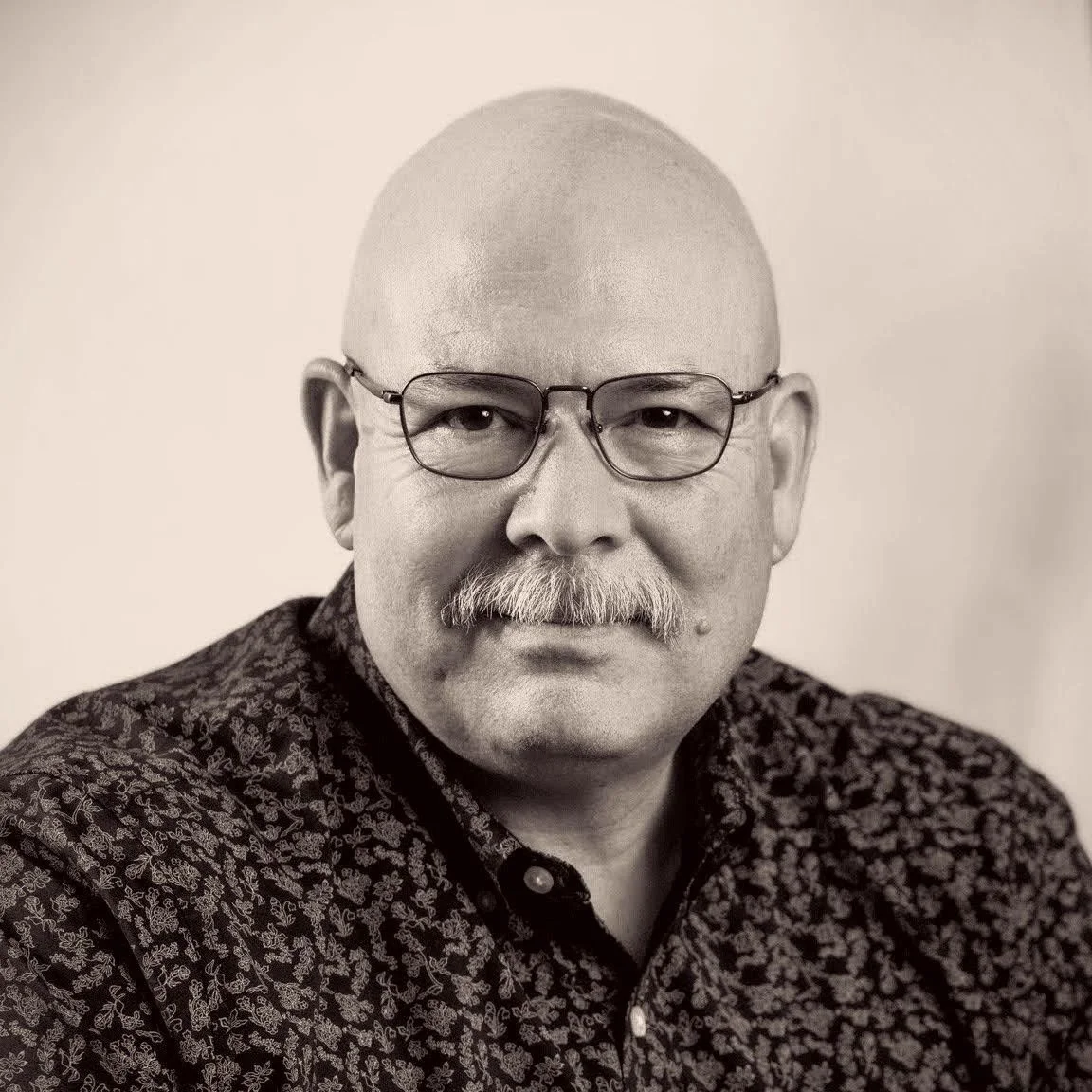
In episode 244, Peter speaks to David Geye who is an organisational futurist in the aerospace sector committed to leveraging his previous military and corporate experiences to anticipate future challenges and empower people and organisations.
Interviewed by: Peter Hayward

Resource
Causal Layered Analysis (CLA) - https://foresight.unglobalpulse.net/blog/tools/causal-layered-analysis/
Fire Support Coordination Line (FSCL) - https://www.jstor.org/stable/resrep13822.21?seq=1
Forecasting Research Institute - https://forecastingresearch.org/
Houston Foresight - https://www.houstonforesight.org/foresight-resources/
Implicit Prediction - https://www.edge.org/conversation/philip_tetlock-edge-master-class-2015-a-short-course-in-superforecasting-class-iii
Kansas City Barbeque Society (KCBS) Judging - https://www.kcbs.us/explore_judging.php
Marshall McLuhan - https://www.goodreads.com/author/show/455.Marshall_McLuhan
TIPPOS - https://www.andyhinesight.com/introducing-tippos-trends-issues-plans-projections-and-obstacles/
US Army Techniques Publication (ATP) 2-01.3 Intelligence Preparation of the Operational Environment (IPOE) - https://armypubs.army.mil/ProductMaps/PubForm/Details_Printer.aspx?PUB_ID=1006342
Transcript
Peter Hayward: The topic of the possible impact on us by our need to go deeply into the uncertainty and weirdness of our environment has come up from time to time. I think its important that we continue that conversation, but maybe we also need to widen it to consider how that might impact the quality of the work we do for our clients?
David Geye: I have taken to saying that uncertainty is inside the wire. And by that I mean it's inside our cognitive and emotional security perimeter as practitioners. I have been in conversations with other practitioners, observed conversations with other practitioners, and they're anxious, they're stressed they're challenged by the uncertainty.
And I don't wanna come across as cold, but put on your own mask before helping someone else. I can't give you my best work. I can't lead you as a client through this storm if I'm also drowning in my anxiety.
It's challenging to maintain a professional level of detachment, but. I think it's necessary because clients don't hire us for vibes. They hire us to give them insight, not just for resiliency, but for ascendancy. They're seeking insight for ascendancy against a future set of macro environmental conditions. Can vibes be useful as signals? Yes. But I don't think they're useful as findings.
Peter Hayward: That is my guest today on FuturePod. David Geye who is an organizational futurist in the aerospace sector committed to leveraging his previous military and corporate experiences to anticipate future challenges and empower people and organizations.
Peter Hayward: Welcome back to Future Pod David.
David Geye: Thank you. I'm actually quite excited to be back. I'm very flattered to receive the invite.
Peter Hayward: So David, we spoke to you as one of the five of the Shameless Collective that won the APF award a couple of years ago, that podcast
David Geye: Couple years ago now.
Peter Hayward: Yeah. And you described yourself in that as the odd duck
David Geye: From the perspective of that team. I'm older, I'm in a different place in my career. I have a distinctly different background coming from military service than the other teammates. So yeah, little bit of an odd duck. Perhaps especially, considering the topic that the shameless focused on.
Peter Hayward: That must have been an amazing ride. As a student you go into the project, I'm sure someone suggested it, and then you got excited and then you said, oh my God, can we do this? Just how far that as a ride took you and the people you got to talk to and present to.
It must have been just a wild experience.
David Geye: When we started off at Houston, , we were all very excited. We were all very nervous to put the thing on and the excitement stayed, or came back rather, every time we went somewhere else to do it. The nervousness, none of the nervousness went away, which I suppose was good.
But yeah, all kinds of people, all kinds of questions, in some cases all kinds of impact.
Peter Hayward: Yeah.
David Geye: We caused people to think about sex and intimacy in ways that they hadn't before.
Peter Hayward: Yeah.
David Geye: So there was that.
Peter Hayward: Yeah. It's good example, David, of just one of our strengths and responsibilities is the questions that we ask people to talk about it's up to them whether they wanna talk about it. And what comes up is what comes up. It's kinda like my podcast to some extent. But yeah it's our opportunity to open an area up and say, do you want to talk about this? And most people are enthusiastic to go into places that they normally wouldn't talk about publicly.
David Geye: Some people are. In my current role, I'm discovering that some organizations are less though.
Peter Hayward: Yeah.
People, as people and people as organizations are different animals, aren't they?
David Geye: They are.
Peter Hayward: Let's start this. Anyway, so for people who haven't listened to Podcast 173 the Future of Sex and Intimacy, I do recommend it.
It is a great example of the work that, our proto futurists are doing as they learn the craft. But let's start with the David question. How you got involved with the Futures and Foresight community?
David Geye: Okay, so this probably, this takes us back to ’18-‘19
Peter Hayward: COVID.
David Geye: I had just moved into what was going to be my final US Army assignment. I was working at the National Ground Intelligence Center in Charlottesville, Virginia, and I knew that my retirement was looming, and I knew I was heading for that transition. And there were several different threads that kind of came together here.
One, my wife reminded me, you need to have a master's degree before you retire. That's a competitive hiring advantage.
And I've been putting it off for a long, long time.
Combine that with a growing frustration I was having with Army Intel. Now mind you, I retired at 30 years of active service. 26 of those were in Military Intelligence, so I'd been, I'd been walking with it for a long time, but I had a growing frustration with it in that they seemed to have a type of tunnel vision with regard to DIME and STEEP interactions. They didn't really think about much of the many of the other letters except the M and when they thought about them at all, it seemed like they were irrelevant at best and adversarial at worst.
And there were other things too. They didn't look far enough, they didn't look broad enough. So between that and my master's degree search, I found the Foresight program and it pushed all my buttons. This is what Intel could be if you poured it into a really well charred, fresh oak cask and let it mature for a while and gain some depth and some nuance.
And I went in both feet. I didn't take the certificate program. I signed directly up for the master's program and just went in.
So jumping ahead to 2023 and 2024, spring of 2024 was my actual retirement. I stepped out of my position in 2023 in the fall and began my transition internship.
And I did that with the Trends and Futuring team at Ford Motor Company. So I spent about six months, two three-month blocks. One inside the Army program, and then one as an actual Ford employee working about the future of mobility. Thinking and talking about the future of mobility, working with a really great team. And getting exposed to not just aspects of the craft, but an aspect of an industry that I didn't really know much about. I liked cars, which is one of the reasons I created the internship opportunity through dialogue with the Chief Futurist at Ford.
That finalized in summer of 24, and then a couple of months later, I was hired on at my current employer, and now I call myself a Space Futurist.
Peter Hayward: Right?
David Geye: It says so on the business card. Somehow I got that position description through HR approval.
Peter Hayward: Good.
David Geye: I'm not a space person by education or training. In fact, in the Army, um, my relationship with space people was sometimes contentious. But my current position, which I also jokingly refer to as Job 1.0 of Career 2.0 is a pivot away from Intel. A deliberate pivot. It's a chance to do something new. It's a chance to grow.
I've seen so many Army colleagues retire from service and almost immediately they take a job doing basically what they were before. And I understand leaning into your strengths, but where's the cognitive growth? Where's the reinvention or rediscovery of you after the uniform? And where's the fun-
Peter Hayward: Yeah,
David Geye: in just continuing to do the thing thing?
Forsighters are an amazing community. I'm just so happy that I have fallen in with a crowd that I love. I guess you hear this a lot. I found my people.
Peter Hayward: Yeah, you found your tribe. Okay. I'm gonna take you back because I have met a lot of people in intelligence coming from the various armed forces, intelligences, and they're very, very interesting people in the practice of the craft of intelligence using Foresight.
I'm gonna ask it just generally as a person who spent a long time in what is often referred to as an oxymoron of military intelligence, you might've heard that joke a few times I'm sure. Can you talk about what do you see around how military intelligence uses. Foresight and futures tools. Can you just talk at a fairly high level through how that works as a craft?
David Geye:
You're asking me to remember quite a bit. There are four steps in the Army's intelligence process, the US Army's intelligence process. We call it Intelligence Preparation of the Battlefield, or the Operating Environment, depending on which version of the doctrine you're reading. And there's four steps.
Define the Operational Environment.
Describe the Environment's Effects (on the participants in the environment)
Evaluate the Adversary.
Determine Adversary courses of Action.
And there's an unwritten fifth step that is Deliver Your Findings. You have to tell somebody the output of all this.
I can try to map those a little bit to Houston's process. Define the operational environment: well, that is mapping the domain, that's looking back to look forward. What is the history of the environment? How did we get here? We call that the road to war or the road to conflict. And it's a definition not just of the geographic boundaries of the operational environment, but of the characteristics of it. So we're mapping the domain.
Next Step we're describing the environment's effects. That roughly maps to Horizon Scanning and what Houston calls TIPPOS. Finding the trends, the inputs, the plans, the projections and the obstacles.
So from the Military Intelligence perspective, especially ground intelligence, it is where is the terrain gonna allow great maneuver? Where is the terrain restrictive? It’s the physical characteristics of the environment and their effects on the participants. Plans, inputs, trends, projections, those have effects on the participants in that domain. That maps kind of well.
Evaluate the threat. That is roughly equated to the Futuring and
Scenario Development step. So we're trying to evaluate the threat or the adversary in terms of their capabilities: what they can do, what they think they can do, what they want to do. And we present those as scenarios and the following step, but that's sort of where it maps to determining critical uncertainties perhaps, anddoing the futureing part. Alternative futures.
Threat courses of action: that maps to scenarios developed against archetypes. The three courses of action are most likely, most dangerous and wildcard.
Peter Hayward: right?
David Geye: And then of course present findings. That's the fifth step of the process. It's adaptation and moving forward towards strategy.
If we have to present the findings, we're presenting findings to to the operations section and to the leadership of the unit so they can do something about it.
So that's roughly how it maps.
Peter Hayward: What would you say, if I was to ask you from a military intelligence where you came from, but now looking at a futures field more broadly, what would you say Military intelligence does really, really well, such that it mightn't be, uh, best of breed for foresight generally, but it's actually got some pretty provide some good guidance for how you do foresight, the way that intelligence does X.
David Geye: What military intelligence does very well is they develop a very good understanding of the different aspects of their domain.
And we as Foresighters, I would say almost all of us come to Foresight from some other domain. I don't know of too many elementary school presentations where the children are asked what they want to be when they grow up. I don’t know how many of them raise their hands and say, I wanna be a Futurist.
Peter Hayward: Yeah,
David Geye: We come to it from somewhere else. Military intelligence is very good at developing an understanding of their domain . And they're very good at determining where on the ground, and when in time to look for specific indicators about it. So, if you map that to Foresight, that is Horizon Scanning but with a strategy.
They're also good at challenging assumptions. One of the key Structured Analytic Techniques is always the Key Assumption Check. Every time you readdress some sort of intelligence problem, that was very often one of the first steps.
Peter Hayward: Yeah.
David Geye: Key AssumptionsCheck. These are the assumptions we have. Which ones are still valid? Which ones aren't?
Peter Hayward: Yeah.
David Geye: What have they been changed to? Have they been overcome by events? Are they no longer relevant? What are some new assumptions that we have to work with to be able to continue the planning process?
Peter Hayward: Yeah, I'd agree. I'd agree. The assumption stuff. The thing that struck me, David, I just, a long time ago, but I was working, I was doing some general presentations and there were a lot of intelligence people in the audience and I was talking to one of them afterwards and one of the things that struck me was the absolute clarity of why they were doing intelligence.
And as this person explained to me, the point of intelligence is for the other group's, people to die first. And that absolutely, they knew why they were doing foresight. There was no if buts and maybes, they had a clear idea of why they were doing it. Now you mightn't have liked their logic of why they were doing, but they understood the importance of what they were doing and doing it well.
David Geye: It's interesting you brought that up. For a while, I ran the (US) Army's entry level intelligence school for its enlisted Soldiers. I ran it for about a year. It's like being the principal. And when I spoke to the incoming classes, one of the things I always asked them was: Is infantry a lethal occupational specialty? Yes. Is artillery a lethal occupational specialty? Yes. Is intel analysis a lethal occupational specialty? And I would get some confused looks and someone would eventually say, “yes…maybe?” It was a leading question, but I said it's lethal for one side or the other, depending on how well you do it.I'm not telling you this to bring you down, but you do need to understand the gravity of the vocation you're about to undertake.
Peter Hayward: Yeah.
David Geye: And I wanna be clear about this part. My military experience is not like some past life I'm trying to shed. If we wanna frame my transition in terms of Foresight, that was Horizon One. Those skills established a fitness for purpose against the environment to enable me to transition through the master's program and my final two years in service, and Ford, as Horizon Two, to now get to explore Horizon Three. As a Space Futurist. Job 1.0 of career 2.0.
It was a necessary evolution. It's not just a career change.
Peter Hayward: No. Even though we work in horizon three, you are still affecting horizon one. Horizon one is still chugging along and most of the people, and most of the tasks and most of the commitments and most of the assumptions still land in Horizon one, don't they?
David Geye: They do. And I think, I think there's room for everybody in the cone, so to speak. I think there's room for Intel people in the cone working in Horizon One and the, and the, maybe the border between one and two. I think there is room for probabilistic forecasters in the cone who work somewhat in Horizon One, somewhat in Horizon Two, and I think there is room for Foresighters in the cone waving at them from out in Horizon Three.
But I believe that those three populations have complimentary skills and talents, and that there's a benefit to be gained from Foresighters being able to provide a speculative, broad outlook beyond the furthest range of any organization's money gun; beyond the range where they can commit any type of resourcing against it.
The other two populations tend to operate inside that resourcing range. When finesse and steering and management of those resources against the challenges becomes more important.
Peter Hayward: Yeah. Agree.
David Geye: I haven’t… Eh, maybe someday there's a paper in there. But…
Peter Hayward: Thank you again for the, just for diverting to the intelligence.
I just didn't wanna miss the opportunity to unpack a bit about what intelligence is and what it offers us as a field more generally. But in terms of your development and your craft as you moved from, from a military intelligence, horizon one perspective, and you got excited, but also challenged by moving to horizon two, horizon three, what were the things you had to lean into that were both challenging and necessary for you to put on new clothes, so to speak?
David Geye: One of the things I had to lean into is comfort with uncertainty. MI (Military Intelligence) is supposed to be uncomfortable with uncertainty, however, they view it from a rather more structured and hierarchical environment than Foresighters.
I had to lean into being comfortable with it, yet at the same time exercising a little bit of professional detachment or clinicality, and I think that's become a bit more important to me in the last couple of years
I have taken to saying that uncertainty is inside the wire. And by that I mean it's inside our cognitive and emotional security perimeter as practitioners. I have been in conversations with other practitioners, observed conversations with other practitioners, and they're anxious, they're stressed, they're challenged by the uncertainty.
And in some cases, I think some of them have developed an unsustainable or possibly unhealthy level of emotional investment. Mm. And I don't wanna come across as cold, but put on your own mask before helping someone else. I can't give you my best work, I can't lead you as a client through this storm if I'm also drowning in my anxiety.
Yeah. So when I say I've had to become comfortable with uncertainty, it's comfort in managing it. In the army, we would say preventative maintenance, maybe out here we say Foresight Hygiene to become comfortable with uncertainty and become comfortable with potential futures that we don't personally like.
Peter Hayward: Yeah. I think it's a great point, David. I think for me, uncertainty has changed its flavor over time. And certainly in recent time. I think there was a strong period of time where I saw uncertainty as being cognitive uncertainty. You know, I just don't understand what's going on and somehow we need to study, remain open, look for signs, imagine that kind of stuff. But highly cognitive. What I think now if we're doing our professional job, is there is still cognitive uncertainty and how we work and structure and sense our way through that.
But what you are touching on, and others I think are touching on is there's actually an internal nervous system adjustment that's also ramping up at the same time. But there's almost a tipping point. There's this cognitive uncertainty, which never goes away, but now we have a nervous system response. Which is the anxiety, the fear, the really not knowing, the fact that, how can I even talk about this stuff? And as professionals, we understand both for us and our clients we're working with that. I think the nervous side of uncertainty is now coming more and more to the fore.
I just did a podcast with, Jamay, cashew, where of course he has coined the phrase BANI 'cause he thinks we're no longer in the VUCA world. He said, volatile's not good enough. It's actually bristle now. Uncertainty's not what we're in we're actually in anxious, I said to Jamay, this description of the world is as much the internal state of the person making sense of it, as it is a description of the world itself.
David Geye: Yes.
I can see his point and maybe there's some strange Heisenberg aspect to it that we affected, it affects us through the observation and interaction.
It's challenging to maintain a professional level of detachment, but. I think it's necessary because clients don't hire us for vibes.
Peter Hayward: No.
David Geye: They hire us to give them insight, not just for resiliency, but for ascendancy. They're seeking insight for ascendancy against a future set of macro environmental conditions.
Can vibes be useful as signals? Yes. But I don't think they're useful as findings.
Peter Hayward: Yeah. That's, Stuart Candy, podcast quite a while ago now, but he coined the phrase our emotional burden, when he was giving a presentation and. And he wasn't trying to paint us as something, heroic or anything other than just, we have to carry and take on things and think about them that most people would prefer not to think about.
And he didn't use the word hygiene, and I think you talked about this even in your sex and intimacy group with, the shameless collective, you had to have scrupulous hygiene, you had to do hot washing, you had to do all those things as professionals to make sure that you can sustain this kind of work.
David Geye: And for all the reasons I said earlier about wanting to come to this field, I didn't become a Futurist to grind my teeth at night,
But if we map the signals against the archetypes and we actually properly address all of them, we're looking at implications or potential outcomes of collapse, we're looking at potential implications or outcomes of new equilibrium or decline. And not all of those we find personally tasteful.
Peter Hayward: Ah,
David Geye: It was a Canadian media personality, Marshall McLuhan, who said, “I don't necessarily agree with everything I say.”
I don't always have to like everything I put in front of a client. I just have to ensure that I was diligent and rigorous in how that was derived.
Peter Hayward: I think you took, I think, yeah, you touched on a very, I think a very interesting point, which is this idea that we are there to give our clients more than just resilience. I think you used the word ascendancy which of course any study of history will argue that takes you to the point of hubris because a belief in ascendancy when there's actually no ground to it, means you are actually heading for a worse situation.
How do you both lay the ground, do your job? Present the information, but also not leave the client in a situation where they now feel less agency. Is that the point for people to pause and hesitate or doubt, or is the point to pump people's tires up so they feel confident and assertive
David Geye: If we change the word ascendancy to resiliency and focus on that for just a second; If you're resilient, then after you suffer an impact,you are quickly able to return to the point you were at when you took the impact.But you've lost time. So compared to your competitor, you might not be in the place you would prefer to be.
We're not trying to pump them up. We are in some cases trying to provoke them to think about uncomfortable futures, but at the same time offer them potential pathways through understanding of the emergent signals and the emergent trends. Offer them potential pathways where they can either navigate around the impact or they can ride through the impact and end up in a better position than they would've been if they were just resilient.
There is a connected pathway forward to it. Yeah, I like your point about pumping people's tires up. No, no, no, that's not what we're trying to do. But as an organization, if I'm thinking about organizations as clients primarily, I guess that's kind of the nature of the diagnostic service.
Peter Hayward: Mm. I'm hearing an echo of Taleb's idea of anti fragility and what I heard you say, David, this idea that we need to ask tough, difficult, uncomfortable questions within what the organization builds through engaging with those ideas, they actually come out as a stronger, more resilient organization through the struggle with the work.
David Geye: Organizations have a very tough time seeing futures without themselves. Seeing a future where they either don't exist or they're dramatically diminished in structure or in scope,in importance because, being a little facetious, but not really, that doesn't create value for shareholders.
It's their version of the place the Bene Gesserit can't look.But if we present to them a future that says, Hey, because of these developmentsyour market share has shrank by this much. What do you do about it? You force them to look at the uncomfortable place, and then they can also look inward and go, well, these are the core competencies we have,these are the skillsets we have. How can we apply that to avoid or prevent an outcome?Or to perhaps soften an outcome?
Peter Hayward: Yeah, what I'm hearing there, David, is this idea that if your business is horizon one, horizon two, but we actually looks like it's gonna be a horizon two, horizon three, then what do you have to become in order to be a resilient company in horizon three. 'cause at the moment, you're not it.
David Geye: At the moment you're not it, and maybe some of the reasons you're not it are things you can't control.
Peter Hayward: Yeah.
David Geye: They're governmental policies, the state of economic affairs in the world, things beyond your control but some of it perhaps you can.
Peter Hayward: So let's jump into what's around David that is getting his attention? That he's getting drawn to of what he's either drawn to it or it's drawing him in that you're paying attention to and why?
David Geye: Well, I feel it would be a little disingenuous to bill myself as a Space Futurist and not actually say anything about space. One of the things thathas kind of captured my attention in the moment is what we're calling, what the team is calling, the gamification of space. We've seen signals for different types of competitions that are either space centered, or actually space located.
One that comes to mind actually talked about satellite racing and some people on the broader team thought aren't all satellites racing? They're all moving very fast. But there was this idea that there was a competitive aspect that's different from the competitive aspect that we see commercial space companies vying for position, vying for ascendancy in the market segment.
This is actual like sports competition. And whether that is orbital satellite racing, whether that eventually takes the form of some sort of human sports on orbit, in orbit, whether that takes the form of some sort of multi-domain competition with space assets and ground assets. It's a gamification, and along with it comes the other interrelated thing that has caught my eye is the, the rise, the ascendancy in the litany to borrow from Sohail Inayatullah of prediction markets.
Peter Hayward: Yeah,
David Geye:When I was in uniform, I participated in some probabilistic forecasting a little bit. I participated in some markets. I have had super forecaster training, which might make me something of a heretic in this community, but I don't do it very often because I confess I'm not that good at it. But I thought that the idea of the wisdom of the crowd could be beneficial as an alternative analysis point of view. So I and some other people that I worked with in that space during that time kind of lamented that nobody paid more attention to them.
Well, now everyone's paying attention to them, they're being quoted in news media, but it's not the pure probability markets, it's the betting markets.
Peter Hayward: Yeah.
And of course insider trading, we actually saw this with poly market that, there's a suspicion that some people had some very good collects on poly market as to whether the current leader of Iran would still be in place at a certain date.
And the suspicion has been that the winning bet may well have been someone who had knowledge of what might be gonna happen.
David Geye: That's the part of this emergence that circles back to what I said before. I don't always have to like what emerges, and I don't particularly like this. It's because anything becomes bettable.
And there are two potential types of insider trading. At least two, there's probably more. There's the kind we talked about and everyone's familiar with from its parallel in the stock market. You know, something that nobody else does, and you're able to place a bet or place a purchase in it and make an ROI.
Then there's the self-fulfilling prophecy kind. You're are able to affect the outcome and so you place a bet because you know that you can win it. That would be akin to some sort of hacking group placing a bet about some web service going downand when they place the bet, they have their finger over the Enter key.
Peter Hayward: I see in our community that we almost want a purist perspective of saying we don't forecast the future. 'cause the future is not forecastable. And at one level we all go, yes, that's right. We don't do forecast. But of course we do do forecasts. 'cause every, but we might say they're provisional. We might say they're hypothetical. But it's based on a set of assumptions. Back to your earlier point, you are leaning into the fact is the actual point of making the assumption itself is an action that leads towards that future.
David Geye: Yes. That is what Philip Tetlock, I believe, called an implicit prediction.
Peter Hayward: Correct.
David Geye: And yes, if I present a series of scenarios to a client - maybe one per archetype - or a series of vignettes to a client. Those are informed by signals. I'm going to present the ones that are informed by signals. If I presented one that was informed by no signals, then that's what we in the trade call fiction.
I'm implicitly forecasting.How can I put this? The very fact that I present it and it's informed, implies it has a higher likelihood of emergence. Yep. But here's the key; this was an out of left field connection that I really wouldn't have thought I would've made, but it's been working out for me.
In addition to being a Futurist, I'm a barbecue judge.During the season, I sign up for and volunteer to go to competitive cooks, and I'm one of the judges, one of the poor, misbegotten, mistreated judges who has to actually eat the competition barbecue to determine who the winner is. When we present a scenario to a client, we are not forecasting that the scenario will emerge in total. I am not telling a client there is a brisket sandwich in your future.
But I'm telling a client that I'm seeing signals for salt, pepper, garlic powder, beef brisket, smoke, bread, pickles, and onions. Those could arrange themselves into a sandwich, but they may also arrange themselves into most of a barbecue plate. Now we just have to look for the sides.
Peter Hayward: Yeah.
David Geye: What are the signals of the adjacent sides?
It's the ingredients.
Peter Hayward: Yep.
David Geye: That we assess are likely to emerge, but the ultimate form they take, we don’t know. Nobody knows that.
Peter Hayward: question. Do you think as a field we should spend more time exploring and participating in the gamification of future states?
David Geye: Ooh, that's a tough one.
We already use a variety of different games as workshop tools, but they are exploratory games,they're not necessarily competitive games where we're seeking a winner; where we're seeking to make winners and losers. They're exploratory games where we're seeking to uncover things. And the short answer is I don't think we should lean too hard into that because that increases the pressure on us to become more forecast-y and less Foresight-y.
Peter Hayward: Sure. But again, taking your barbecue scenario, could it be, would it, could it be wise for a company that where you are picking up sensors around onions and chili and everything else to say, what happens if we set up a market that includes the elements? We're very interested in, but also includes other elements that we're less interested in, and we put that out to the crowd and we let the gamblers enter.
Might we get some interesting information if we design a market that is general as far as the public is concerned, but is specific in terms of the client.
David Geye: Okay. I see more clearly where you're going with this. This circles back to there's room for everybody in the cone. In the Army we had a term called the Fire Support Coordination Line. If you were on one side of the line, artillery could fire over your position without having to coordinate. I've co-opted that a little bit as the Foresight Support Coordination Line. What is the line that separates Foresighters from forecasters, from intelligence analysts, right?,
And how do you coordinate the skill sets and the talents across that? So yes, I think we could develop scenarios and vignettes and then seek to apply forecaster talent to help bring clarity, potential clarity, to them as they get closer. And that is actually something they're quite good at. At least the ones that are good, are quite good at it.
We build narratives to give a client a vision of the future that makes sense to them. Forecasters take narratives and deconstruct them into signals that they believe they can detect. So yes, I think what you're getting at could be done. It's just a question of which market or which forecasting group might be interested in trying to pursue it, because crafting the questions in just the right way is very important.
Peter Hayward: Yeah. The other thing I've seen in the production prediction markets, I'm sure you've seen it as well, is people are entering the prediction markets as a CV building exercise.
That when you want to get into intelligence or market or whatever else, then you go in and you build here is the evidence of myself as a as a super forecaster. Yes. There are people who want to gamble and there are people who want to use and demonstrate their competence.
They are all different motives, but they still potentially become sources of information that could actually assist a client on the other side. I just dunno how you harness it, that therein lies, the, therein lies the dilemma.
David Geye: Therein lies the dilemma. And I'm not quite sure how to fit it all together yet, but I keep a foot in that space.
Peter Hayward: So David, so what do you say David does when people don't understand what David does?
David Geye: I tell people when they ask what’s a Futurist, I help people and organizations visualize potential futures beyond the furthest reaching resource cycles they have.
Peter Hayward: Mm-hmm.
David Geye: Beyond the point where they can spend money. And I try to help them use those visualizations and use that knowledge to make decisions now that will either provide resiliency or ascendancy against those different outcomes.
And when I say resource cycles, I mean beyond the range of their ability to, like, program money against them. You can't spend money out here. What can you do now, in the zone where you can spend money or other resources, to ensure that you're gonna be okay against all of the possible outcomes out here?
Peter Hayward: I think there's a paper there, David. I think there's a paper using your artillery metaphor for that. You are almost taking people out to a point where I don't want your money adding this space here. It's not money, it's imagination, it's engagement, it's thinking it's innovation. And that's a space that, that's the space that you can play into then bring it back into the money space.
David Geye: Yes. We try to go out 10 years because that's two, five-year spending cycles. It's the spending cycle after the next spending cycle where usually the people we're talking to, they aren't thinking about that. And to be fair, they don't really have a lot of time to think about that, but that's why they bring us in.
Peter Hayward: Yeah. It's, it is both the, I haven't got time to think about it, and there's no need to think about it, but at the same time, I'm terrified because we're not thinking about it.
David Geye: Yes. Yes.
Peter Hayward: So that's a, that's almost a nice segue to wrap this up. So let's you bring this home and you bring this home on your chosen theme.
David Geye: Okay. Circling back to the uncertainty piece, and the emotional load that that causes us. Regardless of which school of thought you subscribe to as aFuturist, or which school you went to as a Futurist, you have a set of tools. And by tools I mean education, training, frameworks, methodologies; they're all tools to help you help your client, and in some cases to help you help yourself.
But those tools have minimum and maximum effective ranges. If you were to ask me what the future in 3026 is gonna be like I would just have to chuckle a bit and say good luck with that, I can’t help you.My tools don't have that range. But at the same time, they're also not designed to help me figure out the rest of this week. And when uncertainty is inside the minimum effective range of our tools, it's disruptive for us.
Peter Hayward: Good.
David Geye: So, what I urge all of us as individual practitioners, and as a community of practitioners, is to take care of ourselves and take care of each other. Because when uncertainty is inside the wire, when it is inside the effective range of our tools, that is when we're the most needed.
Peter Hayward: Again, I go to my last podcast with Jamay and BANI clearly Jamay was saying Uncertainty's completely inside the wire at the moment, along with anxiety and absolutely incredulity, or I think his, his last term was WTF. This is where we are, and if we are there, then certainly our clients are as well.
David Geye: Yes. Although not all of them realize that.
Peter Hayward: What are the tools? What are the ways of operating for people where the world just broke as they understood it?
David Geye: That's a hard one. Because it's different for everyone. I think this is where we gain a bit of value in a Foresighter as trusted advisor or confidant, but it's not quite that.
I can kind of circle this back to me a little bit. Tools that help me operate in this are basically the ones I can, if I can draw it on the back of a napkin, then it's useful. If I have to build a slide deck and do a workshop and do project management, yes, all those things are good as Foresighters to have in their practice, but sometimes the best results come from working through the problem live in the moment with the client.
I can draw a cone on the back of a napkin. I can draw three horizons on the back of a napkin. I can, and have, done CLA (Causal Layered Analysis) on the back of a napkin. And actually reached a solution for the person I was working with at the time that they were able to implement. So, I think when the client is feeling anxious or the practitioner is feeling anxious, you have to bring things in close and work from there. You can never think too big and you can never start too small.
Peter Hayward: Yeah.
David Geye: So work through that one tool. Take those results, work them through something else. Take those results, work them through something else.
Solve the problems you can solve.
Peter Hayward: Yeah. A tough one to finish on. Thank you for being such a good sport and,
it's been fun, David. It's been great to catch up after, the couple of years ago with the Shameless Collective. Yes, you're a little bit of an odd cat, but welcome to the tribe and welcome to the Future Pod alumni.
David Geye: Yay. Glad to be here, Peter. Thank you very much
Peter Hayward:
Thanks to David. I got quite a bit from David's framing of how we work with clients and he was certainly the first guest to utilise a BBQ as a metaphor. Future Pod is a not-for-profit venture. We exist through the generosity of our supporters. If you would like to support the pod, then please check out the Patreon link on our website. I'm Peter Hayward. Thanks for joining me today. Till next time.