

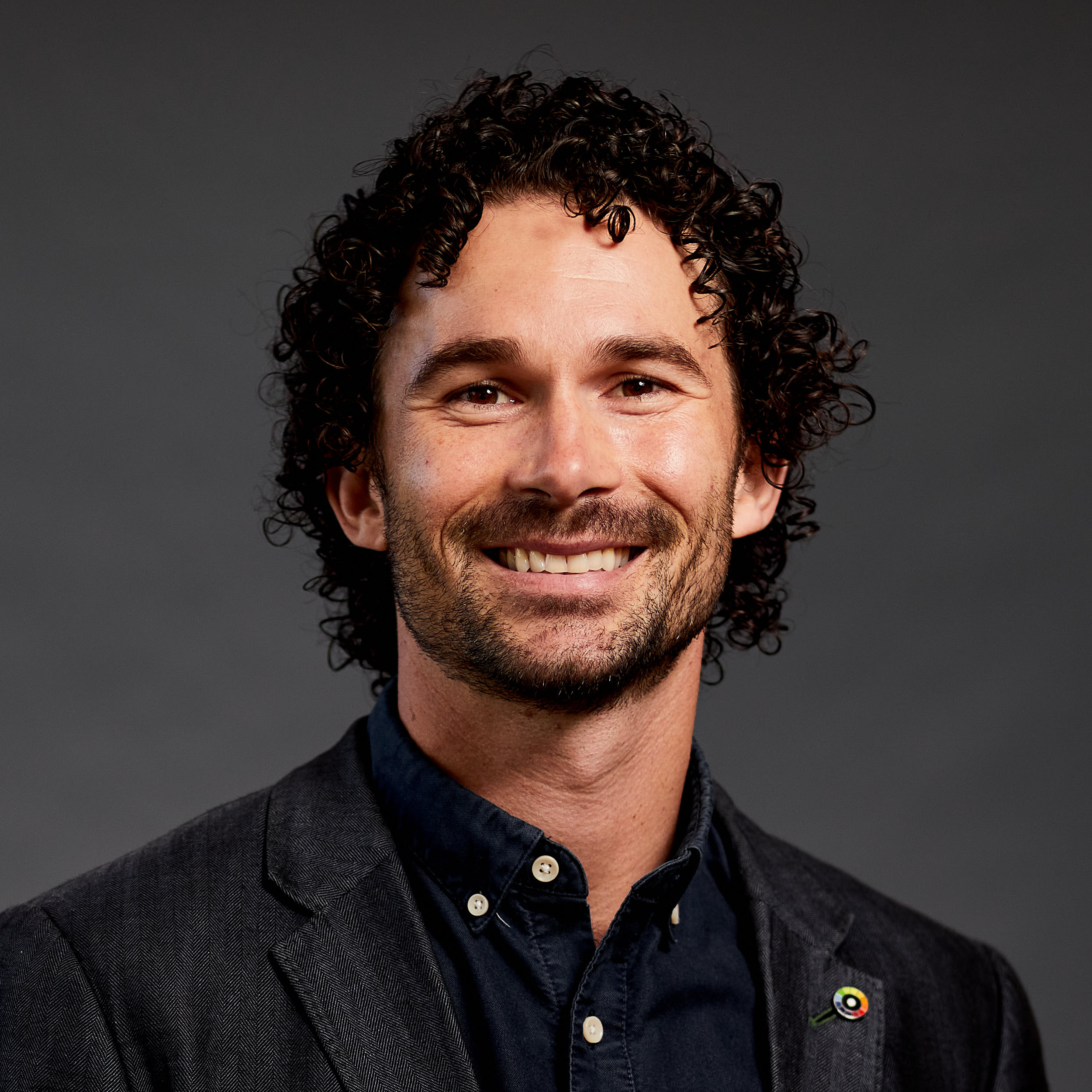
In episode 243 Peter speaks to Louka Parry who is the CEO and Founder of The Learning Future which believes in human-centred education and views education as an ecosystem, nurturing thriving ‘humans’ to grow and connect in a healthy environment.
Interviewed by: Peter Hayward
Resources
Transcript
Peter Hayward: If I asked you should education equip people for the emerging futures I would guess that most would respond with the positive. If I then asked you if education does this I suspect most would respond with the negative. So what could we do, what should we do?
Louka Parry: A lot of what's happening in our world and in my world in education is really an argument between different frames. And so when someone puts a proposition to you they have a frame within that proposition. And often they want you to get you to agree or disagree, but the point is, we wanna be able to reframe the entire conversation.
And so what is school for? Just a great question. And people often will say to get a good job or to do well and to learn what you need to learn so that you can participate in the workforce. So immediately there's a frame that's been created there. And so for me what is this a school for? It's for a multidimensional development. So if the frame for what a school for is academic achievement we've lost the battle already because that is a narrow expression of the incredible value that we have as human beings.
Let's broaden that. Change the frame from, rather than schools are around achievement to schools are about fulfillment. Oh, that's a different frame. So all of a sudden we're talking about cognitive, social, and emotional. We're also talking about the application of what we know, and we're enabling there to be something unique about the way that we work with our learners. So if we can change from a standardization of the human expression and knowledge to a unique expression then we're moving in the right direction.
Peter Hayward: That is my guest on FuturePod, Louka Parry who is the CEO and Founder of The Learning Future
Welcome to Future Pod Louka Parry.
Louka Parry: Peter, great to be with you.
Peter Hayward: Louka this is gonna be a wonderful podcast. And 'cause it is rare for me to talk to a fellow futures podcaster.
Louka Parry: Likewise, honestly, it's so good that our paths have crossed and waven together in some way. Peter.
Peter Hayward: Now for the listeners of Future Pod that Love Future Pod. You also need to tune into Luca's podcast because we share a lot of guests, but Luca asks them different questions and Luca's got people that I haven't spoken to and I'm very jealous about.
So do you wanna just tell the listeners briefly about your podcast,
Louka Parry: Luca? Sure. My podcast is called The Learning Future, and I'm an educator by kind of vocation and passion and background. And so I'm really curious about. The possible futures, the big trends, what we're seeing, who we might become. But in particular, I'm interested in how does learning play a central role in the life of a human being and in the way that we design our social systems.
So that's been my main inquiry now for a number of years. Peter, I wouldn't call myself a legitimate futurists as much as you are. I fell into this work. Going through the kind of design thinking Stanford D school community and go and went, oh my gosh. There's this whole way of trying to understand, how change happens.
And that's been my main inquiry really is in, in, at all the levels of the fractal Peter. From the intrapersonal all the way up to the planetary. I'm incredibly interested. In how change takes place and how it doesn't, and how we might try to nudge it in a direction where we can arc it towards, a deeply human, compassionate, loving future.
Where we are all understood as unique beings having a. Spiritual beings having a human experience as the saying sometimes goes, that's right. And then make sure that our social systems acknowledge that so we can create as much value as possible and be connected while we're lucky to be
Peter Hayward: Here.
So that's the present. Now let's jump back to the past. The power of narrative. So I'm interested how you tell the narrative of. Your origin story for how Luca Perry got involved with the Futures and Foresight community? It's interesting.
Louka Parry: What was really clear from my early life, Peter, was, I'm the son of two immigrants that came to Australia by boat.
When they were children, a Greek mother and a Welsh father. And so my childhood and my mother is an incredible educator. My dad is an incredible adolescent psychiatrist, so that explains a lot about who I'm, and education for me was always just heralded as such a gift and that I had, I was gifted with this incredible education that my forebears did not have necessarily.
And I did the whole travel, travel after high school thing to Europe, lived in Dublin, connected to my Greek ancestry, my Welsh ancestry. But there's a few seminal moments I think that have brought me to here. One was the death of my P bull, my grandfather, when I was 16. And I realized at that moment, Peter, that I hadn't connected to the story of his life that I could have.
And that was largely because of a language barrier. 'cause I didn't speak any Greek and his English was limited. And so that. I started to go, oh my gosh, like I started to learn about my own history and of course the history of the world, especially when you're an Aussie 18, 19 years old, traveling Europe, from Adelaide and.
Everyone's code switching into multiple languages. There's, centuries, millennia of history around you. That's, built architecture, built environments. So I came back and decided to be a teacher, and it's just the commonality for me was education, expansive education, multidimensional education.
It enables us to expand who we are and therefore become more unique. Therefore be able to contribute something more powerfully back into a collective. And so I spent my early career as a teacher in an outback school, an indigenous school, and it was on a cultural interface. English was not the language of the community, it was pigeon Jetta.
And I turned up full of beans. Played for the local football team, Peter and ended up learning an incredible amount about human development and culture and language. Did apply linguistics, masters, became the school principal, which wasn't the plan, but happened and had that leadership journey.
And then I've arced into education leadership since when I worked in some policy and then became a consultant, a kind of professional development design thinker. And that's where I first encountered futures. I have to say, Peter was in one of these design conversations with some colleagues at the Stanford D School that has a Platinum Institute of Design where I was a micro resident and I met my first futurist.
I thought, what the hell is that? Who was that? It was Lisa K. Solomon. Oh, and she was just full. She's such a life force and the way she just thought about the future, of course I'd become a bit of a historian, an academic, I'd done an education leadership masters at that point. So I was trying to consume like who am I?
Who am I becoming? How do I support development of young people? That was my shtick. Become more around the kind of design space. How do we design systems? How do we design experiences? And so the strategic foresight, future space, I thought, oh, this gives me a kind of language that I hadn't encountered before about possible futures or scenarios or world building.
And I'm still very much an aspiring. Futurist and I don't think that'll ever change Peter. 'cause I'm also an aspiring historian and an aspiring leader. I don't, the aspiring bit matters to me. I don't think I'll ever make it. But I guess that's probably the way I think about life. I've been seduced by the arrival fallacy like many.
Oh, at when I get to this point, then I will be enough, or I will have made it, or whatever. I start a podcast, do something, do some speaking. So for me I really do see, and I, my thesis at the moment is if we can help bring people into this space of how do we be playful with the future, how do we fall in love with it especially, and then care enough for it to do something about it.
I think that is a. And obviously I'm trying to do that in the K to 12 space in particular. Yeah. Through my current work with colleagues at the learning future. So that's the journey.
Peter Hayward: Yeah. Is it, to cut to the chase, is it given that education is a monolithic institution that is centuries old, built around a model of why you educate, which I'm gonna say is not human flourishing. Is more about control. And making people fit within a cultural frame. And how does an aspiring humanist, developmentalist educator, idealistic educator, are there still spaces in the ecosystem within that monolith that can happen still?
Louka Parry: Yes, absolutely there are. And I think it's got something to do with the way that we, even, the way we orientate towards our agency.
What I notice Peter, in, in my work with educators and leaders, it's the people that think they can make a difference that do. I'm very interested in the expectation effect and in the placebo and the no sibo and really the whole field of psychology that's exploring the kind of interface of psychology and biology or psychophysiology.
And I just think there's something about people that, the people that are making remarkable change at the moment, that there are young people having phenomenal learning experiences. So not often because of system design, but in spite of them. But of course, what's the differentiator? A human being that's being courageous to say, I'm going to deliver this kind of experience.
And every great school that is be, that is more human oriented, more oriented towards uniqueness than standards has a, I would say, a phenomenal leader that's quite courageous. That seems to be the commonality to me, Peter. Now we also internalize the systems in which we work, and there's like a, we must almost resist in place when we feel like a, if it's a fear-based command and control system, right?
That's been generated out of mass education across a couple of centuries now, so we've inherited that. The question is, what do we do with it? Which of these mental models no longer serve us, or to paraphrase, so Ken, all these organizational devices that we have in schools, they're about organization.
They're not based on learning sciences or human flourishing, effective neuroscience, which is about how do we feel when we learn and using emotions as a vehicle for cognition. You know that's where I like to spend my space and I learn as much from the. The schools and educators I work with, because they're the ones doing the most complex work.
There is, I might be a cliched teacher here, Peter, but I will own that. Monica, proudly. The saying is teaching isn't rocket science. And I agree. I say it's not rocket science. It's far more complex than that.
Peter Hayward: Yeah. '
Louka Parry: cause rocket science is complicated, but the world of human beings in psychology and development is complex.
Anyone that has children will be able to speak Absolutely. To that. The complexity, even our pre-chat, the complexity of bringing different individuals together into a common space and trying to, the tension of recognizing difference and celebrating it whilst also recognizing commonality and unity and that tension and how we move between those two of, I am because we are, but also I am.
And. That really interesting space of self-transcendence back into self-actualization, then back into self-transcendence and I'm sure we'll talk about a bunch of things, but a few of the concerns I have is that we're not enabling our young people to experience as much self-transcendence as previously for a range of different reasons.
One being lack of connection to nature. But and the kind of the way that big tech has moved us from an attention economy into an attachment economy as as AI builds out effectively and hacks our attachment. It was dopamine that was hacked in kind of social media, 2010s.
Now we're looking at other types of chemicals like, serotonin, oxy, oxytocin. These things, can we, can you fall in love with a machine? Peter? These are all open questions in my mind. Yeah. At the moment. Yeah. But what I would say is this I fundamentally believe that it, the power of learning to help shape one's life.
And I think someone who is open to learning, even, all the way into kind of their elderhood into eldership is just such a beautiful example of the power of learning to be regenerative to the human spirit.
Peter Hayward: I'm gonna ask my question in a different way 'cause I love dialectic approaches. In order for leaders to create those educational spaces where people can transform themselves, is it helpful to have a monolithic education system, which doesn't really do that? In other words if the thesis of industrial education is one of conformity and rote learning, then that's necessary in order for individuals to produce antithetical ways to do education, that you need both the monolith and the emancipatory brought together to create truly remarkable learning. What do you say to that as a question?
Louka Parry: I think that's beautifully framed, Peter, does, how can White exist without black?
The, it's the fact is, everything needs to have a contrast. And my, my. Obviously my work isn't so much in trying to retain or reinforce the structures of the existing system. It's actually trying to support the regeneration of that into something new or alternatively, to build the adjacent possible.
Where you have schools that are doing those kinds of things, or you have, and so often they're outside the systems because it's quite difficult, I would say, to be within one. Although there are really remarkable case studies and examples of people doing that, finding the cracks within that industrial paradigm and making oh, actually this is what the policy says, so we're gonna have an individualized learning plan for every student, and therefore you effectively have a fully flexible.
School without ear levels, those kinds of things are all possible, but certainly I think, it's what have we inherited? How do we step back? Which of these mental models are no longer fit for purpose? I'm not one of those people, Peter, that would say, oh, education is broken.
Because I feel like, especially in a HU education is a human system. And as a teacher, when you have, you'd have often these tech titans come up and go, education's broken. You are working your ass off in a classroom with what you have, your curriculum, your learners, your support, the school culture, and I just found it offensive at some level.
I just feel like that's a great way to, really kick you in the guts instead of, education was designed for an era that no longer exists. It was about conformity. It was about, it was the first industrial revolution and the Prussian army before that. And all these, the Committee of 10 and others, all contributed to this.
But are we saying that we're still in the first industrial revolution economy or society? It's about conformity and the production line and manual and cognitive. No we're so far beyond that. Intel, the fourth industrial revolution, the convergence of the cyber physical systems, we're now what has a premium isn.
The kind of even not, isn't just kind of knowledge, it's apply. It's meta learning capacity. How do I create value? What do I do with what I know? In fact, who am I becoming as I do things with what I know? And I have to say, I loved how chat on my podcast because you were just so down into the virtue space of the stoics.
These are timeless principles, Peter, that you know. Senators in Rome were reflecting on 2000 years ago and how do I live a life of justice? How do I live a life of courage? Those, my reflection is, we're not in a knowledge economy. We're in a creation economy, but we should be in a character world because if it's not about who you are as you do things with what you know, what is it about?
That's, and maybe I am idealistic when I talk about this, but really I think at the end of our lives, we'll look back not at just what we did, but who we became. That's certainly the way that I tried to live my life is with a eulogy orientation, not a CV orientation, although I've been captured by my ego many times and have done all the things and got a bit, out of control for a moment there trying to do everything. But I think that's the piece for me. It's, what, I think if we could have every young person just realizing how powerful they could be and perhaps how powerful they already are and that life itself is a gift. The fact that why care?
Because you are alive. Just to be alive. I even think that's a radical act today, Peter, in a world that's trying to grab your attention increasingly through whatever means necessary through the smartest people and. Trillions of dollars of r and d now becoming attachment. I'm gonna grab your attachment as well.
I think honestly to be alive, to be connected, to notice where you are, what you're a part of. Those things seem like radical acts, and yet to me, they are exactly what we need to center into the wonderful places that schools could be and are in certain organiz in certain places and spaces.
Peter Hayward: So let's pivot into your frameworks, your beliefs, and you've had so many amazing people on your podcast, and you yourself, through your own professional journey, come across so many wonderful, powerful ideas, theories, and approaches. This is a chance for you to do a bit of teaching to the listeners about explaining an aspect of this kind of emancipator, agency driven education that you wanna just expound on in a little bit more detail so people understand both what it is and how they might employ it in, whether it's their family situations or their organizations or just their lives. But what do you wanna talk about?
Louka Parry: That's a great question, Peter. I'll share a couple of different. Aspects. The first is maybe it's like the, I wanna say ontology because it sounds smart too, the belief structure space. Like what maybe it's framing. And I think the first thing I've learned is that.
A lot of what's happening in our world and even in, in my world in education is really a, an argument between different frames. And so when someone puts a proposition to you, they have a frame within that proposition. And often they want you to get you to agree or disagree, but the point is, we wanna be able to reframe the entire conversation.
And I would say most, one of the things I've learned and I continue to try to learn more about is the power of cognitive linguistics, of framing. And so first question, what is school for? Just a great question. Oh and then, and people often will say, to get a good job or to do well and to learn what you need to learn so that you can participate in the workforce.
You're like, okay, great. So immediately there's a frame that's been created there. And so for me, I, my view is that. What a school, what is this a school for? It's for a multidimensional development. So if the frame for what a school for is academic achievement, we've lost the battle already because that's, that is a narrow expression of the incredible value that we have as human beings.
And I'm. Absolutely a nerd and absolutely love my academic achievements, and I continue to, we're so much more than that. Let's broaden that. Change the frame from, rather than schools are around achievement. This is very commonly spoken about, especially by parents to schools are about fulfillment.
Oh, that's a different frame. So all of a sudden we're talking about. Cognitive, social, and emotional. We're also talking about the application of what we know, and we're enabling there to be something unique about the way that we work with our learners. There are no two people I've ever met who are exactly the same.
If you are listening to this and you have two children or more in your family. Are they at all similar? I would wage They're probably not. They're radically different. They grew up in the same home. This is the whole point. You have everyone's unique human being. So if we can change from standard, we have a standard, this is about a standardization of the human expression and knowledge, et cetera, to a personalization or even I wish I like even more, like a unique expression, then we're moving in the right direction.
So that would be the first thing to go from academics. To a multidimensional model of development, which is academic, social, emotional. I'd even add physical and spiritual to that as well, Peter. And so then you have a different starting point. Another great shorthand is the Ikigai Model of Purpose which is the Japanese construct.
It's a nice Venn diagram. It's what do you love? What does the world need? What can you be paid for and what are you good at? Now schools, they draw a line, the existing school structures, they draw a line through that and they go, what are you good at? What can you be paid for? That's what you should study.
And I was at a school on the weekend, Peter, and this, it was a fantastically progressive school, and the student said, I'm like, oh, how are you enjoying it? She's yeah, but I actually wanna do law. I said, oh, okay. Yeah. So I've just decided to do the subjects, that I think are not gonna be scaled down so that I can get into law.
And I just thought even in the most progressive school, you have this system. Incentive where young people choose to not study something that they love, that makes them feel alive or something with a social impact potentially, because they go I need to play the game of the system now.
To me, that's system failure. It's one of the, one of the examples we can look at when we look at the way that we rank our young people. So they can go to university. I'm, I think we need to move from ranking to matching and there's some good work happening in Australia with Melbourne Metrics and Learning creates Australia and future training Think and others.
Why the hell are we ranking everybody that's pretending we're all the same again, that's a pretty crude way. So inefficient. If we're talking about human capital investing even, we wanna match people. We want 'em to develop their unique strength so they can create value into a marketplace and into a community.
That to me, is another shift in mental model. So you go from academics to multidimensional development, you go from ranking to matching. And then the last thing I would say in this little teaching monologue that I'm on at the moment, Peter is. In my travels, in my work, I've been really trying to understand what are the first principles, what are, the principles are few, but the methods are many, as Ray Dalia would say.
So it's what are the few principles that are universal for young people everywhere? And I've worked in lots of different countries, been very lucky to observe, and kids are pretty similar when you get down to what they need, and we have a. I think we call the learning feature alphabet, which is kinda bit playful as a heuristic so people can remember this.
But I would say if you insert any one of these principles or you elevate the presence of it or your focus on it, you're moving in the right direction in a learning experience, including, I would say an adult learning experiences. The A-B-C-D-E model we talk about is a for agency.
An agency isn't something you have, you don't have agency. It's something you do. It's when you shape the environment around you rather than being shaped by it. And I think this moment in our trajectory as a species, we have, we must remember to activate our agency lest we become the consumer of. Passive consumer shaped by other thinking, shaped by my AI that's making decisions.
'cause I've often loaded my cognition too much. B is for belonging. Where do we belong? Peter, we know categorically that loneliness has a bigger impact on your health than smoking or drinking. And it's a, we have this, surgeon general in the US talks about loneliness as the major factor.
And people report having fewer friends than they ever have before, and yet we're more hyperconnected than ever before. What an interesting paradox, so how do we belong better? Take off, sit down in a circle with others, look them in the eye, ask them a question. And unfortunately, what we're also doing at this moment is in some ways enabling some young people's fears to overcome their actual power to choose.
For example, and this is slightly controversial 'cause I am a humanist I'm compassionate in my views, the idea, Peter, that, if a student doesn't wanna do a a presentation because they have social anxiety, we'll say, that's okay. We'll let you do something else. What that tells that student is that their fear of speaking is more powerful than they are.
And I really think there's something there we need to take a look at, see is for curiosity, curiosity, divergent thinking, not just convergent thinking. Many possibilities, not just one, I think curiosity to me is the neurobiological spark of any creative act. And that's why I think it underpins creativity, right?
Which is also a great C and in education. Peter, I don't even know. We love our C's. You can do five C's, seven C's, 10 C's. Again, D is for discernment. Ah and friends discernment. Today at the end of our lives, they will have been what we paid attention to. Beautiful quote from Simone and. So what are you paying attention to?
What news has bias? Where are you practicing? And I love this selective ignorance, discern, you are not, there's no way to take on the entire world and what's going on right now. So how are you choosing what bias are we seeing? Is this fake news? Is this real news? Is this artificially generated synthetic content?
Is it not? And finally, to bring this home, Peter, it's e for embodiment. I think we have a really significant issue with disembodiment right now, which, you can hear it even in the language that we use, where it's oh, a bit stuck in my head. Or, you go into the mind, you are not really present to your environment.
We, we have hundreds of thousands of years of. Evolution to be embodied. We have a body for a reason, and yet what we're doing is dis embodying ourselves by forgetting of that it exists. And so how do we use the power of our nervous system? How do we tap into our breath? All these are basic practices that make us human.
How do we get out into nature and back to our self-transcendence piece, realize that we're a tiny speck in the cosmos instead of. What our ego does, I'm the most important person and everyone is thinking about me all the time. And so self-oriented in navel-gazing, I'd say those moments of self-transcendence, they come, I think through embodiment not least of all the vitality factors that underpin great thinking and great learning anyway, of sleep, exercise, and nutrition.
So that's the A, B, CD, E agency. Belonging, curiosity, discernment, embodiment. That's another frame heuristic that we use to go. Let's just use these principles to reflect on what's actually happening in our schools, in our societies more broadly.
Peter Hayward: One of the things that I look at, I have not been a teacher in the way that, you have in sat in a classroom of younger people necessarily.
I've done some university work with undergraduates, but talking, in, in one to 12, it's a very different, you've got people forming.
Louka Parry: Is.
Peter Hayward: Often the leader almost has to have a superhuman capacity to be so remarkable that they can both be, have their own level of self-awareness, their own ability of self, and then also be what they need to be for every other person in the room.
And that's a remarkable human being that can do that. And. Teachers are remarkable, but they're not trained necessarily to be superhuman. And so how do we support teachers to be the best teacher they can be given that the job they're being asked to tackle? When you think about it as a room, you think of your 25, 10 year olds, all unique individuals.
How do you, how does a teacher. Be the best teacher for all those students.
Louka Parry: The first question I would ask, of course, Peter, is what is the teacher for? So that we can look at the frame. We, you hear the word teacher and some of my colleagues, of course they'll say chalky, chore, pan of chalk on the chalkboard.
I'm a chalky, these guy, like older language now. But, so I just wanna answer that part first because I think for some people, being a teacher is to be an instructor, it's to transact. It's, I teach you learn, and that's a particular mindset and understanding. But for others, and I would say there's a large group of educators in, in the latter category, it's, I form relationships and through those relationships, learning takes place and that's our kind of relational frame.
And so it depends on what we think teachers do. And I think in the media, a lot of people just think. Oh teachers should teach better. It's, but I don't think there's an understanding of how learning really takes place and how it's constructed. Neurologically in the brain of a learner, Peter, there's many times I've taught something and no one's learned anything.
It, and so that, that's a really profound understanding when you're a teacher is like you. The question isn't, did I teach The question is. What has been learned, and so then my orientation becomes far more designer and activator of learning with instruction versus. In instruct a transaction with some relationships.
And that orientation I think is such an important ground to get right, because when you realize that, then as a teacher you, you start to preference particular types of ways of being or pedagogies even to say I'm gonna make sure that I have a regulated classroom before I start teaching, and so we do that. We take a breath, I'm gonna have some music on when people arrive. Great. Thank you very much. I'm gonna use a hook. To engage people's passion and curiosity first, and then I might explicitly instruct them in something that they just need to know and they didn't know they needed to know.
And then we might go into something that's applied. It's this beautiful understanding of what a teacher is for. And you're right, being a teacher is a superhuman ask, and I actually think it's a completely unrealistic ask to try to develop every single individual maximally. I think the, I'll say, this is teacher talk, Peter, but we call it differentiation in education, which is where you, you teach to the middle and then you support.
Those that need support and you extend those that are a bit beyond. And so you've got three groupings or at five groupings if you're being quite complex. And if you can do that every single day, you're an amazing teacher. Because that is really difficult to do. Teachers are not really set up to succeed.
See, teachers have been set up to be instructors. That's why we have class where everyone's facing one direction. Peter, and listen to me talk. Thank you. Class. Open your textbooks to page 14. Thank you lockstep. Great. Here's the assessment test. Great job done versus what I think we need. And actually, when you look beyond the formal education system to informal and non-formal spaces, or to other cultural practices or first nations practices and knowledge systems sitting in circle, Socratic seminar.
Mentors intergenerational learning. Imagine that. Imagine having a vertical classroom, Peter, rather than one where we take all the 15 year olds and put 'em all in one room together. Who came up with that idea? That's difficult, really. We step back and you think about that. Why are we batching these students by age?
We would never, we never did that. Before the construction of this idea of math schooling, and we did it so that we could organize and manage the complexity and how complicated a system is. So I, I understand why, I think we need to move towards a learning paradigm versus kind of this schooling paradigm, and that's the shift we're talking about.
To answer your actual question, unless you want to jump in. No, you go now. I was just gonna ask your actual question. We need to treat teachers like they are superheroes. Honestly, wouldn't that just be, that would change the world. The high, by the way, the high performing systems in the world, they do this.
I. Finland, Singapore, Shanghai, South Korea, Estonia as well. That's done remarkably well in Pisa. A teacher, we don't have sayings like, and I hate repeating, if you can't do your teach and if you can't teach, you teach pe, which is the teacher version of that joke as well.
And I am also a PE teacher amongst other things. So what we do is we recognize the role of a mentor, of a guide. Of an educator, of a professor, and we respect that role. And so the first thing would just be status. Because a lot of people would leave because of the low status of a profession.
I just love imagine in Australia saying, oh look, I really hope I can become a teacher, but if that doesn't work out, I'll do medicine or law. Yeah. Call me crazy and speculative. But I think a world like that, just like a society like that has got something right? It works out that the caring economy is as important, or I'm gonna go to do finance, alright, great and earn half a million a year to move around some financial instruments versus a teacher that's changing the lives of young people in a tough community.
Who might be earning, a fifth of that. There's something we've we've messed up a little bit in the way that we value human contribution, so that's another point.
Peter Hayward: Yeah, we can go back to my, my schooling was a long time ago before yours, Louka but a lot of the most influential teachers that I work with were, came to teaching as a second or third career.
Interesting. So they'd actually been out in the world. Been a builder, been a whatever. Yeah. And then when they got to that kind of 40, 50 period they then went into the classroom 'cause they actually had some knowledge of how the world was. They weren't 18 year olds trying to teach about the world. They were, 38. 48.
Louka Parry: Yeah.
Peter Hayward: And they taught from that place of, dare I say, wisdom. Which I think of the most influential men in my life, and for me, they were all people that I met in schools. It wasn't every man, but the most influential men in my life. Yeah. Were these men I met in school. They taught me how to be I hopefully a better male.
Louka Parry: That's a beautiful reflection. And there is, I think a scenario where. I still agree. I think you're right with that premise. There's something about the role, and I've heard this called for parenting. The role of a parent is to progressively mirror the world that the young person is entering.
And you do that progressively, right? Which is why you need to protect childhood as well as, exposed young people to different ideas and key moments. I think the team, same, it's the same for an educator. He's playing that wrong. You have these great conversations. I studied middle school teaching 'cause I just loved that period of the kind of the development of adolescence.
The, who am I becoming? Oh my God. The drama of it all. It's I like, I'll have a crack at that. I lemme try to, work out how to be a good teacher in that context. Yeah, I, I do really I have the same experience. When I think back to my teachers, they were the ones that imparted life wisdom, not just knowledge.
And it goes back to that. Am I transacting or translating or am I enabling kind of the creative transfer in my young people, through a relational frame?
Peter Hayward: Yeah. It's a challenge 'cause it's both. Yeah. You have to equip young people with the skills and knowledge they need to get through the world. You have to, 'cause we're otherwise, they have to get them from their friends and their family and everybody else. But I think the idea of the teacher as modeler is what it looks like. When I wanna know what justice or honor. Courage look like. Yeah. Who do I see? Who do Absolutely do I look for?
Louka Parry: Yeah.
Peter Hayward: And I think, 'cause that's how I learned a lot of things. I learned, not because someone told me something, I saw it, I saw what justice, and similarly I saw injustice and that helped me understand what justice was. Which is why I think it's an impossible job because you're saying you need to be everything. You need to be the person if you wanna know what ethics look like, look at me. But I also make mistakes and say, you're also gonna see humility and vulnerability. 'cause that's the other thing you need to understand is that there is nobody who's perfect. And being able to facilitate that.
Yeah. No. What energy you bring into a group of people and choose an energy, put on a role. Yeah. To let them play with it is such a remarkable, it's more theater than education.
Louka Parry: I think what I'm curious about when you think back to those teachers for you, Peter, I think the modeling bit is true, is so true, and one of the issues is we don't have a lot with the digital world now.
I've heard this thing that young people have more memories from other people than their own because of the way that the horizontal connection, the tech space, it's working. But this idea that. They were authentic, they were themselves. And so I think the danger that, and I've experienced this danger as a teacher, try to do everything and be everything.
And you burn out. It's classic, classic pre burnout training. You can't but just be authentic. Be authentically you. Yeah. And for me, that's what the model is. It's to say, this is me. And I don't need to apologize for my existence. In fact, I own it. I am, and I love this Adam Grant. I am compassion. No, I'm confidently humble.
I am confidently humble, so I know where I can create value and where I can really stand in power. And I also know what I don't know. And it's back to your question around that self knowledge. On educators. I'm a big proponent for the inside out model of leadership. You must lead yourself first before you can lead others and then lead an organization.
And I think people that can't lead themselves that are leading organizations or countries and you're causing quite a lot of havoc would be my reflection on that. So I think the authenticity piece, and I think great advice to young teachers. Like I love working with early career teachers. I did across New South Wales this year, and it was in remote commun regional communities.
And they're so enthusiastic. They're just, rare and to go and they're tired and exhausted and also overwhelmed. And so I often think it's just, okay, what makes you? And if it's your deep curiosity for a subject just by. Portraying that and saying, this is what I love. What do you love?
This is where I can be really affected. This is where I'm excellent. Where are you? Excellent. Those questions, I think they really illuminate the power of learning to learners because one of the problems I think we have is kids are turned off learning through schooling. That's a tragedy. It should be the opposite, and sometimes teachers are turned off learning through teaching. That's definitely not a liberating system, Peter, through LPs, right? Like you should feel enlive and yes. Tired and fatigued, but relationally energized at the end of the day. That's the world I'm fighting for anyway. Yeah,
Peter Hayward: this podcast could go on for three hours if we had the time, but I haven't got an audience that I'll necessarily expose to three hours, so let's talk about your organization let's just leave the listeners with what how you created it, what it's for, what it does. And that'll take us out
Louka Parry: well, honestly. I created the learning future as a vehicle for my own curiosity and contribution.
That was, and it's the first time I've been in the private sector as a business owner. So it's been a lot of really interesting learning on that journey too, Peter. But honestly, I was like what's a vehicle for again, my uniqueness? What am I here to do? What am I here to contribute while I'm alive, while I'm in these spaces, while I have access to whatever I have access to?
And so for me, it was really about. How can I be part of the conversation for what the future could be and then try to run a whole suite of processes where people can create their own versions of that future. And so we try to help education turn towards a more human future. That's probably how, the simplest way, and what does that mean, thriving learners? Not learners that are just achieving, they're thriving, which includes achievement. So it's changing the frame. We work with a range of different schools across Australia, a few internationally, and help them to, go through a kind of a, we call it Future Ready strategic design.
Because I don't think you can always, you can never prepare for the future. In fact, future ready. You may not even be able to be ready for the future either, frankly. But can you become kind of organization that is excited? By its own potential versus fearful. Of what's happening and again, craft a uniqueness, sorry, that says this is who we are and this is what we care about.
Instead of, you can always step back as the Homer Simpson GIF goes, you step back into the thing and disappear into the hedge. Or you can stand somewhere and put a flag down and say, this is what I'm going for. Frankly, that's been my lesson too in this Peter, is I'm very fortunate that I often speak with large groups of education leaders that, lots of principals and teachers.
That's one of the things I do through lots of speaking, and I think it's such an honor. Anyone would listen to me for five minutes, let alone an hour or two hours. So what am I gonna say and what do I stand for that's, I don't take that quite seriously. I'm like a hundred, I give a hundred percent mate, because it's just such an honor.
And if I can just shift the frame from this is what school needs to be to, this is what it could become, and then help with some of the strategic design around that. I don't like the frame change management. I think it's. I think it stifles what it is. I like the kind of trans supported transformation is what I prefer, right?
What is the human change journey happen here? And then how do we connect our workplace culture to the learner experience? And then think about the systems and the management and the spaces and places. And those are the four domains that make a school, in principle.
And so we use that model often to try to understand what's actually going on here. Outside of the statements, and then who do we wanna become? One of the things that I've borrowed from the D School and I want to give them credit for is a Museum of the Future. And I know, Dubai has a lovely one now also, but this idea that we just do that in a micro, which is okay, as a professional staff of 150, what could this school look like in 2040?
In fact, what. Would you prefer it to? And then everyone builds out artifacts from that future. And then of course, like good futurists and good teachers by the way, who I often think teachers very much think about the future. How do you backwards map future backwards. Not today forwards.
'cause today, forwards were captured by mental models, but future backwards we can see around corners that we didn't even know potentially because we open our aperture. And so that's the work that we get to do is really to support educators, leaders, schools, some organizations. Just turn themselves towards a really courageous future and then take steps towards that.
And I think it works similarly at every level of the fractal that is the system. 'Cause I also need to be embodying that Peter, or I'm a snake at oil salesman or something. Who am I becoming? And I actually think that's why it works, because I am so dedicated in my life for whatever reason, to trying to live it well and.
Make sure I don't waste it, and so how do we seize this moment to create something beautiful?
Peter Hayward: You are the transformation you wish to see in the world. Louka it has been an absolute joy to have this podcast. Thank you so much for having me on your podcast, and thanks too for having taking some time out with the Future Pod community.
Louka Parry: Peter, it's been my absolute pleasure as well. It's just great to connect with you. All the best.
Peter Hayward:
Thanks to Louka for embodying such an outrageous framing of what education could be and needs to be. If his ideas resonate with you then do yourself a favour and listen in to the Learning Future Podcast too. Future Pod is a not-for-profit venture. We exist through the generosity of our supporters. If you would like to support the pod, then please check out the Patreon link on our website. I'm Peter Hayward. Thanks for joining me today. Till next time.