
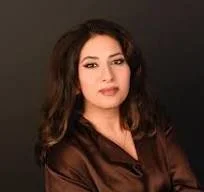
In episode 242 Peter speaks to Eva Oloumi who is the founder and practice lead of Paradiegma and is known for guiding organisations through transformative change.
Interviewed by: Peter Hayward
Resources
Transcript
Peter Hayward: In a lot our work we operate within a defined context like, an organisation and its market or a policy domain. And then there are the wicked, huge non-hierarchial domains full of multiple stakeholders all with different agendas. So how do you work with those?
Eva Oloumi: You have to meet that complexity with complexity from a system, so how do you actually engage not one person, but a system in a conversation, so that you can move towards some sort of future.
At the core of it, I would say it's about creating contexts rather than recommendations. The frustration that I have most of the time around this type of work is that it sits at the level of insight, right?
It is often someone who presents themselves as some sort of expert that does a whole bunch of analysis or some scenarios, trends, whatever, and then they come back with hey, here's some potential ways this could play out and here's what we could do about it. The approach that I take is flipping that on its head completely.
Instead of someone going and extracting a bunch of information from other people and taking that going away and creating something and bringing it back, the idea is how do you actually create the context for the people that are relevant to do it for themselves?
So that they have authorship into whatever they've created. So the core I would say of this type of a process is to enable ownership and authorship of the outcomes of that process
Peter Hayward: That is my guest today on FuturePod, Eva Oloumi, who is the founder and practice lead of Paradiegma, and is known for guiding organisations through transformative change.
Welcome to Future Pod, Eva Oloumi
Eva Oloumi: Thank you. Happy to be here.
Peter Hayward: I'm excited for this conversation. Me too. So if you know the drill at Future Pod Eva, we start with the story question. So what's the Eva Oloumi story, and how did you get involved with the Futures and Foresight community?
Eva Oloumi: To keep it short, the Eva Oloumi story is that I'm a paradox.
I was born in Ankara Turkey and I came to Canada as a young kid. I was six years old and I had a really deep interest in the arts growing up. And then I went to art school for visual arts, and I decided I hated being told to do art and decided I wanted to solve problems. And so my journey was really about how do we make things better, whatever it happens to be.
I'd be sitting in an airport thinking about why do they do it like this? Wouldn't it be better if they do it like that? Just thinking about how, people do what they do, and is that really the best way to do it? Really thinking about optimizing things all the time.
I fell into consulting and I was a really weird consultant in that my first year in a consulting Iworked for one of the major consultancies. They were looking to build a co-design practice.
And in my first year I got identified as, being one of the co-founders of this practice. And and that came about because of, oddly enough. Drawing of a panda. We were doing this training thing where we had to give a presentation with no slides,and the queue was a presentation on the cutest animal.
So I was like, pandas are the cutest animal! And I started drawing as I was talking. That got me, this really amazing opportunity to learn co-design methodology and create this practice. Now, co-design in and of itself doesn't necessarily mean foresight or futures work, but that was my entry point into this world because the methodology that I was learning about used models from futures and foresight practitioners.
Peter Hayward: when I hear that brief introduction, Eva, I hear a person who wants to find the leverage for power, trying to find how you help people create meaningful change And it's through co-design that you think you've found your lever?
Eva Oloumi: Yeah. I think so. It's funny that you mentioned power because power dynamics are a part of our everyday life in every single relationship in, every single context, there is an unspoken power dynamic. And oftentimes that leads to decisions by default. There is an expectation that people will make a decision for you or that they have authority over you or that you can't change things.
And I think what's really interesting about co-design in that sense is that if it's done well, it's not an extractive process, here, those power imbalances are amplified, it actually reduces some of that imbalance. Peter Hayward: Is foresight a discipline that works well with co-design?
Eva Oloumi: Yes, but not in practice as much as it should. people treat these disciplines as being very separate But to me, strategy work, design work, facilitation work and foresight are all the same thingThey're just different pathways to a future state. You can say, Hey, I do strategy work, and that often means that you've got some consultant or external advisor or some quote unquote strategy expert who goes away, does some sort of sense making and comes back with recommendations. You can say, I do facilitation work, which is I help other people come up with some sort of pathway forward.
I do design work, which is okay, I don't do the recommendations but actually build the thing. I build a prototype, whatever, but it's still a future state. Or foresight work, which is okay, I think about what the future should be, but at the end of the day, they're all the same thing, which is, you've got a current context and you are thinking about a future context.
Peter Hayward: I was gonna ask you why they treat them separately and does it actually serve their purposes in some ways to keep them separate?
Eva Oloumi: there's a lot of reasons why people keep things separate. Some of it's just about personal branding, they want to be seen as something. I see a lot of people who call themselves futurists, and for them that means that they are aquote unquote expert on the future, which makes no sense in my mind because how can you be an expert on something that hasn't happened?
some of it is lineage, like they have studied certain disciplines. Therefore, they feel comfortable saying that's what they do. That's who they are. Some of it might be, perception around scarce resources or how to get support around initiativesBut I think it impedes a lot of really interesting impact that could happen if there was a realization that these things are not really that different. And the tools can be used across the board. From different disciplines. I told you I went to art school.
I use my art in my strategy work, in my foresight work and my co-design work in that I'm still doodling and drawing and explaining things visually to people, I don't feel like I have to box things up or compartmentalize to say, oh when I'm doing this type of work, I can't be that person who also draws, I think about it like an artist's toolbox. If you have different tools in your toolbox, you can do more.
Peter Hayward: Does that also draw the the audience or the person you are working for towards you because you're using art that way?
Eva Oloumi: Sometimes. I think people have different ways of engaging. For some people it might actually create a cognitive dissonance., if they see you at a whiteboard, doodling somethingAnd I used to call myself Marker Girl, because I always had the markers. And so I had to really think about what does this do for whether or not they engage with me the way that I need them to?
how do I use the tool at my disposal in this moment to still create.rhe facilitative connection that I need with them. So it became less about recording what they're saying, and more about how do I create a story or a visual model that pushes their thinking forward without necessarily saying a word.
There's something about how you use the tool as well.
Peter Hayward: It what you sought to do was to actually step to the front of the conversation, invite the people in,. T such that people can take what they said and see it represented as a beautiful object
Eva Oloumi: or even the utility. So if it can become like a question, can the art become a question that they have to answer?
Can you think beyond how you would normally ask the question? So that, you create something where there's a vacuum and they have to fill it. And in that sense, you are actually guiding where they're going with the conversation. that was a really formative in teaching me how to interact with people so that you're creating the context into which they step into without necessarily forcing it, Sometimes it's about leaving that space.
Peter Hayward: And is this what Paradeigma was created to structure and support?
Eva Oloumi: yes. part of what we try to do is create contexts for other people where they can go through a process that is emergent. So that they can collectively create solutions towards the future together. So some of it is about that facilitative process,what we were actually created to address was wanting to work on large, systemic, complex problems. so this process supports that because. You have to meet that complexity with complexity from a system, so how do you actually engage not one person, but a system in a conversation, in an effective way so that you can move towards some sort of future.
So
Peter Hayward: how do you,
Eva Oloumi: at the core of it, I would say it's about creating contexts rather than recommendations. The frustration that I have most of the time around this type of work is that it sits at the level of insight, right?
It is often someone who presents themselves as some sort of expert that does a whole bunch of analysis or some scenarios, trends, whatever, and then they come back with. Hey, here's some potential ways this could play out and here's what we could do about it. The approach that I take is flipping that on its head completely.
a lot of my work is informed by futures literacy work, where we're talking about how do we actually expand the range, the depth, and the breadth of what we can imagine with people And transformative foresight. So how do we change the stories that we tell ourselves about the future so that we can create something different?
But the way that it flips everything on its head is instead of someone going and extracting a bunch of information from other people and taking that going away and creating something and bringing it back, the idea is how do you actually create the context for the people that are relevant to do it for themselves?
So that they have authorship into whatever they've created. So the core I would say of this type of a process is to enable ownership and authorship of the outcomes of that processPeter Hayward: I would've thought that when a person engages you, they already have in their mind a context of what this is about and what engaging you does is whatever context you start with, it's probably not gonna be the context that you end up with. You recontextualize it such that much more is possible, both positively and negatively. You actually make it more dynamic, more complex, more abstract. But within that problematizing, actually comes really radical possibilities. Is that a fair call?
Eva Oloumi: Yes. Although you're gonna scare off anyone from talking to me.
That's exactly what the process is. It's about making the problem bigger before you make it smaller. And I call that making the problem bigger, but it's actually about being really clear on what it is that you're trying to solve for.
oftentimes when you engage with us, there's a sponsor and they have some sort of, they have an inkling, they have an idea as to how things should go But the problems that we are really interested in are those that sit usually outside of a hierarchy. And so it's not possible for one person's vision to really.be relevant enough to be the solution A at the end of the day,, even if you're the type of leader that's extremely gentle, in a hierarchy, at the end of the day you can say, Hey, this is what we're doing.
Everyone get on board or get out. But when you're looking at systemic problems that sit outside of a hierarchy, then you're dealing with people that don't have to listen to you. They don't have to say, okay, then I guess this is what we're doing. I have to get on board. They can say, oh, this doesn't work for me.
You haven't convinced me. And so those questions are where it becomes really interesting to go through a process. Where you're trying to create alignment and ownership and authorship because those people don't have to engage with you. And typically those problems are the ones that are really the ones that we really struggle with, you said, Hey, they come to you and you expand the scope of the problem and I say, yeah, make the problem bigger. What that refers to is typically when someone comes to you and says, Hey we have this challenge or opportunity and we want to, we wanna do some work around it, with other people, they have a current context that they perceive and they have. It could be vague, but they have some sort of vision as to a future state in their mind. And that's not necessarily shared with other stakeholders, and yet they believe that they have come to you with a problem statement.
So I'll give you an example. so I'm in Canada, right? And we have what everyone's defining as a housing crisis happening in Canada. So if you were to go up to nearly anybody in Canada right now and say, Hey, we have a housing crisis. It's a real problem. We need to work on it. Everyone agrees with you.
They say, yeah, it's a real issue. We need to work on. It let's, you might say, let's get some people together, we'll talk about it. We'll come up with some solutions, whatever.
But then, if you were to say, okay, everybody, go away, come up with some solutions to this problem you're gonna get however many people that you have onboarded onto this problem,
You're gonna get that many different solutions. So you're gonna get someone that says, we need to build more non-for-profit housing. We need to build more low income housing. Someone else is gonna say no, it's about the financialization of housing. People are using housing as investment vehicles.
You're gonna get someone else that says no, it's about zoning and we need to rezone different areas. Someone who's gonna come and say, we need government owned housing. You're gonna get this huge range of solutions
So then the question becomes, did you ever actually have a problem? saying something like, Hey, we have a housing crisis. There's a problem we need to work on, it means nothing. I have a very specific criteria for how I define problems.
A problem is the delta between your current state and an envisioned future. Okay. Now, where co-design becomes really important here is when you're working with people outside of a hierarchy, that you can't force a decision down their throat and you need their alignment or their support in actually delivering something.
If you don't have a problem that you're aligned on, then you can't reach a solution. And it's a step that people just skip. They just assume that they're aligned on what the future vision is, and they assume that they have this perception as to what the current context is. And until they make both those things explicit, you don't have the delta, which is what you can actually work on.
The front end of my process starts with collective visioning because. Tell me what you, what your ideal state would be around housing. Tell me where you wanna go with it Tell me what it would look like if it was bettertell me what you see now.
What are we seeing now and what would it look like if it was better? And then the difference between the two is what you can actually change.
Peter Hayward: That's good. That's very good.. Most people concerned about something would come together with thinking if there's lots of us, that's probably a good thing because the more of us means more energy and everything else. But there would be a natural reluctance to try and nail what it is we are here for. 'cause it might actually start to push people away from you.
Eva Oloumi: Yes, but it's necessary. It's necessary. And it's not only necessary because you need the people, it's necessary to actually understand your context,
where those areas of disagreement are is information from that system. About that system. Yep. if we were to continue the same example, if you were to get two people fighting about, no, it's zoning, no, it's financialization. That tells you they're coming at it from reallydifferent perspectives.
Yep. They're seeing different things, but both those things are valid.
Peter Hayward: The fact that they're disagreeing actually is super important because that actually means it matters. And if you can find the thing that they both have in common, then you've actually got tremendous buy-in.
Eva Oloumi: Exactly. Have you ever heard the story of, it's like a parable, the story of the monks in the jungle. So the parable is that there's a bunch of monks that are blind and they go out into a jungle.
And they come upon an elephant but they can't see. So each one of them touches a different part of the elephant and describes what they feel, so one of them, grabs a leg and says, oh, I think it's like a tree trunk. Another one grabs a tail and says, I think it's a snake or a vine or something.
One of them grabs a trunk and says, no. It's like a really powerful hose. they each touch a different part of the elephant and. Individually, they're all right their perception is correct, but they're not able to see the whole.
t in speaking with each other, they can deduce that it's an elephant.
Peter Hayward: Yeah,
Eva Oloumi: and it's the same thing with complex problems. We all have a facet of reality that we're seeing. It's like a crystal that you can turn and it's gonna reflect light in different ways. We don't see reality as. It's not an objective reality.
We all see a little part of it, but until we work with other people, we don't see the whole,
Peter Hayward: and that's the conversation I imagine, that you place the premium on, but also I guess within that conversation is you're starting to create some sort of shared narrative.
Eva Oloumi: Yes. we try to expand what people can imagine.
imagination is inherent to humanity, But we usually imagine from our current context, we imagine using the rules of today for the future, Riel Miller calls it colonizing the future, right?
narrative becomes really important because. Of how people relate to the storynot everyone necessarily has the terminology. Of foresight and future studies, but if you ask someone what they want for their children, they can describe it to you
So it becomes around like, how do you actually open up this conversation space so that people can resonate with it and relate to it and understand it and have a story about it that they can share with others.
Peter Hayward: That's interesting 'cause what you've suggested to me is that I can tell your story of how a world might work or how we might get there, but pivoting to how my children might be in the future, you are actually making my story one from relation empathy, I would imagine kindness. Are those the key elements for you in lasting narratives?
Eva Oloumi: It's not really about my values, right? It's not really about my worldview, it's about that collective shared understanding. So this is partially why I study a lot of Sohail Inayatullah’swork for me, it's about how do you enable the context for other people to start thinking in this way and questioning their own beliefs about the world and the stories that they tell themselves and what stories enable them to think differently. And my, my practice is focused on co-design.
But we use things like the causal layered analysis a lot for making sure that people are actually talking about narrative in a way that enables a different future. So, yes, I value kindness, I value empathy. But that's not necessarily That's not necessarily the keystone to the conversations that we're talking about.
In that collective conversation, people have different motivations and ambitions, and they're not always altruistic. Nor do they have to be in order to create a better future or imagine a better future. It doesn't have to come from a place of altruism, it could come from a place of self-interest that is in alignment with collective goals.
So some of the times it's about, those values, but some of the time it's about how do you deal with Self-interest. How do you deal with maybe more Machiavellian people and their agendas in a way that still is aligned with that shared collective forward moving path, whatever you wanna call it.
Peter Hayward: Yeah.
Eva Oloumi: So I call that enlightened self-interest, Like you could be self-interested and still do good things.
Peter Hayward: Yeah, evoking the future generation is helpful because the future generation can be identified as an altruistic target or someone can just see it as a pragmatic outcome.
if they get what they want now, then good on the future.
Eva Oloumi: not even necessarily about invoking the future generation. It could be about you right now, If you can find the overlap in the Venn diagram between what you want and what's good for the future.
It doesn't matter what your intention is. You found the overlap, but you don't find that overlap unless you have the right context for people to engage.
Eva Oloumi: where people can disagree with each other and really see what the other person is thinking and identify where those overlaps are.
Unless you have a process to do that, you don't get there.
Peter Hayward: So as you look around our field, our futures and foresight field is the way we do futures and foresight helpful in the kind of domains that you are working in?
Eva Oloumi: I think there are a lot of people that do really good work. I think there is a movement towards more participatory foresight as well, so there's recognition that, engaging other people in divergent perspectives in the process is really helpful. In terms of sense making, So a lot of participatory foresight is focused on sense making and navigating and mapping the differences, et cetera. But where I would like to push is there's a difference between participation. And authorship, So you might participate in a process and still not feel like you own it versus authorship is what really enables action.
'cause there's agency embedded in the authorship. And so the question then becomes, if you really want alignment and you want movement towards this, collectively envisioned better future state. Then you need authorship rather than just participation If they feel like it's their baby, they're more likely to take care of the idea. Peter Hayward: So how do people get authorship in large scale, multi-level, non-hierarchical context?
Eva Oloumi: The million dollar question. I could write three books on this. I'll say, in our practice we hyper manage a lot of different variables from, how people are seated together to how we manage power dynamics.
power distance is lowered as much as possible. We take away titles from name tags, we sit people in different configurations where they're not elevated upon a stage, et cetera. So there's many different variables from environmental to how you're structuring questions to who's even invited into the conversation.
the key to making people feel like there are owners or have authorship on a process is that it's an emergent process. Because when it's emergent they can literally feel that they are guiding conversation. They are able to pull the conversation in, into different directions,
And so a lot of what I see in how foresight is practiced isit's not a monolith. there's different people doing different things\
. There are a lot of people who are fence making and broadcasting And what I mean by broadcasting is, I don't necessarily mean they're going on television or they're having a podcast or they're creating a conference, but the conversation is a one way
Delivery. So they have an insight and then they deliver it to other people, broadcasting their insights. And oftentimes that also is coupled with some sort of extraction. 'cause to get the insights, you have to extract it from somewhere. and I do see a movement towards participatory foresight as well. But for me, the question is how do we create multilateral conversations around the future,That have real ownership around them. So it's not a broadcast. People aren't elevated onto a stage, they're actually rolling up their sleeves and working on something together.
Peter Hayward: I can imagine where you are working with a large group in a context for a question and participants in that can both work in that context, but almost clarify for themselves what their context is. And they actually leave the process with their own context clarified better because of the work the broader group was doing, and they've created authorship, does that make sense?
Eva Oloumi: if the process is designed well and facilitated well, there's no, oh, that group is going that way and we're going this way, it's, Hey, we've created a path together.
the pathway is not preset. It is, Hey guys, we need to figure out where we are together.
Where are we? Where are we in this world? And we need to figure out where we need to go together. And the map to get there. So if you have done this well first you're gonna get a bunch of disagreements around where you're at and where you wanna go. But then those disagreements should kind of surface where there's commonality.
Peter Hayward: Yeah, people actually can actually say, yeah, we are gonna follow our different paths to you, but we're actually heading to where you want to go.
Eva Oloumi: there's also that option. And when I say facilitated, potentially, you do something like a parallel process, You get one group saying, Hey, we should do it this way. You get another group saying, no, actually we should do it this way. And you say, okay, great, you guys have two potential pathways. Let's go prototype it. Let's go model it out, Let's go talk about it. Go split up and go think about what it would actually look like and then come back and report it out to each other.
And let's see, where the fault lines are. Let's see how similar it is. Let's see how different it is. Let's see whether it's actually executable. And that divergence within process is also really important. And encouraged, You don't actually wanna shut that down. This is not about, this is not about forcing people down a specific pathway.
This is about letting them discover what works for them. Hence they have ownership of it. Yeah. And authorship. So that should actually be a part of the processPeter Hayward: I'm gonna suggest that the authorship is actually the most important thing. In the sense that even if people don't necessarily have a rock solid understanding of the future, they're heading for, if they've actually got authorship and they want to get started, then the answer is well go and get started. Because as you start moving towards the future gets clearer.
Eva Oloumi: Yes. Exactly. 'cause we have, perceptions about possible futures, but, again, we don't know what's going to happen. And so as time goes on, we get more information and more data that we can incorporate into the models that we're working with.
if you don't know where you're going any path, any map will do, right? Correct. If you need to go somewhere with other people and you all have a different map that you don't get anywhere.
So that the question becomes, how do you create a process so that people can at least look at each other's maps and argue about this map says that, and that map says the other sometimes you need a process to surface are you guys even going to the same place and does your map even get you there? the other thing is, I've been observing how we make global decisions.
Peter Hayward: We don't make global decisions,
Eva Oloumi: we don't make global decisions, but it's always a small group of people that are making decisions for a very large group of people under time constraints and using very limited frameworks or models to do that. we're not using good processes to create better outcomes.
We're using horrible processes that involve. Extraction that involve making decisions for others, that involve lack of representation, that involve suboptimal imagination, that cuts off potential solutions before they're even surfaced. And so the question for me is how can people involved in futures
Create space for conversations to make better decisions that have global impact.
Peter Hayward: If we look at the rise of people saying, we're not gonna participate, we're gonna do what we want, what we think is best for us. Whether that's in some ways a reaction to the fact that we haven't run good global processes,
Eva Oloumi: I don't think it's difficult to see the frustration where you're potentially invited into a conversation as a token or as someone who's experience and knowledge is going to be either ignored or extracted for someone else to make a decision for you. It's easy to see why people are turning their backs on these conversations.
The systems we have currently are not serving their purpose, and I don't think anyone can really disagree with that. And it's not because they are inherently non valuable. There's a lot of value the analysis that's done.
At all the various think tanks, the insights that are produced with different governments. That stuff is legitimate, but then the question is how is it actually used? And I think that's the question that I grapple with a lot with foresight work as well, is how does it move beyond insights that are then presented for someone else to then either uptake or not uptake.
that's the failure point, is that they And most of the time, these insights. Die. Yeah. As insights.
Peter Hayward: The insight doesn't create authorship.
Eva Oloumi: Exactly. Or at least the process to get that insight doesn't create authorship. How many foresight briefings, or security briefings or whatever happen in the world every day - tons.
But does it actually translate into effective decision making? Not necessarily the decision maker that's getting the briefing, the insight has not got the level of detail, does not understand where those insights came from. Maybe doesn't buy it, maybe it doesn't align with their own.Agenda. Maybe it doesn't align with their own self-interest. Number of reasons why. It just dies as an insight. for me it's okay, on one hand, how do you bring more divergence of perspective into these decision making spaces so that the decisions work for more people, but also how do you make those insights something that.
Is used by people who actually are making decisions.
Peter Hayward: Thanks for that, Eva. I wonder just to close this off, is there anything you're working on at the moment that would be good for the listeners to listen to how you're going about it and what it is?
Eva Oloumi: Yes. I'm working with a few others to build something that I'm not yet ready to speak about,But the idea is to createthe context for a different mechanism for global decision making that brings futures into the conversation in a different way.
Peter Hayward: Cool. So any listeners that are interested in finding out more can reach out to you. Your contact details will be on the podcast and find out more about it.
Eva Oloumi: Yeah, I'll be sharing more details soon
Peter Hayward: and maybe at some point in the future you can come back on Future Pod and bring a few friends and tell us about it.
Eva Oloumi: That sounds good. Some of the friends you've already had on your podcast, so it would be very interesting to have them all together. There's a number of really interesting folks that are aligned with this project which I won't name yet.
Peter Hayward: Let's plan to do that as a preferred future. Eva. It's been great fun. This has been a somewhat interesting genesis to get this podcast finally down. But it's been it's been delightful to, to meet you and hear about your work and your ideas. Thanks again for participating and thanks for chatting to the Future Pod community.
Eva Oloumi: Thank you. I'm glad the stars finally aligned to let us speak to each other after so many reschedules. It's been a pleasure. It's been really wonderful. Thank you.
Peter Hayward: Thanks to Eva for guiding us on a masterful journey through how you create genuine participation and authorship amongst different stakeholders in large complex domains. Future Pod is a not-for-profit venture. We exist through the generosity of our supporters. If you would like to support the pod, then please check out the Patreon link on our website. I'm Peter Hayward. Thanks for joining me today. Till next time.