

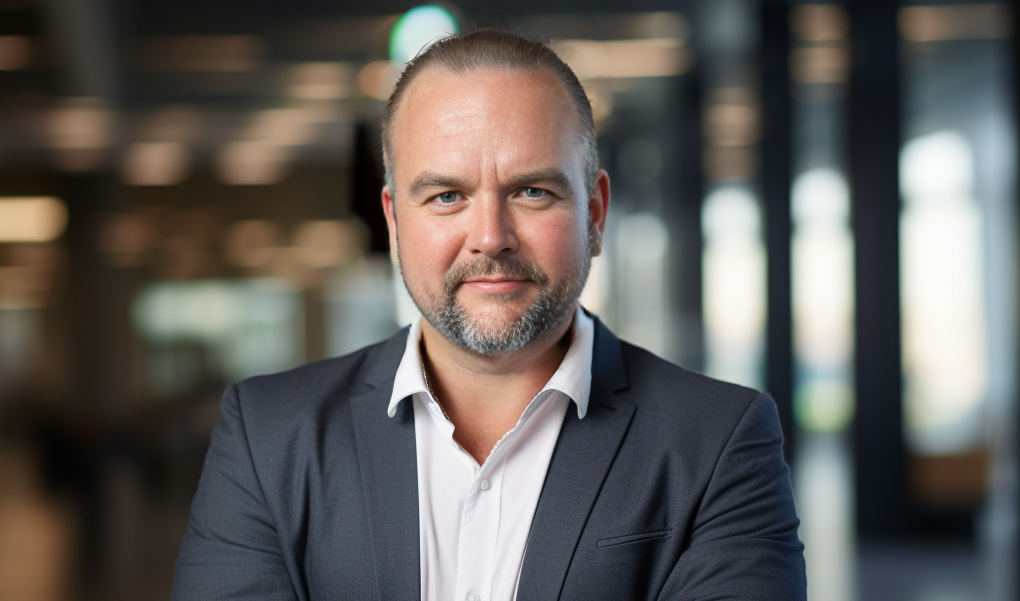
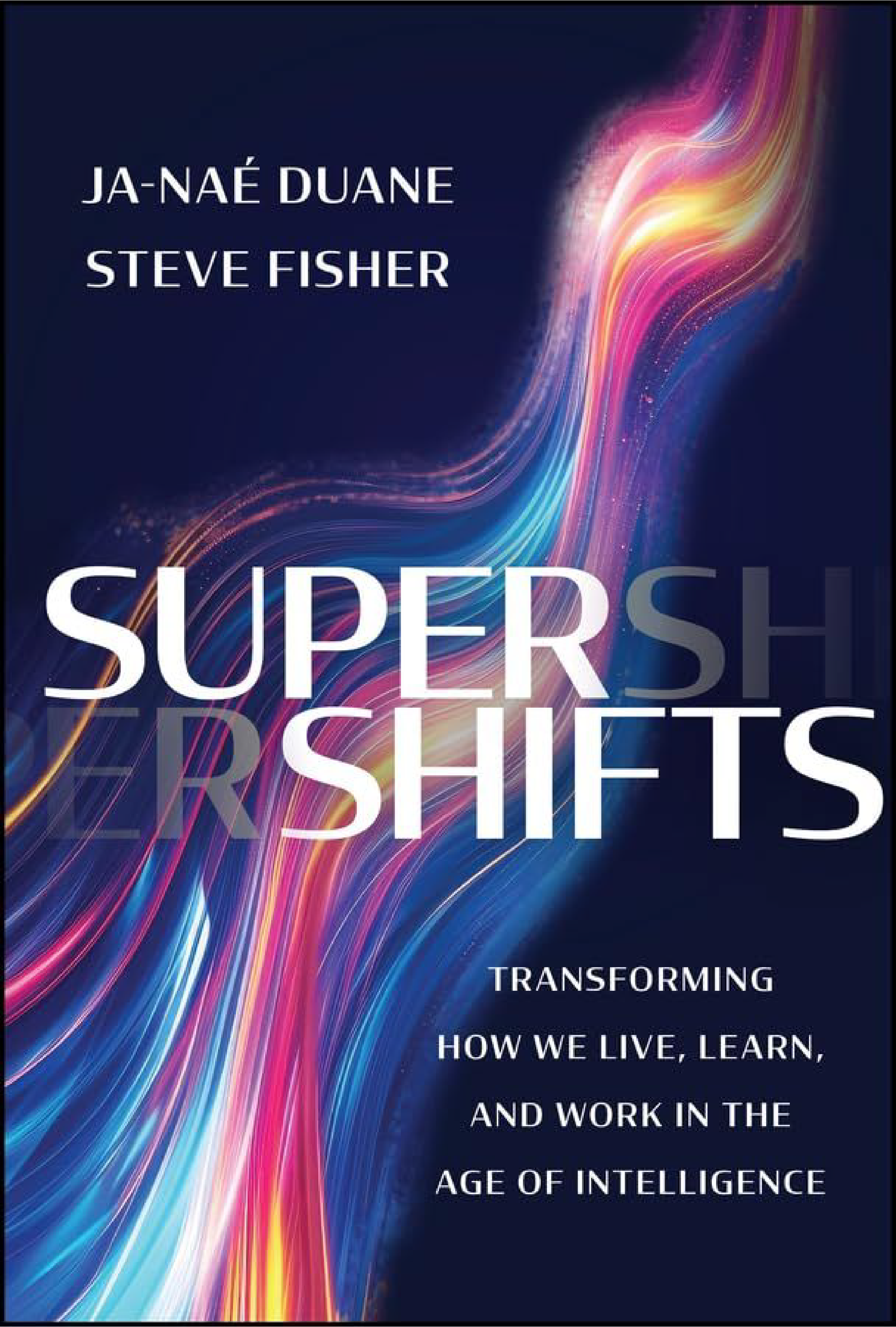
In episode 241 Peter speaks to Steve Fisher who with Ja-Nae Duane co-authored SuperShifts - Transforming How we Live, Learn and Work in the Age of Intelligence.
Interviewed by: Peter Hayward
Resources
Web: www.stevenfisher.io
Host: Think Forward Show: https://thinkforward.buzzsprout.com/
Publisher: Future Proof Newsletter: LinkedIn https://www.linkedin.com/newsletters/future-proof-7303526412311842816/
Co-Author, "Startup Equation", “SuperShifts" and *Designing the Future (coming 2026)* www.supershiftsbook.com
Revolution Factory | Human Frontier Institute
Transcript
Peter Hayward: Naisbitt's books on MegaTrends have been a staple of our field. There is a new book that looks at them through a different frame. The book is SuperShifts.
Steve Fisher: So here's the thing about SuperShifts. It was something that, Ja-Nae and I, she's a systems person, she teaches at Brown and she teaches entrepreneurship and innovation. And we both have been entrepreneurial. We both build a lot of things, but I started to see beyond the trends work. We saw that not only just AI is a thing, but there is a broader sense beyond even like these are bigger than Megatrends. We call 'em Shifts, there was individual Shifts, but when you started to cluster them, there was not only surface change, but there was like systemic change.
And we also saw that it was taking human and artificial intelligence but also the opportunity for networked and collective intelligence. The nine super shifts within themselves if I had to do it in two words, it's accelerated change. They're not all happening at once. Things will change. They might rename themselves, but these are things we're experiencing right now at certain levels.
Peter Hayward: That is my guest on Futurepod today, Steve Fisher, who is a Futurist, podcaster, author and innovation leader with over 30 years experience guiding companies, government and startups through change.
Welcome to Future Pod Steve.
Steve Fisher: Great to be here, Peter.
Peter Hayward: I'm really looking forward to this one, Steve, so Me too. Let's start with the Steve Fisher's story. How did you get involved with this community?
Steve Fisher: It's funny. On my show, Think Forward
I always ask people like how they came to a futures, and for the most part I can't say anything is purposeful. It's really accidental. The accidental weal futurist. Yeah, we're all accidental futurists. Mine, mine goes back to an earlier period, it's always somebody discovers it. Mine was at the age of 13, and that was in the 1980s.
Personal computers were just coming to homes. The internet, commercial internet wasn't. Anywhere near, we could get into a real history of computers conversation. But there was a, I was a voracious reader. I guess you could call me now a autodidact, someone pursuit of knowledge.
And I think that's a feature or a function or a quality trait, whatever you wanna call it, of futurists. Yeah. I think by nature. We are AutoD, we pursue things relentlessly. And one of the books that I picked up when I was in the library was Future Shock.
So Alvin and Heidi Toler, and then I was into architecture and I studied eventually Frank Lloyd Wright and especially Bookie Munster.
Those. The seventies, especially the, those eighties, there was an interesting mix of futures. I didn't realize it at the time, we, people talked about, the Club of Rome report, depopulation Global. There was global cooling, it was in global warming. There was the ozone, there was a lot of population bomb.
Peter Hayward: Erlich,
Steve Fisher: yes, there was so many things in the world, but what really struck me about the book was the kind of the. Prescient nature of it. But 'cause he was made in the early seventies and I'm reading it, 13 years later and it's all there. And then I read his other book third Wave, which was about, telecommunications.
And it was like what he and his wife did. And it was funny. They it reminds me of what Jenne and I do is, they're, they were the power couple of, of the futurist field, but I was like, you could do this as a job. This is a, this is like a thing, but remember this, this is the eighties.
For those of you who alive back then, it was a wonderful decade. Despite the, being on the verge of death, and. 26 minutes from an ICBM. It was a, there was a lot of freedom, a lot of great time to be alive. The music was great and I was 13 years old, it was girls, it was cars, it was, I was playing guitar.
I was like, yeah, whatever, so I just it went back in the corner and then, went through college and. I fell, I just have a knack for technology and computing and nobody wanted to do network. And it was this networking thing and I was like, nobody wanted to touch it.
They were all, afraid of them. Give it to me and I'll do it. And I fell into the field and through that I did the traditional thing. I got a business degree and got into technology and then the internet and that was like the light bulb for most people too. Got into that and building products for years.
Building products gave me a lot of education in terms of, and also being a business person who could also talk technology. It was a very good mix for my career. I. But at the same time, I always had this knack for seeing things five years out, 10. Like I could, not just the early adopter, but I, it's, I was good at picking horses.
Now don't take me to the track, but like I was good at picking technology horses, so I pivoted my careers in many different times and that served me well. And I would say around 2000. All the hype with, the change of the millennia, the, you saw a lot of futures books and I don't name, some of them were garbage, but a lot of them.
But I read, good ones like mega trends and I started to revisit the field. And during that time, futures was good, but it was a lot of people talked about, the scenario like Peter Schwartz's scenario planning, the whole Shell scenario group, you learn about that and it was like, oh, this actually can help business.
So it became this like foundational part of me. For, forever. So I became, and this is where I found that most people do this. It's the stealth futurist. I think the pure futures work is good for government agencies, but a lot of companies, the short termism, their ability, their appetite, I.
For things that are far like long-term planning, because I never understood why strategy groups didn't adopt this.
Peter Hayward: Yeah.
Steve Fisher: People just don't have the, of the patience, the ap, they d the desire, they don't think they're gonna be there. It doesn't hit their world. We're a reactive bunch of we humans. So yeah, so I did it in the product work I did building innovation groups, doing design work, and it just became I called it different things.
Yeah. Instead of signals work. It was just, we would look at. Patterns or trends, we would look at things for the project. So I was a futurist, but not officially a futurist, and that was, that went on for many years. And then where design is my. Really the main vein of my, I would say, that paid the bills and has paid the bills.
Stewart Candy and Jake Dunnigan came out with some of their speculative fiction pieces like Think from the Future, and that was really a spark for me that I saw that you could. Go beyond the scenario. This is in 20 13, 20 14. You could go beyond the scenario and you could, just like what IDEO does or other prototyping companies, but this was about communicating the future in a way that people could touch, taste, feel, and that just.
That was me. So I was like, oh, design futures. That's a thing. Again, it's like you can do this as a job. You really can't. Yeah. If you think about the field, we could have this debate and may, we may, for this episode, maybe another is is it, is futures a skill or a job or both?
Could be both, could be one or the other, right? I think it's a skillset that is needed more than ever, especially for navigating. Uncertainty like we live in perpetually. I think the rate of acceleration, which is why we wrote super shifts, the rate of acceleration is palpable and visceral. We are experiencing it more so than we did.
Even with like when the internet really came about in like the mid nineties it built momentum and obviously still was a bubble, but people could adapt. People had time to change. This is like nothing we've ever seen and it's only gonna get faster and it scares a lot of people. Yeah. So I think futurists are needed more than ever.
Not in a, the world is collapsing, dystopian way, but a protopian that we can make it through this and we can thrive after. We can be a place of, we can be a, a. Erase the humanity can be a place where there's abundance and not scarcity. Yeah. And that's. So yeah, so my journey has been probably unlike most, but some, probably similar to, to, to some, yeah. But again, it's still that once accidental, somewhat purposeful. And now just for me, my mission is to, democratize this stuff. That's what I'm want to teach a million people in the next 10 years. That is my, if I can be the communicator and I can get people talking this language and understanding how to use it in the ways that are effective for their work, I would be very happy.
Yeah.
Peter Hayward: I'm gonna ask you, 'cause you've, you haven't touched on it yet, but you clearly look at things. Obviously in terms of innovation and what's coming, but you've also got the bent to look back and look at the pattern through time. Yeah. So you've got a historical interest. And one of the things, I'm again, asking you this question 'cause it's always fascinated me.
I, again, I'm a bit older than you, so my story is very similar to yours in a whole lot of ways, but I'm Yeah. Earlier in the process. But when I was. Studying my PhD and I was reading through the bones and the journals and the history of the field. Yeah. The thing that completely blew me away, Steve, was when Limits to Growth landed in the late sixties, early seventies.
It shook. Countries, governments cage. Yeah. To the point where there on the public record, there were debates on the flaws of governments about the limits to growth. It was taken seriously to the point where, as I say, you can go into the Australian government, you can look in the hand side, which is the record of what they spoke of, and you will find public debates about what. This idea about a possible future meant for them as a government. And when I read that and I found it happened in America, and it happened in England. It happened in Germany. It happened in France. And I thi, I'm trying to think of I'm trying to imagine that world because I cannot imagine that world now.
Yeah. And so I suppose my long-winded question to you is. How come? How come? At that time, were we so naive? Were we so mature? Were we immature? That political figures felt that this was something that they should. Wrestle with, whereas I'd argue now I can't think of a political, a democratic political system right here now beginning 21st century, that actually would slightly entertain any of the things that are rolling up.
Steve Fisher: I think there's enough, there's a lot of distance from that report. There's a few things about that report. We don't have to get into the conspiratorial trilateral commission, Illuminati, club of Rome, all the depopulation that's for another other awesome fun channels.
But I would say that they, things like that shock the system when there's a singular and they don't even say a possible future. They make it seem like it is. The destined, not a preferred, the destined future.
They put out data behind it and there's usually a motivation for some type of policy change, some type of, it's usually money.
Sorry to sound sounds so cynical, but I think another one I can draw parallels to. Is Al Gore's like his movie that he did? Inconvenient Truth. Thank. Yeah, thank you. I remember watching that and it shocked my system. I. It had the same kind of effect. 'cause it was the destined future. It wasn't a possible future or a preferred future.
It was a destined future. I'm just coining this term as we speak it. 'cause it's just, it sounds like it's unavoidable on future of
Peter Hayward: fight and I think Unavoidable. Unavoidable. Yeah.
Steve Fisher: Yeah. That's a good term too. And I think when you have things like that, you actually need futurists to go whoa.
That's, is it possible? Yeah, there's a lot. That's our job as futurists. We look at possible futures. We don't predict things.
I think that's why that they try and create a shock effect, and I think it actually hurts. That's probably the next, the cause in the end. That was
Peter Hayward: the following on.
You could argue Y 2K was another. Sort of shock effect that governments took seriously and possibly without getting very far into the COVID response. And I think what you are suggesting, and I think it's interesting, is that each time we heighten the organizational response by shocking, we make it harder to do it the next time around.
It's almost like your version of, the boy who could. Who cries wolf, each time you shock political systems, it's harder to shock them the second time around. So you've gotta escalate the shock factor.
Steve Fisher: Yeah. Here in the United States right now, as we're taping this there, left versus there's, groups trying to do their jobs to deal with cartels and, bad and get people outta the country that came in that were, that are not only just breaking the law coming in, but breaking the law a lot in here and there's protests for it, trying to make it.
What it's not. And there's just a lot of professional paid provocateur and intermingled with truly good prote, people that truly want to express their first amendment rights in protest. And at the same time, if you think back to George Floyd, that had obviously a visceral reaction. People see the video.
Is it contextual? There's a lot. You could go back and forth, but. It goes to your point of that had a lot of effect. And then BLM was really in the end a scam. Like they, they did spent it on themselves. They didn't do anything to help the communities. They didn't do, it's so when it, things are really serious, which is now like this kind of thing happening, people aren't gonna take it seriously.
People aren't gonna listen. If we had another, like a real like COVID was bad for what it was too. But when you started to have a mandatory need for, vaccines for children. They were not, or people that were not part of the vector. Like I took the vaccine 'cause I was I'm a diabetic, like I was part of the comorbidity.
So I understood that it wasn't 'cause of a job. Like I understood that there, there's a prevention level, but when you start for force functioning things, if we had a, another one that was more serious and there was a fatal, there was higher fatality and there's certain, especially kids, would people take it seriously?
Peter Hayward: And
Steve Fisher: I suspect the possible future is they, wouldn't it is a possibility. So it's a question of where we are now in this kind of new age of intelligence that we talk about in the book. For the first time we have the, there's very much the possibility of the next 10 years as we're going to have.
Machines are things that are smarter than the hu we were the smartest on the planet and we will have something smarter than us. Is that really hard to do? I don't really, we could have debate that but if you think about that what does that do for, I. Creating new institutions. 'cause all of our institutions are failing all of the things that we believed in.
Because if you think about it, the, and this is where the macro history, 'cause in the book I went back about a thousand years and I saw a high level and I've worked, I've noodled with that for a while. And I've worked on the, I've been working on this for like good 10 years. 'cause I've just, I'm a cyclist theorist.
I look at pattern, cycles pattern. And I've read all the social theories like Toy Bee and Spengler and all those, godfathers and godmothers of macro history and. You start to see these patterns and every 200 years. The last one was the age of engines and we, you could call it the industrial age.
It just sounds cool 'cause it's, age of something. But everything that powered us was material engines, the things that made the world work. But we also built. Work around that nine to five jobs. Schooling was, schooling was designed. This kind of schooling that exists now was designed to get kids to be literate and functioning at the age by the age of 12 or 13.
And then send them into the factories of the farms. Correct. That was it. That was it. That's right. Higher education. And then, maybe as we got more machines and people could be more technical, they had to be of a certain age and child labor laws and blah, blah, you can, and then college
Peter Hayward: and then of course, and then of course when we had both parents working, then we needed education to become a form of childcare that we had to design education so that it gave the children somewhere to go when the parents weren't at home.
Steve Fisher: Right.
Peter Hayward: So I think, again, education's one of those wonderful social economic forms that kind of encapsulates a lot of our technology, our geopolitics, our economy.
Steve Fisher: That's right. Our
Peter Hayward: social things. Education's a, I think sport is another thing that when you wanna look at a society, look at the state of its sport.
Sport in some ways. Leads. I studied American history and I followed American sport, particularly baseball. And I found that the study of the history of baseball was often ahead of where America's social development was. I. Yeah. Bumped into things earlier.
Steve Fisher: Very true. That's very true.
I'm a big, I collect a lot of vintage sports cards, so I have a lot of the brook, my favorite teams are Brooklyn Dodgers. Like from the, something about 1950s New York baseball was quite a magical time, yeah. I had these three teams in the city, and the rivalries is the microcosm of America.
You rigs, you're absolutely spot on with that, and I think with, american history, we've got. Prideful moments in time periods, and we've got shameful time periods and moments. So I think all history, I think if we're honest with it and not biased on one side or the other, we can also, the best thing we need to do is we need to learn from it.
I think that's, I just. I think when I look at macro history, I look at it from, you look at it from like large periods of time and it just, one of my favorite series is the Foundation series, and of course, Harry Selden, I mean the whole, his concept of his. So let's just
Peter Hayward: go back just a second 'cause we're rolling and it's turning into an avalanche, which is fantastic and I'm loving it.
Steve Fisher: Yeah.
Peter Hayward: And you and I are both macro nerds, so we exactly know and we're happy to riff with this, but let's just draw back and, yeah. Because I think in your book, and we are gonna get to the book, but I think the way you use macro history to frame not just the book, but to also understand change and geopolitics and economy can, I know it's a toughie, but can you draw back and just for the listeners who, who haven't really come across the term macro history, just explain what macro histories are and.
How they useful to people who do what we do?
Steve Fisher: Yeah, that's a great question. So what macro history is essentially the study of large periods of time, more than a hundred years. So you're looking at large sections in time and you're looking at it from the perspective of what is social, what is change within those periods.
It's about the most basic way I could describe it. There's many different ways in terms of. There's usually a certain pattern though. There's a birth, like the dawn or the awakening, the birth of something. It's a cycle, right? It's, it goes into this height. Then it goes into a kind of, a little bit of a chaos, a little bit of, breakdown, and then it goes into a crisis or, a collapse because we and collapse.
Not in the sense of med Max or any kind of major dystopian novel, but really somewhat painful failure of things that were established and then a rebirth and a, and an emergence of a new thing. And it's not clean cut, it's just they overlap and I think. It's zooming out.
You think about Google Earth, right? You can see the entire planet. If you could see the entire span of a thousand years and certain things happened like the Crusades and the age of, we call it the age of faith, right? That all that change in the church and how it established, right? And then, but then we had this kind of.
Birth of and rediscovery of in the Renaissance. This rediscovery of knowledge and humanism. And then that evolves into the age of expansion. And I think it's, or sorry, the age discovery. And it just, it start, you start to see the, yeah. Pattern. The pattern.
Peter Hayward: There's also the pattern maker, as I say, as I understand macro history, yes, there are the patterns that people talk about, but there's also the person, the autodidact, the polymath that sits at the center of any macro history.
Steve Fisher: Yes,
Peter Hayward: because they are the author, they are the sense maker, they are the weaver of the story. So you've got Spangler, Tobe, you've got people like I, Abraham Hido, project, Robin Sarkar, these, and of course there are macro histories from. The East Asian perspective. In other words these theories exist within cultures.
Steve Fisher: That's right. They're not
Peter Hayward: all pumped out by the authors of America, Europe, yes, they are dominant because they write in English, but any study of a long-lived culture. You will find macro histories in all of them. The Persian culture. Yeah. And to me there's, there is the pattern and the pattern maker and I think the two kind of. Need to be understood together.
Steve Fisher: Yeah. Pattern maker I think it's the pattern recognizer. Yeah. Because I think for, I think you have to have a lot of layers and anyone can do this. I think you start with the social theories. Read the Spanglers Read to be read.
All of Read because they give you an understanding of I think. Those cycles at in different ways. Like the Eastern, like you should read reading those, is this kind of the start. There's some good, there's a good paper from Saha. He's got. I think it's from 2009. It's a journal, but it's on macro history and that's a really good primer.
But I think being the auto didact, like I'm a history buff. I've read a lot of, I've read way too much on the Medici, way too much on am, but like American history. Sure. I'm not as versed on like Eastern, I do know that. Maybe most people don't know this, that the Chinese in the 14th century or the, maybe the 13th century burned all their boats.
Yeah, the emperor burned all the Navy. 'cause he didn't want, imagine if they had found the West coast. I. Before, like what the world would be like. And I think that's, when you look at things it's just studying history, studying events, layering that on with this perspectives and you start to see things happen.
I think that's the first steps. And then from there you might, I. Have your own personal perspectives, your own personal views, and the way things interact with nature. Like you can construct things in a way that maybe makes sense to you and does it add to the voices of the macro historians?
Maybe just works for you, but I think anybody to do that. But there's, I think there's a lot of preparation that you should, that you, that most, I would think most macro historians do. There's a lot of, you can't just pull it out of there. There's a lot of built in like innate knowledge once you start to add it in.
So I don't know what do you think, but maybe what's your perspective? Again,
Peter Hayward: I think a bit like what you talked about is futures. Just a thing, or is it a job? And to me I think essentially it's a way of being, it's a way of thinking. It's a way of, it's a philosophy. It's a philosophy for self and life.
People who come to thinking about what's coming, what could, what should. If you get interested in change, then you look at where change is taking you. Then you get into the interest of why change towards that and not this. And then if you keep drawing back, then the time periods get longer and longer, and as you look forward, you get pulled back.
And so I think it's just this thing of if you keep doing it and you'll keep driven by interest and passion and. Then you keep getting longer and longer in the past. Yeah. And further into the future. Yeah. And when you talked about a job, I think the role of it being useful other than just, this is my itch and I scratch, I.
Is when we then try to take it out into the world to help people, trying to make decisions, set policy. Then we are judged by not the elegance, not how wonderful we are, but is this useful? It's entertaining. Yeah. But is useful and I think the job side of it is that steel that makes us not just get fascinated by our own ideas.
But can I give you something that actually helps you right here, right now, whatever it is you are trying to do, whether it's trying to run a policing policy, come up with a policy for how we handle energy transition, whether we license drones, how do we run an education system? I think we have our elegant theories and our wonderful stereoscopic ideas of past, present, future.
And then you've got a person sitting on you. I need a policy. I need to. Yeah. And so to me, that pulling us back into reality, reckoning with reality, as someone once said to me that's the, that's both the fun and the frustration
Steve Fisher: Yeah.
Peter Hayward: Of what we do.
Steve Fisher: Yeah. It's. I've always, I've often thought about the skillset that people need.
'cause it's do you, are you the person that can do financial analysis with a spreadsheet or are you the financial analyst? Are you the analyst that, and then he sees it as a tool, right? Are you the one that it's this, I think what's starting to happen with people and COVID was really a big part of this.
When I was at McKinsey one of the things that. I worked on there, I helped co-create the futures practice, and that was at first when we did it, let's just say I was, I've not been very good at timing in my life. The two times were probably I was at the right place at the right time to meet my fu my future wife, and that I started the futures practice six months before COVID.
So those are probably two of the times I got really lucky. But, I found my tribe there and it was like getting sponsorship and getting people, but a lot of people were like, as you, anybody in the listening here that knows consultants or, you work in one of these firms, like they get paid a lot of money to tell people what to do tomorrow, and they're very protective of that client relationship.
So getting in front of somebody to tell 'em that their business is gonna die in five years or 10 years, eh, they're not really, they're not really into that. Especially then having to ask to get paid, like with, they get paid an hour, which I won't divulge. But when you have the entire world, like essentially go home and watch Netflix for a month, and all the supply chains that you built for perfection for 20 years, like Snap in three weeks. Yeah. You're a little more open to options. Yeah. You're a little bit more open to conversations. It's reversed itself. Everyone's tried to go back to status quo, returned to office, they've just gotten by with what they did.
But we learned a lot from it. We learned a lot about human behavior. We learned a lot about desire for change, and it's also the people that. We learned this, that those who actually took this stuff seriously beforehand, like prepared for an online, had contingencies. They thrive through it. They were able to pivot their business.
Yeah. And it was really a big lesson. I can only hope that people will, memory is short. It's so short is that people will remember that those events and how it was and understand that they need to think constantly. Not just a one time, put the scenarios out, put it in a drawer, put the, put it in a pdf and put it into marketing to throw on the website, but really use it as a strategic.
Advantage. I always used to, and I still evangelize that design is a strategic competitive advantage. Those who have products, like no one will care what your code. If your app sucks, no one will use it. Like it's doesn't how beautiful your code is. If you don't design something wor, if you don't think of yourself as, listening to your customer and making the best products and doing design.
Better than your competitor. You're setting yourself up for a critical failure. Yeah. Same thing. It's if you don't have understanding of the way the future may go, like what happens if the dollar loses? Its, what hap what affects your business? What if fuel prices go through the roof?
What do you do? It's all these things that you have to, I think people are just overwhelmed by all of the change that just, even the thought of it just is sometimes too much.
Peter Hayward: Yeah. I think the other thing too is that there's a. Again, as my students who suffered with me in the classroom understood, I see things paradoxically at the same time.
So there is that natural willingness to make futures work useful now. Yes, to support the current decision makers, policy makers, everything else. And then the other side is the people who simply, again to quote Zia Sardar which is our job, is to put the foot up against the edifice of general society and give it a good shove.
'cause it's a corrupt system doesn't work because look at the people who does benefit from the present. Yeah. So when you then introduce, as Wendell Bell said, all futures work. Is morally based. Yes. Once we look at the present as to who's not served by the status quo, who hasn't got access to Liberty, freedom Choice, then of course futures flips from being.
The thing that is useful now to, no, our job is to undermine or support the people who are trying to drive a more, just, more humane, more fairer future. And that's one of the pivot points of our field is that we straddle that we fully understand why people who pay deserve to have useful information Now.
But we also have a knowledge to say, but this can't be allowed to continue.
Steve Fisher: Yeah. One of the things that I am working on now, and I've, I started work on it about a year and a half ago, was around the, what I call the futures operating system. It's a, it's the ongoing aspect of doing this kind of work and.
Using something like artificial intelligence, what excites me about it? One, you have to be careful of the hallucinations, but if you can build the right LLMs to do the right scanning work, you can power like having your own, organ foresight team without, you can do a lot with less now.
Yeah, that's the democratization part of it that I really like. There's always the human element, but yeah, it can do other ideation. You also have to be aware that it's gonna give you vanilla, sometimes it's gonna give you something provocative.
But a lot of times it's gonna be generic and vanilla.
But it, but at least what it might do is it get you in directions you never thought of and always be the human part of the equation, right? And always be in that. But I'm excited by the prospect that we can take. All the tools that are happening now and really make this less of a barrier to entry or less of a barrier to use, then it's just the one person who loves this stuff and cannot get anybody to buy into it.
But if they could have, simple tools or they could do other things with it that are more accessible, they could show their superiors through. Real work that has impact that it might, it might sell them on doing this more as a function. It may not be, just be like an organization, but it can grow.
Yeah. So let's talk about the book. Let's talk about super shifts. 'cause you
Peter Hayward: Yeah. Very generously sent me a, an early galley version. I've had a good spin through it. Let's say, what's the book? Why the book? Who's the book for, and then let's talk a bit about. What's in the book?
Steve Fisher: Yeah. Wow. So here's the thing about Super Shifts. It was something that, Jana and I, not beyond the ages and Errors Theory and her, she's a systems person. She teaches at Brown and she teaches entrepreneurship and innovation. And we both have been entrepreneurial. We both build a lot of things, but.
I started to see beyond like the trends work that there is and in the, this, I have a, we have a four set method we can talk about called Spectrum. Hey, everybody's got their frameworks. But I'm gonna, I'm gonna get a little bit, I'm gonna get a little bit provocative with that. Not Alex Ani provocative, but my man, I'm on the show, my man, I'm like he's my favorite provocateur.
But we saw that. Not only just AI is a thing, but there is a broader sense beyond even like these are bigger than mega trends. Like there is, we call 'em shifts, like there was like individual shifts, but when you started to cluster them, there was like not only forced, kind of surface change, but there was like systemic change.
And we also saw that it was taking human and artificial intelligence, but also. The opportunity for networked and collective intelligence. So all different kinds of this age that it's remaking like identity and governance and different global systems. So yeah, that's some heady stuff, right? The nine super shifts within themselves.
And I would like to just, if I had to do it in two words, it's accelerated change. They're not all happening at once. It's a question of. It's like the book, mega Trends, like things will change. They might rename themselves, but these are things we're experiencing right now at certain levels.
So they're tectonic, but I. The, I was like, how do we communicate this? Like how do we make this in the frame of someone looking at the world and the thing that they're living in individually? So we started, so each of the nine super shifts goes into how it impacts society or, as a broad, in a broad sense, the organization and then the individual.
So how you, so I not just making it like a general business book of crush it, bro. Go do leadership thing. I'm not, there's no Gary V in me whatsoever. Thank the Lord. But I will say that using ages and arrows, which is, we went into that, laid the groundwork for there's, okay, there's cyclical.
Pattern in this. How, it's been re we've researched it enough. Can I, could I peer review it more? Sure. But there's pattern there. We're moving into a new age. We're living it now. It's like very visible. It wasn't visible like a couple years when we started this, but it's very visible now and it will continue to be, and then we're like, okay, we use foresight in a way.
We go beyond archetypes and we said to ourself, how do we communicate this? There's a number of models we'll get into in a sec, but each one we said, okay, there's not just, let's just not be like a quantum techno or a tech book or an AI book, but it was like this is gonna impact the environment, how it's gonna impact biology, and I.
When I look at the future, I get very I look at a lot of other books and I was very frustrated 'cause everyone talks about things like a singularity or all this, change, but no one talks about what happens after
And what the world could be. And, we talk about abundance versus scarcity.
We talk about singularity. So when we did these nine, and I can for the listening audience, just so you get a sense, I'll give 'em to you. Generational drift is about like the extension of lifespans, the generational overlap, that identity is fluid beyond this, like any kind of wokes up, but it's just what does it mean to be human?
And what does it mean for generations that could live a hundred, 150 years? What does that mean for work? What does that mean for relationships, right? Then there's like the inte fusion where human and AI is going to converge. It could be. We talk about subspecies of humans, right? There could be a lot of, and people that are just purists, right?
That's, that leaves it for a lot of good just, a lot of science fiction novels. But the acceleration for tech acceleration is beyond our ability to adapt. Like the breakthroughs that are coming, we call the first era of the quantum era. Because if you look at from vacuum tubes to transistors, to integrated circuits to microprocessors, to now, like everything that's gonna drive the change is gonna be around that power flow.
Is around energy, geo geopolitics, sustainability, reality, remix gets into the digital and physical worlds merging, ar, vr, all the fun things we get to play with now. But it's really gonna change work and education in our social lives in more ways than we can imagine. And one of my favorites is the eco awakening.
I am, I'm not a tree hugger, but I have a, I have an 8-year-old that I wanna live on a healthy planet and I believe through like quants and technology things that we can solve the big. As Terry Irwin calls it in transition design the wicked problems, right? To deal with. But I believe there's a gonna be a kind of shift in consciousness in how we look at the planet and reorienting toward the, our earth systems.
And then the social quake is like no models of governance and distributed economies. And then the world mosaic. We deal with this, is it not so much borderless and no world, one world government kind of thing, but. It's about the kind of cultural fluidity, like a networked influence and like what is belonging.
And then the last one is the bio nexus, which is like biology and technology convergent. Yeah. You've got gene editing, you got neuro augmentation. There's some crazy stuff I even talk about, like I. Imagine one of my favorite things to talk about is imagine if you had a brain computing interface that allows you to understand into a com, into a collective consciousness.
I'm not talking about the Borg, but I'm talking about understanding how people feel. If you were able to understand your adversary, if you're, what could that do for peace negotiations for, yeah. Conversations, I truly talking about walking a mile in somebody's shoes. I think the World Economic Forum had this, it was a viral video of a vr, exper vr, one of the first VR documentaries.
They walked through refugee camps, so you could put the VR on and you could experience what it was like to be in that, in a true likely immersive, space. So yeah, when we did the book as a design futurist, one of the things I really wanted to do was bring in, design, future design fiction.
Be a design futurist. Yeah. And I, that's where the Sinclairs came into this because we needed to bring the reader not just be like this business book with lots of cool jargon and lots of cool concepts, but bring the the pathos of a play so you meet them in the prologue and it's 2040 ordinary day.
There's some cool technology, it's normal for them in 2040, but then this kind of AI anomaly happens and it's could it be the singularity? We don't. We don't get into specifics 'cause you don't want to be like prescriptive to it. And then through each of the super shifts chapters, we the family move, we follow them through the weeks and months and we get to learn through their eyes the changes that are happening to the world, not just the things that we put out there.
And I think tries to connect somebody with. Oh, this is real. And it's a positive thing. It's not like the robots, need, we forgot to put those laws of robotics in there. Yeah. But
Peter Hayward: I love that turn. The scope around the change is fantastic and people should read it for that.
I love that you then tried to personalize it. I'm gonna say to you, you wrote the book as a love letter to your children.
Steve Fisher: Yeah. There's a letter. Yeah. The letter to the children of the age of intelligence. Yeah.
Peter Hayward: That's important to me. That must just, as I said, your thinking's as good as people think around this stuff tick.
I, but there's a, I really appreciate that there's a deeper abiding humanity, humility, and a spiritual base that this is not just about information. Yeah. It's also about purpose. And can you, in our remaining time, can you just play a bit in that space? 'cause I think it's an important part of someone who's interested in the book.
Steve Fisher: Yeah. And what I want to do is I'll, I wanna do that and I want to talk about the kind of the action pieces like spectrum real quick and like the perspectives that people can use from it and why it would, I'd be like, what do I do with all this? W the le in the beginning of the book, and I really appreciate you saying that because some of the things we had to fight for 'cause of page count, we had to fight to get, keep it in there.
And that was one of them. The Sinclair's, which is the thing that I think people really enjoy the most, which is really nice to hear because I wanna, I could write a whole book on them. I could do like a whole side book on them, but. The letter, there's a letter to the children of the age of intelligence.
So we have our one and only Max is our 8-year-old, and he's the high school class of 2035. What is even school gonna be like, college will, like what will exist? What will the jobs be? What will the world be like? And he's most likely gonna live to be a hundred, 150. We could live longer.
There's so many things that could happen that could, make a life, almost eternal. He's growing up in an age of wonderment, but at the same time, the thing I like to say is that we need more, more wi We don't have enough wisdom to meet our technology needs. And it's a, it's, there's a different quote I use, but it's if we can help them see that there is possibility and there's hope that they can change the world in ways we can't even imagine yet.
And I think that was, that's the essence of this, is we try and touch upon the things that are going to change. And one of the things that we do in the latter part of the book when we talk about, our, the work that we do with organizations is around spectrum. We call it spectrum foresight. I.
Most of the people are listening. If you're futurist, there's the archetypes, right? We've grown up with data and two by twos and all the, we love our two by twos and, all the good things. And I call it standing on the shoulders of giants. The more I did work around okay, you can do a scenario archetype.
You can do some, write up some, maybe a little bit of scenario profiling and things like that, but at the same time. There's these things are happen simultaneously. So what's the spectrum of existence? Because one person with, let's take AI for example, one person's colla, transformation.
This isn't a whole new world for me, is another person's collapsed 'cause they're laid off and they can't retrain. So there's these, and we call 'em people of the future, right? We use this method to, I'm a designer, so it's persona like, but I like to write the design fiction. You wanna write the scenes of the world that people in inhabit.
So I think it's the opportunity to not just look at those possible futures, but the spectrum of existence and the possibilities and the simultaneous. Existence that it, that happens within that and it helps organizations fe not feel like they have to pick one road. Like it's all gonna be collapsed, or it's all gonna be transformation, or it's all gonna be equal.
It's not gonna be that. No, it's just not. So I think you have to have one part perspective, which is ages and errors and the, the model transform. You have to have the structure in which to. Approach it, which transform the model of the nine super shifts are the things that are happening. And then spectrum and futures operating system is like, how do you make that actionable?
So that's the book. So that's go read it. That the book
Peter Hayward: and then, and the thing too. Go pick it up. Yeah. The other thing, Steve, that I think, which I think is part of the super shift world
Steve Fisher: Yeah.
Peter Hayward: Is who's doing the teaching. 'cause I think. The way you've done the book. Yeah. Is that, I could imagine you sitting down with your kids talking about one of the changes.
Yes. And you could tell them what it means or what could emerge, but I suspect that they could also tell you that they will, they may well be more literate in the world. They may have an imagination of where the world goes. Yeah. One of the things, and so we may well see this to be one of those points where we start listening more.
I agree and making the young people, the carriers of our ideas, we may in fact start to become the carriers of their ideas.
Steve Fisher: That's very well said. I, and I love, like Peter's Peter's work with Teach the Future. I'm a big proponent of one of the things we need to teach kids how to do this kind of stuff.
Like how to think about the future, how to, from a very young age, because. Their mindset, their approach to things. They'll create the world that they want. They'll create the future. Don't, they're not gonna let it happen to 'em. They can design the future. And that's my parting thought to that.
Peter Hayward: So to wrap it.
Steve Fisher: Yeah.
Peter Hayward: What's your hope? Where does super shifts go? Is it just a book that goes out there and makes a splash? Or are you thinking no, there's going to be the opportunity for coalescence between groups and ideas,
Steve Fisher: there's a few things. One, so there's a. We wrote an earlier book a couple years ago called Startup Equation and that was around like how to build a framework on building startups. Very visual, kinda like business model generation. Hopefully we'll get to, we're gonna redo that. 'cause doing a startup these days, I think using super shifts and other things to help with.
How do you, I. Run, being a single entrepreneur. But what we're doing next the, there's a two book deal with Wiley, so the next book is coming out next March. It's more of a business model generation visual book of all the, you have the background or of all the non of the super shifts, but it's more actionable and how you use spectrum.
So it's really something that helps people take action with all this stuff. The other thing is we're getting a lot of, a lot of interest around leadership. How do you integrate this into leadership? We're getting a lot of interest in how you use this as an investment model, so there's a lot of different ways this can go.
I think is when I mentioned startup equation too, it's like that book still sells 10 years later. It's it's, we just renew, we have Japanese versions. You should see the coverage are cool, the Japanese, Korean so Japanese, Japan just renewed the contract for that. So there's this like on growing and that's my hope.
Is that just like mega trends, like it becomes this like reference point.
And that maybe we have the opportunity to update super shifts again in five year, like sooner. Like what are the new super shifts? I. Publish it. There's so many different ways it can go. So my, my hope is I don't, I never wanted it, it'd be great if it was like, it sold like 20,000 copies in a week.
But, there's a place for those books and I'd rather have it sell that over, a year or two where there's a continued building interest and as we put more things out that add dimension. To it that it, we've seen it now become a very, a seed of a very fertile, in a very fertile ground, and I think that's what's very encouraging.
About it is that it's really with fellow futurists like yourself, that it resonates with them. It resonates with business people, but it resonates with just people that we've talked to that are just trying to understand this world that their kids are growing up in. Yeah. What's ahead in the next, what do they really have to be informed about, it's not just beyond blocking your kids' apps on their phones. It's there is so much that you need, it shouldn't scare you, but it should help you have conversations with your kids too. That's so I think that's what we're seeing and I'm very encouraged by that and I'm very happy about that.
And lastly,
before
Peter Hayward: I let you go,
Steve Fisher: can
Peter Hayward: you just tell the listeners about the podcast.
Steve Fisher: Yeah. So your podcast is awesome. You're the, you're like the godfather of our future space. But think forward, it's got about, it's got 150 episodes, the first hundred's, like a foundations and foresight thing that I put together.
But I've interviewed we've, I've interviewed futurists, innovators, big thinkers. I love doing this stuff. I love talking to people. I'm just a curious auto didact. I think that's the best way. A lot of people have asked me like they wanna start a podcast, and I say and what do I do?
I'm like first get good equipment. I. Two make sure you tape about six to eight episodes because find a Good Editor because it's, it is a, it's some, a lot of it's a labor of love. You have to really wanna do it. But I love, and I, and anybody's listening, you're like, I'd love to meet you and if you got some interesting things to say, we can definitely have you on.
But yeah, forward, is on all the major podcast sites and I would also, if you're LinkedIn, find me and then have a really cool newsletter people seem to called Future Proof. And yeah, of course there's the wonderful books, super shifts book.com. Absolutely. You can get the first two chapter, you can get the first two chapters so you can check out and meet the Sinclairs.
Peter Hayward: And yeah, we'll have all your links. All the links so that all the things will be on your show page along with the transcript of this as well. But Steve, it has been an absolute delight. Thank you so much for the chance to have a conversation and spending some time with the CIA pod community.
Steve Fisher: Thank you.
It's been an honor. I am a big fan as well. Now I get to be in the pantheon of, with a lot of awesome guests, so thank you very much for the time.
Peter Hayward: Thanks, mate.
Steve Fisher: Thanks. Peter Hayward: Thanks to Steve. Check out SuperShifts, its a very interesting piece of design futures fiction and research. Future Pod is a not-for-profit venture. We exist through the generosity of our supporters. If you would like to support the pod, then please check out the Patreon link on our website. I'm Peter Hayward. Thanks for joining me today. Till next time.