

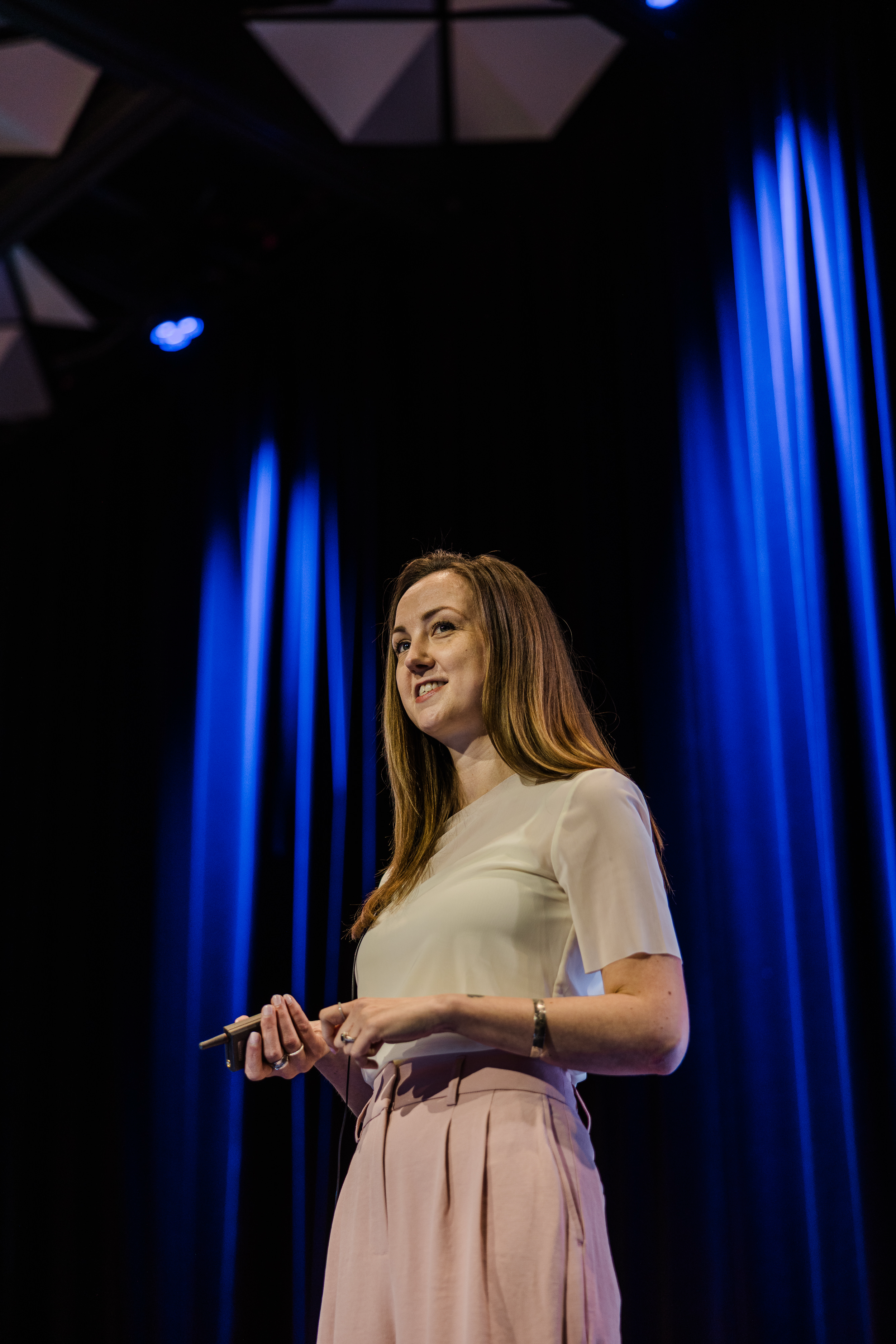
In episode 240 Peter speaks to Jo Lepore who practiced corporate foresight within McDonald's and Mars Wrigley, leads the insights company Dig, is the founder of FIG, is a partner at Copenhagen Institute for Futures Studies (CIFS) and a podcaster at Looking Outside.
Interviewed by: Peter Hayward

Resources
https://www.jolepore.com/
Transcript
Peter Hayward: Is foresight in business just a pale imitation of our field or is there genuine interest in employing foresight for something other than short-term profits?
Jo Lepore: I think that anyone that's practicing foresight in a business world and I say this with, I guess firsthand exposure to how that works understands that business is now operating in a complex world and a complex environment and needs to adapt to a more resilient, ready, prepared adaptable way of working that is very incongruent with traditional business playbooks. So yeah, while I think the perception is you're trying to force feed foresight into a short profit focused organization that's kind of in it for themselves. I think organizations that have foresight realize that is not the playbook of the business for the future, and that's why they need to build these new and adaptive models and systems.
Peter Hayward: That is my guest today on FuturePod. Jo Lepore who has a deep background in corporate foresight in business and is passionate about seeing foresight become central to all organisations.
Peter Hayward: Welcome to Future Pod Jo.
Jo Lepore: Peter, such an honor to be here. Very excited.
Peter Hayward: It's always fun to talk to a fellow podcaster.
Jo Lepore: I know I gave you the like radio announcer. Hello, didn't I? That's what tends to happen,
Peter Hayward: If you know the drill at Future Pod, we start with the first question, which is the story question, the origin question, so to speak.
And so what's the Jo Lepore origin question? How did you get involved with the Futures and Foresight community?
Jo Lepore: By accident, a very happy accident, which I think is actually a very common story for people that come into futures and foresight. And honestly, a part of the reason why I love it, because then you just encounter people that have a very different diverse background and perspective.
So mine is through business. I've, uh, sometimes call myself a CPG baby or an FMCG baby. I, um, got into the business world. After a, a pretty severe pivot out of my initial dreams as a young girl to be a writer and then realized, oh, actually I like this whole, like building brands and creating products and seeing things actually come to life.
So I, uh, did marketing for about 10 years and it was all new brands or new categories or. New markets, you know, which I think very naturally kind of leans into foresight without me having realized it at the time. So I was creating all of these new opportunities for the companies that I worked for. Companies like Murray Goulburn in Australia, so Devon, Dale, uh, general Mills, Mars.
Um, so Mars, Wrigley, and then. Very quickly realized that in the innovation strategy work that I was doing, I needed to really investigate where the future was going in a more methodical way. And when I did a piece of work to help us to sort of reinvent our innovation strategy at Mars and I did a, a piece of trend analysis as part of that, which by the way.
Looking back now, I can see it's quite basic, but it was my introduction into, into this whole world. Um, it got the attention of the global team who said, well, hey, we actually wanna start a global foresight team. You seem to know what you're doing. Can you come to the US and help us to work this out? So I made the move quite literally and physically to the US from Australia at that time, and also made the move from marketing and innovation into.
Foresight. And I'd say, you know, I did it with a lot of hesitation because I was always a business gal, so I wanted to be taken really seriously in the work that I did in business, and I knew only of foresight. The more speculative, creative trend, extrapolation, inductive reasoning aspects of it. So I was, uh, genuinely really excited, curious and skeptical all at the same time.
And then once I got into it, I started talking to people in the foresight and future space. I had great conversations with people that were doing it brand side with the likes of Andy Hines and Cat Tully, and you know, did my institute for the future training. So I actually, I think. Realized what it truly was and what the potential of it was inside of the corporate world and fell in love and then had an opportunity to build what I feel very lucky to call an amazing privileged career inside of foresight for the last six years.
Peter Hayward: So how do you regard the field, which is quite eclectic and spans from the activist, we wanna change the world because this world is not the world we want for the future, the academic, which is the drilling down into the methodology, the critical frames, and then the business some might say the messy, pragmatic, narrowly focused aspect, but as a business gal, your term
Jo Lepore: Yes.
Peter Hayward: How do you regard, if I call them tribes
Peter Hayward: I'm doing it from love, but we have these tribes that sit in this tent of foresight. How does a business gal see and relate to all the dis the disparate tribes of foresight?
Jo Lepore: It's a journey of discovery for me personally, particularly now that I've been in foresight for a little while and I've seen it applied not only in the organizations that I've done it in, but also through the nonprofit professional network that I set up for corporate foresight practitioners, fig.
So I've seen it applied in seven different sectors, different geographies, and so. Now that I've had that kind of step back and broader exposure, I've also therefore engaged with foresight as it comes to life across different sectors and areas of responsibility. All the ones that you mentioned, you know, and the way that it's done in government and policy directives is so different to the way that it's done when it's being taught to a, you know, a young, uh, growing.
Field of future practitioners in education to how it's done in not-for-profit, um, sectors to how it's done in you know, oh my gosh. Like everything in between. And so I, I guess the way that I see it from a business perspective is, um, maybe two reflections. One is that I feel like businesses often.
Like the annoying kid that's left out of the playground. Like, we don't want, we don't wanna play with you. Like we're doing serious futures work now. So, ah, you go and you do your short term profit generating thing that you do and leave us to the serious stuff. Uh, there's also just I guess traditionally maybe not so, right, like at the moment I think it's changing, but a, a perspective that ForSight shouldn't be done in business because it's there to.
Change the world for the better. And so again, I guess just like a, uh, a little bit of elitism when it comes to the foresight space amidst all of this amazing diversity and different perspectives. So that's kind of one reflection that I've had. The second is that I think that anyone that's practicing foresight in a business world.
And I say this, uh, with, I guess firsthand exposure to how that's, how that works understands that business is now operating in a complex world and a complex environment and needs to adapt to a more resilient, ready, prepared. Adaptable way of working that is very incongruent with traditional business playbooks.
So yeah, while I think the perception is you're trying to force feed foresight into, and not yours peter up, but generally force feed foresight into a short profit focused organization that's kind of in it for themselves. I think organizations that have foresight realize that that is not the playbook of the business for the future, and that's why they need to build these new and adaptive models and systems.
So where I've been really inspired is where people have opened their door to bus business people and corporate foresights and said, let's collaborate. Let's learn from each other. Let's build something better together.
Peter Hayward: You wrote a piece in the in the Copenhagen publication using the future, and it was, I thought it was a delightful piece because you talked about the business of foresight.
Peter Hayward: And you framed it through something I've not seen a lot, which you talked about the impact of. Foresight on return on investment, because foresight has, I didn't say have to, but you said we should look at the effectiveness of foresight. Its contribution to organization as a return on investment because it is an investment that companies make to let foresight come in to what's already a problematic, contested process.
And therefore, in my words, you've gotta prove that. You can actually pay your way, so to speak. You can actually not just do the foresight bit, but you can actually improve other parts of the organization. Do you wanna just elaborate on that piece?
Jo Lepore: Absolutely. Happy to. I mean, this is a point that I'm, I'm quite passionate about and not everyone agrees, which I, I welcome the debate and the discussion on that, but certainly I think foresight is an investment by the organization.
You put it beautifully. It's also an overhead. As is every other function in the business, and just like every other function, you are asked to demonstrate what you are delivering to help grow the organization. I'm a huge proponent of the Peter Drucker mandate around not necessarily growing your business to be bigger, but growing it to be better.
So when I say ROI, I am also thinking of return on. Positive growth of your organization, future proofing your, or future proofing, sorry, I know that's a really contentious term in foresight, in futures. Creating a more resilient and adaptable organization, like all of this can be ultimately led back down the path of quantifying the, the financial, commercial, economic return.
But that's not all it is. You know, so I think sometimes when people hear ROI. Firstly, they say maybe that's not the role of foresight is to deliver profit and money. It's giving you so much more, right? It's building futures literacy and capability, and perhaps it's there to challenge the way that the company is currently generating ROI.
But the way that I frame it is really just that you, we need to be really responsible around what we're delivering for the organization as a company overhead, and that that can be something that is commercially beneficial. And by the way, that commercial product can be a better for the world. Product if we frame it in the right way with the right business case.
But it can also be around building this capability inside of the organization so that if like the companies that I've been in Mars, 110 year old company, if I want it to be around for the next 100 years, like my contribution as a foresight practitioner is tremendous in helping it to build that kind of resiliency and adaptability.
And that isn't. All commercial profit generating ROI. So that's, that's kind of a, a little bit of a messy answer to that to say, I think we just don't get a free pass, just because we're doing something that's very unique and very different and very special doesn't mean that we get to be implemented inside of a business setting and told, you know, the rules of business don't apply to you.
They absolutely apply to us just like every other function.
Peter Hayward: I've done foresight inside organizations and I've also done foresight on the outside of organizations. Mm-hmm. And they are very different. I often, in some ways, when I'm feeling playful, I'll often say that a parachute consultant who comes into an organization can almost be provocative.
Peter Hayward: And can say things that aren't talked about because they are know. They know they are leaving. So you can actually almost come in and say things that aren't getting talked about and then people can show you the door and you can go fine.
Whereas if you're in an organization, you have to actually manage the politics and your position in the organization constantly because you can't believe unless.
You are asked to leave, can you maybe elaborate, 'cause you've been both sides as well. Do, how do you see the two?
Jo Lepore: Yeah, and I've been on the other side now for almost a year. For the first time in my career, I've always been that CPG baby on the inside. And now I'm on the outside and I'm like, Ooh, this is really interesting.
I, I can come in and I can. Drop a bombshell and like, you guys have a little, think about that, I'm gonna come back in three months and see what you did with that. Um, it's really, it's a very unique position to be in and I always say that I think both roles are really important. You do need that external provocation and.
I think that's why having brought those people into the organization when I've been in it, like I have tapped the futurist to say, Hey, by the way, we're doing a piece of work on the future of food and we really need like a nutritionist that's just gonna give it to them straight. Those external voices are really important.
But I think that what maybe what's, uh, more challenging is what you hit on, which is that I have to go to work the next day with these people. I have to build a relationship with them. They have to trust me, they have to wanna reengage with me, their advocacy for my work. Pretty much determines my success for the next stakeholder that I'm gonna engage.
And if I want to, going back to ROI calculate the impact that I've had. I need them to vouch for me. I need them to be able to say, Jo was a, Jo and her team were partners in this, and they really flexed to what we needed them to flex to, right? They didn't just come in rogue giving us provocations or, you know, speculative scenarios about the future.
They really helped us to identify a. Pathway and a roadmap towards success that helped us make decisions. You know, that's that translation bit and that highly collaborative nature of business is I think, really, really challenging for a foresight practitioner. And, you know, if you like a challenge, it's awesome because, you know, it's, it really kind of.
Is that sweet spot between, I think a traditional business person that naturally has to be highly collaborative and know how to persuade stakeholders and a pure futurist who is really tasked with coming in and helping people to think differently and to feel differently about the future and drive them to make very different decisions.
It's kind of a blend of both of those things. And then if you're. If you're, um, you know, ambitious enough, you'll throw in a third in there, which is you wanna be commercially minded and actually be able to say, Hey, we launched this thing and it was really incremental for the organization. And take that as a case study for a future success of foresight.
I think like when you can triangulate those three things, you can be deeply, deeply successful inside of business in foresight.
Peter Hayward: A lot of people who listen to Future PO are people that are studying in the various courses around the world. We're very grateful at Future Pod that, these little chats get raked over by people that are learning the craft.
Mm-hmm. As someone who has, who can roll their sleeve up and show the scars for working in large organizations and trying to work in the hierarchy. What, for people who possibly think they're going to be an inside futurist, what are some of the things that you say about how they get established? They come out with their newly minted masters or PhD in futures and foresight. What do they start doing in their organization?
Jo Lepore: it's a really, really important and common question that, that I get a lot and I think, um, you know, like the common response that I sometimes get when I say, oh, I like set up foresight for McDonald's out of their head office in Chicago, people are like, oh my God, that's the best job ever.
I'd love to do that. You know, if you love futures in foresight and you wanna apply it to an amazing, big brand right at the heart of the action. It sounds awesome, but I guess the, I would say that the key way that I was successful in that was being able to think like a business operator and then apply foresight, methodologies, skills and mindsets to that and keep flexing, keep adapting the let's say the, the theory to the practice so that it's impactful.
I mean, when I started in ForSight, I got a lot of this, um. I got a lot of this training of people saying to me, you know, you don't use the, these words like I just caught myself before. Right? With future proofing, you don't use these words we like, we don't do it this way. It's a very purist mentality, and what I found was that in business I would just leverage whatever got me in the door because the reality is that while everyone is really interested in the future and the.
The future is always inspiring and insightful and provocative, and they like businesses are craving that so much. At the very same time, there's a high level of rejection for it and skepticism that we actually don't wanna change how things are running right now, and the future is really scary and we're al already overwhelmed and we already have too many things to do.
So you're kind of battling that at the same time. And so whatever you can do to be deeply pragmatic. Adaptable to the business climate and to what your stakeholders need, the more successful you're gonna be. So I would say like if you are finishing your masters and you're really interested in going into corporate foresight like you are al, you already have a leg up on corporate foresight practitioners who don't have futures training, which is a large chunk of them who are just placed in those kinds of roles.
So use that to your benefit, but really think of it in a more practical way, but I guess Peter, I'm really interested on your perspective on this because like, is there a misconception between students when they come out of these courses of how they think it's applied?
Peter Hayward: My advice would be, don't plan early on the Big foresight project I often found that if you move too quickly that we're going to do the grand scenario process and we're gonna bring all the executive in and use them for two weeks. You may do one of those. You may do a large scale where you call in all the chips and ask for significant chunks of executive or leaders time, but you want a very secure base to do that. If you go too early and you ask for lots of executive buy-in, 'cause they've only got small amounts of time to give to any task, then you need to be very conscious of is this the best use of their time? And can I get it in some other way that doesn't require them to give tremendous amounts of time. Mm-hmm. Because I've been party to corporate processes that have pulled the executive leaders in, and it's almost set foresight back in the organization because people just said, for the time, you asked for me, for the time you took away, I don't see the return.
Peter Hayward: How do you say to that?
Jo Lepore: Yeah. Well, I really like the point that you made around. This desire that we have to demonstrate. How much we know. And, and a lot of it is that we're, we're just so passionate about the theory that we know that it's gonna work and it's gonna make an impact. So just let us do it. But then another part of it is something that I learned the hard way in business, which is that I don't need to be the most interesting person in the room all the time.
Peter Hayward: Yeah, good point.
Jo Lepore: And I think a lot of the times people want you to be that. They want you to come in and be like, I'm gonna give you some, you know.
Projections or predictions about the future. And I'm gonna tell you something that you don't know, and I'm gonna be like, really, um, charismatic. You know, because people think business futurist is also like a keynote speaker, essentially, right? You're constantly kind of presenting around the changes of the world.
And so you get into this like habit, I think, or expectation of yourself that you will be that in every situation that you will. Leave the room and have them wanting more, which is kind of necessary in business. But at the same time, you become almost like a gimmick of yourself. And then maybe, yeah, you take away from everybody else in the business becoming a great innate futurist, right?
Like that's really what we want. We want everyone in the business to think like a futurist and to act on futures thinking. So it's not all about you. That's definitely something I learned the hard way. It's also this, uh, maybe perception that we know is something that you don't know. And therefore it's like a field wrapped in wisdom, which of course there is a lot of wisdom in foresight, but I often used to say I'm knowledgeable on everything.
But an expert in nothing except for foresight in futures. So I am not gonna come into a sustainability meeting and tell you something around ESG metrics that you don't already know. That's not my role. My role is to help you to connect it to emerging consumer behaviors or shifting cultural norms or changing political, you know, reg regulations and legislation like help you to connect the dots and help you to push your thinking around what you currently know into the future so that you can make decisions about that today to prepare you for that future. Obviously articulating things that you, you know, well Peter, but yeah, I think that there is.
Still this perception that like the wise old man and like a lot of the, the men that are the founding fathers of futures and foresight who are many of whom are still around and in their seventies and eighties, right? They are so brilliant. You kind of listen to them and I, I get massive imposter syndrome.
Like I'll listen to real Miller and feel completely inadequate as a human being because I don't have the level of knowledge and, and eloquence that he has, but. That is the kind of the expectation of everybody in our field. And so maybe going back to what you said at the start, it's the diversity of experience and perspectives that makes this field even richer than just a few old wise men.
Peter Hayward: Yeah, I think you're onto something too, Jo, that I think, again, I don't have the experience you have in recent large corporates, but I actually think they're crying out for people coming in from different backgrounds. Mm-hmm. And they value people who know how to deploy their difference in ways that are constructive in the organization. So it's not about just coming in as a weirdo or coming in as a provocateur. It's actually how do I bring my unique. My perspective in such a way that the culture and the conversations of the organization can use this without turning me into them or turning them into me.
Peter Hayward: How can I be different enough? That the organization grows through the difference.
Jo Lepore: Yeah, it's a little, it reminds me a little bit of what cat Tully talks about with the Horizon two operator. Is that person a little bit in the middle. You're not really that hugely divergent and disruptive voice because you know that's. That's the speaker that they, that comes into the conferences once a year and you're not the day-to-day brand manager on the ground.
You're, you're kind of like in the middle helping to just push a little bit, just nudge them towards the uncertain future.
Peter Hayward: Andy Hines wrote a piece where he talked about this taxonomy of working inside organizations. Mm. And he typified four types of people you encounter in organizations. I don't know if you've read the piece
I have. It's pretty, I have read this. Yeah.
And he said you basically get people who are rats and the whole point about a rat is a rat will be a person who moves towards the cheese and they'll also be the first ones off the sinking ship. Then there are the frogs that are the amphibians. They're almost the horizon twos. In cat's world, they can live in the kind of futures world and they can live in the organizational world. There are the lemmings of the people who love foresight, but actually can't really help you in the organization, and there are the vultures who hate you and are gonna wait for you to die. And what Andy's premise was when you work in an organization, you are kissing a lot of frogs, trying to find the people who are gonna be able to help you. You pay careful attention to the rats.
Peter Hayward: cause you want them coming towards you because you've got cheese. Mm-hmm. And.
You don't get, you don't get carried away by the adulation of the lemmings. And when you meet vultures, hey, they're vultures.
Jo Lepore: Yeah.
Peter Hayward: You're not gonna change them.
Jo Lepore: Yeah. I love that framework so much. I often bring up the rats to people. Wait till you hear this theory from Andy ees about the rats in your organization.
It's a good conversation starter. No, I think that framing is really, really helpful. And I know Andy's written a few white papers as well from his time in. In that side of the world as well, that have been really, really helpful. For me, as I've been orienting myself to I'm not necessarily, you know, anyone that's coming into corporate voice.
It's not building anything from scratch. Like this has been around in the business world since the seventies, right? So we have a lot of learnings about. What works? What's effective, how is that dependent on cultural context, you know, market context, how is it dependent on where you're placed in the organization and you know, the kind of advocacy that you get, which is what you're touching on there with Andy.
I think a lot of the times we get very. Wedded to finding our, our advocates in the organization. You know, the people that just get foresight and believe in foresight and we like latch onto them and forget about everybody else. And then, you know what, what happens, um, if you do that. But I think, I.
My one build to Andy's framework is that I do think that it is really, really important to find the people in a very senior positions in the organization that will be the ambassadors for the work that you're doing, and not just your boss, but like beyond that, because that can make a huge difference in scaling your impact and vouching for you when you get into that moment where the vultures are coming.
Peter Hayward: Can you tell us more about FIG and your podcast just for listeners, because I think they're both f. Quite again. I mean, they're, they're different offerings, but they have a very interesting synergy with what you've spoken about.
Jo Lepore: Yeah. Thanks Peter. I thought you were just gonna say, uh, the podcast is really different.
Yeah. So I'm a huge fan of your podcast, so I'm so excited to be here. Um, yeah. So my podcast is a little bit different in that I started about four years ago now when I was working at Mars, and I thought, you know what? I. And connecting with really cool, interesting people that are not in the field that I'm in and having amazing conversations with these people thinking surely if I put this out, someone else would benefit from this as well.
So it basically started from, that idea is broadening our perspective by gaining it a diverse perspective from somewhere else. And so that has morphed into something that's been quite rewarding for me personally, and I think quite successful. And I've had the opportunity to, well, I've just gone really rogue with it.
I'll be honest. Like I've, I just interview whoever I want. I've interviewed, um, uh, an a retired LAPD detective. I've interviewed an commercial airline pilot. I've interviewed a French fashion designer, like people that, are not really connected to what I do at all. And yeah, you have a conversation with them and you go, oh.
That's right. Yeah. Like the airline pilot, Ricardo, he was talking about how, you know, every six months he needs to get into a flight simulator to practice the potential disasters that he might face in a real airplane. Just like in foresight with scenario planning. You know, there's always kind of these links that I'm making as I'm having conversations with these people.
It's making me think in different ways, and so I really enjoy it. Um, so when people in the foresight and futures world listen to it I'm deeply grateful, but it's not really a Futures and Foresight podcast. I have had some amazing futurists on there. I. I've had, you know, the likes of Paul Safo and Kat and Amy Webb and Andy Hines, you know, a bunch of, uh, really cool people on there.
Sohail Inayatullah. I mean, I'm, I'm just like gonna miss a bunch of people that I should be recognizing. But it's more to balance the conversation. So if I'm speaking with strategists and marketers and French fashion designers. I wanna make sure I have the voice of futures and foresight in there.
Peter Hayward: Yeah, you call it looking outside.
Those words tell you what this is. You are reaching outside of even what you expect.
Jo Lepore: Yeah. Yeah, exactly. And, I think probably my favorite conversations is when I have people on there that I know that I'm gonna disagree with, and it's kind of a test of my own patience to go, okay, how do I become more open-minded about this?
I really wanna hear their perspective, and I don't really wanna have a debate. I just wanna have a really robust, um, deeper conversation about it. So yeah, I've been really, really enjoying that. I get to connect with really interesting people because of it. And then, you know, when I wanna go deep on, uh.
A futures and foresight topic. Then I listen to podcasts like yours. So I've been a, a huge fan for a long time, so
Peter Hayward: thank you.
Jo Lepore: Yeah. So it's joy to be here with you, Peter. Yeah.
Peter Hayward: And FIG.
Jo Lepore: Yeah.
Peter Hayward: You talk about it being a fruit, which of course you also know it's also a flower. And it's a flower on the inside.
Jo Lepore: Mm-hmm. Yes. Yeah, exactly. Um, so growth and wisdom is kind of the. The whole mantra of fig, which is the professional network. Obviously for those practicing futures and foresight inside of big organizations, it's a closed network, so there's no agencies allowed. It's only people that are living and breathing and doing these, these roles inside of business so that you can have a safe space.
We call it foresights anonymous, so you can vent everything really freely. Chatham House rules, um, NDAs in place, and, you know when I said wisdom and growth, it's that we recognize that across the seven sectors that we have covered there, we all operate really differently where we sit in different functions.
Some of us have one person, some of us have a team of 60, some of us have been around for since the seventies. Like Shell, some of us are brand new, like Nestle, and so. We're all kind of traversing this corporate foresight journey in very different ways, and we all agree that it's very different now than its origins.
You know, it's, um, something that has o obviously been around in business for a really long time. You could even argue that sustainability for decades has played some role in future. Thinking, long-term thinking, corporate strategy cultural marketing, like there have been elements of it in business and obviously corporate foresight has been around for a while, but we feel like in the last five or 10 years, it's really undergone a transformation and it's in a prime time for us to just pause and go, how do we make sure that it's successful?
'cause we really wanna protect it and grow it and advocate for it. We want more organizations to be practicing futures and foresight and really resourcing for this. So that I would say is our mission. And even though we all operate very differently, um, with it, we all share the same qualms, you know, the same challenges, and have really fantastic kind of projects on the go to help us to give back to the foresight community collectively.
So that was, um, I need to mention. I started about two years ago when I was doing foresight at McDonald's with my good friends and foresight leaders at Disney and Jag Land Rover. So Ben Moncrief and Adam Walker, we started it together, um, and. We have now 12 member organizations, so we just signed h and m, uh, and we've got in there, ikea, Nestle, PepsiCo, axa, Autodesk, hp.
You know, like we've got a whole bunch of different industries and sectors covered. So we can, um, really hopefully use that as a pathway towards growing this corporate foresight field.
Peter Hayward: Lovely. It's kind of like an in-house, Chatham house just for futurists.
Jo Lepore: Yeah. And I would say it's very different to GBN as well.
'cause I know a lot of people have said that to me is like, well, is is this kind of an evolution of that? I think probably the first thing that we did when we started it was to go like, why is GBN no longer around? Why, why do these sort of clubs and communities disappear? What happens? And so that's a part of the reason why we've made it really, really.
Structured and formalized and led by people so that we can make sure that it's kind of nurtured over time. And it's been deeply rewarding for me.
Peter Hayward: I push you to what you are paying attention to now. Obviously you are paying attention to a lot, but what are the things that you find are continuing to just kinda want to get into your attention, and why do you think that is?
Jo Lepore: A few things. One is this the narratives? I guess I was gonna say the narrative, but I think there's two narratives that are concerning for me in the world right now. One is the narrative around the time of crisis that we are in. And I think a lot of this is kind of self-reported anxiety around the state of the world.
The uncertain world uncertainty index I think is not very helpful for anyone, to be honest. And I think that in, um, at least from a corporate foresight perspective, from a business perspective, when you throw this message out of. Crisis and disorder in the world and chaos, it gets people's attention.
So it's very successful in that way. It's also really unhelpful in actually driving action. So it paralyzes people, it makes them pay attention, which is what we want, and then it paralyzes them to not drive any action out of it. So that's one narrative. And then the other narrative is this kind of anti-capitalism movement.
So there is a very objective observation of. Capitalism in decline, um, which Andy Hines obviously has written about, which I think is very, very accurate and true. But I think that there's also an anti-capitalism movement happening at the same time. And I see this narrative coming from people who have very greatly benefited from capitalism.
And that's kind of the, the irony that I'm observing. And then maybe the third one that I'll give you is. I see a lot of positive signs around the trust in business growing, which gives me a lot of hope that we, we go in these ebbs and flows right, where we have more trust in government than business. I can see the business trust coming back, and I think it's a really great opportunity to spread that message to corporations that you have the permission and the ability and maybe the responsibility.
To do more in a time like this, whether it is a true time of crisis or not, um, putting aside all of those scary narratives, it is an opportunity for you to step up and do more.
Peter Hayward: Yeah. When I get the chance to talk to senior leaders, and I wanna just be a little bit provocative. I make the point that organizations don't have futures. It's the people who have the futures. It's the people who have the agency.
Peter Hayward: If organizations have something that you could call a future, it's because individuals make that organization part of their future, that for a short period of time, they carry out things on their behalf. Mm. But also on behalf of the organization, ultimately for society.
And it's always about people. It's always about people's agency. And to me the challenge for organizations is to give their people a good enough reason for them to want to buy in and give some of their, their scarce agency on behalf of the organization.
Jo Lepore: I guess the question is, do you need permission to have agency in an organization?
Peter Hayward: It's a very good question. What do you say?
Jo Lepore: I hate to be a, like a classic futurist and say it depends, but maybe it depends a little bit. Maybe it's a little bit of both. You need the permission, like you need a little bit of permission, like the inched door, and then you need to like just slam your foot through that door at the same time.
Peter Hayward: Yeah. Permission's interesting. 'cause to some extent the leader might think it's job is to create permission spaces. Mm-hmm. But that assumes top down, that assumes that people need permission, whereas in your life and your career, you take permission by either staying in an organization Yeah that you feel is part of your agency well, you go somewhere else. Does the organization give permission or does the organization step back and create conditions where people step up?
Jo Lepore: Yeah, and I think, um, we've seen a lot of organizations that do that so, well, fa, I mean, family run businesses do this exceptionally well, where because they're naturally thinking about generations, they really, I think, empower people to operate in a different way.
It also obviously depends on what kind of incentives the organization has for that kind of thinking. And you know, I always like when you said that, I always go back to. The Mars business that I was a part of, and they have these five principles set by the family, and one of them is freedom. And freedom is all about Peter.
It's on you. You have an idea, you see a problem, you go fix it. Like don't bring it to me, don't bring it to the CEO. You have the freedom to act on the ideas that you have and to solve problems within the realm of your control. That is permission that you give yourself to act within the realm of your power.
But then I do think that the company needs to create the structures. So going back to what you said, the permission to create those kinds of structures or a lack of hierarchy to be able to, to operate in that way. So I do think it kind of needs to be both.
Peter Hayward: Yeah. Interesting. You talked about the whole doom scrolling process I call it. And at the end of it, you feel, wow, we are seeing around the globe. A lot of people losing confidence with institutions.
Peter Hayward: And particularly political institutions, but also institutions like the church and everything else. If people are losing faith in institutions, then I think what you are saying is that maybe the faith comes back to business.
Peter Hayward: In the absence of political leadership or social leadership.
Peter Hayward: And that would get some people very excited because some would say, well, how can you trust business? Because businesses just aren't just in it for the money.
Peter Hayward: But people want to make a difference in business, don't they?
Jo Lepore: They absolutely do. Like going back to what you said, a, a company is made up of people and people have great ideas and we can't underestimate a small group of people and the change that they can make, especially when they build a coalition.
So yes, absolutely. I think that is the opportunity for those in organizations to respect. Where they work and who they work for, and be pragmatic about the role that they play, but to aim for more, to push for more, to find that balance between wanting their organization to use its resources and its power to do more for.
It's people like, let's just start there for starters, right? Let's just get organizations to treat their own employees better and create structures for their own employees and systems that allow for that kind of thinking and, and operations. And then maybe we can solve things for our consumers.
It's, um, it's definitely one element of it. There was something else that you mentioned that I've has now completely. I left my mind. Institutions have the right, have the potential to do more, is what you said.
Peter Hayward: Yeah. One of the things I often felt as a student of history and particularly looking at English history studying people like, Benjamin Disraeli and William Gladstone and if you were a social activist, the place you went to. Practice your activism was politics.
Peter Hayward: And so we had that remarkable century of really powerful figures that drove change.
Peter Hayward: And I've wondered whether we're not seeing that type of political leader Maverick type emerging in most political systems. And maybe the place that you go if you want to change the world is you go into business, maybe go into a startup.
Peter Hayward: The people who are driving not-for-profit. Are not that dissimilar to some of the radical people from the corporate side who want to change how the world works, don't they?
Jo Lepore: Yeah. Well, everybody wants to succeed, like no matter what type of corporation, organization, uh, you're leading, and I guess it's then what is the, the corporate culture of that organization that dictates your behavior or what you deem to be the path towards success.
And I do think I see certainly startup founders and people that are going and creating their own organizations. Like I think of people like Seth Goldman and what he's done. And he's a wonderful human being and he's obviously creating, you know, consumer goods products, right? Ready to drink products that are more sustainable, more ethical.
He's purchased his companies back off the big players so that he can do it right, and he's growing exceptionally well. And, you know, he's, I think doing it for quote unquote the right reasons. So I do think like when you see that playing out. And then the corporate culture represents that kind of mindset.
It can be different. And I guess I, I kind of go back to family run organizations, which are, you know, by no means a tiny part of the global market. It's a huge, employs 60, 70% of the global workers and contributes like billions of dollars to the global economy. And again, like those organizations are thinking about.
How do we create a positive commercial environment for our business, but also how like we're responsible for our nation and our, our national success, like we contribute back to the. The culture of Japan and maintaining our traditions and supporting our economy, and you know, like the, there's just a different, there's a very different mindset that you can apply to the business world.
I think if you are bold and brave enough to do so, and if you can see a different way of doing it. All that to say, or all that said, I should say, I'm not a huge fan. Of like straight activism in business. I think that's where potentially when you talk about some of these things, people might. Veer off and start thinking, you know, we want more, personal causes in business.
We want more purpose marketing, we want more corporate social responsibility coming into it. And I think that's where you start to get this rejection in business of, we're not a charity, we're, we are here to be self-sustaining. That's a real challenge that we face inside of the business landscape.
So I think it needs to be it needs to be a balance.
Peter Hayward: If I throw it to you to wrap this, is there particular things that you want to leave with, talk to anything else to throw in there?
Jo Lepore: I'm on a mission to. Build awareness and implementation and advocacy for corporate foresight. That's really like the bread and butter of what I do in for, in the foresight space.
So I think that it's really important for anybody that's interested in foresight, in futures, and I'm sure you have a lot of curious people who.
Maybe don't practice it today, but are, are interested in it or those in business listening, thinking, I kind of already do this. What next? I do think it's really important to go and get training and to build the formalized capability in futures and voicer. And I know Peter, I'm like preaching to the choir here 'cause you taught theism foresight and, um, what's regarded as like one of the world leading programs in the world.
So world leading programs. So, uh, yeah, you, you definitely understand this, but I think that when, when you talk to the, the people that operate in business training, upskilling learning and development, it's kind of like a nice to have and it's generally, um. Totally acceptable that you just learn on the job.
And I think it's really, really important for anyone that's interested in this to go and learn not only the foundations of foresight, so go and get training. You could do a course at the Copenhagen Institute for Future Studies where I'm now a partner. You can, um, obviously do something more intensive and more formalized as well.
Um, but I would say go and learn the foundations and then learn the history. Of futures and foresight. I found that to be incredibly valuable for me to understand the rationale for why things are in futures and foresight the way that they are. Because if we wanna adapt them, which we, I think we kind of need to, in the business environment, we need to understand why they were designed the way that they are.
And then, you know, I'm a big, big proponent of what Sohail talks about. You know, make futures fun but not frivolous, so. Hmm. Ensure that everything that we're doing is really focused on the impact that is driving
Peter Hayward: and your passion and what you are gonna commit to for. The foreseeable future, at least until we talk again, is gonna be,
Jo Lepore: uh, it's gonna be all about advocating for more corporate foresight, more organizations being interested and implementing futures and foresight feeding in longer term thinking, building that kind of organizational muscle.
In futures and doing it hopefully with a lot of openness, trust, and a big impact.
Peter Hayward: Awesome. Jo, it's wonderful to spend some time with someone who actually has got the runs on the board and has the experience of how you do make it work. So thank you for agreeing to come onto the pod and spend some time with the community.
Jo Lepore: It was a pleasure. Thank you, Peter.
Peter Hayward: Thanks to Jo. There are lots of ways to engage with Jo if you are interested. Listen to her podcast, follow her on LinkedIn or Substack. If you are practicing foresight inside an organisation then she is a great guide and gives wise council. Future Pod is a not-for-profit venture. We exist through the generosity of our supporters. If you would like to support the pod, then please check out the Patreon link on our website. I'm Peter Hayward. Thanks for joining me today. Till next time.